Why apartment heat quietly destroys electric scooter batteries
Most riders worry about potholes and rain, not where they park an electric scooter at home. Yet the way you handle electric scooter storage in a hot apartment can cut battery life in half, especially when indoor temperatures creep above 30 °C. Treat the scooter battery like a living organ, and the whole machine will age more slowly.
Lithium ion cells hate extreme temperatures, and apartment heat can be worse than a garage because the space often traps warmth from south facing windows and radiators. Ideal long term storage for a scooter battery sits roughly between 10 and 25 °C, while sustained heat above about 45 °C accelerates rust corrosion on metal parts and pushes the pack toward early capacity loss. These ranges broadly match guidance in many lithium ion cell datasheets and electric scooter manuals, which call for cool, dry storage away from heat sources. When a scooter is parked beside a window where sun bakes the deck, the internal battery charge level rises slightly with heat, stressing the chemistry even when you do not ride.
Think about where you keep scooter models like the Segway Ninebot Max G30 or Xiaomi Pro 2 after a ride, because their dense battery packs sit low in the deck and soak up ambient heat. Segway and Xiaomi user manuals both recommend avoiding prolonged exposure to high temperatures or direct sunlight for this reason. If you leave electric scooters pressed against a radiator or over a floor heating vent, the pack never really cools, and the BMS may sit near its thermal limits for hours. That kind of long term storage habit is less dramatic than rain snow damage, but it quietly shortens range and makes the scooter damp inside from trapped moisture.
Finding a cool, safe space in a small apartment
In a compact flat, the best scooter storage spot is usually the dullest corner, not the prettiest. Aim to keep scooter parking away from direct sun, ovens, and hot water pipes, because those hidden heat sources raise local temperatures even when the room feels fine. A hallway nook with some airflow beats a bright living room window ledge every time.
Walk your apartment and check where the air actually moves, then choose scooter storage that lets the pack breathe while staying dry and clean. Avoid closets that trap heat from routers or dryers, because parking electric scooters in stagnant air lets moisture and dust linger on parts and wiring. If you must keep scooter gear in a wardrobe, leave the door slightly open and keep the scooter battery side facing outward so heat can escape.
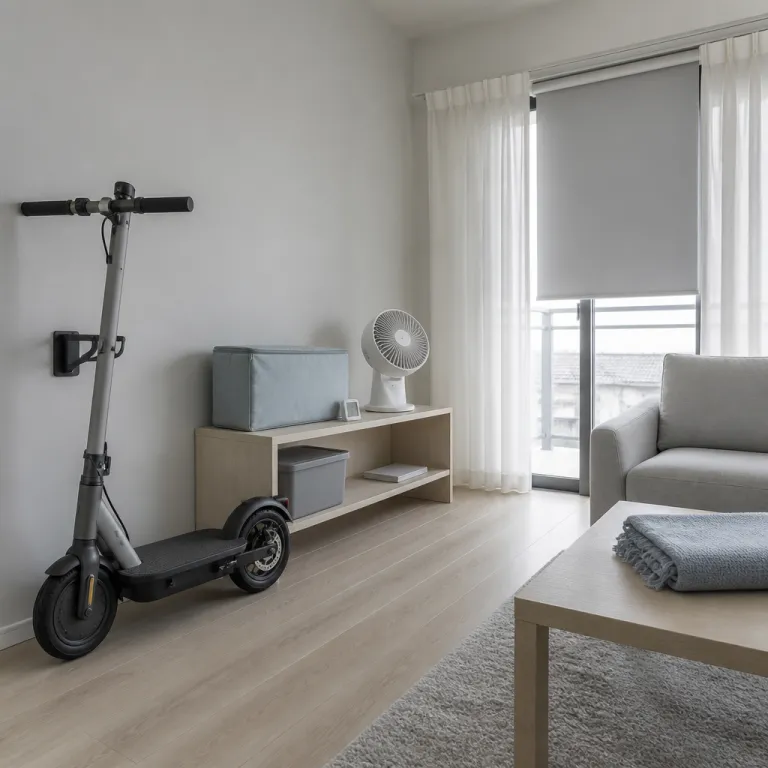
Vertical wall hooks rated for heavy duty loads work well for a single electric scooter, especially folding models that can stand upright without wobble. Mount them on a wall that does not back onto a boiler cupboard, and always store electric scooters with at least one wheel touching the floor to reduce strain on the frame. For riders who used to keep a scooter stored in a garage, think of your apartment corner as an indoor garage space, with the same rules about avoiding scooter damp, rust, and poor security.
Charging habits that protect your battery in summer heat
How and when you charge matters as much as where you store an electric scooter in a hot apartment. Leaving a scooter battery at 100 percent for days in warm air is like parking a car at redline, because the cells sit under constant stress. For long term health, aim to keep the battery charge between roughly 40 and 60 percent whenever you will not ride for several days.
Before a weekend away, ride gently to bring the charge level down, then top up or discharge until the display shows around half full, which is ideal long term storage for most electric scooters. Never leave the charger plugged in indefinitely, because trickle charging in high temperatures encourages rust corrosion on exposed contacts and can keep the pack slightly warm. If your model supports a smart charger or a timed outlet, use it to stop the battery charge automatically after a set window.
Ventilation around the charging space matters, since lithium cells warm up slightly while they store electric energy during a charge cycle. Avoid charging in a sealed cupboard or under a pile of coats, and always check that the scooter stored nearby items are not blocking vents or ports. When you keep scooter charging sessions supervised and short, you reduce both fire risk and the subtle heat soak that slowly ages the pack.
Quick charging and safety checklist: use only the original or manufacturer-approved charger, ideally one that is UL-listed or certified to your local safety standard; avoid cheap, unbranded power bricks; limit unattended charging to a couple of hours and avoid leaving the unit on charge while you sleep; keep the charger off beds, sofas, or carpets that can overheat; and make sure you have a working smoke alarm near the main charging area.
Protecting components from dust, moisture and indoor hazards
Apartment life feels dry and clean, but indoor scooter storage still exposes parts to dust, moisture, and accidental knocks. Fine dust works its way into folding joints and brake calipers, while moisture from cooking or a nearby bathroom can leave a scooter damp for hours. Over months, that combination encourages rust on bolts and connectors, even when you never ride in rain snow outside.
Use a breathable cover rather than plastic sheeting when keeping scooter models in the same space as laundry racks or humid kitchens, because trapped moisture accelerates rust corrosion on steel parts. Wipe the deck and stem after wet rides before you park scooter gear indoors, paying attention to the underside where road grime collects. A quick check for rust spots every few weeks lets you catch issues early, especially around the folding hinge and brake hardware.
Security matters even inside an apartment, particularly in shared hallways where multiple scooters sit together. A quality lock rated for heavy duty use deters casual theft and also prevents the scooter from falling if someone bumps it in a narrow space. When an electric scooter is stored upright with a lock anchoring it to a railing or wall bracket, you protect both the scooter battery and the people walking past.
Simple monthly inspection routine: once a month, wipe down the frame and deck, then check the tyres for cuts and correct pressure; inspect brake pads and cables for wear; look for rust or white corrosion on bolts, axle nuts, and charging ports; test lights, bell, and display; and finish by confirming that the folding latch and stem clamp lock firmly with no play.
Model specific tips and real world storage examples
Different electric scooters react differently to apartment heat, because pack placement and frame design change how they store electric energy and shed warmth. The Segway Ninebot Max G30 hides its scooter battery in a thick deck, which acts like a heat sink when the scooter is stored on a sun baked floor. By contrast, some GoTrax XR Ultra units keep more electronics in the stem, so hanging them on a wall hook above a cooler tile floor can help.
If you ride multiple scooters, assign each one a specific storage space based on its weight and balance, so you do not keep scooter models leaning precariously in random corners. Heavy duty performance scooters with dual motors and larger packs should sit low and stable, while lighter commuter scooters can safely hang or stand in tighter spaces. Always check that folding latches are fully engaged before storing scooter units vertically, because a half folded stem can slam down and damage parts or flooring.
Urban riders who used to store scooter fleets in a shared garage often underestimate how much warmer an upstairs hallway can get on a sunny afternoon. When those same riders move electric scooters into a small flat without adjusting storage habits, they see range drop and charging times creep up within a single season. Treat every new apartment like a fresh test lab for electric scooter storage apartment heat, and adjust where you keep and charge until the scooter stored there comes off the wall cool to the touch.
At-a-glance indoor storage checklist: choose a cool, shaded spot with airflow; keep the deck and stem dry and clean before parking; avoid radiators, ovens, and south facing windows; store around half charge for breaks longer than a few days; use a breathable cover if dust or humidity are high; and secure the scooter with a stable stand or lock so it cannot tip over.
FAQ
How hot is too hot to store an electric scooter indoors ?
Most electric scooters tolerate short bursts of heat, but long term storage above roughly 30 °C starts to age the battery faster. When indoor temperatures approach 40 °C near windows or radiators, move the scooter to a cooler space. If the deck or stem feels hot to your hand after sitting, that spot is too warm for safe long term storage.
Should I leave my scooter plugged in overnight in a hot apartment ?
Leaving a scooter plugged in overnight is risky in any setting, and apartment heat makes it worse. Long charging sessions keep the pack warm and hold the battery charge at 100 percent, which accelerates wear. Charge while you are awake, unplug when full, and avoid using low quality extension cords that can overheat.
What battery level is best for vacation storage ?
For vacations or any break longer than a few days, aim to store the scooter battery at roughly 40 to 60 percent. This mid range charge level reduces stress on the cells compared with full or empty storage. Park the scooter in a cool, dry space, and check the level once a month if the break runs long.
Is a hallway better than a balcony for scooter storage ?
A covered hallway is usually better than an exposed balcony, because it protects the scooter from rain snow and direct sun. Balconies often swing between extreme temperatures, which is hard on both metal parts and the battery. If a hallway has decent airflow and no heaters nearby, it is a safer choice for long term storage.
Do I need a cover for indoor scooter storage ?
A breathable fabric cover helps keep dust off the scooter and reduces moisture settling on metal parts. Avoid airtight plastic covers, which can trap condensation and leave the scooter damp after temperature swings. Whatever you use, make sure vents and charging ports stay accessible so you can check and maintain the scooter easily.
Note: Temperature and charge level guidelines in this article reflect typical recommendations from lithium ion battery manufacturers and electric scooter user manuals, which generally advise cool, dry storage and a partial state of charge for long term parking.