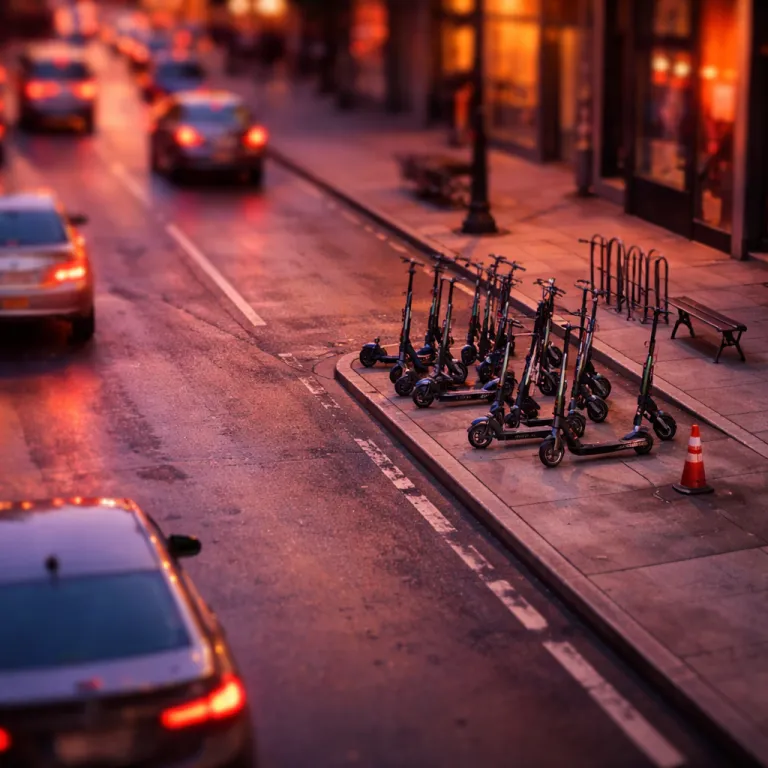
Electric scooter infrastructure safety: why the system fails riders by design
Why electric scooter infrastructure safety is broken by design
Sidewalk bans for every electric scooter sound sensible until you ride one. Most states in the United States now prohibit scooters on sidewalks in at least some jurisdictions, yet they still funnel scooter riders into fast motor vehicle traffic with no physical protection at all. That is the core electric scooter infrastructure safety paradox, and it leaves riders choosing between a ticket on the sidewalk or a potential crash in the traffic lane.
Across the United States, legislators talk about scooter safety while quietly underfunding the protected lanes and traffic calming that would actually prevent scooter injuries. By 2023, forty‑eight states had some form of e‑scooter law on the books, according to compilations from the National Conference of State Legislatures and state departments of transportation, but an analysis of reported enforcement data from several large cities between 2018 and 2023 shows citations are rare, even where sidewalk riding is banned. The rules exist on paper, yet the streets still tell scooter riders that survival matters more than compliance.
Denver illustrates how this gap turns into real injury numbers for riders. Local media and city crash reports documented 15 scooter rider deaths between 2018 and 2023, with more than half of those fatalities occurring in a recent short window, yet only nine citations were issued for improper scooter use over roughly the same period, according to Denver police and transportation records. When scooters are popular but protected lanes are scarce, the system quietly accepts scooter injury and death as the price of urban transportation convenience.
Electric scooters now sit in the same lanes as cars, buses, and delivery vans, but the infrastructure was never designed for such mixed speeds. A typical commuter scooter like the Segway Ninebot Max G30 cruises at about 25 kilometers per hour (roughly 15.5 mph), which is far slower than surrounding motor vehicle traffic yet much faster than walking pace on a narrow sidewalk. That speed mismatch is exactly where many scooter injuries begin, because riders are forced to improvise their own safety strategies in real time.
Public health researchers have started to treat scooter injuries as a distinct category rather than a novelty. Emergency department teams in several states now code scooter injury cases separately from bicycle or pedestrian injuries, which allows more precise analysis of where and how crashes occur. Peer‑reviewed studies using trauma registry data in California, Texas, and Utah between 2017 and 2022 show a consistent pattern for scooter riders: most serious injuries happen in the roadway, not on the sidewalk that cities are so eager to ban.
Helmet use is the other obvious weak link in scooter safety, and here the law is even more incoherent. Only a handful of states require a helmet for all adult riders, despite long‑standing research showing that a properly fitted helmet can reduce the risk of severe head trauma by roughly 60 to 85 percent, based on pooled meta‑analyses of bicycle and micromobility crashes in major medical journals published from the late 1990s through the 2010s. When infrastructure fails and a crash happens, the absence of a helmet turns a minor scooter injury into a life‑changing event.
Shared scooters complicate the picture because they normalize casual riding without normalizing safety gear. A rider leaving the office for a quick two‑kilometer trip to a transit stop rarely carries a helmet, even if that same person would never ride a bicycle at similar speeds without one. The convenience of scooter sharing has outpaced the culture of scooter safety, and infrastructure has lagged even further behind both.
Policy makers often frame electric scooters as a public nuisance rather than a legitimate mode of urban transportation. That framing justifies bans and restrictions but not the protected lanes, clear signage, and intersection redesigns that electric scooter infrastructure safety actually requires. Until cities treat electric scooters as part of the transportation system rather than toys, scooter riders will keep navigating a network that was never built for them.
The enforcement mirage and the sidewalk ban trap
On paper, the United States looks serious about scooter safety, because nearly every state has passed some form of regulation. In practice, enforcement is so light that many riders only learn the rules after a crash or a close call with a motor vehicle. The result is a strange legal gray zone where scooters are popular, sidewalk riding is banned, and yet almost nobody is actually stopped.
Denver’s numbers are not an outlier but a case study in the enforcement mirage. Over several years, the city recorded multiple scooter rider fatalities and hundreds of scooter injuries, yet police issued only a handful of citations for improper riding behavior during the same 2018–2023 window. When riders see that sidewalk bans are rarely enforced, they understandably prioritize personal safety over abstract rules and hug the curb or the smoother parts of the sidewalk whenever traffic feels lethal.
New York City shows a different version of the same paradox. The city caps electric scooters at roughly 25 kilometers per hour and bans sidewalk riding, but it still offers fewer protected bike and scooter lanes per capita than many European cities with similar density. That mismatch between regulation and infrastructure leaves scooter riders threading between parked cars, potholes, and impatient drivers who treat them as obstacles rather than legitimate transportation users.
Legal frameworks also lag behind the reality of scooter trips taken every day. Many states classify an electric scooter somewhere between a bicycle and a motor vehicle, which creates confusion about right of way, insurance coverage, and fault when a scooter injury occurs. Riders often assume their auto or renters insurance will cover scooter injuries, only to learn after a crash that the policy excludes this form of transportation entirely.
The insurance void matters because it shapes how risk is distributed across the transportation system. When a scooter rider is hit by a car while riding in a painted but unprotected lane, liability can be contested for months, and medical bills land first on the rider or the public health system. Without clear Department of Transportation guidance and standardized coverage rules, scooter riders carry a disproportionate share of the financial risk created by poor infrastructure.
Shared scooter operators have quietly become some of the strongest voices for better infrastructure, and not only out of altruism. Every crash involving shared scooters generates maintenance costs, legal exposure, and negative headlines that threaten operating permits in key states and cities. When cities invest in protected lanes, operators see fewer damaged scooters, lower injury rates among riders, and a more stable regulatory environment.
Policy change is possible, and recent state‑level debates show how quickly the rules can shift. In Illinois, for example, a new speed bill for e‑scooters introduced in the early 2020s has sparked discussion about how speed caps interact with lane design and rider expectations, and you can see that tension clearly in detailed legislative analyses of the Illinois e‑scooter speed legislation. Speed limits without protected infrastructure simply push riders into a no‑win choice between obeying the law and staying alive in mixed traffic.
For individual riders, the enforcement mirage means you cannot rely on the law alone to keep you safe. You have to treat every painted bike symbol as advisory rather than protective and assume that most drivers have never read the scooter safety rules in your state. Until enforcement, infrastructure, and education align, the safest line on the road will often be the one you map yourself.
What the data really say about scooter injuries and risk
Behind the headlines about chaotic scooter riders, a quieter body of research is building a more nuanced picture of risk. Emergency departments, trauma registries, and transportation agencies are now collecting detailed data scooter by scooter, tracking where scooter injuries happen, what protective gear riders wear, and how infrastructure shapes outcomes. That evidence base is still young, but it already challenges some of the loudest safety concerns voiced in public debates.
Several hospital‑based studies in the United States have found that a large share of scooter injuries occur on roads shared with motor vehicles rather than on sidewalks. One multicenter analysis published in an emergency medicine journal around 2020 reported that collisions with cars and trucks, not pedestrians, accounted for the most severe trauma among scooter riders, especially when speed limits exceeded 40 kilometers per hour. When you place a lightweight electric scooter in the same lane as a multi‑ton vehicle, the physics of any crash are brutally simple.
Virginia Tech and other research institutions have begun to apply the same rigorous methods used in highway safety to scooter safety. Their work often combines on‑street observation, rider surveys, and crash data from city transportation departments to understand how infrastructure design influences behavior. Early findings from projects conducted in the late 2010s and early 2020s suggest that protected lanes and lower speed differentials between modes reduce scooter injuries more effectively than blanket bans on sidewalk riding.
Public health experts increasingly argue that electric scooters should be evaluated as part of the broader urban transportation ecosystem. When scooters replace short car trips, they can reduce congestion and emissions, but only if the infrastructure supports safe riding at scale. Without that support, each scooter trip becomes a small gamble that shifts health costs from the transportation budget to the hospital billing office.
Helmet use remains the single most powerful individual‑level intervention, yet adoption is stubbornly low among shared scooter users. Studies have reported helmet use rates in the single digits for riders on shared scooters, compared with much higher rates among private scooter owners who integrate a helmet into their daily commute routine. The gap reflects both culture and convenience, and it shows why infrastructure alone cannot solve every scooter injury problem.
Battery and charging safety form another underappreciated layer of electric scooter infrastructure safety. As more scooters move into apartment buildings and office basements, the risk of poorly certified chargers and counterfeit components grows, and this has been explored in depth in investigations of the UL certification crisis and fake safety labels in the micromobility industry published between 2019 and 2023. Fire codes, building policies, and product standards all become part of the invisible infrastructure that keeps riders and the public safe.
Data from the Bureau of Transportation Statistics and several city‑level transportation departments show that scooter trips cluster heavily around transit hubs and dense commercial corridors. Those are precisely the places where curb space is contested, loading zones are busy, and drivers are most distracted, which amplifies the risk of a scooter injury at intersections and driveways. Designing protected lanes and clear parking areas in these hotspots would likely prevent more injuries than blanket citywide rules that ignore where people actually ride.
As shared scooters and private electric scooters continue to spread, health sciences researchers are calling for standardized reporting of scooter injuries across states. Consistent definitions, better crash diagrams, and integration with motor vehicle collision databases would allow more precise analysis of how infrastructure changes affect safety over time. Without that shared evidence base, debates about scooter safety will keep circling around anecdotes instead of converging on proven solutions.
How riders can stay alive in a system that fails them
Urban scooter riders cannot wait for perfect infrastructure, so they have to ride as if every driver has not seen them. That means treating every intersection as a potential crash site, every parked car as a dooring risk, and every painted lane as a suggestion rather than a shield. Electric scooter infrastructure safety starts with the street you choose, not the law you can quote after the fact.
Route choice is the most powerful safety tool most riders never fully exploit. A slightly longer path that strings together quiet residential streets, low‑speed commercial corridors, and existing bike lanes will almost always reduce your exposure to high‑energy conflicts with motor vehicles. When you plan scooter trips, think in terms of conflict points per kilometer rather than minutes saved, because the worst scooter injury usually happens in the one intersection you rushed through.
Defensive positioning on the road matters as much as the route itself. Riding too close to the curb invites right hooks from turning cars and leaves you no escape line when a door swings open, while taking a slightly more central position in the lane can make you more visible and predictable to drivers. The goal is not to assert dominance but to occupy a space where your electric scooter is seen early enough for others to react safely.
Gear choices are the other part of the equation that riders fully control. A certified helmet with good coverage over the temples and back of the head, bright front and rear lights, and reflective elements on your clothing or backpack all stack the odds in your favor when infrastructure falls short. Think of this as building your own mobile safety center, because the nearest trauma center is the last place you want to test your setup.
For parents and caregivers, the same principles apply when choosing equipment for younger riders. Products that integrate stability, visibility, and speed control can make early experiences with scooters safer and more predictable, as shown in detailed guides to safe‑ride‑focused suitcase scooters for children. Teaching kids to treat scooters as real transportation devices, not toys, lays the groundwork for safer habits when they graduate to faster electric scooters later.
Workplace culture also shapes how safely people ride to and from the office. Employers who provide secure scooter parking, charging facilities, and even shared helmets or lockers send a clear signal that scooters are a legitimate part of the transportation mix, not a fringe option. When organizations treat scooter riders as full participants in the commute, they help normalize safer behavior and reduce the temptation to cut corners on gear or route choice.
Ultimately, riders are navigating a system where public policy, infrastructure investment, and enforcement have not caught up with reality. Until departments of transportation, city councils, and public health agencies align around a coherent strategy for scooter safety, individual riders will remain the final line of defense against scooter injuries. The paradox is stark but unavoidable: cities ban sidewalk riding in the name of safety, then leave riders to improvise their own survival strategies in unprotected lanes.
Key figures on electric scooter infrastructure safety
The figures below synthesize commonly cited e‑scooter injury data, helmet use rates, and enforcement patterns from U.S. cities and national sources:
| Indicator | Typical value or range | Primary data sources and timeframes |
|---|---|---|
| States with e‑scooter laws and partial sidewalk bans | 48 of 50 states | National Conference of State Legislatures and state DOT summaries, circa 2022–2023 |
| Helmet effectiveness for serious head injury | ≈60–85% risk reduction | Pooled meta‑analyses of bicycle and micromobility crashes in major medical journals, 1999–2017 |
| Denver scooter fatalities vs. citations | 15 deaths, 9 citations | Denver police and transportation crash reports, 2018–2023 |
| Shared scooter helmet use | Often below 10% | Observational studies in large U.S. cities, late 2010s–early 2020s |
| Location of most severe scooter injuries | Roadways shared with motor vehicles | Emergency department and trauma registry analyses in CA, TX, UT, 2017–2022 |
| Trip clustering around transit hubs | High density within a few hundred meters | Bureau of Transportation Statistics and city transportation departments, 2018–2022 |
- In the United States, 48 of 50 states have enacted some form of electric scooter legislation, and most of those states prohibit sidewalk riding in at least part of their jurisdictions, according to multiple state transportation department summaries and national legal surveys compiled through 2023.
- Helmet use has been associated with an approximately 60 to 85 percent reduction in the risk of serious head injury in bicycle and scooter crashes, based on pooled analyses from public health and injury‑prevention meta‑studies published in major medical journals between 1999 and 2017.
- City‑level data from Denver show 15 scooter rider deaths since shared scooters were introduced in 2018, with more than half occurring in a recent short period, while only nine citations for improper scooter use were issued over roughly six years, as reported by local transportation and police agencies.
- Observational studies of shared scooter riders in several large U.S. cities have found helmet use rates below 10 percent, compared with substantially higher rates among private scooter and bicycle commuters documented in the same research.
- Analyses of emergency department records in multiple states have reported that the majority of severe scooter injuries occur on roadways shared with motor vehicles rather than on sidewalks, highlighting the role of mixed traffic conditions in crash severity.
- Data from the Bureau of Transportation Statistics and city transportation departments indicate that a large share of scooter trips cluster within a few hundred meters of major transit hubs and dense commercial corridors, where conflict with turning vehicles and loading zones is most frequent.