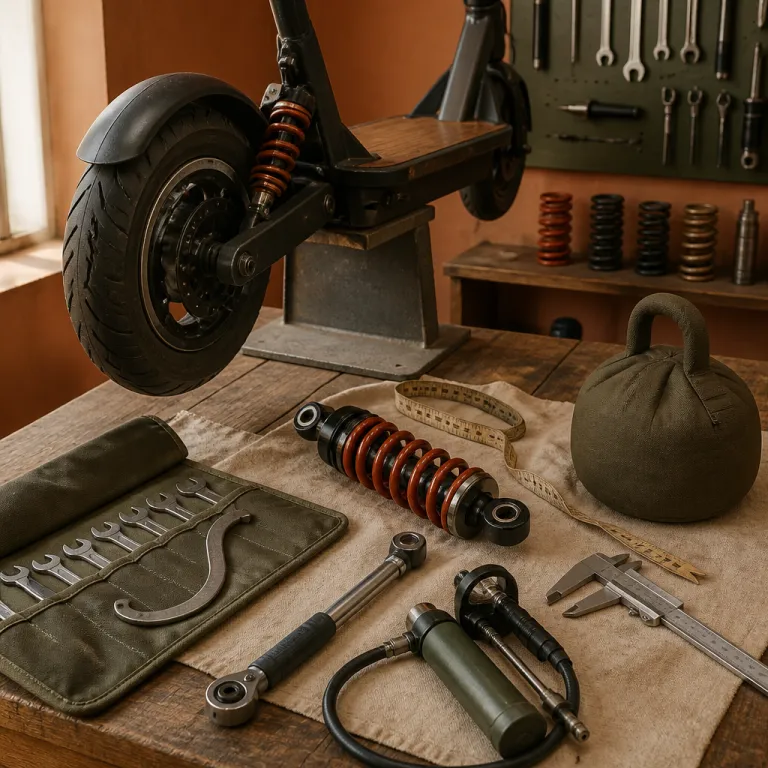
Why electric scooter suspension fails heavy riders first
Most electric scooter suspension is quietly tuned around a 70 to 80 kilogram rider. When you push past that weight spec into the territory of heavy adults, the same scooter suspension that feels plush for lighter riders can turn harsh, vague, and occasionally dangerous. For anyone comparing electric scooters on paper, this mismatch hides behind glossy claims about high performance and long range.
The warning signs show up fast once heavier users start riding daily. You feel the fork or rear suspension slam to the stop over speed bumps, you hear a metallic clunk from the spring or hydraulic cartridge, and the ride quality over broken asphalt suddenly feels worse than a basic commuter scooter with solid tires. That repeated bottoming out means your suspension system is spending most of its time fully compressed, so the scooter cannot offer real stability or precision handling when you need it most.
Weight limits on many mid tier scooters sit around 100 to 120 kilograms, yet the springs and damping are usually optimized for the middle of that range, not the top. A performance scooter might advertise dual suspension and a high range battery, but if the spring rates are too soft for heavy riders, the electric scooter will squat under acceleration, dive under braking, and wander in corners. When that happens, even the best electric motor or powerful controller cannot compensate for poor handling and inconsistent grip from overworked tires.
Example: A rider weighing 115 kg on a typical 10-inch wheeled commuter model with about 60 mm of fork travel will often use nearly all that travel just rolling off a curb. Tests by independent reviewers such as Electric Scooter Guide on models like the Segway Ninebot Max G30 and Xiaomi Mi Pro 2 show that heavier riders routinely use more than 70 percent of available travel in similar low speed drops, while a 75 kg rider on the same scooter might only use roughly half the stroke, leaving plenty of margin for emergency braking or potholes.
Reading the signs: when your suspension is under specced
Before you reach for tools, you need to know whether your electric scooter suspension heavy rider problem is really about setup or about design limits. Frequent bottoming out over modest bumps, even at moderate speed, is the clearest sign that the spring or hydraulic fork is under specced for your weight. If your scooter feels harsh over tiny cracks yet still slams into the stops on big hits, the suspension system is probably riding too deep in its travel.
Watch how the scooter behaves when you brake hard from 25 to 30 km/h on a flat road. If the front end dives so far that the chassis feels like it might pitch you forward, the front scooter suspension is too soft or under damped for heavy riders, and no amount of marketing about high performance or long range will change that. On the flip side, if the fork barely moves and the tires chatter over rough surfaces, the suspension electric setup is too stiff or over damped, which also ruins ride quality and stability.
Cornering tells another part of the story for heavy adults who push their scooters. A well tuned dual suspension chassis should compress smoothly into a bend, hold a consistent line, and then rebound without a wobble when you exit the turn. If your electric scooters wallow mid corner, stand up abruptly when you touch the brake, or feel like the rear suspension is steering the scooter, you are riding outside the intended weight envelope, and you should start thinking about both preload tuning and whether a heavier duty frame would be safer, just as battery placement shapes performance and comfort on an electric bike as explained in this guide on how battery placement shapes performance, comfort and safety.
Real world reference: Owners of compact city scooters with simple spring forks often report that once rider weight passes about 100 kg, the front end will bottom on speed humps taken at only 15 to 20 km/h, even when tire pressure is correct. In user surveys and long term tests of entry level models like the Xiaomi Mi Essential and similar 10-inch commuters, heavier riders consistently describe this behaviour, which is a clear sign the fork hardware, not just the setup, is at its limit.
Preload versus damping: the heavy rider’s main tuning tools
Most riders hear about preload and damping but few get a clear explanation of how they affect an electric scooter suspension heavy rider setup. Preload is simply how much you compress the spring before you even sit on the scooter, while damping controls how fast the suspension moves through its travel when it hits bumps or rebounds afterward. For heavy adults, getting preload right is the first step to restoring ride quality, stability, and precision handling on both the front and rear suspension.
Turn the preload adjuster on a hydraulic fork or spring shock clockwise, and you increase the initial force needed to move the suspension, which helps keep scooters heavy riders higher in the travel instead of riding on the bump stops. That extra support lets the suspension system absorb big hits without bottoming, while still allowing the tires to track the road and maintain grip. If you only increase damping without touching preload, the scooter may feel firmer but will still sit too low in its stroke, which shortens available travel and can make the performance scooter feel nervous over repeated bumps.
Damping comes in two flavors, compression and rebound, though many budget electric scooters hide both behind a single adjuster or omit them entirely. For a heavy rider, slightly more compression damping can prevent the fork from blowing through its travel on the first impact, while extra rebound damping stops the scooter from pogoing after each hit. When you are well above the nominal weight rating, there is a point where no amount of preload or damping can compensate, and that is when a scooter designed for heavy riders, such as those discussed in this guide to choosing the right electric scooter for adults weighing 300 lbs, becomes the safer and more comfortable choice.
Typical numbers: Many mid range scooters offer around 60 to 80 mm of fork travel and 70 to 100 mm at the rear. Drawing on basic suspension setup guidelines used in motorcycle and mountain bike tuning, heavier riders often need springs roughly 15 to 30 percent stiffer than the stock units to keep sag and bottoming under control, which is why preload alone cannot always solve the problem.
Hands on tuning: from fork preload to tire pressure
Start with sag, which is how much the electric scooter suspension compresses under your body weight at rest. For heavy riders, a good target is roughly 25 to 30 percent of total travel on both the front and rear suspension, which keeps enough room for big hits while still allowing the suspension system to respond to small bumps. This range mirrors common recommendations from mountain bike and motorcycle manuals, and gives a practical baseline for most commuter scooters. To measure sag, put a zip tie on the fork stanchion or shock shaft, climb on the scooter in your normal stance, then step off and check how far the zip tie moved.
If sag is more than one third of the available travel, add preload by turning the adjuster on the hydraulic fork or spring shock clockwise in small steps, usually one or two turns at a time. Recheck sag after each change until you reach the target range, and then ride a familiar loop with mixed surfaces to judge ride quality, stability, and handling. When the setup is close, the scooter should feel planted under braking, the tires should stay in contact with the ground over rough patches, and the chassis should not clunk or top out when you unweight it over crests.
Step by step sag checklist (example for 80 mm fork travel):
- Measure total travel: 80 mm from fully extended to fully compressed (from manufacturer data or a ruler).
- Slide a zip tie onto one fork leg and push it down to the dust seal.
- Stand on the deck in your normal riding stance with full gear for 5 to 10 seconds.
- Carefully step off without bouncing the scooter and note the zip tie position.
- Measure sag: if the zip tie moved about 20 to 25 mm (25 to 30 percent of 80 mm), you are in range.
- If sag is 30 mm or more, add preload; if it is under 15 mm, reduce preload if possible.
Tire pressure is your next lever, especially if your scooter uses pneumatic tires rather than solid tires that offer no extra compliance. Heavy adults can usually run a few PSI higher than lighter riders to protect the rims, but dropping pressure slightly within the manufacturer’s safe range can add a bit of extra suspension electric comfort without sacrificing too much precision handling. If you often ride at high speed or carry extra weight like a backpack, treat your tires as part of the scooters suspension package, checking them weekly and adjusting pressure to balance grip, comfort, and puncture resistance, while remembering that cheap models under 500 euros, such as those compared in this guide to budget electric scooters that outlast a single season, rarely offer the same quality of suspension systems as more robust designs.
Reference values: Many 10-inch commuter scooters recommend around 45 to 50 PSI for a 75 kg rider, as stated in manuals for popular models like the Segway Ninebot Max G30. A 110 kg rider on the same tires might run 50 to 55 PSI for rim protection, then experiment by dropping 2 to 3 PSI to gain comfort while staying above the minimum rating printed on the sidewall.

When to upgrade components and when to change scooters
There is a hard limit to what tuning can achieve when an electric scooter suspension heavy rider setup starts from undersized hardware. If your fork has no visible preload adjuster, no external damping controls, and a very short travel, you are likely dealing with a basic spring or elastomer unit that was never intended for heavy adults. In that case, upgrading to a scooter with a true hydraulic fork and dual suspension chassis may be more cost effective and safer than chasing aftermarket parts.
Some performance scooters accept upgraded shocks with stiffer springs, better hydraulic damping, or even air spring cartridges that can be pressurized for different riders. Swapping to a higher quality rear suspension unit can transform ride quality and stability for scooters heavy users, especially when combined with stronger swingarm bushings and better tires. Just remember that a scooter powerful enough to hit 60 km/h without a matching suspension system and frame stiffness will feel sketchy, no matter how carefully you tune preload or damping.
Weight limits printed in manuals are not just legal disclaimers, they are engineering boundaries for frames, axles, and suspension components. If you are consistently 10 to 20 kilograms over the stated maximum, and you already run maximum preload with the suspension bottoming regularly, it is time to look at a chassis built for heavy riders from the ground up, with thicker tubes, stronger welds, and higher spec suspension systems. In that scenario, the best electric choice is not the lightest scooter or the one with the longest range on paper, but the one whose handling, braking, and structural quality remain predictable on the eighth kilometre in the rain, not just the first kilometre on a showroom floor.
Practical benchmark: If you weigh 120 kg and ride a scooter rated for 100 kg, even perfect sag and tire pressure will not change the fact that the frame, stem, and axles are operating beyond their tested loads. At that point, a purpose built heavy duty model with higher weight certification is not an upgrade in comfort only; it is a safety requirement.
FAQ
How do I know if my scooter’s suspension is safe for my weight ?
If your electric scooter bottoms out over moderate bumps, dives excessively under braking, or feels unstable in corners, the suspension is likely undersized for your weight. Check the manufacturer’s maximum weight rating and compare it to your actual weight with gear. If you are near or above the limit and still experiencing harsh impacts, consider a model designed specifically for heavy riders.
Can I fix a harsh ride just by changing tire pressure ?
Adjusting tire pressure can improve comfort, especially with pneumatic tires, but it cannot compensate for fundamentally weak suspension components. Running slightly lower pressure within the recommended range can soften small bumps and improve grip. However, if you go too low, you risk pinch flats, rim damage, and vague handling at higher speeds.
Is upgrading the rear shock worth it for heavy adults ?
Upgrading the rear suspension can be very effective when the frame and fork are already solid. A higher quality shock with a stiffer spring and better damping can reduce bottoming, improve traction, and stabilize the scooter under acceleration. Make sure any replacement matches the original dimensions and mounting hardware to avoid stressing the chassis.
When should I replace my scooter instead of upgrading parts ?
If your scooter lacks preload or damping adjustments, has a very low weight rating, or shows signs of structural flex or cracking, replacement is usually safer than modification. Upgrading parts on an underbuilt frame can mask deeper issues without solving them. In those cases, investing in a scooter engineered for heavier riders offers better long term performance and safety.
Do dual suspension scooters always ride better for heavy riders ?
Dual suspension designs can offer better comfort and control, but only if the components are properly sized and tuned for your weight. A cheap dual suspension scooter with weak springs and poor damping may perform worse than a single suspension model with higher quality parts. Focus on build quality, adjustability, and realistic weight ratings rather than the number of suspension components alone.