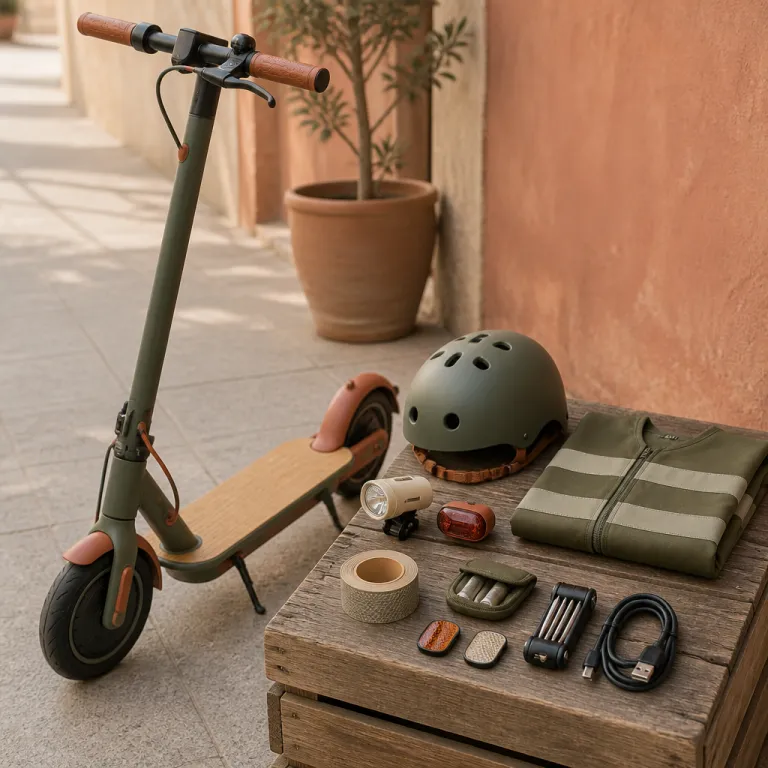
Electric scooter night riding lights: why visibility matters
Riding an electric scooter after dark is very different from rolling around a quiet park at walking speed. Real night riding in mixed traffic demands lighting that helps you see the road and, more importantly, makes drivers notice you early enough to react and steer around you safely.

Why stock scooter lights fail at real night riding speeds
Most electric scooter riders assume the factory lights are enough. When you start riding electric in real traffic at night, those tiny beams show their limits very quickly, especially once cars approach at 50 km/h and your visibility window shrinks to a couple of seconds. A stock electric scooter light may help you see the path, but it rarely makes you truly visible during a fast scooter night commute.
On many popular scooters, the front light is a 1 to 2 watt LED mounted low on the stem. That position throws light on the road ahead, yet it leaves your upper body and helmet almost invisible to drivers who are scanning higher for threats, which is a serious problem for night riding in mixed traffic. Rear lights are often even weaker, with a single dim diode that disappears completely once a car’s own headlights flare in a wet nighttime street or on reflective road markings.
Think about your typical night rides in a bike lane beside 60 to 70 km/h traffic. The closing speed between a car and an electric scooter doing 20 km/h is brutal, and drivers only have a second or two to react when your visibility is poor. If your scooter lights are barely brighter than a keychain torch, you are relying on luck rather than a safe lighting strategy for nighttime rides.
Side visibility is the other big blind spot for most scooters. Many electric scooters ship with no lateral lighting at all, so at intersections you are almost invisible in a crossing night ride when a car looks left or right. Without reflective details or extra LED strips on the sides, your ride electric profile can vanish completely in a driver’s peripheral vision, especially when they are scanning for larger vehicles.
For older riders using a scooter as a mobility tool, that risk is amplified. Reaction times are often slightly slower, and a fall at 18 km/h on a dark road hurts more at 65 than at 25, even with good protective gear. Treat the stock scooter battery powered light as a backup, not as your primary defense for riding night in real traffic where impact speeds are high.
The minimum effective lighting kit for being seen, not just seeing
To stay safe, you need a lighting setup built around conspicuity, not just illumination. A practical baseline is a 600 lumen or brighter front light mounted high, plus an independent rear light with a pulsing mode that cuts through nighttime glare, and both should be USB rechargeable so they do not drain your scooter battery. For most riders, that minimum kit transforms a vague glow into real high visibility during every night ride.
Start with the front light, because that is what drivers see first. A 600 to 800 lumen bicycle style light on the handlebar or helmet gives a broad, bright beam that makes your electric scooter look more like a legitimate road user than a toy, especially on poorly lit roads. In independent bike light tests, this output range typically lights up road markings at 25 to 35 meters, which is enough for urban speeds. Aim the front beam slightly down so you do not blind oncoming riders, but keep it high enough that the light clearly defines your ride electric silhouette at a distance.
Next, upgrade your rear lights to something that can punch through car headlights. A dedicated rear light with a steady plus pulse pattern works well, because the constant light shows your position while the pulse grabs attention during night rides in busy traffic. Mount one rear unit on the scooter and another on your helmet or backpack, so you have front rear redundancy if a mount fails or a light battery dies mid ride, and so at least one light stays visible above car bumpers.
Side visibility needs its own tools. Simple spoke or wheel lights, or thin LED strips along the deck edges, create a moving outline that makes your scooter visible from 90 degrees during nighttime rides at intersections. Even a short strip of lighting on each side of the deck can turn a nearly invisible scooter night profile into a clear, moving object that drivers instinctively check before turning, especially when the LEDs form a continuous arc as the wheel rotates.
While you are upgrading hardware, do not ignore contact points and control. A stable grip on the bars matters as much as bright lights when a pothole appears suddenly in a dimly lit lane. If your hands slip on wet rubber, consider using a detailed guide on how to choose the right scooter grips for your electric scooter to improve control during every riding night trip and reduce the chance of overcorrecting when a light beam reveals an obstacle late.
| Model | Type | Max output | Claimed runtime (high / flash) | Measured beam pattern |
|---|---|---|---|---|
| Cateye AMPP 800 | Front | 800 lumens | 2 h / 4 h | Wide, road focused with cut-off style top edge |
| Lezyne Lite Drive 700XL | Front | 700 lumens | 1.5 h / 8 h | Spot center with usable side spill to ~45° |
| Bontrager Flare RT | Rear | 90 lumens (day flash) | 4.5 h / 15 h | Wide, 270° visibility with focused daytime flash |
Reflective gear and helmets that actually change driver behavior
Lighting is only half the visibility equation for an electric scooter rider. Reflective elements on your body and helmet bounce car headlights back toward drivers, which dramatically increases detection distance on any dark road. Transport safety studies on nighttime cycling and pedestrian safety consistently report that reflective clothing can extend the range at which drivers notice you by several times, especially when the reflective pieces move as you ride.
For seniors and mobility focused riders, reflective ankle bands are one of the highest value upgrades. Your ankles move in a regular circular pattern while you ride electric, so reflective strips there create a distinctive motion signal that drivers subconsciously recognize as a human on a scooter, not just a random light. Pair those ankle bands with a reflective vest over your jacket, and you add a large, static surface that stays visible even when your scooter lights are partially blocked by bags or other riders.
Your helmet is another prime location for both lights and reflective details. A matte black helmet might look sleek during the day, but at night it disappears completely unless you add reflective stickers or a small rear light, and that is a poor tradeoff for style. When choosing between options, a CPSC certified electric scooter helmet with built in reflective panels beats a fashion oriented lid every time, and a detailed comparison of e scooter helmets explains why a 40 dollar certified lid often outperforms a 200 dollar designer shell in impact tests and low light visibility.
Think in layers when you plan your nighttime rides. First, you have active lighting from your front rear lamps and any helmet mounted light, which you can check with a quick glance before each ride. Second, you have passive reflective surfaces on your clothing, helmet, and even the scooter frame, which keep working whenever car headlights hit you, even if a scooter battery powered light fails unexpectedly or a USB cable was not fully seated.
For riders who feel nervous about traffic, this layered approach opens a window to more confident riding. You are no longer relying on a single bright beam or one tiny rear light to stay safe during a long night ride home. Instead, your entire body and scooter become a moving, reflective, and well lit package that drivers can hardly miss, even in chaotic nighttime traffic and poor weather.
Mounting, battery life, and real world durability for scooter lights
Even the brightest lights are useless if they shake loose or die halfway through a ride. Electric scooters vibrate more than bicycles, especially compact models like the Xiaomi Pro 2 or GoTrax XR Ultra with solid or semi solid tires, so your mounting strategy matters as much as the lumen rating. A secure mount on the handlebar or stem, plus a backup on the helmet, keeps your lighting where it belongs during rough nighttime rides and emergency braking.
Handlebar mounts are usually the most convenient for a primary front light. They keep the beam aligned with your steering, which helps you read the road surface when riding electric over cracks, puddles, or tram tracks, and they make it easy to reach the power button or mode switch. Stem mounts sit slightly lower but can be more stable on scooters with thick bars, while helmet mounts follow your head movement and help you check side streets during a scooter night commute or when scanning for pedestrians.
Rear lights deserve the same attention to mounting. A seat post style clamp often does not fit an electric scooter, so look for rubber strap mounts that can wrap around the rear fender, frame, or even a backpack strap, and always test them over bumps before trusting them on a long night ride. Adding a second rear light on your helmet or bag gives redundancy, which is especially valuable for seniors who want a margin of safety during every night riding trip and for riders who commute in heavy rain.
Battery life is the other practical constraint. Many compact lights advertise impressive runtimes, but those numbers usually assume low power steady modes that are too dim for real traffic, so you need to check the runtime for the brightest or pulsing setting you will actually use. As a rule of thumb, aim for lights that can handle at least three full commutes between charges, so you are not constantly juggling USB cables or worrying about draining your scooter battery by tapping into its ports.
Durability becomes obvious after a few months of wet weather rides. Look for lights with at least basic water resistance ratings and solid housings that do not rattle, because cheap plastic shells can crack under vibration and leave your scooter lights dangling by a wire. When you find a setup that survives your local roads and climate, treat it like a core part of your protective gear, not an optional accessory you only use on the occasional riding night.
Cost, value, and how to build a complete visibility setup under 50 euros
Upgrading an electric scooter for safer night riding does not need to be expensive. For most riders, a carefully chosen mix of budget lights and reflective gear delivers a huge visibility boost for less than the cost of a tank of fuel, and that is especially appealing if you are testing whether a scooter can replace some car trips. The goal is not luxury gadgets, but a reliable, bright, and redundant system that keeps you visible on every night ride.
A realistic budget breakdown looks like this. Spend roughly 20 euros on a 600 lumen front light with a solid mount, 15 euros on a quality rear light with a pulse mode, and 10 to 15 euros on reflective ankle bands plus a basic vest, which together create high visibility from multiple angles. That package, combined with your stock scooter lights and any built in rear reflector, gives you front rear coverage and side visibility that far exceeds what most electric scooters offer out of the box.
Accessories like thin LED strips or spoke lights are optional but valuable. A short strip along each side of the deck or under the frame adds a subtle glow that defines your scooter’s footprint on the road, which is especially useful during slow nighttime rides through intersections where cars cross your path. Just make sure any extra lighting does not blind you with reflections off the deck or drain the scooter battery through poorly wired connections or low quality adapters.
Do not forget about security while you are thinking about safety. A well lit scooter parked outside a café or shop is more visible to both honest passersby and opportunistic thieves, so pairing your visibility upgrades with a lock you will actually carry makes sense for everyday rides. A detailed comparison of the best scooter lock options ranked by portability can help you choose something that fits in a bag without turning every quick stop into a chore.
In the end, the value of these upgrades is measured in avoided close calls, not in lumens per euro. A single driver who checks twice because your reflective gear flashed in their headlights is worth far more than the small cost of a rear light or vest. For seniors and cautious riders, that peace of mind opens window after window of new routes and night rides that once felt too risky to attempt.
FAQ
How bright should my electric scooter front light be for city night riding ?
For urban roads with street lighting, aim for at least a 600 lumen front light mounted on the handlebar or helmet. That level is bright enough to make you stand out to drivers without creating excessive glare for other riders. If you often ride on unlit paths, consider 800 lumens or more, but always angle the beam slightly down.
Do I really need separate rear lights if my scooter has a built in one ?
Yes, a separate rear light is strongly recommended for reliable visibility. Built in scooter lights are usually small and low to the ground, which makes them easy to miss in car headlights, especially in wet conditions. An additional rear light mounted higher on your body or bag adds redundancy and places the signal closer to drivers’ line of sight.
What is the best place to mount lights on a folding electric scooter ?
For most folding scooters, the handlebar is the best place for the main front light, because it stays aligned with your steering and is easy to reach. The rear light can go on the fender, frame, or a backpack strap, as long as it is not blocked when you fold the scooter. Always test the setup over bumps and during folding to ensure nothing gets crushed or shaken loose.
Are reflective vests and ankle bands really necessary if I have bright lights ?
Reflective gear is not legally mandatory everywhere, but it is one of the most effective and affordable visibility upgrades. Lights can fail, run out of battery, or be obscured by bags or clothing, while reflective surfaces work whenever car headlights hit them. Ankle bands add a moving signal that drivers recognize quickly, and a vest provides a large, stable reflective area around your torso.
How often should I check my scooter lighting setup before a night ride ?
Make a quick lighting check part of your pre ride routine, just like checking tire pressure or brakes. Before every night ride, confirm that the front and rear lights turn on, that they are set to the desired modes, and that mounts are tight. Once a week, recharge all USB lights fully and inspect cables or straps for wear so you are not surprised by a failure mid commute.