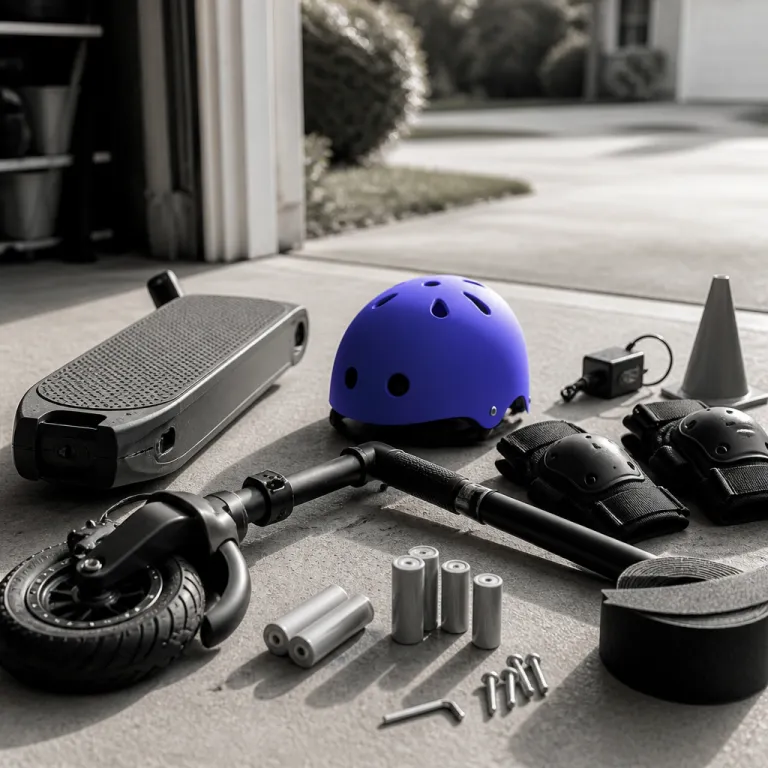
Choosing the right kids electric scooter before the first lesson
Before you teach a kid to ride an electric scooter, you need the right machine. For most children between about 8 and 12 years of age, models like the Segway Ninebot C2 and C2 Lite hit the sweet spot with capped top speeds around 16 km/h (about 10 mph) and sensible weight. A lighter scooter helps a young child ride with better balance and makes it easier for parents to grab the stem when things go wrong.
Parents often ask whether kids should start on kick scooter models or jump straight to electric scooters, and the honest answer is that previous kick scooter experience makes every later riding skill easier. A child who already pushes a simple scooter and understands how a wheel tracks through a turn usually has better balance coordination and needs fewer practice sessions to feel stable. If your kid has never used scooters at all, spend a weekend on a basic kick scooter first, because this builds balance and teaches how a child should stand on the deck before you add a motor.
When you choose an electric scooter for young riders, focus less on headline speed and more on safety features. Look for UL 2272 certification, which is a widely used electrical safety standard for personal e‑mobility devices, a clear rear brake light, and a deck height that lets a child ride with knees slightly bent rather than locked straight. For smaller kids, electric models such as the Segway Ninebot C2 Lite at roughly 7.8 kg are easier for children to lift over a curb and for parents to carry home when the battery dies.
Braking hardware matters more than motor watts for children ready to ride in real streets. Drum brakes on the front wheel combined with electronic rear braking, as seen on many Segway and Xiaomi kids electric scooters, give predictable stopping without the grabby feel of cheap mechanical disc brakes. Whatever you buy, make sure the brake lever reach suits small hands, because a riding attempt is not safe if tiny fingers cannot fully pull the lever.
Protective gear is non negotiable when you teach a kid to ride an electric scooter, even in the driveway. A properly certified helmet with CPSC, ASTM, or EN 1078 markings, plus knee and elbow pads, cuts the risk of injuries dramatically during early mistakes. Research summarized by the U.S. Consumer Product Safety Commission and the Centers for Disease Control and Prevention indicates that bicycle‑style helmets can reduce head injury risk by more than half in crashes, which is a powerful reason to make gear mandatory for scooters as well.
Quick pre‑lesson checklist for parents
- Age and size: child is around 8+ years old and tall enough to stand with slightly bent knees
- Scooter choice: kids electric scooter with UL 2272 certification and a low speed mode
- Controls: easy‑reach brake lever and gentle throttle response
- Safety gear: certified helmet, knee and elbow pads, wrist guards, closed‑toe shoes
- Practice area: flat, traffic‑free space such as a quiet driveway or empty parking lot
Suggested image (ALT text): parent checking a child’s helmet fit next to a small electric scooter in a driveway.
Session 1 – static balance, controls and safety habits at zero speed
The first teaching session happens with the electric scooter powered off, because zero speed lets children focus on posture and balance without fear. Place the scooter on a flat surface, hold the stem firmly, and ask your kid to step on and off several times while you watch how their weight shifts over each wheel. This slow ritual might feel boring, but it shows whether a child is physically ready for riding and whether the scooter size matches their age and height.
Next, walk through every control before you ever use electric power, naming the throttle, brake lever, bell, and power button while the kid squeezes and taps each one. Many children learn best when they say the control names aloud, so ask them to explain safety rules back to you in their own words. You want young riders to know that the right hand makes the scooter go and the left hand makes it stop, long before they ride anywhere near a driveway or street.
Use this static time to adjust the handlebar height so the riding position keeps elbows slightly bent and shoulders relaxed. If the bars sit too high, kids lean back and lose balance; too low, and they hunch forward over the front wheel, which hurts control. Aim for a stance where the child can rock gently from heel to toe without the deck feeling tippy.
Now layer in safety gear habits until they become muscle memory, because building confidence starts with predictable routines. Have your kid put on the helmet, then knee pads, then elbow pads, then wrist guards, in the same order every time, and repeat this sequence during several practice sessions. When wearing helmet protection feels as automatic as buckling a car seat belt, you have already reduced the risk of early injuries during future attempts.
Finally, talk openly about why parents care so much about scooter safety and what can happen if riders skip gear. Explain that many electric scooter accidents for kids happen in the first couple of weeks, when excitement outruns skill and balance coordination is still developing. Framing safety as a way to keep riding fun, rather than a list of rules, makes a kid far more likely to respect the helmet and other protective gear without constant nagging.
For families thinking about long term riding habits, it can help to mention that the same safety mindset will matter if grandparents ever use electric scooters for seniors, where stability and confidence to ride at lower speeds become just as critical. Showing that every generation of riders benefits from the same basic precautions reinforces that your child is joining a wider community of careful scooter riders. This context makes the first static lesson feel like the start of a lifelong riding skill, not just a toy tutorial.
Suggested diagram (ALT text): simple line drawing showing correct stance on a stationary kids electric scooter with knees and elbows slightly bent.
Session 2 – slow straight line riding and smooth braking in a safe space
Once your kid stands comfortably on the scooter at rest, you can move to very slow riding in a controlled area such as a quiet driveway or empty parking lot. Keep the electric scooter in its lowest speed mode, often called beginner or eco, so the throttle response feels gentle and the top speed stays under roughly 10 km/h (around 6 mph). At this stage, your goal is not distance or excitement but a calm, straight ride that ends with a smooth, predictable stop.
Start by having the child push off like a kick scooter, then gently add throttle only after the scooter is already rolling, which keeps the front wheel from jerking sideways. Stand beside them, one hand lightly on the stem, and coach them to look ahead rather than down at the deck, because the body tends to follow the eyes during early practice. If they wobble, remind them that small corrections with the hips, not frantic handlebar twists, keep scooters stable.
Braking drills come next, since safe stopping is the foundation of scooter safety for young riders. Ask your kid to ride a short straight line, then squeeze the brake lever gradually until the scooter slows to a walking pace before stepping off. Repeat this pattern many times, praising every controlled stop, because positive reinforcement builds confidence far more effectively than scolding after a skid.
Parents should watch for signs that children are truly ready to progress, such as keeping both feet planted correctly on the deck and maintaining balance without grabbing the bars in panic. If your child’s attempts still end with them jumping off early or dragging a foot, stay in this session longer and shorten the ride distance. The goal is to make smooth braking feel boringly easy before you add turns or obstacles.
During these early practice sessions, keep reminding your kid about wearing helmet protection and checking that safety gear straps stay snug. Treat the pre ride ritual as part of operating electric scooters, not a separate chore, so that riders never think of gear as optional. This is also a good moment to explain that different places have different rules for where and how fast scooters may ride, and that knowing local e scooter laws is part of being a responsible rider.
Many parents find it useful to read a clear state by state guide to e scooter laws from their local transportation department or municipal website, then translate the key points into kid friendly language about sidewalks, bike lanes, and crossings. When children understand that laws exist to prevent injuries and protect both riders and pedestrians, they see safety as a shared responsibility rather than just a parental demand. That mindset will matter later when your kid wants to ride beyond the driveway and into real neighborhoods.
Suggested image (ALT text): child riding slowly in a straight line on an electric scooter while a parent walks beside them in an empty parking lot.
Session 3 – turns, obstacles and looking where you want to go
After your kid can ride straight and stop smoothly, it is time to add gentle turns and simple obstacles at low speed. Set up a few cones, chalk marks, or plastic bottles in a wide slalom pattern, leaving at least two scooter lengths between each one. Keep the electric scooter in its slowest mode so the focus stays on balance and steering, not on speed or thrills.
Coach your child to look through the turn toward the next cone rather than staring at the front wheel, because the body naturally follows the gaze during practice. Encourage them to lean slightly with the scooter while keeping their upper body relaxed, which improves balance coordination and reduces the twitchy handlebar movements that cause many beginner wobbles. If they clip a cone or drift wide, treat it as data, not failure, and adjust the spacing or speed until they regain control.
Introduce very small obstacles next, such as a painted line or a thin stick, and teach the technique of unweighting the knees slightly as the front wheel rolls over. Make it clear that they should never jump curbs or hit large bumps at speed on kids electric scooters, because that is how many preventable injuries happen. The aim is to show how scooters behave over imperfect surfaces while still keeping everything within a safe, low risk envelope.
Parents should watch how consistently the young rider maintains lane position between cones and whether they can correct a wobble without panic. When a kid can complete several clean slalom runs and obstacle passes while wearing helmet protection and using the brake smoothly, they are usually ready for more complex drills. If not, stay patient and keep the practice sessions short and fun, ending each one on a small success to support growing confidence.
This is also a good time to talk about sharing space with other riders and pedestrians, since real world paths rarely stay empty. Explain that scooter safety means slowing down when passing people, giving a bell ring or verbal warning, and never weaving unpredictably around others. Young riders who learn these habits early are far less likely to cause or suffer injuries when they eventually ride in parks or on mixed use paths.
For parents who want a deeper technical understanding of how different scooters handle, a detailed guide to electric scooters for informed urban riders can clarify why tire size, deck length, and brake type change the way a child feels on the machine. Knowing that a wider deck or slightly larger wheel can make balancing easier might influence your next purchase as your kid grows. Matching the scooter to the rider’s size and skill is one of the quiet secrets of long term safety and enjoyment.
Suggested diagram (ALT text): top‑down view of a simple cone slalom course for kids electric scooter training.
Session 4 – stop and go drills and emergency braking from higher speeds
With turning and low speed control in place, you can move to more demanding stop and go drills that simulate real riding patterns. Choose the same safe practice area, but now mark a short course with a start line, a mid point stop box, and a final stop line. The electric scooter can stay in its low or medium mode, depending on your child’s age and confidence, but you should still cap speeds around 12 to 15 km/h (roughly 7.5 to 9 mph).
Begin with simple acceleration to the mid point, then a controlled stop inside the box, followed by a restart and final stop at the end line, which teaches timing and brake modulation. Ask your kid to keep their eyes up, scanning ahead for the next marker, because this habit later translates into watching for driveways, pedestrians, and other riders. Each clean run deserves specific praise, such as noting how early they started braking or how steady their balance looked, since targeted positive reinforcement helps skills stick.
Emergency braking comes next and deserves serious attention, because many electric scooter crashes involve riders who simply did not stop in time. Explain that emergency stops mean squeezing the brake lever firmly but progressively, shifting hips slightly back, and keeping arms strong but not locked, so the front wheel stays planted without pitching the child forward. Practice from gradually increasing speeds, always on dry, predictable pavement, and stop the drill if your young rider seems scared rather than challenged.
Parents should watch for skidding or rear wheel lift, which signal that the brake power or weight shift is too aggressive for the current surface. If your kids electric model has both mechanical and electronic braking, experiment with how much lever pull is needed to slow quickly without losing traction. The goal is for the child’s instinct in a surprise situation to be a firm, controlled squeeze, not a panicked grab.
During these higher energy practice sessions, double check that all safety gear remains correctly fitted and that wearing helmet protection still feels non negotiable. Remind your kid that scooter safety is not just about their own injuries but also about avoiding collisions that could hurt others. This is a good moment to revisit local rules about where electric scooters may operate and what speeds are allowed, reinforcing that responsible riders respect both physics and the law.
As skills improve, some parents consider gradually unlocking higher speed modes on kids electric scooters, but this should never be automatic. Tie any speed increase to clear milestones, such as a set number of flawless emergency stops and consistent control over several practice sessions, and be ready to roll back if behavior slips. A thoughtful speed limiter conversation shows your child that trust is earned through safe riding, not demanded as a right.
Suggested image (ALT text): child practicing an emergency stop on an electric scooter, with cones marking a braking zone.
Session 5 – simulated real world riding and the speed limiter conversation
The final structured session brings all the skills together in a simulated real world route that still stays away from active traffic. Lay out a loop that includes straight sections, gentle turns, a pretend driveway crossing, and a narrow path where your kid must slow down as if passing pedestrians. Keep the electric scooter in a conservative speed mode at first, because the complexity of decisions matters more than raw pace.
Walk or jog alongside as your child rides, calling out scenarios such as a car backing from a driveway, a dog on a long leash, or another scooter approaching, and ask them to react with appropriate speed and lane position. This kind of teaching builds situational awareness, which is the missing ingredient in many early injuries where riders simply did not anticipate hazards. Encourage your kid to narrate their choices aloud, because saying “I am slowing before the driveway” or “I am moving left to pass” reinforces good habits.
Parents should pay attention to how automatically the child checks over their shoulder, covers the brake lever, and adjusts balance when surfaces change. When a young rider can complete several laps while maintaining control, respecting imaginary right of way, and keeping safety gear properly worn, they are close to being ready for supervised neighborhood rides. If they still rush, cut corners, or ignore your prompts, keep practicing in this controlled environment until judgment catches up with physical skill.
Only after this stage should you revisit the parental speed limiter conversation in a calm, data driven way. Explain that many kids electric scooter accidents cluster in the first couple of weeks of new speed levels, just as they did when first learning to ride at all. You might agree on a trial period at a slightly higher setting, with the clear rule that any risky behavior means returning to the lower mode, which keeps growing confidence tied to responsibility.
Throughout this process, keep emphasizing that scooter safety is a partnership between parents and young riders, not a one sided lecture. When your kid sees that you also respect rules, wear a helmet on your own scooters, and choose safe routes, they are more likely to copy those habits. In the end, the goal is not just to teach a child to ride an electric scooter but to raise a thoughtful rider who treats every wheel turn as a shared responsibility.
If you ever feel unsure about technical details such as battery care, brake adjustment, or long term maintenance for family scooters, a dedicated scooter blog with practical guides can help you make informed decisions. Understanding how to operate electric systems safely and how to spot worn parts before they fail keeps both the machine and your child safer over time. A well maintained scooter plus a well trained rider is the combination that truly reduces injuries in everyday use.
Approximate time per session
- Session 1 (static balance and controls): 20–30 minutes
- Session 2 (slow straight riding and braking): 20–30 minutes
- Session 3 (turns and simple obstacles): 20–30 minutes
- Session 4 (stop and go plus emergency braking): 20–30 minutes
- Session 5 (simulated real world route): 20–30 minutes
Frequently asked questions
What is a good minimum age for a child to ride an electric scooter ?
Most reputable brands recommend that children be at least around 8 years of age before riding kids electric scooters with a top speed near 10 km/h (about 6 mph). Below that age, balance coordination and judgment are usually better suited to a simple kick scooter without a motor. Parents should also consider the child’s height, strength, and ability to follow safety rules before allowing any electric riding.
Should kids learn on a kick scooter before using an electric model ?
Starting on a kick scooter is very helpful, because it teaches basic balance, steering, and braking without the extra complexity of a throttle. A child who already rides scooters manually usually adapts faster when you teach a kid to ride an electric scooter, needing fewer practice sessions to feel stable. This progression also lets parents assess whether children are ready to handle more speed and responsibility.
What safety gear is essential for young riders on electric scooters ?
At a minimum, every kid should wear a properly fitted, certified helmet that meets CPSC, ASTM, or EN 1078 standards whenever they ride a scooter or scooters with a motor. Knee and elbow pads, plus wrist guards, add important protection against common injuries from low speed falls during early practice. Closed toe shoes with good grip are also part of essential safety gear for any riding session.
How long does it usually take for a child to ride confidently ?
With a structured five session plan and short, focused practice sessions, many children reach basic confidence on kids electric scooters within one to two weeks. Some kids need more time, especially if they are nervous or have limited prior experience with scooters or bicycles. Parents should advance only when each milestone is met, prioritizing safe control over any fixed timeline.
Can my child ride an electric scooter on the sidewalk or road ?
Rules for where electric scooters may operate vary widely by city and region, with some areas allowing them in bike lanes, others on certain roads, and some restricting them from sidewalks. Parents should check local regulations, such as municipal codes or transportation department guidance, and then explain them clearly to young riders as part of overall scooter safety teaching. Even where sidewalk riding is legal, slowing near pedestrians and yielding at driveways are essential habits to prevent injuries.