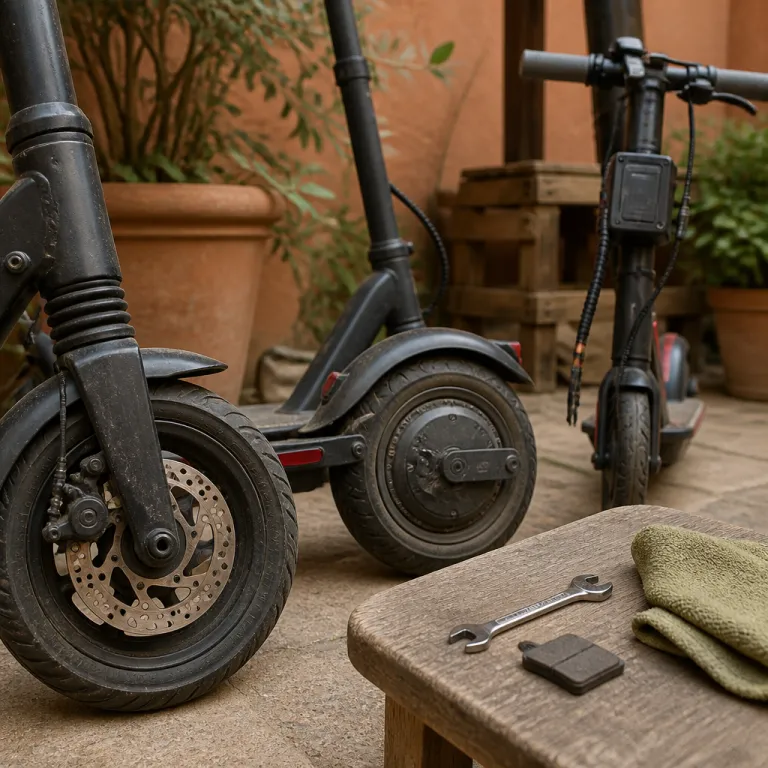
Why your scooter’s brakes quietly get worse long before they fail
Most riders only notice a brake problem when the scooter finally scares them. By then the stopping distance has already doubled, the brake lever feels vague, and the electric scooter brake adjustment guide they wish they had read is suddenly urgent. Safe braking is not about drama; it is about catching small changes early and understanding how each brake system gradually loses performance long before a complete failure.
On a Segway Ninebot Max G30 or Xiaomi Pro 2, the first warning is usually subtle extra lever travel before the brake bites. That extra movement means the brake cable has stretched, the pads have worn, or the drum shoes have glazed, and a simple brake adjustment with a barrel adjuster could restore normal braking in minutes. Electronic brakes fade even more quietly, because software masks the loss until the battery is low and the scooter suddenly coasts when you expect a firm brake turn at the rear wheel, a behaviour described in Segway and Xiaomi owner manuals that note reduced regenerative braking near cutoff voltage and low state of charge.
Think of your scooter as three separate braking systems that must all be healthy. Mechanical disc brakes use a steel rotor at the wheel and a caliper that squeezes pads, while drum brakes hide the friction parts inside a metal housing that shrugs off rain. Electronic or regenerative brakes live in the motor and controller, and they rely on battery charge and firmware, so no cable adjustment or allen wrench will fix them when they misbehave. Within mechanical systems, cable‑actuated calipers move only one pad with the brake cable while the rotor flexes, whereas hydraulic calipers push pistons on both sides; that difference matters when you decide whether to adjust a single inner pad adjuster located near the hub or to bleed a hydraulic line instead.
Reading the symptoms: sounds, feel, and stopping distance by brake type
A good electric scooter brake adjustment guide starts with your senses, not your tools. Squealing, grinding, a spongy brake lever, or a scooter that needs an extra two car lengths to stop all point to different failures in disc, drum, or electronic brakes. Learn those patterns and you can decide whether to adjust, tighten, or book a shop visit before your next ride, instead of guessing which cable adjustment or wrench move might help.
With mechanical disc brakes on a GoTrax XR Ultra, a sharp metallic squeal under light braking usually means the pads are glazed or the caliper is misaligned against the rotor. A rhythmic scraping that changes with wheel speed suggests the rotor is slightly bent, so the fix is a careful brake cable check, a small cable adjustment, and a tiny turn on the caliper’s inner pad adjuster located near the hub on most cable‑pull calipers. If the lever pulls almost to the grip before anything happens, the brake cable has too little tension and you need to use the handlebar barrel adjuster to shorten the housing path and remove slack, then lock the adjuster ring so vibration cannot slowly loosen your work.
Drum brakes tell a different story when they need work. A dull grinding noise from the enclosed housing or a pulsing feel at the brake lever usually means the internal shoes are worn or contaminated, and no amount of external wrench work will restore smooth braking. Because drum systems are sealed, any serious symptom is a sign to let a pro handle the internal brake adjustment and shoe replacement, while you focus on protective gear like a well fitted scooter helmet for safe and stylish city riding. Electronic brakes add one more pattern: if regen feels strong at medium speed but fades as you roll to a stop, that is normal behaviour described in many vendor manuals, not a sign that you should try to turn an adjuster on the motor housing; instead, confirm the behaviour against the manufacturer’s description of low speed and low voltage limits.
Disc brake tuning in 15 minutes: cable, caliper, and pad checks
For most casual riders, disc systems are where an electric scooter brake adjustment guide pays off fastest. A basic home toolkit with a 5 millimetre allen wrench, a small open ended 8 or 10 millimetre wrench, and a clean rag is enough to restore crisp braking on scooters like the Ninebot Max G30 or Xiaomi Pro 2. The goal is simple: bring the pads close to the rotor without rubbing and set the brake lever feel so you get strong braking halfway through the pull, following the torque values and pad wear limits in your scooter’s service manual whenever they are available; many bicycle‑style calipers specify around 6–8 Nm for mounting bolts, but always verify the exact figure for your model.
Start with the cable path from the brake lever to the caliper, checking that the brake cable housing is not kinked or crushed where it enters the frame. If the lever feels soft, use the barrel adjuster located at the lever to add tension by turning it in the direction that moves the adjuster body away from the lever clamp, then test the brakes while rolling the scooter and applying a firm squeeze. If the wheel still spins too freely under braking, move to the caliper and use an allen key to loosen the two mounting bolts just enough that the body can move side to side, typically retightening to the torque listed in your manual rather than guessing.
Now pull and hold the brake lever hard to centre the caliper over the rotor, then tighten both bolts evenly with the allen wrench while keeping pressure on the lever. Release the lever and spin the wheel, listening for light scraping that signals the pads are too close and need a tiny adjustment on the inner pad screw for cable‑actuated models; on hydraulic calipers without a manual pad adjuster, you instead realign the caliper or have a pro bleed the system rather than forcing a screw that does not exist. When the rotor runs silent and the scooter stops firmly with a smooth brake turn at the lever, lock the barrel adjuster with its small ring and check that every cable adjustment point is snug so vibration cannot slowly loosen your work or change the tension again.
Drum and electronic brakes: low maintenance, real limitations
Drum brakes and electronic systems sell themselves as maintenance free, but any honest electric scooter brake adjustment guide has to explain the tradeoffs. A drum inside the wheel housing is fantastic in rain, because water and grit stay out and braking stays consistent when disc rotors are hissing and losing grip. The price you pay is that once the internal shoes wear or glaze, there is almost nothing you can safely adjust at home beyond the external cable and lever, and most manufacturer manuals recommend professional service for any internal drum work.
On a typical rear drum scooter, the only user facing control is a simple cable adjuster located near the drum arm, where the brake cable attaches. You can turn this adjuster to increase tension and shorten lever travel, or back it off slightly for a small counterclockwise release if the wheel starts to drag while spinning freely; always watch the arm and cable as you move the adjuster so you understand which direction tightens and which direction loosens on your specific scooter. If you reach the end of the threads and the lever still feels long or weak, that is the sign the internal brake shoes are worn and a pro with the right puller tools and torque specs should handle the full brake adjustment and shoe replacement, rather than forcing the arm further with a big wrench and risking damage to the housing.
Electronic or regenerative brakes live in the motor and controller, so there is no physical cable to loosen or tighten with a wrench or allen key. They work best at medium speeds with a healthy battery, then fade at walking pace or when the battery management system is close to cutoff, which is why you should never rely on regen as your only braking system. If your scooter suddenly loses electronic braking or cuts power entirely, inspect the power connectors and consider how a 2 pin male connector keeps your electric scooter safely powered, because a loose plug can feel like a failed brake even when the mechanical system is still fine, and no amount of turning an adjuster will restore braking until the electrical fault is fixed.
When to adjust, when to replace, and how to test safely
Knowing when to stop adjusting and start replacing parts is the last piece of any serious electric scooter brake adjustment guide. Mechanical disc pads typically last between 1 000 and 2 000 kilometres for a weekend rider, but heavy hills, wet commutes, and frequent emergency stops can cut that duration in half; these ranges are similar to the pad life estimates given in many bicycle and scooter brake manuals, yet you should always confirm the recommended limits for your specific caliper and rotor combination. If you can see less than a couple of millimetres of pad material or hear grinding under braking, no amount of cable adjustment or lever tweaking will bring back safe performance.
For drum systems, the rule is simpler but less visible, because the friction material hides inside the housing. When you have already maxed out every external adjuster located along the brake cable and the lever still comes close to the grip, the shoes are worn and the scooter needs a shop visit rather than another attempt to tighten the adjuster nut. Electronic brakes are different again, because their limitations often show up as inconsistent behaviour at low battery, so if regen feels strong at half charge but vanishes near empty, treat it as a software and battery limitation, not something you can fix with an allen wrench or a brake turn on the caliper, and confirm the behaviour against the warnings in your owner’s manual.
Before each riding season, perform an emergency brake test in a quiet, flat parking lot with good run off space. Accelerate to a moderate speed, then apply both mechanical and electronic brakes firmly while keeping your weight low and centred, and note how many painted lines or car lengths you need to stop. If that distance has crept up since last year, or if the scooter pulls to one side under braking, it is time to revisit every cable, lever, and adjuster and to read up on local rules such as the proposed speed tiers for e scooters that shape how fast you ride and how much stopping power you really need; for extra clarity, sketch a simple diagram of your brake cable routing and mark each adjuster so you can repeat the same checks next season and quickly see where to turn clockwise to tighten or turn counterclockwise to loosen on your particular setup.
FAQ
How often should I check my scooter brakes at home ?
For a casual weekend rider, a quick brake check every month is usually enough. Squeeze each brake lever, roll the scooter, and confirm the wheel stops firmly without grinding or squealing. Any change in lever feel, extra travel, or new noises means you should inspect the brake cable, pads, and adjusters before your next ride, following the inspection intervals suggested in your scooter’s maintenance schedule and noting any change in cable tension or lever position.
What tools do I need for basic brake adjustment ?
Most scooters only require a small allen wrench set, an open ended wrench for cable nuts, and sometimes a screwdriver for minor hardware. With those tools you can adjust cable tension, centre a disc caliper, and tighten a loose brake lever clamp. Always match the tool size to the bolt head to avoid rounding it and making future maintenance harder, and use a small torque wrench if your manual lists specific values for caliper bolts or lever clamps so you can tighten and then lock each fastener correctly.
Is it safe to ride with only electronic or regenerative braking ?
Relying only on electronic or regenerative braking is not safe, because these systems lose power at low speeds and when the battery is nearly empty. Mechanical disc or drum brakes provide consistent stopping regardless of charge level. Every street legal scooter intended for real world use should have at least one strong mechanical brake as a backup, and many regions explicitly require a cable‑actuated or hydraulic brake in their vehicle standards.
When should I take my scooter to a professional mechanic ?
You should see a professional when a drum brake feels weak even after cable adjustment, when a disc rotor is badly bent, or when you hear grinding that suggests metal on metal contact. A pro shop has the tools to replace internal drum shoes, bleed hydraulic systems, and reset electronic controllers safely. If you are not confident in your own repair, paying for expert work is cheaper than a crash, and most vendor manuals recommend professional service for any brake job that goes beyond simple cable tension or barrel adjuster tweaks.
How can I safely test my stopping distance without crashing ?
Choose a wide, empty parking lot with clean pavement and no traffic. Mark a starting point, ride up to a moderate speed, then apply both brakes firmly while keeping your weight low and straight. Measure the distance from your braking point to where you stop, and repeat a few times to track changes over the season, noting any increase that might signal pad wear, cable stretch, or a need to adjust an external cable adjuster to restore proper brake feel and lever travel.