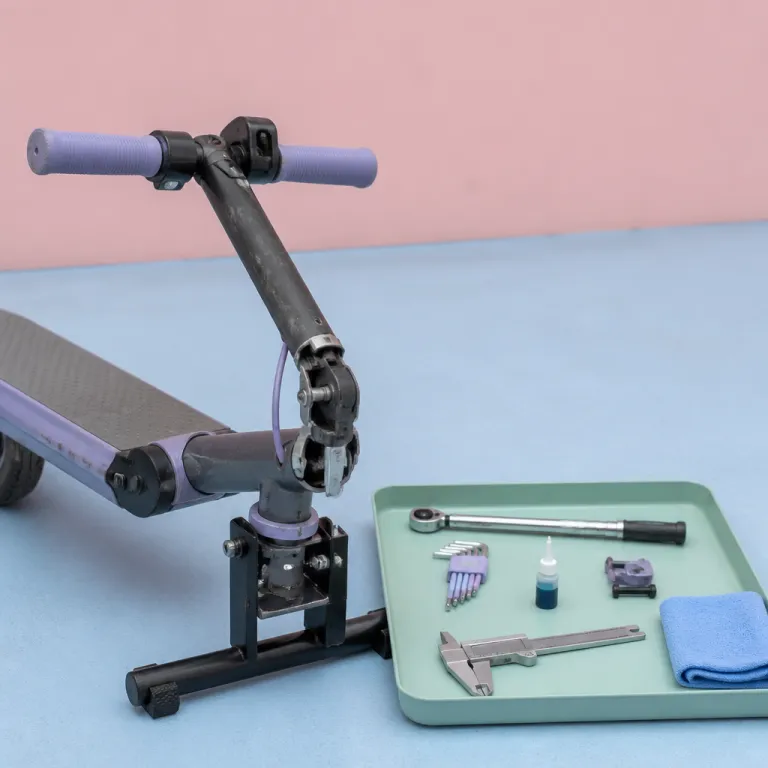
Why electric scooter folding joints keep failing on real roads
Every folding electric scooter hides the same uncomfortable truth. The moment a designer adds a folding mechanism to make scooters easier to carry, that hinge becomes the structural weak link that decides whether a pleasant ride turns into a fall hazard. For casual riders who bought an electric scooter for errands or boardwalk trips, that tradeoff between portability and product safety is rarely explained clearly.
The recent electric scooter folding mechanism safety recall stories around Segway Ninebot and Acer America Corporation made this engineering compromise painfully visible. Segway Ninebot Max kickscooters such as the Ninebot Max G30P and G30LP were recalled after the handlebar folding mechanism could loosen and collapse, and the United States Consumer Product Safety Commission reported dozens of failures and multiple injuries including abrasions and broken bones in its official recall notice for the Segway Ninebot Max G30P and G30LP folding handlebar defect. Acer America issued a separate recall for its Acer AES015 folding electric scooter after a loose screw in the front tube area allowed the stem to fold unexpectedly, creating a risk of serious injury even at modest speeds according to the company’s CPSC filing on the Acer AES015 front tube screw hazard.
Both recalled scooters shared the same basic design idea. A wheeled folding scooter promises that you can roll it into a trunk, under a café table, or beside a desk, yet the very joint that lets the scooter fold must also carry your weight plus braking forces over thousands of kilometres. When that folding mechanism is under engineered, or when a single bolt or latch is responsible for the entire load path, the scooter turns from consumer product into consumer product safety problem the first time a rider hits a pothole while braking hard downhill.
Think about what happens when you stand on a Segway Ninebot Max kickscooter and lean forward to accelerate. Your weight pushes down through the deck while the front wheel and front tube resist that force, twisting the folding joint with every bump, curb cut, and emergency stop. Over time, microscopic play in the mechanism grows into visible wobble, and that wobble is exactly what riders reported before the Segway recall and the later Acer recall showed how similar stresses can expose design shortcuts. A non folding scooter with a fixed stem spreads those same loads through continuous metal instead of through a small latch and pin.
Manufacturers know this, yet the market keeps rewarding lighter, slimmer, more compact electric scooters that can be carried up stairs with one hand. Retail listings highlight how many units were sold and how quickly the scooter folds, but they rarely explain how the safety commission in any country actually tests that folding joint under real world vibration. Until the United States CPSC or another national safety commission mandates specific fold mechanism stress testing and publishes harmonised standards, riders are left reading recall notices and hoping their own scooter’s mechanism is not the next one to fail.
From Segway Ninebot Max to Acer AES015: what the recalls really tell riders
The Segway Ninebot Max G30 recall was not about a rare defect in a single batch. It was about a design pattern where the handlebar folding mechanism on electric scooters carries too much responsibility for keeping the front tube locked while riders brake, turn, and hit expansion joints. When a safety commission steps in after dozens of incidents, it is signalling that the original safety margin for that mechanism was simply too thin.
In the Segway case, the CPSC described in its 2024 recall bulletin how the folding mechanism on certain Segway Ninebot Max kickscooters could loosen, causing the handlebars to move unexpectedly and creating a fall hazard. Riders reported injuries ranging from road rash to broken bones, and the company and the commission agreed to a broad recall of approximately 220 000 scooters sold through major retailers and online stores in the United States and Canada, as documented in the Segway Ninebot Max G30P and G30LP folding handlebar recall summary. Those recalled scooters were marketed as robust commuter tools, yet the real world data showed that repeated stress at the fold joint could turn a normal stop into a serious injury in a fraction of a second.
Acer America faced a smaller but telling problem with its Acer AES015 folding electric scooter. Here the issue was a single screw in the front tube assembly that could work loose, allowing the stem to fold while riding and again creating a risk of serious injury for any consumer who trusted the product at full speed. The recall covered about 510 units rather than hundreds of thousands, but the underlying story was the same, because a single point of failure in a folding mechanism is not compatible with long term product safety on rough pavement, as the Acer AES015 CPSC recall documentation makes clear.
For a weekend rider choosing between a Segway Ninebot Max, a Xiaomi Pro 2, or a GoTrax XR Ultra, these recalls are not abstract regulatory news. They are case studies in how a folding electric scooter can behave after a year of use, when corrosion, grit, and vibration have worked on every pin and latch in the mechanism. A non folding model with a fixed stem may be less convenient to store, yet it removes one entire class of failure that has already generated multiple recalls and documented injuries.
If you are buying for an older adult or anyone with fragile bones, the stakes are even higher. A fall from a scooter at 20 km/h that might mean bruises for a teenager can mean hip fractures or other serious injuries for a senior rider, which is why guides to choosing an electric scooter for older adults seeking safe mobility often recommend prioritising stability and braking over compact folding designs. When you read a recall notice from the CPSC or another consumer product safety authority, read it as a design review in public, because it shows exactly where the industry cut corners on the last generation of scooters and where future models must improve.
Why inspection kits and warning labels are not real fixes
After a high profile electric scooter folding mechanism safety recall, manufacturers often respond with inspection kits, warning stickers, and updated manuals. On paper this looks proactive, yet in practice it shifts the burden of detecting a dangerous folding mechanism from the engineering team to the rider who just wanted a simple scooter for weekend errands. A casual consumer is suddenly expected to perform torque checks and structural inspections that even some bike shops struggle to do consistently.
Segway’s response to the Ninebot Max recall included guidance on checking the folding mechanism and tightening bolts, and Acer America’s recall notice for the AES015 scooter described how a dealer or rider could inspect the front tube screw that might loosen. These steps are better than silence, but they do not change the fact that the original product design allowed a single fastener or latch to become a potential fall hazard under normal use. When a scooter’s continued safety depends on a consumer product owner following a complex inspection schedule, the design has already failed the most basic test of robustness.
There is also a psychological trap here. Once a rider receives a repair kit or reads that their scooter has been recalled and then serviced, they may assume the risk of serious injury has dropped to zero, even if the underlying mechanism still relies on the same geometry and the same small contact surfaces. A folding electric scooter that needs regular re tightening to stay safe is like a car whose steering column must be checked every few weeks, because the consequences of a missed inspection are simply too high. True product safety comes from designs that tolerate neglect and dirt, not from designs that demand meticulous care from every owner.
Proper solutions look different. Some scooters replace the traditional wheeled folding latch with a quick release collar that clamps around the entire front tube, spreading loads across a larger area and adding redundancy if one part loosens. Others abandon folding entirely and use a fixed stem, accepting that the scooter will be harder to fit into a small car trunk but dramatically reducing the chance that a mechanism failure will send the rider over the bars.
When you evaluate an electric scooter, treat the folding mechanism the way you would treat the brakes or the battery connector, because it is just as critical to your survival. A detailed guide on how a 2 pin male connector keeps your electric scooter safely powered can teach you how engineers think about redundancy and contact quality in electrical systems, and you should demand the same level of over engineering in the mechanical joint that holds your handlebars upright. If a manufacturer’s answer to past recalls is mainly stickers, warnings, and owner checklists, that is a sign that the company is still treating folding failures as a maintenance issue rather than as a fundamental design flaw.
How to judge your own folding joint and when to walk away
Riders cannot redesign their scooters, but they can learn to judge whether a folding mechanism is ageing gracefully or quietly turning into the next recall statistic. Start with a simple wobble test on level ground, holding the front wheel between your feet and gently rocking the handlebars front to back while watching the joint. Any visible play at the hinge or audible clicking from the mechanism is a warning sign that the joint is wearing faster than the rest of the scooter.
Next, perform a torque check by standing beside the scooter, locking the front brake, and pushing the handlebars forward as if you were braking hard from top speed. The stem and front tube should feel like a single solid piece, with no lag or flex at the folding point, and the latch or collar should not creep or rotate under load. If you feel movement or hear creaks, treat the scooter as if it were already on a recall list and stop riding until a qualified technician can inspect the mechanism and the surrounding metal for cracks.
Visual inspection matters too. Look closely at the folding mechanism, the welds around the front tube, and any bolts or pins that carry the load, checking for rust, elongation of holes, or hairline fractures in the paint that might indicate metal fatigue. A scooter that has been ridden in rain, stored outdoors, or used by multiple riders will accumulate far more stress cycles than a lightly used weekend toy, and those extra cycles can turn a once tight mechanism into a loose joint that fails without much warning.
There is also a strategic choice that many riders never consider. If you rarely carry your scooter up stairs or onto trains, a non folding model with a fixed stem may be a safer long term bet, even if it is slightly harder to store in a small garage or apartment. The extra rigidity pays off on rough pavement, in emergency stops, and in bad weather, where a solid front end lets the tires and brakes do their job without the added variable of a flexing hinge.
Finally, remember that folding is only one part of the safety equation. Heat, heavy riders, and rough surfaces all stress a scooter’s frame and components, and guides on how summer scooter commuting affects your range, tires, and patience show how environmental factors can accelerate wear everywhere on the vehicle. Treat your folding joint as a living component that needs periodic attention, and if a manufacturer or retailer seems evasive about past recalls or long term testing of their mechanisms, take that as your cue to walk away and choose a scooter whose design puts structural integrity ahead of marketing convenience.
Key figures on folding mechanism failures and scooter safety
- Segway’s recall of certain Ninebot Max G30P and G30LP scooters covered approximately 220 000 units sold in North America, after 68 reports of handlebar folding mechanism failures and around 20 documented injuries including abrasions and broken bones, according to the United States Consumer Product Safety Commission’s official recall summary for the Segway Ninebot Max G30P and G30LP folding handlebar defect.
- Acer America’s recall of its Acer AES015 folding electric scooter involved about 510 units sold, following at least one reported incident where a loose screw in the front tube allowed the scooter to fold unexpectedly and caused an injury, as reported in the company’s recall notice and CPSC documentation on the Acer AES015 front tube screw hazard.
- Published durability testing for personal electric vehicles submitted to the CPSC and discussed in manufacturer technical appendices indicates that folding joints on electric scooters can experience several thousand high stress cycles per 1 000 km of urban riding, especially when riders frequently brake hard or hit potholes, which helps explain why mechanisms that appear safe in controlled lab tests may still fail in real world use.
- Non folding scooters with fixed stems typically weigh 1 to 3 kg more than comparable folding models, yet frame failure rates reported to safety regulators are significantly lower for these rigid designs, highlighting the tradeoff between portability and structural redundancy at the folding point.
- Consumer product safety agencies worldwide have issued multiple recalls for scooters and other wheeled folding devices over the past decade, and a substantial portion of these recalls cite hinge, latch, or stem failures as the primary cause of fall hazards and serious injuries, as shown in public recall databases that track folding mechanism and steering column defects.
Technical sidebar: common folding joint designs and test metrics
Most electric scooters use one of three front end architectures. A traditional pin and latch hinge relies on a rotating joint at the base of the stem, locked by a hook, cam, or safety catch; it is compact and easy to fold but concentrates stress on a small pin and a few contact faces. A quick release collar design wraps a clamping sleeve around the front tube or steering column, using a lever or threaded ring to preload the joint so that braking and bump forces are spread over a larger circumference. A fixed stem layout eliminates folding entirely, welding or bolting the steering tube directly to the deck or head tube and turning the whole front assembly into a single rigid structure.
Engineers judge these designs with repeatable tests. Cyclic fatigue testing bends or twists the stem through tens of thousands of cycles to simulate years of riding, while torque tests apply a specified moment at the handlebars to confirm that the latch or collar does not slip under emergency braking loads. Vibration and impact testing add high frequency shocks and pothole style hits to the front wheel and deck, checking for crack growth, loosening fasteners, and increasing play at the hinge. When manufacturers publish clear limits for allowable stem deflection, maximum hinge play, and the number of cycles survived without damage, riders and reviewers can compare folding mechanisms with the same clarity they already expect for battery range and braking distance.