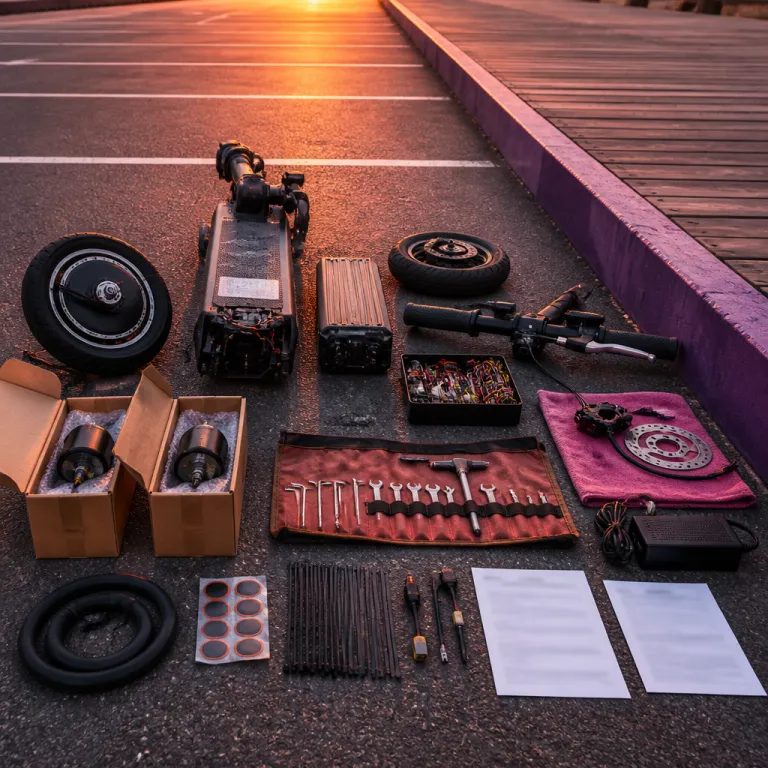
Why electric scooter brand stability matters more than top speed
When you buy an electric scooter, you are not just paying for speed or range. You are also buying into an electric scooter brand, its warranty policy, and its long-term parts availability story that will quietly shape every repair, every flat tire, every battery scare. For a casual buyer in the United States who rides on weekends, that hidden story can decide whether a fun electric scooter becomes a stranded item in the garage after eighteen months.
Segway Ninebot sits in a different league from fly-by-night scooter brands that appear on marketplace sites and vanish before the warranty period ends. The company has a physical presence, a documented limited warranty, and a real customer support structure that will provide genuine spare parts and replacement components for several years after purchase. For example, Segway’s U.S. warranty for many consumer scooters typically lists around 12 months of coverage for the main battery and controller, with shorter terms for wear items such as tires and brake pads. That does not mean every warranty claim is painless, but it does mean the support team and parts pipeline are more than a single email address that stops working when sales slow down.
Think about what happens when a smaller scooter brand folds or exits the United States market while your electric scooter is still under warranty. On paper, the warranty terms might promise twelve months of battery coverage and six months of protection for the controller, yet in practice there is no one left to honor warranty service or ship critical components. Consumer protection agencies generally note that once a business is dissolved and its assets are liquidated, warranty enforcement becomes extremely difficult. The electric scooters themselves may keep rolling for a while, but once proprietary parts fail, the buyer often learns that damage caused by normal use is now their problem alone.
What really happens to your warranty when a brand disappears
Legally, a warranty is a promise that a manufacturer or seller makes about the condition of its products at the time of purchase. In reality, when an electric scooter brand shuts down or leaves the United States market, that warranty promise can become almost impossible to enforce. Courts cannot force a dissolved company with no assets, no shipping operation, and no customer support team to send you a new battery or controller, and consumer protection agencies generally confirm that a closed business cannot perform warranty work it no longer has the capacity to provide.
For Segway Ninebot buyers, the risk is lower because the brand has a longer track record, a broader catalog of electric scooters, and a network of service partners that can process warranty claims. If a Segway Ninebot Max G30 battery fails within the stated battery warranty period, you can usually file a claim through official channels and expect some form of replacement or repair. The company’s warranty terms still exclude damage caused by misuse or unauthorized modifications, but at least there is a functioning support team that can explain which parts are covered and which items fall outside the limited warranty.
Contrast that with a no-name electric scooter brand that sells a few thousand units through online marketplaces, then quietly exits the market. Buyers may still be within the original warranty period on paper, yet emails bounce, phone numbers die, and no one will provide replacement parts or even basic feedback on repair options. In that scenario, your practical warranty becomes whatever the aftermarket and independent repair shops can do with compatible components, plus any guidance you can find from communities that track brands like Inmotion or other established players in detailed guides such as this overview of Inmotion scooters. A simple step-by-step approach helps: document the fault with photos or video, locate the original proof of purchase, contact any remaining seller or distributor in writing, request written confirmation of coverage, and then compare the quoted repair cost with independent shop estimates before deciding whether to proceed.
Parts availability when models are discontinued but scooters keep rolling
Once a scooter brand stops selling a model, the clock starts ticking on parts availability, even if the company itself survives. Tires, tubes, and generic brake pads are usually easy to source because many scooters share wheel sizes and caliper designs, so these basic parts remain available long after a specific item disappears from catalogs. The real pain points come from brand-specific replacement parts such as display units, controllers, and battery packs with unique shapes or connectors.
Segway Ninebot handles this better than most budget brands by keeping a pipeline of official accessories and service parts for popular scooters like the Ninebot Max and F series. You can often find original controllers, stems, and even full battery assemblies through authorized channels, which keeps warranty claims and out-of-warranty repairs relatively straightforward. Real-world repair invoices from independent shops in the United States often show labor charges of $80–$120 for diagnostics and installation, plus $150–$300 for a mid-capacity replacement battery, depending on chemistry and capacity. That does not mean every buyer will get cheap shipping or instant support, but it does mean the electric scooter does not become e-waste the first time a controller fails after eighteen months of weekend rides.
When a smaller brand exits, discontinued scooters can become orphans overnight because no one stocks proprietary replacement parts anymore. Independent shops sometimes reverse-engineer components or adapt parts from other products, yet this works better for simple mechanical items than for smart batteries with integrated BMS boards. Riders who own Joyor or similar mid-tier scooters often rely on community knowledge and long-form guides such as this deep dive into Joyor electric scooters to understand which parts are interchangeable and how to keep capacity and safety within acceptable condition. Internal resources that map which Joyor, Segway, or Inmotion models share tire sizes, brake hardware, or stem designs can also make it easier to source compatible parts when official stock runs low.
The aftermarket lifeline: third party batteries, controllers and more
When official warranty service dries up, the aftermarket becomes the lifeline that keeps electric scooters on the road. Third-party sellers offer compatible batteries, generic controllers, and universal brake components that can stand in for original parts when brands no longer stock them. Quality varies wildly, so a buyer needs to look beyond low prices and check real feedback about capacity, fit, and long-term reliability.
For Segway Ninebot models, the aftermarket is unusually rich because so many scooters share similar frames and electrical layouts. You can find replacement parts such as third-party battery packs, upgraded controllers, and cosmetic accessories that extend the practical life of the scooter far beyond the official warranty terms. These products do not turn a dead warranty claim into a free repair, yet they do mean that an electric scooter with a failed battery after thirty months is not automatically destined for the landfill.
Independent repair shops in the United States often specialize in adapting components from one brand to another, especially for scooters whose makers have vanished. They may install a generic controller with a different rated lifespan, pair it with a compatible throttle, and bring an old electric scooter back to life with a new battery that matches the original capacity. A typical out-of-warranty repair of this kind might cost around $250 and keep a commuter scooter running for another two or three years, which is often cheaper than replacing the entire vehicle. Guides that analyze long-running brands, such as this look at seated electric scooters and Razor’s role, help riders understand which products have enough ecosystem depth to justify investing in aftermarket replacement parts rather than starting over with a new purchase.
How to judge a scooter brand before you buy into its warranty
Before you click purchase on any electric scooter, treat the brand itself as the most important spec. Range, top speed, and motor watts matter, yet the combination of brand stability, warranty coverage, and parts availability will decide whether you can still ride after a few hard seasons. A careful buyer looks at how long the company has sold scooters in the United States, how many models it supports, and whether there is a visible customer support structure behind the glossy marketing.
Segway Ninebot checks more of these boxes than most because it maintains a clear warranty policy, a defined warranty period for major components, and a network of service partners that can process warranty claims. The company’s limited warranty spells out coverage for the battery, controller, and other critical parts, while also listing exclusions for damage caused by misuse, crashes, or unauthorized modifications. That transparency does not guarantee perfect outcomes, but it gives the customer a realistic picture of what the support team will provide if an item fails under normal conditions.
When you evaluate smaller brands, look for signs of staying power such as a real website with documented warranty terms, a reachable customer support phone number, and evidence of stocked spare parts and replacement components. Check whether other buyers report successful warranty service experiences, not just fast shipping or shiny products on day one. In a crowded field of electric scooters, the brands that treat warranty claims as part of a long-term relationship, rather than a short-term cost, are the ones most likely to keep your parts available and your weekend rides rolling year after year.
FAQ
What happens to my warranty if my scooter brand shuts down ?
When a scooter brand shuts down, the legal warranty promise often becomes unenforceable because there is no operating company left to honor warranty service. You may still find compatible replacement parts through third-party sellers or repair shops, but official warranty claims usually stop. In practice, your protection shrinks to whatever the aftermarket and local technicians can offer.
Can I still get parts for a discontinued Segway Ninebot scooter ?
Segway Ninebot typically keeps parts available for popular scooters even after specific models are discontinued. You can often source official components such as tires, tubes, and controllers through authorized channels or established retailers. Over time, some proprietary items may become scarce, yet the large installed base helps keep both original and aftermarket parts in circulation.
Are third party batteries and controllers safe to use ?
Third-party batteries and controllers can be safe if they match the original specifications and come from reputable sellers. A mismatched battery or controller can reduce capacity, trigger BMS cutoffs, or even cause damage caused by overheating or wiring faults. Always check voltage, current ratings, and real user feedback before installing non-original replacement parts.
How long should I expect parts to be available after purchase ?
For established brands such as Segway Ninebot, you can often find key parts for several years after purchase, especially for high-volume models. Smaller brands may stop stocking parts much sooner, sometimes within a single year of discontinuing a scooter. That is why brand stability, warranty strength, and parts availability should weigh as heavily as range or top speed in your buying decision.
When is it better to replace a scooter instead of repairing it ?
If a major component such as the main battery or controller fails outside the warranty period and only expensive or questionable aftermarket options exist, replacement may be more sensible. When repair costs approach half the price of a new electric scooter with better support, investing further in an orphaned model rarely pays off. At that point, treating the old scooter as a donor for minor parts and moving to a brand with stronger customer support can save money and frustration.