
Summary
Editor's rating
Value for money: good if you catch it at the right price
Design: practical, a bit generic, but not ugly
Battery and range: realistic if you stay modest
Comfort: solid tires = no punctures, more vibrations
Durability and build: feels sturdy, but check the moving parts
Performance: decent speed, okay power, nothing crazy
What you actually get with the Riceel R50
Pros
- Decent real-world speed (around 25 km/h) and acceptable power for flat city commuting
- Solid honeycomb tires mean no punctures and low maintenance
- Foldable design with lights, app control, and dual braking system at a budget-friendly price
Cons
- Comfort is limited due to rigid suspension and solid tires, lots of vibrations on rough roads
- Advertised range is optimistic; real range closer to 18–25 km depending on conditions
- Quality control and after-sales support seem inconsistent based on user feedback

Specifications
View full product page →| Brand | Riceel |
A cheap way to stop taking the bus?
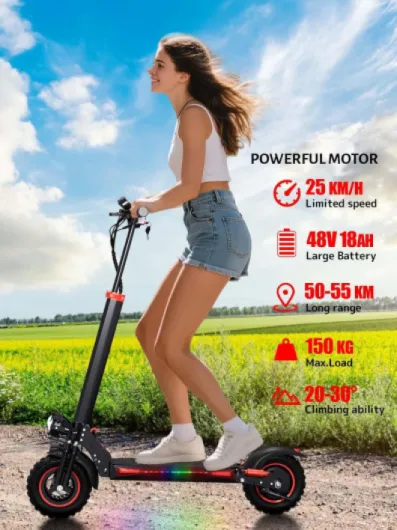
I’ve been using this Riceel R50 electric scooter for a few weeks now for short trips around town and to replace some bus rides. I didn’t buy it expecting a premium model; I just wanted something simple that could get me from home to the station and to the shops without sweating. On paper it ticks a lot of boxes: 350W motor, up to 25 km/h, around 25–35 km range, and it folds. In reality, it’s a bit less shiny, but it mostly does what it says.
The first thing I noticed when I unboxed it is that it’s clearly a budget scooter made in China: basic packaging, a bit of foam, a small manual, and that’s it. Assembly was quick though, just a few screws for the handlebar and it was ready to go. No fancy extras, no tools beyond what’s needed. For the price, that didn’t bother me, but if you expect a polished unboxing experience, you won’t get it here.
My main use has been commuting: about 4–6 km per day, mostly flat roads, a few small hills, and a mix of bike lanes and sidewalks. I also let a friend try it for a weekend, so it had a bit of rougher use, including some potholes and bad tarmac. That helped show where the scooter is solid and where it feels a bit cheap. It’s not a toy, but it’s not a heavy-duty machine either.
Overall, my first impression is: pretty solid for the price, but with compromises. If you keep your expectations realistic, it’s usable and fairly practical. If you expect the range and comfort of more expensive brands, you’ll probably be a bit disappointed. I’ll break down the details by design, performance, battery, comfort, durability, and value so you know what you’re actually getting into.
Value for money: good if you catch it at the right price
In terms of value, this scooter sits in that middle zone where it’s cheaper than big brands but still not pocket change. When you look at what you get—350W motor, around 20 km real range, solid tires, dual brakes, lights, app, foldable frame—it’s actually pretty solid for the price if you’re mainly after a basic commuter. It does the job for daily short trips without you having to spend as much as on a Xiaomi or Ninebot.
However, you do feel the cost-cutting in some areas: the comfort is average because of the rigid suspension, the quality control seems a bit hit-or-miss based on reviews, and the after-sales support doesn’t sound great, especially the story about a two-month refund process with the third-party seller. That’s the kind of thing you need to factor in: you’re saving money up front, but if something goes wrong, it might be more hassle than with a more established brand.
Compared to similar budget scooters I’ve tried, this one is roughly on par in terms of performance and battery, maybe slightly better than the very cheap no-name models you see all over, mainly thanks to the app and the overall sturdiness of the frame. It’s not miles ahead, but it’s not junk either. If you find it on discount, it becomes a more attractive deal. At full price, it’s okay, but I’d at least compare it with a Xiaomi Essential or similar to see what fits your needs better.
So, value-wise, I’d say: good if your expectations are realistic and you’re a bit handy, average if you expect flawless quality and support. It’s a practical tool, not a premium gadget. If you just want to cut some bus rides and get around town cheaply, it makes sense. If you want long range, plush comfort, and top-tier reliability, you’ll have to spend more.
Design: practical, a bit generic, but not ugly
Design-wise, the Riceel R50 looks like most budget scooters you see in the city. The red-gray color gives it a slightly sporty look without being too flashy. The frame is alloy steel, which makes it feel reasonably sturdy, but it also adds some weight. It’s not as sleek as some aluminum models, but it doesn’t feel flimsy either. The deck has enough width for one adult to stand comfortably with one foot in front of the other. I’m around average height, and I didn’t feel cramped.
The folding mechanism is pretty straightforward: you unlock a latch near the base of the handlebar, fold it down, and hook it to the rear fender. After a few tries it becomes automatic. It takes maybe 3–5 seconds. The mechanism itself feels okay, but I can see why one reviewer mentioned doubts about the locking system. You really need to make sure it clicks properly both when folding and unfolding. I had one moment where I hadn’t locked it fully, and the handlebar felt a bit wobbly until I fixed it.
The handlebar is adjustable, which is nice if you’re sharing it with someone shorter or taller. The grips are ergonomic and reasonably comfortable, not soft premium rubber but not hard plastic either. The cables are mostly tucked in, but you still see some external wiring, which reminds you this is not a high-end product. The LED display is centered and readable in normal daylight, though in direct sun it can be a bit hard to see, especially the battery bars.
Overall, the design is functional and pretty simple. It doesn’t scream quality, but it doesn’t look like a toy either. If you want something you’re not afraid to lock outside the shop for a few minutes, this fits that role. I’d just say: check the folding joint and locking latch regularly, because that’s the kind of part that can loosen over time on cheaper scooters.
Battery and range: realistic if you stay modest
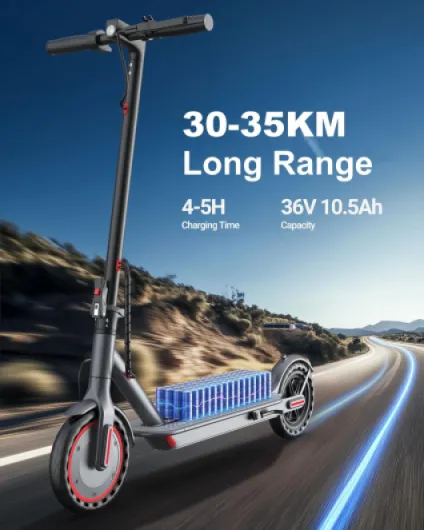
The brand claims a 25–35 km range with the 36V 10.5Ah battery. Like most electric scooters, that’s the ideal number: light rider, flat road, eco mode, no wind. In real use, my range was more in the 18–25 km zone depending on how I rode. On days where I stayed mostly in medium mode and didn’t push it to full speed all the time, I could get close to 22–23 km before the battery started dropping fast. If I stayed in the fastest mode with a lot of stop-and-go, it was closer to 18–20 km.
This lines up with what I expected for this price, but it clearly doesn’t match the top of the advertised range. The negative review about the battery draining quickly doesn’t surprise me. If you’re heavier, ride full speed, or have hills on your route, you’ll see the battery bar melt quicker than you’d like. So if you’re planning daily 15 km+ round trips at max speed, this is probably not the best choice unless you can charge at both ends.
Charging time is roughly 4–5 hours from low battery to full. I usually plugged it in at night and didn’t think about it. The Smart Battery Management System is supposed to protect from overcharge, overheating, etc. I didn’t have any issues with heat or weird behavior while charging. The charger itself is pretty standard: small brick, a bit noisy with the tiny fan when it runs, but nothing dramatic. The charging port on the scooter has a rubber cover that you need to make sure is properly closed, especially if you ride in wet conditions.
In practice, I’d say: count on about 20 km of reliable range, and treat anything above that as a bonus. For short commutes, that’s fine. For long rides or all-day use, it’s limited. If you’re the type who forgets to charge things, you’ll probably get caught out once or twice with a low battery and have to push it home, which is not fun given the weight. So it’s okay, but it’s not a long-distance machine.
Comfort: solid tires = no punctures, more vibrations
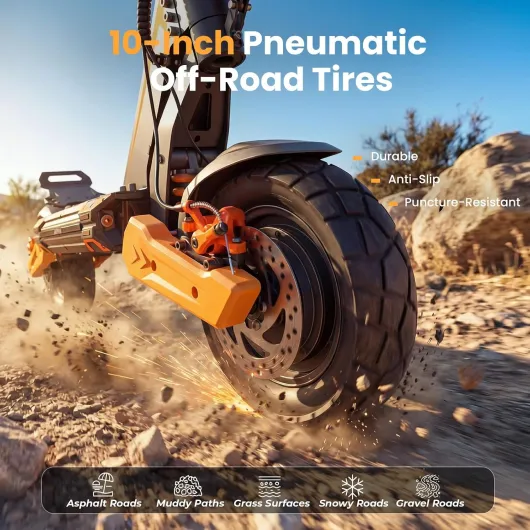
Comfort is where you really feel that this is a budget scooter. The 8.5-inch solid honeycomb tires have one big advantage: no punctures. I went over glass bits and rough patches without worrying about flats, which is nice. But because the suspension is rigid and there’s no real shock absorber, every bump and crack in the road comes up through the deck and handlebar. On smooth tarmac or well-maintained bike paths, the ride is fine. On bad roads with potholes or cobblestones, it gets tiring pretty quickly.
The honeycomb design helps a bit with shock absorption, but don’t expect miracles. After about 20–30 minutes on rougher surfaces, my legs and wrists definitely felt it. If you mainly ride short distances, it’s manageable. If you’re planning long daily rides on bad roads, you might want something with actual suspension or air-filled tires. The deck grip is good though; your feet don’t slide around, even if it’s a bit damp. Just don’t ride in heavy rain; like most scooters, it’s not really made for that.
Stability-wise, the scooter feels okay. The frame in alloy steel gives a solid base, and the steering is predictable. At full speed, you don’t feel like it’s about to wobble out of control, as long as your folding mechanism is properly locked. The adjustable handlebar is handy to find a comfortable height. I didn’t feel hunched over or stretched out. The ergonomic grips are decent for the price, not super soft but better than basic plastic tubes.
In short, comfort is acceptable for short commutes and smooth paths, but it’s clearly not a cushy ride. The trade-off is simple: low maintenance and no flats vs. more vibration and less comfort. For me, for 10–15 minute trips, it’s fine. For 40+ minute rides, I’d start looking for something with better suspension or inflatable tires.
Durability and build: feels sturdy, but check the moving parts
After a few weeks of use, the overall build of the Riceel R50 feels reasonably solid for the price. The alloy steel frame doesn’t flex much, and there’s no scary creaking when you ride. The deck is stiff and handles my weight without issue. The paint job seems okay; I had a couple of minor scuffs from leaning it against walls, and they didn’t chip down to bare metal immediately. So structurally, it feels like it can handle normal daily commuting.
The parts I’d keep an eye on are the folding mechanism, the brake cable, and the handlebar clamp. Those are the usual weak points on cheaper scooters. After about two weeks, I noticed a tiny bit of play in the folding joint. Nothing dramatic, but enough that I tightened the latch and checked the screws. Same with the brake: I had to adjust the cable slightly to keep the braking consistent. This is normal wear, but if you never touch a tool, you might find it annoying.
The solid rubber tires should last a long time since there’s no tube and no risk of puncture. They might eventually wear down, but that’s not going to happen overnight. The lights (front and rear) still work fine after all the bumps, which is good. The LED display hasn’t shown any glitches so far. The app connection is the only thing that felt a bit flaky at times, but that’s more software than durability.
Given the Amazon reviews, you can see two types of experiences: some people say it keeps going strong with no faults, others report problems with battery or brakes. That’s pretty typical for cheaper brands: quality control is not as consistent as with big names. If you’re willing to do small adjustments and check bolts from time to time, it should hold up okay. If you expect zero maintenance and perfect reliability, you might be disappointed. I’d rate durability as decent but not bulletproof.
Performance: decent speed, okay power, nothing crazy
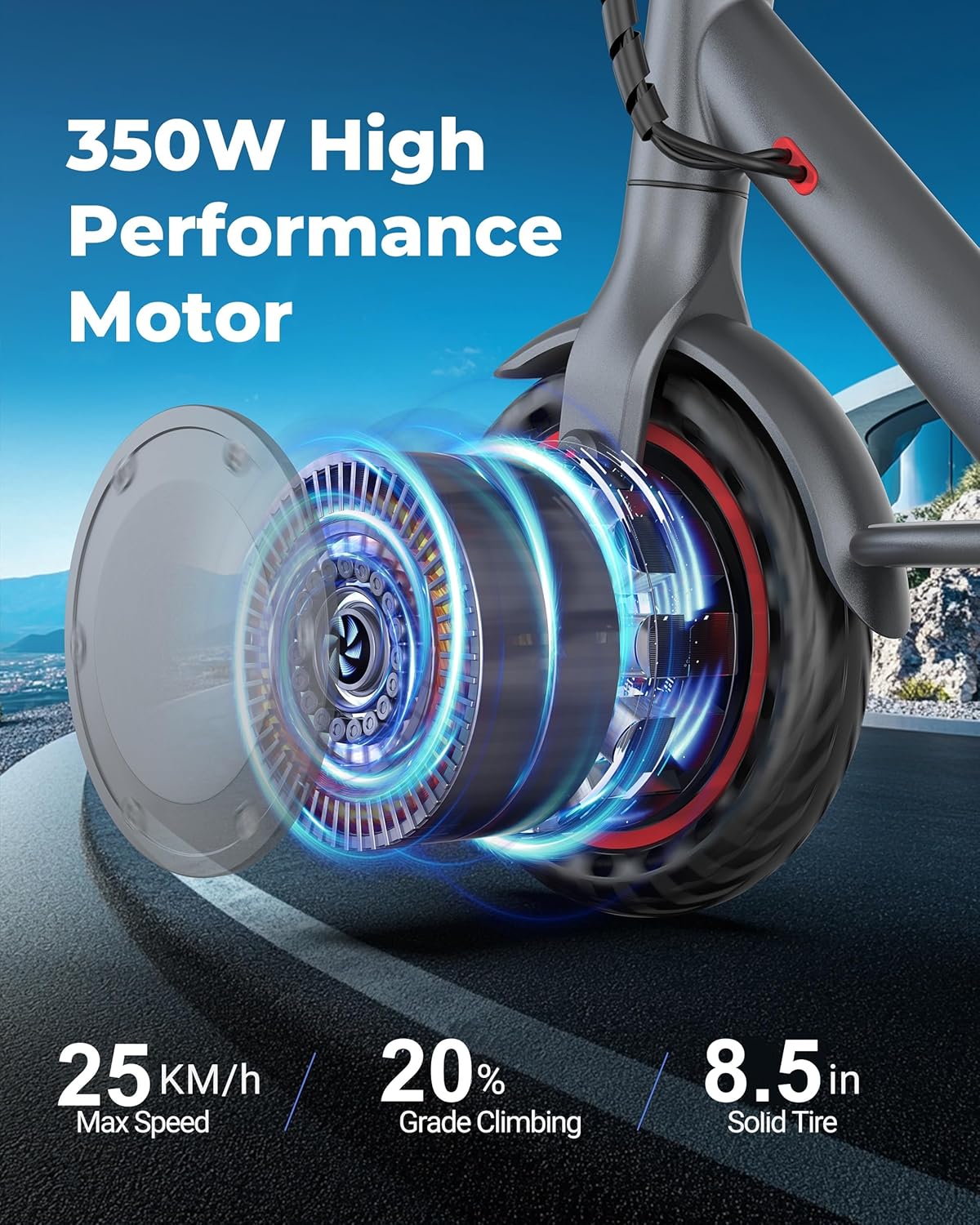
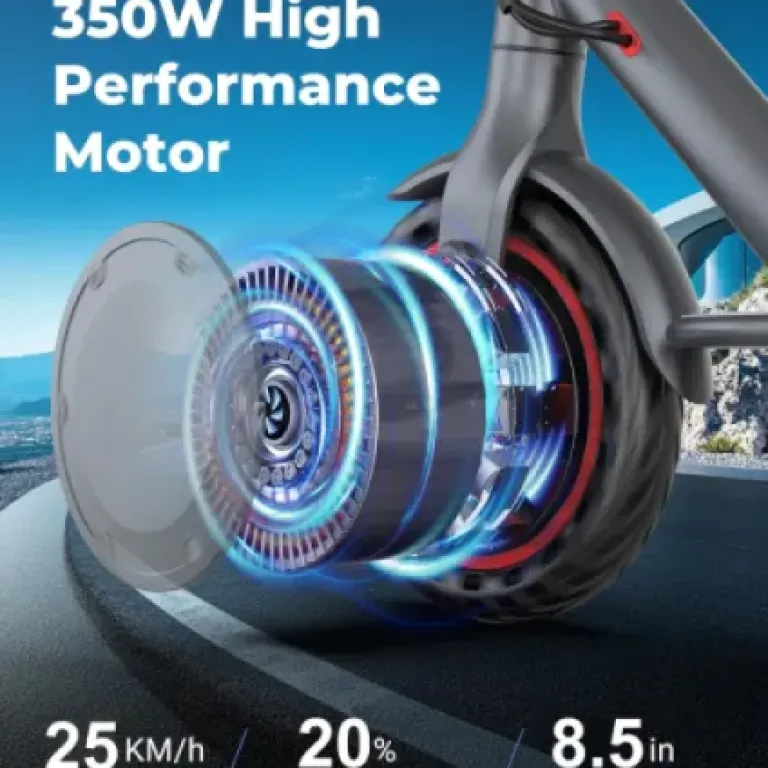
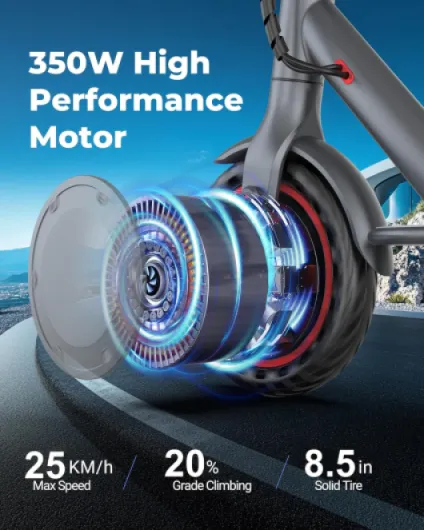
In terms of performance, the 350W motor is decent but not mind-blowing. On flat ground, I was hitting 24–25 km/h in the highest mode pretty consistently. One Amazon user mentioned reaching around 19 mph (about 30 km/h); I personally didn’t see that on mine, so it might depend on rider weight, firmware, or app settings. I’m around 80 kg, and on flat city streets it felt fine for commuting. You’re not racing anyone, but you’re not crawling either.
On small hills, the scooter slows down, but it still manages. On steeper slopes, you definitely feel it working hard, and speed can drop to around 12–15 km/h depending on the incline. If your city is full of long uphill climbs, you might find it a bit weak. For mostly flat routes with occasional short hills, it’s acceptable. Acceleration is smooth, not aggressive. That’s good for beginners or teens, but if you like quick bursts of speed, you might find it a bit soft.
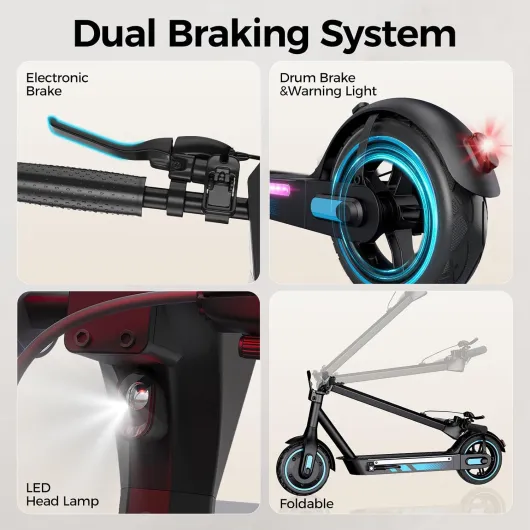
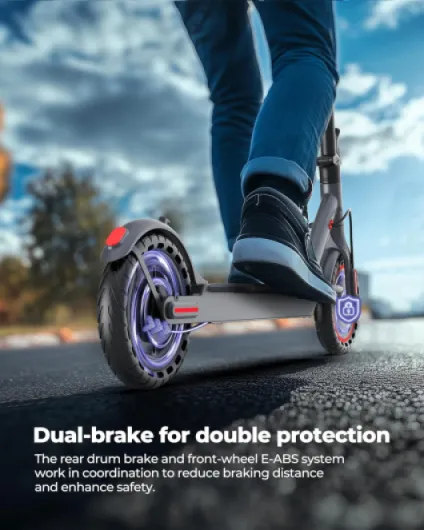
The braking system is where I have mixed feelings. On mine, the combination of electronic brake and drum brake stops the scooter in a reasonable distance, as long as you’re paying attention and not going full speed downhill. It doesn’t throw you forward, but it’s firm enough. However, given the 1-star review mentioning unreliable braking and a fall, I can see how a poorly adjusted brake or a rider who isn’t used to e-scooters could run into trouble. Out of the box, I had to slightly adjust the brake cable to make it bite a bit earlier. That’s something many people won’t think to do.
Overall, performance is fine for everyday commuting and casual rides. It’s not built for aggressive riding or heavy riders on steep hills. For city use on bike lanes and side streets, it gets the job done. Just don’t expect the same consistency and fine-tuned control you get from more expensive brands. And if you give it to a kid or teen, take some time to test the brakes and acceleration with them before letting them go off on their own.
What you actually get with the Riceel R50
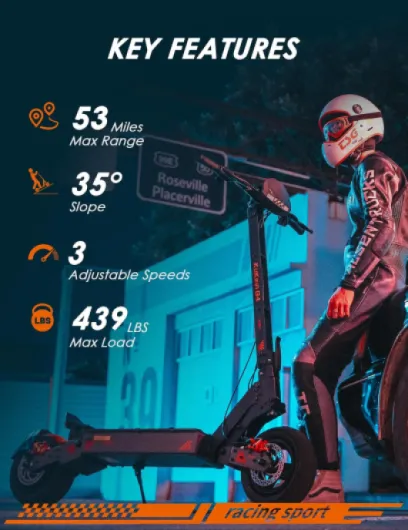
On paper, the Riceel R50 looks like a classic entry-level commuter scooter. It has a 350W brushless motor, a 36V 10.5Ah battery, and a claimed range of up to 35 km. The top speed is listed at 25 km/h, which is pretty standard for this kind of scooter and matches what I got in normal conditions. There are three speed modes and cruise control, all controllable via the handlebar and the companion app. It’s clearly aimed at adults and teens who want something for everyday commuting, not for tricks or off-road.
The scooter has 8.5-inch solid honeycomb tires, so no inner tube and no punctures, which is good if you hate fixing flats. The downside is that you lose some comfort, especially since the suspension is rigid. There’s a double braking system: electronic brake plus drum brake, and front and rear lights with a brake light. It folds in one step, and you can carry it into a car trunk or up some stairs. It’s not feather-light, but manageable for short distances.
There’s also an app and LED display. The display shows speed, battery level, and mode. The app lets you lock/unlock, turn lights on/off, set cruise control, and tweak the max speed a bit. It works, but it’s not the most polished app I’ve seen. It sometimes takes a moment to connect, and once or twice I had to restart Bluetooth to get it to pair again. Still, for a cheap scooter, having those options is a nice bonus.
So in short, you’re getting a basic but fairly complete electric scooter: it folds, it has lights, it has a decent motor, and it has solid tires. Nothing high-end, but enough features to cover daily use. If you’ve never had an e-scooter before, it feels like a good starter model. If you’re coming from a big brand like Xiaomi or Ninebot, you’ll feel the difference in refinement and consistency, especially in the app and braking.
Pros
- Decent real-world speed (around 25 km/h) and acceptable power for flat city commuting
- Solid honeycomb tires mean no punctures and low maintenance
- Foldable design with lights, app control, and dual braking system at a budget-friendly price
Cons
- Comfort is limited due to rigid suspension and solid tires, lots of vibrations on rough roads
- Advertised range is optimistic; real range closer to 18–25 km depending on conditions
- Quality control and after-sales support seem inconsistent based on user feedback
Conclusion
Editor's rating
Overall, the Riceel R50 is a decent budget electric scooter that covers the basics for everyday commuting. It goes up to around 25 km/h, offers a realistic 18–25 km of range, folds easily, and uses solid tires so you don’t have to worry about punctures. The frame feels sturdy enough, the dual braking system works fine once adjusted, and the built-in lights and app control are handy extras at this price point. For short daily rides to work, school, or the shops, it does the job without too much fuss.
On the downside, it’s not the most comfortable scooter due to the rigid suspension and solid tires, and the quality control seems a bit inconsistent judging by some of the more negative reviews. The advertised range is optimistic, and the after-sales support through third-party sellers doesn’t sound like a smooth experience if something goes wrong. You also need to be willing to do small adjustments—tighten the folding joint, tweak the brake cable, check screws—if you want it to stay in good shape.
If you’re a beginner, teen, or budget-conscious commuter who needs a basic, practical scooter for short flat trips, this is a reasonable option, especially if you find it on sale. If you’re heavier, ride long distances, have lots of hills, or care a lot about comfort and strong customer support, you’re probably better off saving up for a better-known brand with suspension and a more reliable battery. It’s not perfect, but for the right user and the right price, it’s a good value for money tool that gets you from A to B without too many surprises.