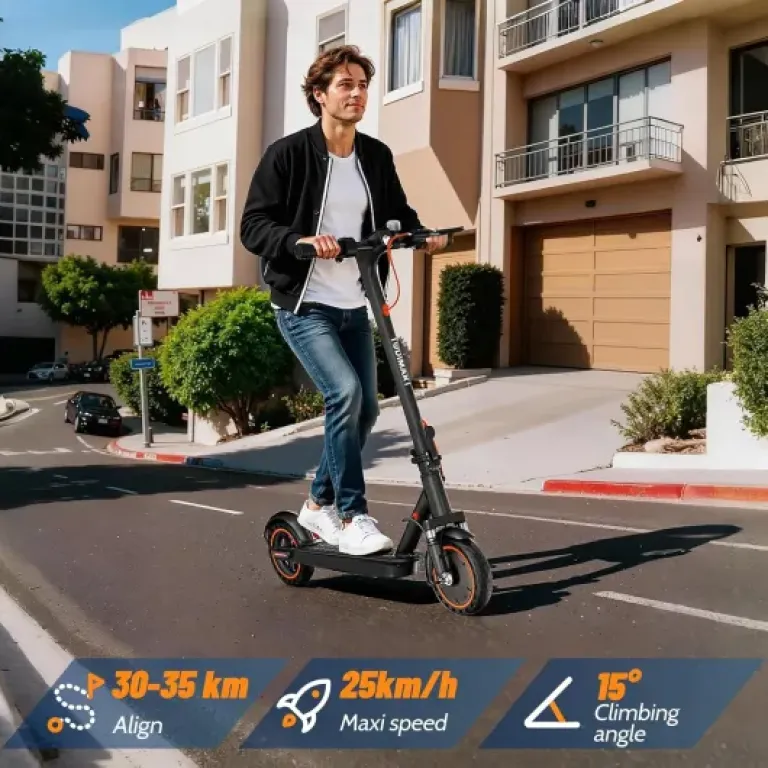

Summary
Editor's rating
Value for money: good if your needs are simple and routes are flat
Design: simple, light and a bit generic, but practical
Battery and range: realistic numbers if you keep expectations in check
Comfort: decent on flat, still a small-wheel scooter
Durability and build: feels decent, but long-term is still a question mark
Performance: fine on flat, weak on hills if you’re heavier
What you actually get with the TODIMART T6
Pros
- Very light (12.6 kg) and folds in seconds, easy to carry and store
- Decent performance and comfort on flat city roads for short commutes
- Solid tyres and dual suspension: no punctures and slightly smoother ride than basic models
Cons
- Struggles on hills, especially for riders over ~80 kg
- Real-world range closer to 15–20 km for adults, far from the 30–35 km claim
- Budget finish and unknown brand, long-term durability and support less certain

Specifications
View full product page →| Brand | TODIMART |
A budget scooter I actually used to commute
I’ve been using this TODIMART T6 scooter for a couple of weeks for short city trips, mainly home–station and quick runs to the shops. I’m not sponsored, I just wanted something cheap-ish for commuting instead of always taking the bus. I weigh around 82 kg, so I’m right in that zone where the brand says it’s fine on flat but not great for hills. That warning is accurate, and it’s important if you’re not a lightweight rider.
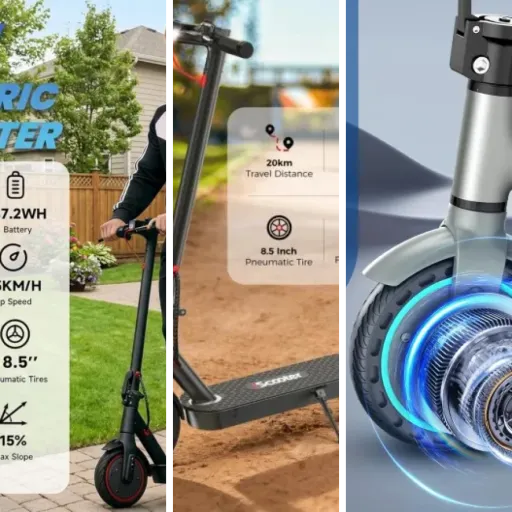
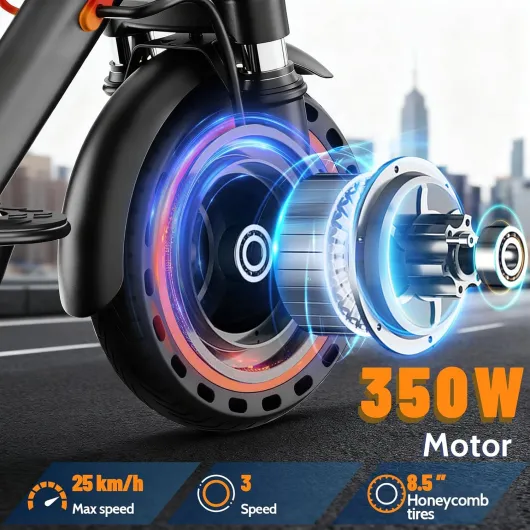
Out of the box, it looks like a pretty standard budget scooter: 8.5'' solid tyres, 350W motor (500W peak), claimed 30–35 km range, 25 km/h top speed and a 36V 7.8Ah battery. No crazy features, but it does have Bluetooth and an app for locking, speed settings and cruise control. For the price, that’s already more than I expected, but I went in with realistic expectations: basic commuting, not a high-end Xiaomi or Ninebot experience.
In daily use, it does what it says, but with a few conditions. On flat ground and normal city use, it’s pretty solid. Once you add weight, rough roads or small hills, you feel the limits of the motor and the battery. The marketing talks about 25° climbing, but honestly, if you’re over 75–80 kg, forget anything close to that. Small slopes are fine, real hills are a struggle.
Overall, my first impression is: good little scooter for flat urban rides, but don’t expect miracles. It’s light, easy to carry, and decent for teenagers or adults who just need 3–8 km trips. If your commute is hilly or you’re heavier, you’ll probably want something stronger, even if it costs more.
Value for money: good if your needs are simple and routes are flat
When you look at what you get for the price, the T6 sits in that category of budget scooters that give you a lot on paper: 350W motor, dual suspension, app, lights, and a light 12.6 kg frame. It’s clearly not perfect, but if your expectations match what it’s built for, it’s good value for money. For short urban commutes, teens going to school, or adults doing a few kilometres per day on mostly flat routes, it makes sense and saves you from taking the bus or car for every small trip.
Compared to better-known brands like Xiaomi or Ninebot, you’re saving some money but also giving up a bit on refinement, brand support and long-term track record. The performance and comfort are in the same ballpark as their entry-level models, but the finish and app polish are a bit behind. On the other hand, the T6 is lighter than many competitors, which is a big plus if you carry it often. That’s honestly one of the main reasons I kept using it: carrying 12.6 kg up stairs is a lot nicer than lugging a 15–17 kg monster.
If you’re heavier, live in a hilly city or want to do long daily distances (20+ km), I think this scooter becomes less interesting. You’ll hit the limits of the motor and battery quickly and probably end up frustrated. In that case, it’s better to spend more on a bigger battery and stronger motor. But if you just want a simple, compact scooter to cut down walking time and you know your route is mostly flat, the T6 does the job without costing a fortune.
So overall, it’s a decent budget pick: not a beast, not trash either. It’s the kind of scooter I’d recommend to a friend who wants to try electric scooters for commuting but doesn’t want to drop big money right away, as long as I’m clear about the limitations on hills and range.
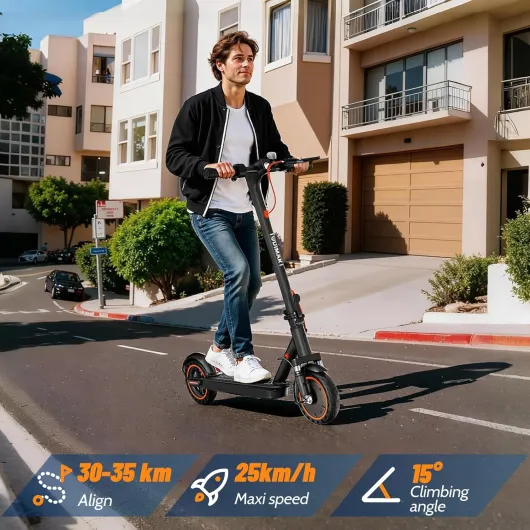
Design: simple, light and a bit generic, but practical
Design-wise, the T6 doesn’t try to stand out. It’s a typical black commuter scooter with a straight stem, a small deck and 8.5'' wheels. If you’ve seen an entry-level Xiaomi or similar, this looks very close. Personally, I’m fine with that: I prefer something low-key that doesn’t scream “steal me” when I park it outside a shop. The black finish is basic but clean, and after a couple of weeks of daily use I only picked up a few light scratches, nothing dramatic.
The folding mechanism is straightforward and, more importantly, it feels safe. There’s a main latch you pull to fold the stem, and once locked in riding position, I never felt any wobble or play in the joint. I’ve had a cheaper no-name scooter before where the stem started to loosen after a month and it felt sketchy; this one is definitely better on that point. The deck is not very long, but I can still stand with one foot forward and one sideways without feeling cramped (I’m 1.78 m).
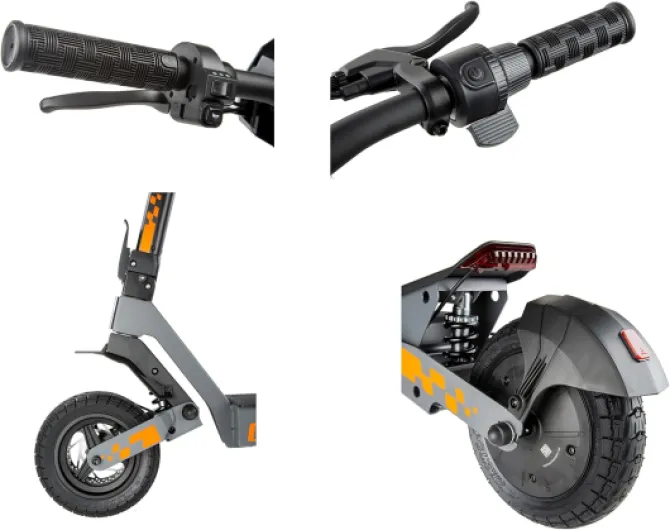
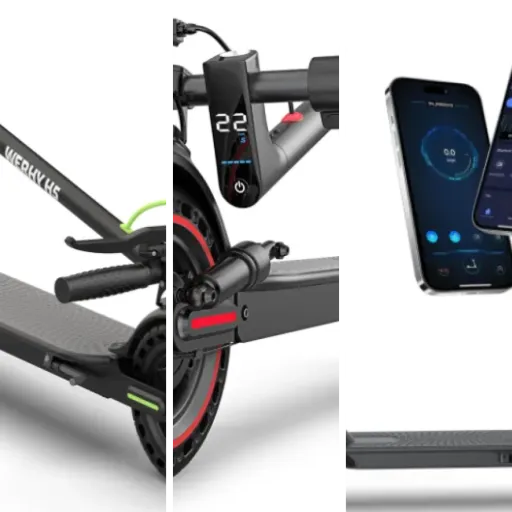
The cockpit is minimal: LCD in the centre, a throttle on the right, a brake lever on the left, and a bell. The screen is bright enough to see speed and battery even in daylight. It’s not super high resolution or anything fancy, but it’s readable, which is what matters. The cables are partially exposed, which looks a bit cheap compared to more expensive brands, but it doesn’t affect use. Just don’t expect a super clean integrated cable routing.
Overall, the design is functional, nothing more. It’s compact, easy to fold, and discreet. If you want something that looks premium or very stylish, this won’t impress you. But if you just want a scooter that is light, practical and doesn’t take much space in your hallway or car boot, it gets the job done without fuss.
Battery and range: realistic numbers if you keep expectations in check
The scooter is advertised with a 36V 7.8Ah battery and a range of 30–35 km. Those numbers are always optimistic, and here it’s the same story. In my real use, with my 82 kg, mixed riding (a lot of full speed, some stops, a couple of small slopes), I was getting around 15–20 km per charge before the battery bar started flashing and power dropped. If I rode more calmly in mid speed mode and avoided slopes, I could push it closer to 22–23 km, but not more.
So I’d say: if you’re an adult around 80 kg, count on 15–20 km of real range, not 30–35. For a teenager or someone lighter who rides slower, 25+ km seems possible. For my daily use (about 4–5 km per day), it means I can charge it every 3–4 days without stress. If you need 15+ km daily, you’re going to be charging it almost every night or riding slower to save battery.
Charging time is in the typical range: around 4–5 hours from almost empty to full. The charger is basic but does the job. One thing to mention: I saw at least one review saying their unit wouldn’t charge at all, so there is some risk of a bad unit. Mine has been fine so far, but it’s something to keep in mind. At least they mention a one-year warranty, so if you get a faulty battery or charger, you should be able to sort it out.
There’s also the usual drop in power when you’re below 30% battery: acceleration is weaker and top speed goes down a bit. That’s normal on most scooters, but it’s more noticeable on a 350W model like this. For safety, I try not to go too far from home when the battery icon shows only one bar. For short city trips and occasional commutes, the battery is okay. If you’re thinking of long daily rides, this capacity is on the low side and you might want a bigger battery model.
Comfort: decent on flat, still a small-wheel scooter
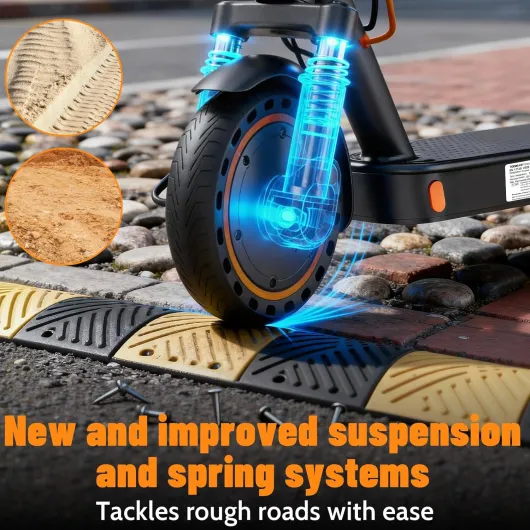
Comfort is always the weak point of small 8.5'' solid-tyre scooters, and the T6 is no exception, but it does a bit better than basic models thanks to the dual suspension. Compared to a previous scooter I had with no suspension and solid tyres, the T6 is clearly less harsh on potholes and bumps. You still feel everything, but it’s less of a shock in the wrists and knees. For short trips of 10–20 minutes, it’s totally fine; for longer rides, you start to get tired.
The deck height and handlebar height feel okay for my size (1.78 m). The handlebar is adjustable, which is handy if you share it with a teenager or someone shorter. Once adjusted, it stays in place and doesn’t slip, which was a concern I had at first. The grips are simple but comfortable enough; I didn’t get any hand pain even after a 30-minute continuous ride. The standing position is slightly narrow, but that’s normal for this type of scooter.
The solid tyres are the big trade-off: no punctures, but less comfort. On smooth tarmac, it rolls nicely and you almost forget they’re solid. On rough roads, cobblestones or broken pavement, it shakes. The suspension helps, but it doesn’t turn it into a magic carpet. If your daily route includes a lot of broken surfaces, be prepared to slow down or you’ll rattle your teeth. For me, most of my ride is on normal city roads and cycle lanes, so it’s acceptable.
Noise-wise, the motor is fairly quiet, and there are no big rattles from the frame or folding mechanism after two weeks. Only a small plastic part near the rear fender started to buzz a bit on very bumpy sections, but nothing major. In short: comfort is okay for the price, much better than a hardtail no-suspension scooter, but if you’re looking for real comfort on bad roads, you’ll need bigger wheels and inflatable tyres, which usually means spending more.
Durability and build: feels decent, but long-term is still a question mark
In terms of build quality, the frame itself feels pretty solid. The aluminium chassis doesn’t flex when you stand on it, and the stem doesn’t wobble. After two weeks of daily folding and unfolding, the hinge is still tight and there’s no play, which is reassuring. Compared to some super-cheap no-name scooters I’ve seen, this one gives a bit more confidence when you ride over bumps or at full speed.
The weak points are more on the small parts: plastic fenders, cable routing, and the general finish. The rear fender flexes a bit if you touch it, and I wouldn’t use it as a footrest. The cables are not perfectly tucked away and might be more exposed to wear if you’re not careful where you lock or carry the scooter. Nothing broke on mine, but you can tell this is built to hit a price point, not to survive five years of daily abuse.
The solid tyres are a plus for durability: no punctures to worry about, which is great if you ride through glass or debris sometimes. The downside is that if you ever need to change them, it’s usually a pain on scooters, but at least you won’t be patching inner tubes every month. The mechanical disc brake might need occasional adjustment as the pads wear, but that’s standard. So far the braking stayed consistent for me with no squeaking.
Long-term durability is hard to judge after just a couple of weeks, but based on the feel and what I’ve seen from similar scooters, I’d say it’s fine for regular commuting if you treat it decently: avoid jumping curbs, don’t leave it in the rain all the time, and don’t constantly ride at full load on bad roads. The one-year warranty is reassuring, but it’s still an unknown brand, so I wouldn’t expect premium service. For the price bracket, though, the build is acceptable and doesn’t feel like a toy.
Performance: fine on flat, weak on hills if you’re heavier
Performance is where you really see that this is a budget 350W scooter. On flat ground, it’s actually quite pleasant. In the highest speed mode, I reach around 22–25 km/h depending on wind and road, and it gets there reasonably quickly. The acceleration is not brutal, but smooth and controlled, which is probably better for beginners and teenagers. You don’t feel like you’re going to fall off if you push the throttle suddenly.
Where it struggles is on inclines. The description claims up to 25° climbing, but in the real world, with my 82 kg, anything more than a gentle slope slows it right down. On a medium hill near my place, it dropped to 10–12 km/h and I had to help with a few kicks. On very small slopes, it manages fine, but if you live in a hilly area, this scooter is not ideal unless you’re light (like a 12–15 year old). This matches what the brand says: above 80 kg, it’s really a flat-city scooter.
The three speed modes are useful. I used the lowest one when riding near pedestrians or in tight areas, and the mid mode in most city streets. The top mode is more for open cycle lanes or roads where you can safely go 20+ km/h. The app lets you tweak things like acceleration and cruise control, and the cruise is handy on long straight sections to rest your thumb. It’s not as refined as big brands, but the basic options are there.
Braking is decent. The mechanical disc brake at the rear has a good bite without being too aggressive. After a couple of rides I got used to how much to pull the lever. From top speed, it stops in a reasonable distance without drama, as long as the ground is dry. In the wet, like any scooter with small tyres, you need to brake earlier and be more careful. Overall, performance is okay for everyday flat commuting, but don’t believe this will handle serious climbs with a heavy adult on board.
What you actually get with the TODIMART T6
On paper, the T6 is positioned as a lightweight urban scooter for adults and teens: 350W brushless motor (500W peak), 36V 7.8Ah battery, 8.5'' solid tyres, dual suspension, mechanical disc brake, LED front and rear lights, and a claimed 30–35 km range. Max rider weight is 120 kg, but they clearly say that above 80 kg it’s basically for flat roads only. That honesty is appreciated, because a lot of cheap scooters pretend to climb mountains with a 250W motor.
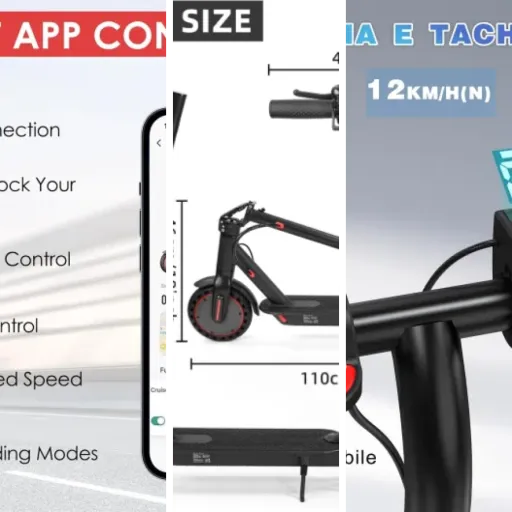
The scooter has three speed modes, with a max of 25 km/h. In practice, with my 82 kg, I usually cruise around 20–23 km/h on flat ground and it feels stable enough. There’s an LCD screen in the middle of the handlebar showing speed, battery level and distance, and you can pair it with an app via Bluetooth to lock it, adjust speed limits and enable cruise control. It’s not a polished premium app, but it works and the connection was stable for me on Android.
It folds in about three seconds, and that part is not marketing fluff: you pull the latch, the stem folds down and hooks into the rear fender. I carried it up two flights of stairs every day and at 12.6 kg it’s manageable with one hand, even if you’re not particularly strong. That’s one of the big selling points: it’s genuinely light for a scooter with this spec. For people in flats without lifts, that matters more than some fancy extra features.
In terms of target user, I’d say it clearly suits: teenagers (12+), light to average-weight adults, and anyone who mainly rides on flat city roads. It feels like a good first scooter to see if you like this kind of transport. If you already had a higher-end scooter, you’ll probably see this as a step down in power and comfort, but as a starter or backup scooter, it makes sense.
Pros
- Very light (12.6 kg) and folds in seconds, easy to carry and store
- Decent performance and comfort on flat city roads for short commutes
- Solid tyres and dual suspension: no punctures and slightly smoother ride than basic models
Cons
- Struggles on hills, especially for riders over ~80 kg
- Real-world range closer to 15–20 km for adults, far from the 30–35 km claim
- Budget finish and unknown brand, long-term durability and support less certain
Conclusion
Editor's rating
The TODIMART T6 is a light, simple electric scooter that works well if you use it for what it’s made for: short, mostly flat city trips. The 350W motor and 36V 7.8Ah battery are enough for 15–20 km of real-world range for an average adult, and the 25 km/h top speed feels fine for everyday commuting. The big strengths are its low weight (12.6 kg), quick folding and the fact that the solid tyres remove the stress of punctures. The dual suspension doesn’t turn it into a luxury ride, but it does smooth things out a bit compared to rigid budget scooters.
On the downside, it’s not a strong climber, especially if you’re over 80 kg, and the finish is clearly “budget”: exposed cables, flexible plastic parts, and an overall feel that’s decent but not premium. The brand is less known, so long-term support is a bit of a question mark, even if there is a one-year warranty. I’d say it suits teens and adults who want a first scooter for short commutes, school runs or station connections, and who ride mostly on flat ground. If you’re heavy, live in a hilly area or need serious daily mileage, skip this and look for something more powerful with a bigger battery, even if it costs more.