
Summary
Editor's rating
Value for money: worth it if you accept the trade-offs
Design: looks decent, more practical than flashy
Battery and range: real life is under the marketing numbers
Comfort: okay for short rides, tiring on rough roads
Durability and safety: feels solid, but not flawless
Performance: fine for city riding, but don’t expect miracles
What you actually get out of the box
Pros
- Decent top speed (around 25 km/h) and smooth acceleration for city use
- Solid honeycomb tires mean no punctures and low maintenance
- Good price-to-features ratio with dual brakes, lights, and app control
Cons
- Real-world range is closer to 13–17 km for an average adult, below the advertised figures
- Ride is quite firm on rough roads due to solid tires and no suspension
- Quality control and after-sales support less reassuring than big-name brands

Specifications
View full product page →| Brand | Riceel |
An affordable scooter I actually used to commute, not just to play with
I’ve been riding this Riceel R30 electric scooter (the orange-gray 350W one) for a few weeks, mainly for short commutes and quick errands. I’m not a scooter nerd, I just wanted something cheap-ish to replace a couple of bus rides and avoid traffic. So I didn’t baby it: light rain, rough pavement, a few potholes, and daily folding/unfolding going in and out of my building. I’m about 80 kg, so I’m not testing it with a featherweight user either.
My first impression was that it feels similar to the entry-level Xiaomi scooters in terms of size and layout, just from a lesser-known brand. Setup was basic: unfold, tighten a couple of screws, connect to the app, and ride. No weird surprises. The build doesn’t scream premium, but it doesn’t feel like a toy either. You can tell it’s made to hit a price point, not to impress with fancy details.
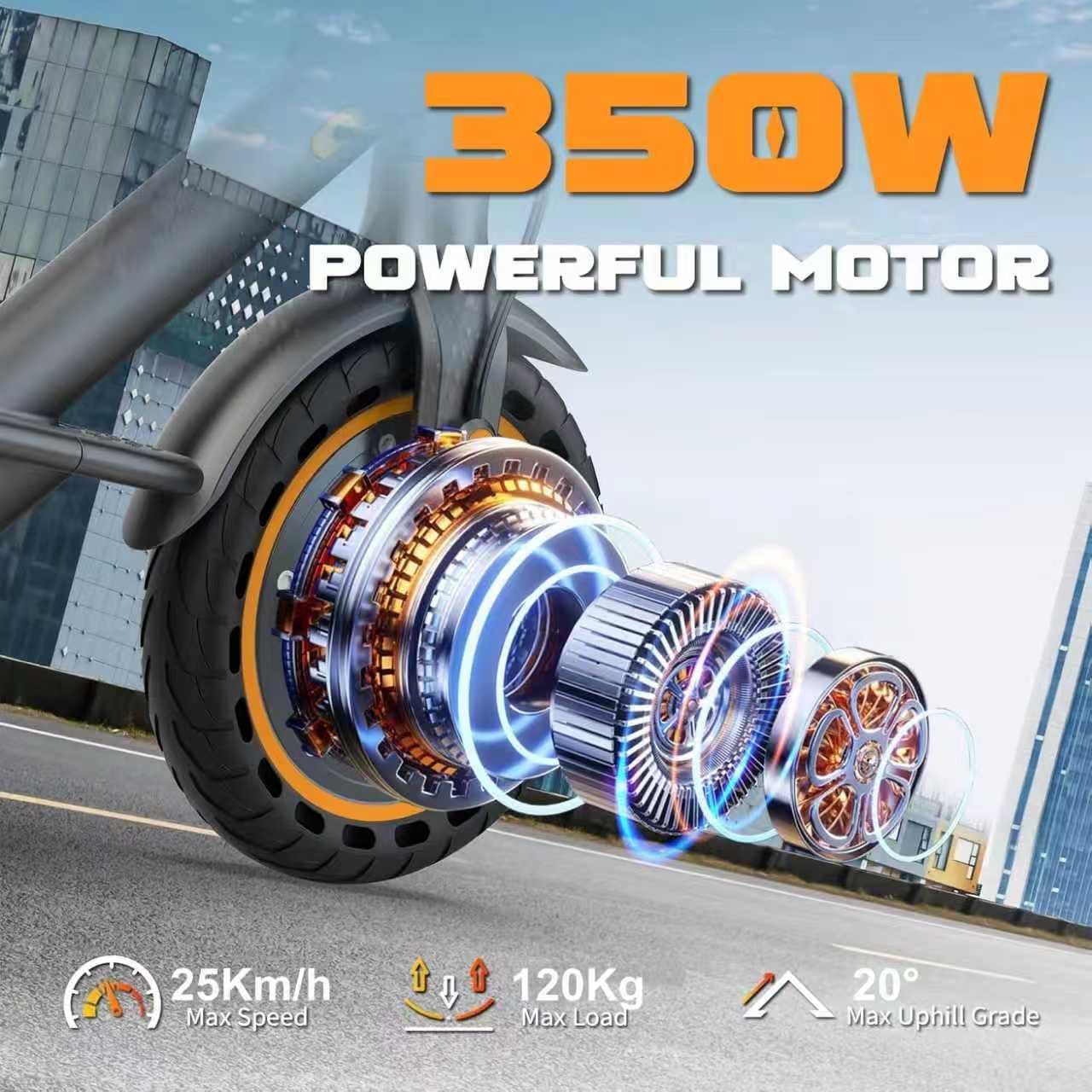
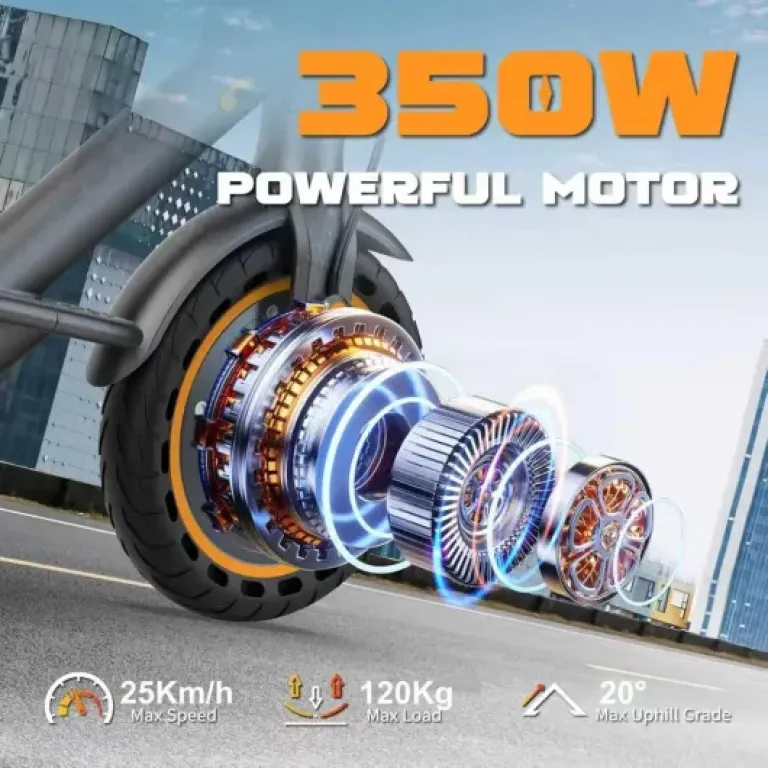
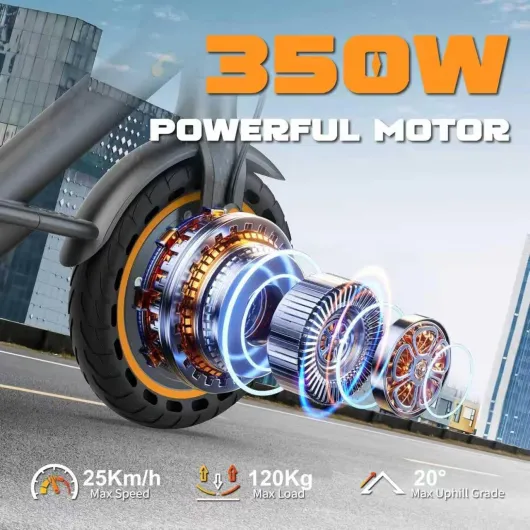
What interested me most was: does it really do 25 km/h, how far can I go on a charge in real life, and is it safe enough to trust the brakes in traffic? On paper, you get a 350W motor, 8.5" solid tires, dual brakes (electronic + drum), and an app with some settings. In practice, some of that is useful, some of it is just there for the spec sheet.
Overall, after a few weeks, I’d say it’s a decent commuter scooter for short to medium trips if your expectations are realistic. It’s not perfect, there are some annoyances, and the battery claims are optimistic. But for the price bracket it sits in, it mostly does what it promises, with a few caveats I’ll detail below.
Value for money: worth it if you accept the trade-offs
For what it costs (usually cheaper than the big-name brands with similar specs), the Riceel R30 offers good value for money if your expectations are realistic. You get: a 350W motor, decent top speed, dual brakes, solid tires that don’t puncture, a folding mechanism that actually works, and an app with some extra features like locking and cruise control. For basic commuting, that’s basically the checklist most people care about.
Where they clearly saved money is in the finer details: battery capacity is just okay, comfort is average, and quality control seems a bit inconsistent based on the Amazon reviews. Some people are super happy and say it’s perfect for daily use, others complain about battery not holding up, dodgy brakes, or long refund processes with third-party sellers. That’s the risk you take with a less-known brand. You get more specs for the price, but you might not get the same level of after-sales support as with Xiaomi or Ninebot.
Personally, if you’re looking for a first scooter to see if this way of commuting suits you, and your budget is limited, this model makes sense. It’s not overkill, it does the job, and if it survives a couple of years of moderate use, you’ve got your money’s worth. If you already know you’ll ride every single day, long distances, and you care a lot about comfort and long-term reliability, I’d say stretch your budget for a more established brand.
So in plain terms: good deal for light to medium everyday use, with some compromises on battery realism and long-term durability. If you buy it, do it with eyes open: check it thoroughly in the first weeks, test the range for your weight and route, and don’t assume the advertised numbers are gospel.
Design: looks decent, more practical than flashy
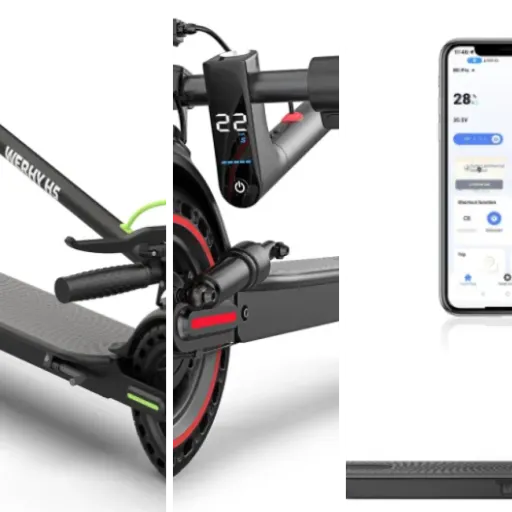
Visually, the orange-gray combo is actually pretty nice. It’s not too loud, but it doesn’t look bland either. I’d call it clean and functional. The frame is aluminium, so it has that typical matte metal look with some plastic parts around the stem and deck edges. Nothing about the design looks premium, but it doesn’t scream cheap toy either. It sits somewhere in the middle: decent finish, some visible screws, and a general “budget commuter” vibe.
The folding mechanism is simple: unlock the latch at the base of the stem, fold the handlebar down, and hook it to the rear mudguard. It takes a few seconds and becomes natural after a couple of tries. In my use, the latch held well; no scary wobble in the stem, which is something I always watch for because that’s where cheap scooters often cut corners. Here, there is a bit of play, but nothing that made me feel unsafe. If you’re picky, you’ll notice it, but it’s not dramatic.
The deck is not huge. With my 43 EU shoes, I can stand one foot forward, one sideways, but it’s a bit tight if you like to move around. The grip tape is basic but does its job: I never felt like I was slipping, even in light drizzle. The handlebar height is adjustable, which is nice if you’re sharing it with a teenager or someone shorter. The grips are non-slip and comfortable enough for 20–30 minute rides; beyond that, you’ll start to feel the vibrations more than the grips themselves.
In terms of layout, the controls are simple: one thumb throttle on the right, brake lever on the left, and a single button on the display to turn it on/off and switch modes. After a couple of rides, it’s all muscle memory. No clutter, no weird button combinations except for some app-related features. Overall, the design is practical and pretty solid for the price, but don’t expect fancy cable routing or high-end touches.
Battery and range: real life is under the marketing numbers
The brand claims 20–25 km range (and up to 30 km in some descriptions). In real life, I never got close to 25 km with my 80 kg weight, mixed riding, and mostly top speed. On a typical day, I was getting around 13–17 km per charge depending on temperature and how much I pushed it. On a cool day with some wind and a couple of small hills, I was closer to the lower end. On a warm, flat route riding a bit more gently, I could stretch it a bit more.
If you’re lighter (like a teenager or someone under 60 kg) and you ride in eco mode at lower speed, you might hit something closer to their numbers. But for an average adult using it at full speed most of the time, plan for around 15 km of reliable range. That’s still fine for a lot of commutes: 5–7 km each way with some margin. Just don’t buy it thinking you’ll do 25 km at full speed on one charge every day. That’s not how it behaves.
Charging time is roughly what they state: around 4 hours from almost empty to full. The charger is small and light, so you can keep it at work if you need a top-up. The LED display shows the battery level, but like most scooters, the last bar drops faster than you’d like. When it gets low, the scooter starts to lose power and speed, so the last few kilometers are not as fun. You can still get home, but you’ll notice it.
I did notice one thing that lines up with the negative Amazon review: the battery indicator can feel a bit jumpy. It drops fast if you’re at full throttle on a slight hill, then creeps back a bit on flat. That’s normal to some extent, but it can make it hard to judge exactly how much you have left. Overall, the battery is okay for short daily commutes, but if you plan longer rides or hate charging often, you might find it a bit limiting.
Comfort: okay for short rides, tiring on rough roads
Comfort-wise, this scooter is fine for 10–20 minute trips, but beyond that, you start to feel the compromises. The main issue is the lack of suspension combined with solid 8.5" tires. On smooth bike lanes, it’s not a problem at all: the ride feels stable and you barely think about it. The trouble starts when you hit rough tarmac, cracks, or cobblestones. All those small impacts go straight into your hands, knees, and lower back. It’s not unbearable, but if your daily route is on bad roads, you’ll notice it quickly.
The deck is just wide enough for a comfortable stance, but there’s not much room to move your feet around. After 15–20 minutes, I often shifted my feet a bit to relieve pressure. The non-slip grip works well though; I never felt like I was going to slide, even when it had rained earlier and the ground was slightly damp. For short hop-on, hop-off city rides, that’s totally acceptable. For a long continuous ride, you’ll probably want a short break.
The adjustable handlebar is a plus. I tried lower and higher settings, and it’s handy if you share the scooter with someone shorter or taller. The grips are basic rubber, not super soft, but they don’t chew up your hands either. After a week of daily use, I did start to feel some numbness in my hands on longer rides, just from the vibrations. That’s the trade-off you make with solid tires and no suspension – less maintenance, more vibration.
Noise-wise, it’s pretty quiet. You mainly hear the motor whine and the tires on the ground. No annoying rattles on mine so far, which is good. Overall, comfort is decent but clearly not the strong point of this scooter. For pure commuting on okay roads, it’s fine. If you want something plush that soaks up bumps, you’ll have to spend more on a model with real suspension and maybe pneumatic tires.
Durability and safety: feels solid, but not flawless
In terms of build, the aluminium frame feels sturdy enough. I’ve folded and unfolded it daily, carried it up stairs, and hit a few potholes I didn’t see in time. So far, nothing has cracked or come loose. The stem latch still locks properly, and there’s no scary flex in the deck. It’s not bulletproof, but for the price, I’d call the structure pretty solid. The solid honeycomb tires also help: no punctures, no checking pressure, just ride and forget.
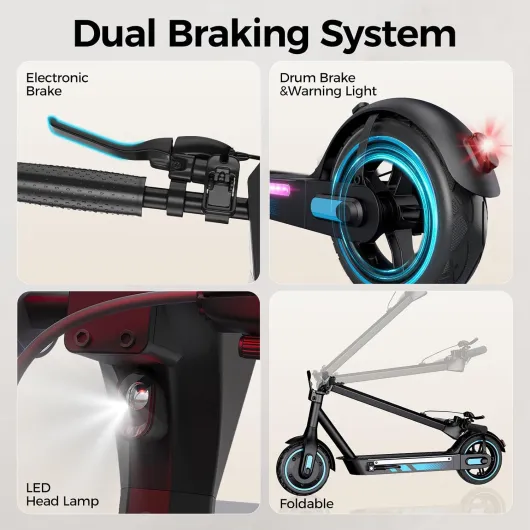
Where things get more nuanced is safety and brakes. The scooter has a dual system: electronic braking plus a drum brake. When both are working properly, stopping power is decent for city speeds. You’re not going to stop on a dime from 25 km/h, but you can slow down in time if you’re paying attention. On dry ground, I felt reasonably confident. In wet conditions, you need to brake earlier and more gently, but that’s true for most scooters.
However, I can see how some users might feel the brakes are not perfect. The electronic brake sometimes feels a bit inconsistent at very low speeds, and if you rely only on that and don’t pull the lever firmly, it can feel weaker than expected. Also, there are reports of speed control and locking issues in the Amazon reviews. I didn’t have a runaway throttle situation, but I did have one moment where the accelerator didn’t respond until I restarted the scooter. Another reviewer mentioned pressing the power button 4–5 times to fix that; I had a similar trick: turning it off and back on usually cleared it.
Long term, this doesn’t feel like a scooter that will last 10 years, but for a couple of seasons of regular commuting, I think it holds up if you don’t abuse it. Just be aware: this is not a premium machine, and quality control on lesser-known brands can be a bit hit or miss. Inspect the brakes, make sure the latch is tight, and if something feels off (like the battery dying too fast or the lock not holding), deal with it early while you’re still in the return window.
Performance: fine for city riding, but don’t expect miracles
On performance, this scooter is good enough for everyday city use if you’re not chasing speed records. With my 80 kg weight, it hits around 24–25 km/h on flat ground, which matches the stated 25 km/h. It doesn’t rocket off the line, but the acceleration is smooth and predictable. For bike lanes and city streets, that’s honestly all I need. It’s fast enough to feel efficient, but not so fast that you’re terrified every time a pedestrian steps out.
On hills, the 350W motor is okay but not heroic. Small inclines, it handles fine, you just lose a bit of speed. On steeper hills, you’ll feel it slow down, and you might end up at 10–12 km/h or even less if you’re heavier. Compared to branded scooters in the same range (like a basic Xiaomi), it’s roughly similar. If your daily route has serious hills, this might annoy you. On mostly flat city routes, it’s totally acceptable.
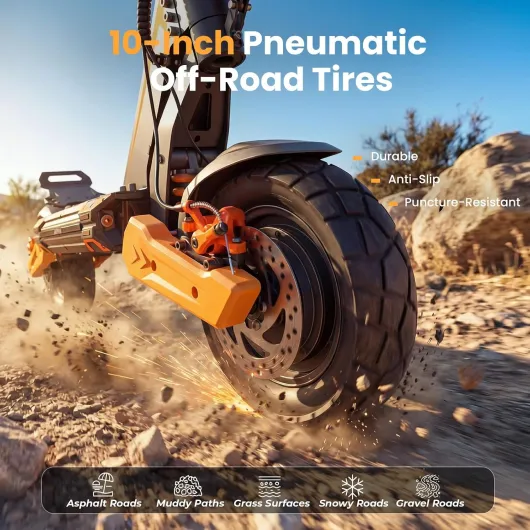
The ride quality is where you feel the solid 8.5" tires and lack of suspension. On smooth asphalt, it’s pretty pleasant. On cracked pavement, cobblestones, or rough bike paths, you feel every bump. It’s not painful, but it can get tiring on longer rides. The upside of solid tires is that you don’t get punctures, which is honestly a big plus if you hate dealing with flats. But you trade that for more vibrations and less comfort, especially in your wrists and knees after 20+ minutes.
In terms of stability, up to 20–22 km/h it feels quite steady. At top speed on rough surfaces, you need to pay attention and keep both hands firmly on the handlebar. The scooter is not wobbly, but the combination of small wheels and solid tires means it can get a bit nervous on bad roads. Overall, performance is decent but nothing special: good enough for short to medium commutes, not built for speed or long-distance comfort.
What you actually get out of the box
Out of the box, you get the scooter already mostly assembled, a basic charger, and a small manual. No fancy extras, no spare tire (not that you need one with solid tires), no carrying strap. It’s really just the scooter + charger and that’s it. The manual is clear enough to get going, but don’t expect a full course on maintenance or troubleshooting. For a first scooter, you’ll probably end up checking YouTube for some things.
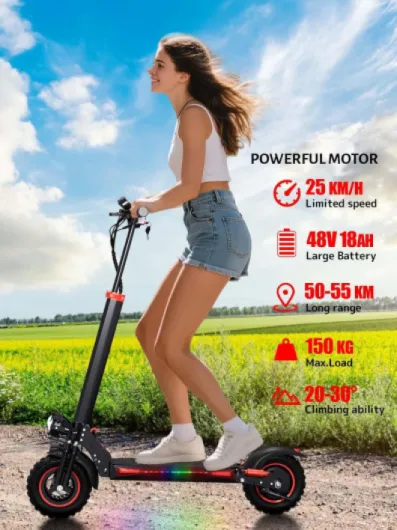
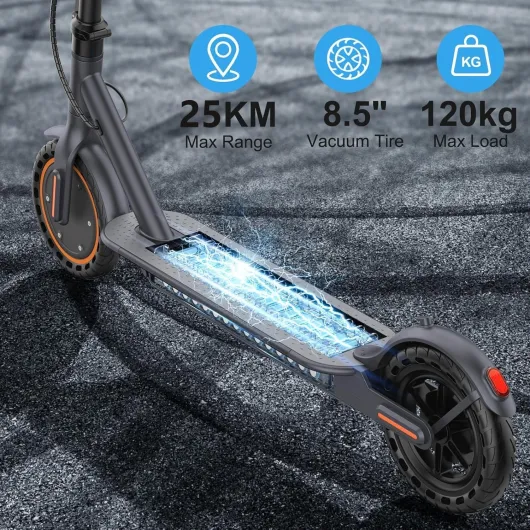
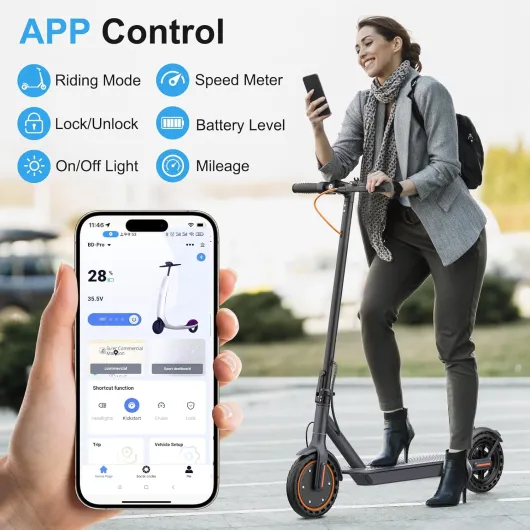
The claimed specs: 350W motor, max speed 25 km/h, range 20–25 km (Amazon page also mentions up to 30 km, which is optimistic), 120 kg weight limit, and 4-hour charge time. It has 8.5" solid honeycomb tires, dual braking system (electronic front + drum rear), and front + rear lights. It folds down in one step and locks into place for carrying. There’s also an LED display on the handlebar and an app you connect via Bluetooth to tweak settings like top speed, cruise control, and locking.
When you first stand on it, it feels like a typical budget commuter scooter: narrow deck, upright stance, and enough height for an adult (I’m 1.80 m and didn’t feel cramped). The scooter is not ultra-light, but it’s manageable up stairs or into a car trunk. It’s clearly built with short commutes and city use in mind, not long leisure rides or off-road adventures.
So in short: the presentation is straightforward. No premium packaging, no extras, but all the basics are there. If you’re looking for something simple that works out of the box without much setup, this fits. If you like brands that overload you with accessories and fancy unboxing, this is not that. It’s more “here’s the scooter, now ride it”.
Pros
- Decent top speed (around 25 km/h) and smooth acceleration for city use
- Solid honeycomb tires mean no punctures and low maintenance
- Good price-to-features ratio with dual brakes, lights, and app control
Cons
- Real-world range is closer to 13–17 km for an average adult, below the advertised figures
- Ride is quite firm on rough roads due to solid tires and no suspension
- Quality control and after-sales support less reassuring than big-name brands
Conclusion
Editor's rating
The Riceel R30 is a no-frills commuter scooter that does most of what it promises, as long as you don’t take the spec sheet too literally. In real life, it gives you around 15 km of usable range at full speed for an average adult, a top speed close to 25 km/h, and a frame that feels solid enough for daily city use. The solid tires and dual braking system are practical: no punctures to worry about, and brakes that are decent once you get used to them. Comfort is acceptable for short trips, less so on rough roads or longer rides.
It’s not perfect: the battery claims are on the optimistic side, the ride can be harsh on bad roads, and being a lesser-known brand means you might have to be patient if something goes wrong and you’re dealing with a third-party seller. There are better scooters out there, but they also cost more. I’d recommend this one to adults and teens who need a budget-friendly city scooter for short to medium commutes, mostly on decent surfaces. If you’re very picky about comfort, plan to ride long distances daily, or want top-tier customer support, you should probably skip this and look at more established brands.