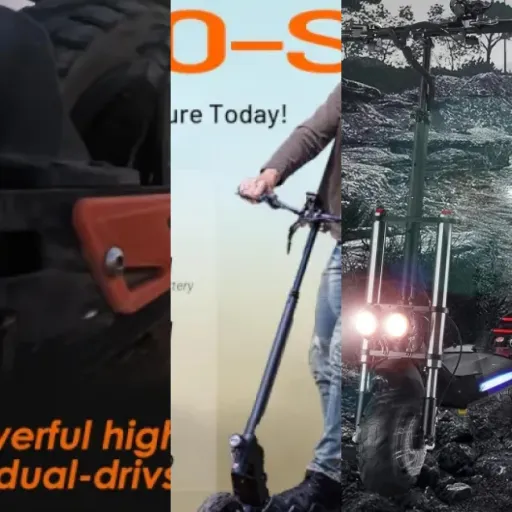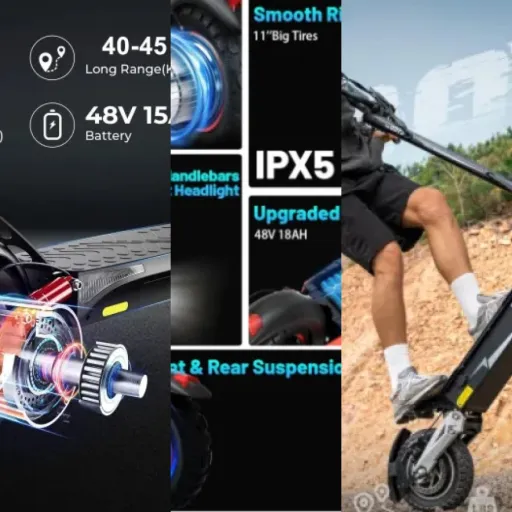

Summary
Editor's rating
Good value for raw power, less so if you care about polish and support
Bulky, aggressive, and not exactly discreet
Big battery, long range… if you don’t ride full throttle all the time
Comfortable ride, uncomfortable to move around
Feels sturdy, but some parts and support are question marks
This thing is brutally fast for a "scooter"
What you actually get out of the box
Pros
- Very strong dual-motor performance with good hill-climbing even for heavier riders
- Large 60V 40Ah battery gives genuinely long range when ridden sensibly
- Comfortable ride thanks to dual suspension and 11-inch off-road tubeless tires
Cons
- Very heavy and bulky at around 45 kg, hard to carry or store in small spaces
- Brand is not widely established, so spare parts and long-term support can be tricky

Specifications
View full product page →| Brand | HWWH |
A scooter that feels more like a small electric motorbike
I’ve been riding electric scooters for a few years now, mostly mid-range commuter stuff around 500–800W. This HWWH S3 is in a totally different category. Dual motors, 60V 40Ah battery, 11-inch off-road tires, 45 kg weight… it’s basically a small electric motorbike that folds. I used it for a couple of weeks for mixed use: commuting, messing around on dirt paths, and a few longer rides just to see what the battery could handle.
The first thing that hit me is how aggressive the power feels compared to normal scooters. Even as a heavier rider, it pulls hard and doesn’t really care if there’s a hill in front of you. It’s fun, but you have to respect it, otherwise you’ll be on the ground faster than you think. This isn’t the kind of scooter I’d put a complete beginner on.
On the flip side, you pay for that power in two ways: weight and size. At 45 kg, this is not something you casually carry up three flights of stairs. Folding it is fine, but actually lifting or loading it into a car is a mini workout. If you live in a flat without an elevator or need to carry it daily, that’s going to get old quickly.
Overall, my first impression was: great power and comfort, but absolutely not a light commuter toy. It’s more for people who want real speed, off-road potential, and long range, and who don’t mind dealing with a big and heavy machine. If you just want something easy for the last mile to the office, this is overkill and not very practical.
Good value for raw power, less so if you care about polish and support
In terms of value, it really depends what you’re looking for. For the specs you get – dual high-power motors, 60V 40Ah battery, hydraulic brakes, big off-road tires, and full suspension – the price is usually lower than many big-name brands with similar performance. So if your main goal is maximum speed and range for the money, it’s pretty hard to beat. You get a lot of scooter for what you pay.
But you have to factor in the less visible parts of the deal: after-sales support, parts, and overall polish. The documentation is basic, the cable management is a bit messy, and the brand isn’t exactly a household name. If something breaks out of warranty, you’ll likely need to be resourceful and comfortable searching for parts that “should fit” rather than just ordering an official spare from a well-known brand’s website.
Compared to smaller, more city-focused scooters from brands like Xiaomi, Ninebot, or similar, this HWWH S3 gives you way more power and range, but much less practicality. You’re trading portability, refinement, and brand ecosystem for brute force and long-distance capability. For some people, that’s a fair trade. For others, it will feel like too much hassle for daily commuting, especially if they don’t use the full performance regularly.
Overall, I’d say the value is good if you know exactly what you’re buying: a heavy, powerful machine for long rides and off-road fun. If you just want something simple, light, and easy to live with, there are better options for the same money. It’s not a bad deal, but it’s a niche kind of good deal: great for power-hungry riders, meh for casual city users.
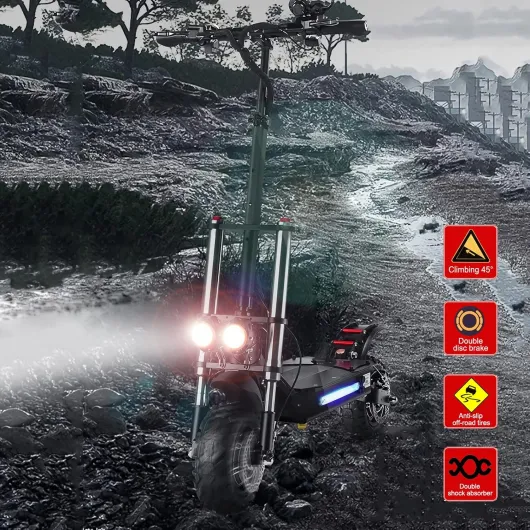
Bulky, aggressive, and not exactly discreet
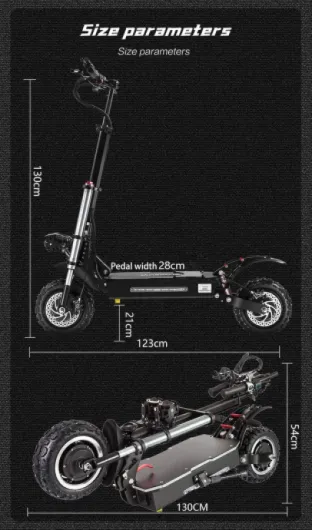
The design is basically: big, black, and aggressive. The frame is thick aluminium, the deck is wide, and the 11-inch off-road tires make it look like a small dirt bike without the bodywork. If you’re after something sleek and minimal, this isn’t it. If you like the “tank on wheels” look, you’ll probably be happy. The handlebar height (around 132 cm) is good for adults; I’m about average height and never felt hunched over.
One thing I liked is the wide deck. You can comfortably place your feet side by side or one behind the other, and you still have space to move around a bit when braking or taking bumps. The included seat is optional: I tried it for a couple of longer rides. It’s practical if you’re going far, but it also makes the scooter even bulkier and more awkward to fold and store, so I ended up using it mostly in standing mode.
The folding mechanism is decent. The stem folds down over the deck and locks into place. It feels secure enough, but you still notice some flex in the stem when you hit bigger bumps or brake hard. Nothing scary, but it reminds you this is still a folding scooter, not a rigid motorcycle frame. Also, because of the size of the tires and suspension, even folded it takes a lot of space. Forget about slipping this under a small desk.
Visually, the cables are a bit messy around the handlebar area. They’re not hanging dangerously, but it doesn’t have that clean, hidden-cable look some higher-end brands try to do. Personally, I don’t care that much as long as it works, but if you’re picky about aesthetics, it might bother you. Overall, the design is more about function and brute force than finesse. It looks like what it is: a heavy-duty performance scooter, not a stylish city accessory.
Big battery, long range… if you don’t ride full throttle all the time
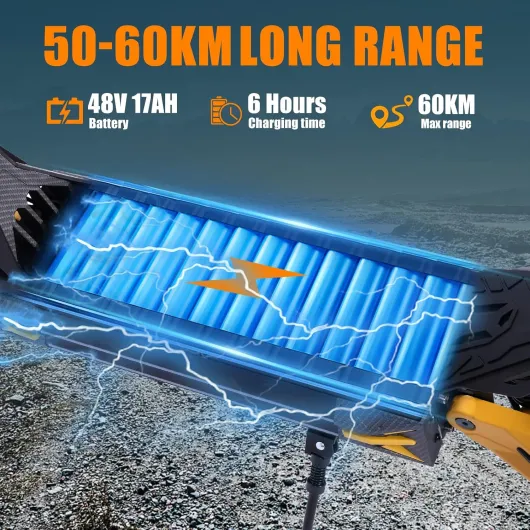
The battery is one of the main selling points: 60V, 40Ah, with a claimed max range of 100 km. That kind of capacity is noticeable right away in the weight, but also in how slowly the battery gauge drops compared to smaller scooters. I did several mixed rides – some city, some open roads, some hills – and tried different modes to see how it behaves.
In real life, 100 km is optimistic unless you ride gently. With a heavier rider, mixed speeds between 25–45 km/h, some hills, and dual motor on part of the time, I was getting more in the 50–70 km range before I started to feel the power drop and the battery bar getting low. If I stayed mostly in single motor and kept speeds around 25–30 km/h, the range jumped closer to what the brand claims, but then you’re not really using the full performance potential.
Charging time is around 5–6 hours with the included charger, which is fine for an overnight charge. The scooter supports dual charging if you get a second charger, which can cut the time in half. The USB charging option on the scooter is a small bonus – handy to top up a phone if you’re using navigation, but I wouldn’t rely on it as a main power bank. It’s more of a convenience feature than a game plan.
Overall, the battery is solid and suited to the power of the scooter. You don’t feel like you’re constantly worrying about running out of juice after 15 km. But like always, the official range numbers are based on ideal conditions: light rider, flat ground, low speed, and probably single motor. If you buy it with realistic expectations – long range, but not magic – you’ll be satisfied. Just remember: the more you enjoy the speed, the faster you’ll eat through that 40Ah pack.
Comfortable ride, uncomfortable to move around
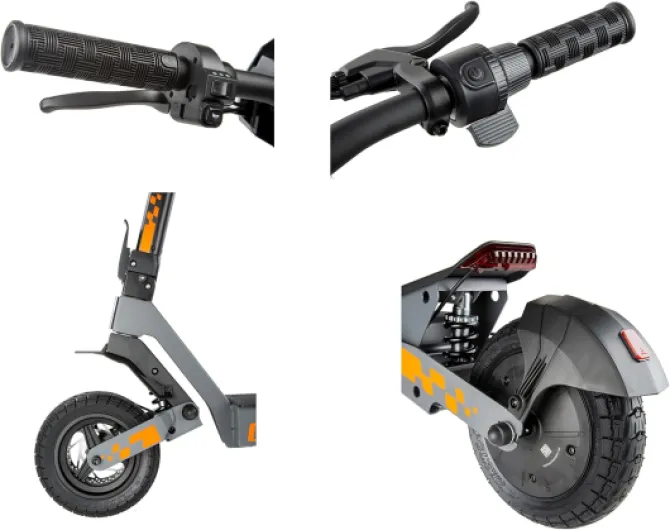
On the road (or on dirt), the comfort is actually one of the strong points. The dual suspension setup – inverted hydraulic shock up front and dual springs at the back – does a good job smoothing out rough surfaces. I tried it on cracked pavement, cobblestones, and some light off-road trails. You still feel bumps, but they don’t smash your knees and back like on a cheap rigid scooter. At higher speeds, that suspension gives you a bit more confidence, especially when you hit unexpected potholes.
The 11-inch tubeless off-road tires also help a lot. They’re wide and have decent grip, even on dirt and gravel. On wet pavement you still have to be smart with acceleration and braking, but that’s true for any scooter. Because they’re tubeless, you worry a bit less about pinch flats, though punctures can still happen. The scooter feels stable at speed, especially with the wide deck and the overall weight pressing it down.
Standing comfort is good thanks to the deck size and the grips, which are fairly ergonomic. After about 40–50 minutes of riding, my legs were more tired from balancing the weight when stopped than from the actual ride. With the seat mounted, longer trips are less tiring, but then you lose some of the fun of riding it like a big toy. The seat itself is okay – not luxury, but fine for an hour or two.
Where comfort takes a hit is off the scooter. Moving this thing around manually is a pain. Pushing it up stairs, turning it around in a narrow hallway, or lifting it into a trunk is where you start swearing. If you have an elevator and a garage, fine. If you’re in a small flat or need to carry it regularly, it becomes annoying quickly. So: great comfort while riding, pretty bad comfort when you have to manage its weight and bulk in daily life.
Feels sturdy, but some parts and support are question marks
In terms of feel, the scooter comes across as solid and overbuilt. The aluminium frame is thick, the stem is chunky, and nothing feels flimsy when you step on it. I hit a few potholes and rough sections on purpose to see if anything would rattle loose. Apart from the usual minor vibrations you get on any scooter, nothing worrying showed up in the first couple of weeks. The folding latch stayed tight and there were no weird cracking noises from the frame.
The hydraulic brakes and suspension components seem decent out of the box, but with these kinds of scooters, long-term durability really depends on maintenance. You’ll likely need to adjust brakes, tighten bolts, and maybe bleed the hydraulic system after some time. This is not a “ride it and forget it” product. If you don’t like doing basic maintenance or don’t have a local shop willing to work on it, that’s something to consider.
One thing that worries me a bit is parts availability and after-sales support. One of the Amazon reviews literally asks how to find parts for it. That matches my feeling: this is clearly an imported, generic high-power scooter sold under the HWWH/FUFONG name. If you break a specific part (like the display, controller, or a custom bracket), you might have to dig around online, contact the seller, or improvise with compatible parts from similar models. It’s not like buying from a big mainstream brand with a clear parts catalog.
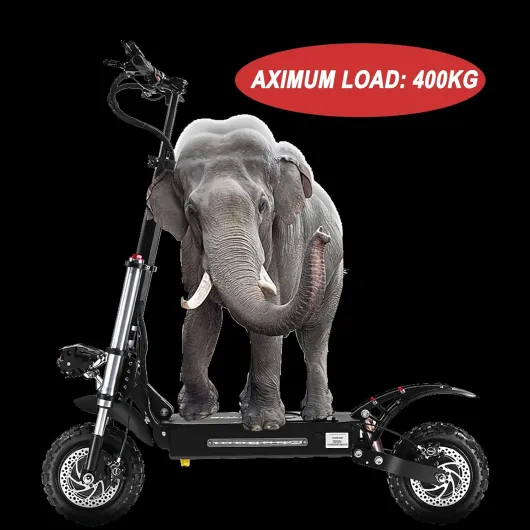
So my take on durability: the structure and main components feel up to the job for heavy use, especially considering the 200 kg weight limit. But don’t expect premium brand-level support or easy spare parts. If you’re a bit handy or don’t mind hunting parts online, it’s manageable. If you want plug-and-play service and local support, you might be better off with a more established brand, even if it means less power.
This thing is brutally fast for a "scooter"
Performance is clearly the main reason to buy this model. With the dual motors engaged, the acceleration is no joke. I’m not light, and even so, it pulls hard off the line and keeps pushing up to high speeds on flat ground. One Amazon review mentions 50–60 mph (80–95 km/h) with a 110 kg rider on flat; I didn’t push it to the absolute limit because, honestly, I don’t trust any scooter that much at those speeds, but I can confirm it goes way beyond typical rental scooters and most commuter models.
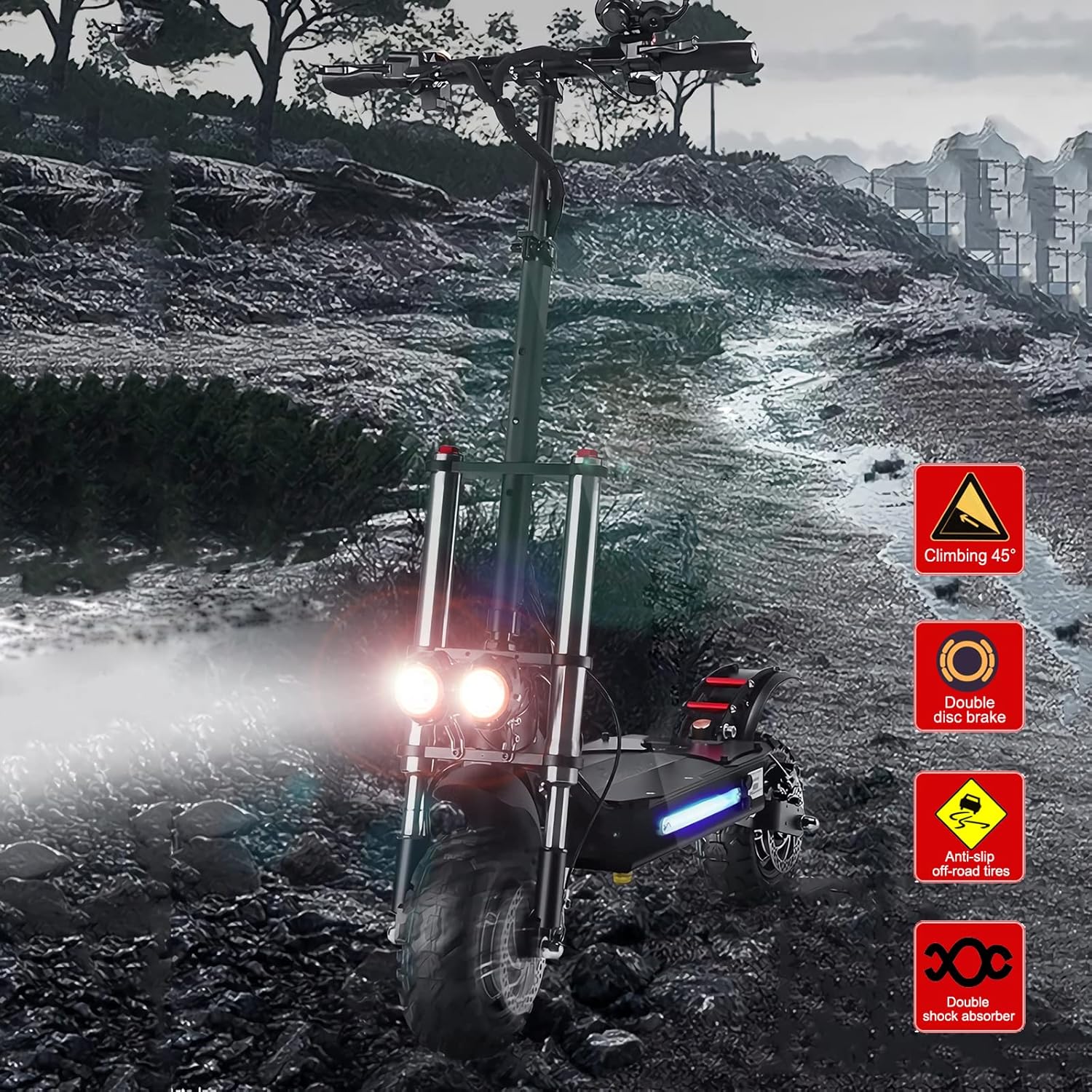
Hill climbing is where it really shines. Steep inclines that usually slow scooters to a crawl are handled without much drama. The brand claims it can handle up to 45° slopes; that’s optimistic in real life, but for normal city hills and even some nasty residential climbs, it keeps a good pace. You don’t feel it struggling and whining like smaller 350–500W scooters. If you live in a hilly area, that’s a big plus.
The dual drive / single drive switch is useful. In city traffic or when you want to save battery, running only one motor is enough and makes the throttle a bit less twitchy. In dual mode, you really have to lean forward and be ready, especially from a standstill. The throttle is pretty sensitive, so the first days I rode in a lower speed mode until I got used to it. It’s easy to spin the rear wheel on loose surfaces if you just slam the throttle.
Overall, in terms of raw power and speed, it delivers. But you need to be honest with yourself: this is way too much scooter for casual, slow commuting on crowded bike lanes. It’s fun on private roads, wide bike paths, and open areas. In tight, busy city centers, it feels like overkill and honestly a bit stressful because you’re constantly holding back a machine that wants to go much faster than it should in public spaces.
What you actually get out of the box
Out of the box, the HWWH S3 looks pretty complete. In my case, the package included the scooter, a removable seat, a basic pump, a phone holder, a scooter bag, installation tools, and the charger. So you’re not hunting for extra bits just to start riding. The assembly is mostly folding the stem up, tightening a few bolts, and adjusting the handlebars and seat if you plan to use it. Nothing too complex if you’ve ever built a bike or scooter before.
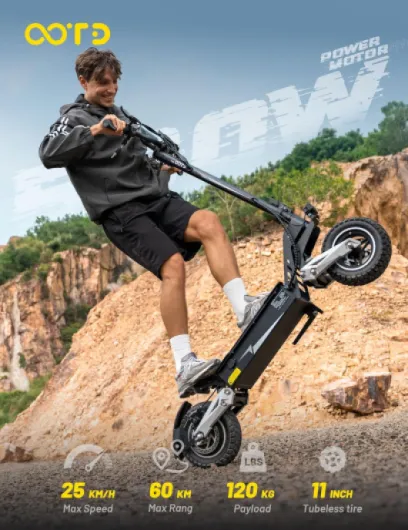
The spec sheet is packed: dual motors (marketed as 5600W total), 60V 40Ah battery, 11 × 3.6 inch tubeless off-road tires, dual hydraulic disc brakes with EABS, dual suspension, and a claimed 100 km range. The brand calls it a commuter and off-road scooter, which is technically true, but in practice it leans more towards performance and off-road than calm commuting. The official top speed listed as 25 km/h is clearly just for legal reasons; users (and my own tests) show it can go far above that on private roads.
The cockpit has a digital display, throttle, mode buttons, and separate controls for lights. It’s not super fancy, but it’s functional. There are front and rear lights plus turn signals, so you’re visible at night. The screen is readable in daylight, but in direct sun you sometimes have to squint or shade it with your hand to clearly see speed and battery level.
In short, the presentation is pretty solid for the price range. You get a lot of stuff and a serious spec list, but it’s clear this is built more for performance and range than style. If you’re expecting Apple-level packaging and ultra-polished instructions, you’ll be disappointed. If you just want a big, powerful scooter with all the main features in the box, it gets the job done.
Pros
- Very strong dual-motor performance with good hill-climbing even for heavier riders
- Large 60V 40Ah battery gives genuinely long range when ridden sensibly
- Comfortable ride thanks to dual suspension and 11-inch off-road tubeless tires
Cons
- Very heavy and bulky at around 45 kg, hard to carry or store in small spaces
- Brand is not widely established, so spare parts and long-term support can be tricky
Conclusion
Editor's rating
The HWWH S3 is a big, powerful electric scooter that feels much closer to a small electric motorbike than to the lightweight city scooters most people know. Its strong points are clear: serious acceleration, solid hill-climbing, long range thanks to the 60V 40Ah battery, and a comfortable ride with proper suspension and chunky 11-inch off-road tires. If you’re a heavier rider or live in a hilly area, it doesn’t flinch the way smaller scooters do. It’s fun, it feels stable, and it has enough juice to handle long rides without constant range anxiety.
On the downside, the 45 kg weight and bulky size make it a pain to carry or store in tight spaces. It’s not ideal for people in walk-up apartments or those who need to lift it regularly. The brand is also not very established, so parts and long-term support are a bit of a question mark. The overall finish is functional but not refined: cables are visible, instructions are basic, and you need to accept that you’re buying more of a performance machine than a polished lifestyle product.
So who is it for? Riders who want raw power, long range, and off-road capability, and who are okay dealing with a heavy scooter and doing some maintenance or part hunting if needed. Who should skip it? Anyone looking for a light, easy commuter, people without good storage space, or those who want strong local support and a big brand name. If you fall in the first group, it’s a pretty solid choice. If you’re in the second, you’ll probably be happier with something smaller and more mainstream.