
Summary
Editor's rating
Value for money: pretty good if your expectations are realistic
Design: practical, a bit basic, but sensible
Battery and range: fine overall, but the last bars vanish fast
Comfort: dual suspension helps, solid tires remind you they’re there
Materials and build: light but not flimsy
Durability: feels sturdy enough, but some parts may rattle over time
Performance: decent speed for city use, nothing crazy
What you actually get with the W4 Pro
Pros
- Dual front and rear suspension makes city riding more comfortable than rigid scooters
- Lightweight and easy-to-fold design, practical for carrying and storage
- Decent real-world range for short to medium commutes (around 18–22 km for an average rider)
Cons
- Battery indicator drops quickly after the first bar and performance slows near low charge
- Solid tires and basic build mean you still feel a lot of vibration on very rough roads

Specifications
View full product page →| Brand | WQCJL |
A budget commuter scooter that actually feels usable
I’ve been riding the WQCJL W4 Pro for a couple of weeks now, mostly for short city commutes and quick runs to the shop. I didn’t buy it expecting a premium, high-end scooter, more something that’s practical, folds easily, and doesn’t die halfway through the ride. On that front, it does pretty much what it says. It’s not perfect, but it’s usable and fairly straightforward to live with.
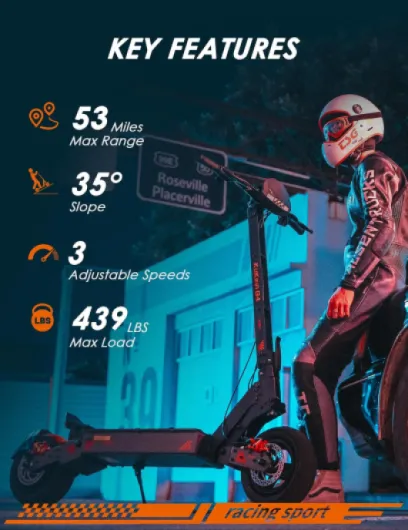
In daily use, the scooter feels like it’s aimed at someone who wants a simple way to cover 3–8 km at a time, not someone doing 30 km marathons every day. The advertised range is up to 35–40 km, but like most scooters, that’s optimistic. With my weight around 80 kg and riding mostly in the faster mode, I’ve been getting closer to 18–22 km before the battery starts to feel weak and the speed drops.
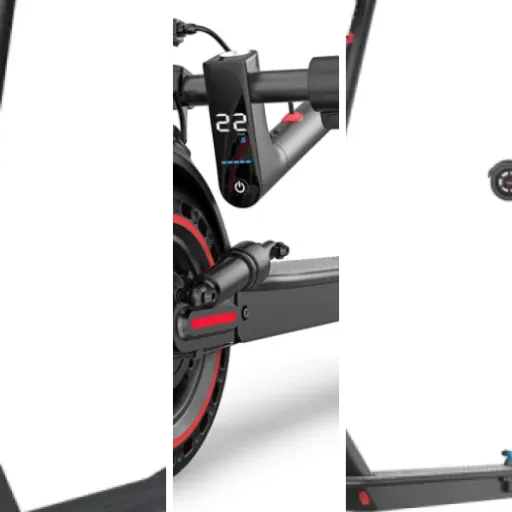
What stood out right away is that it’s easy to handle. The folding system is straightforward, the controls are basic, and the LED display is clear enough. You’ve got speed, battery bars, and mileage, nothing fancy. The Bluetooth app is there, but to be honest, after playing with it twice, I mostly ignored it. I just turn it on, ride, and fold it when I’m done.
If you’re expecting something super powerful or ultra comfortable like a big dual-motor scooter with huge tires, this isn’t that. But if you just want a relatively compact electric scooter with dual suspension that doesn’t feel like a toy, this one is pretty solid for the price. There are a few annoying bits, especially around how the battery behaves at low charge, but overall it does the job for basic commuting.
Value for money: pretty good if your expectations are realistic
Looking at the specs and how it rides, the W4 Pro sits in that segment where you want something more serious than a cheap toy scooter, but you don’t want to spend the price of a mid-range bike. For what it costs, you get a 10.4 Ah battery, dual suspension, a 130 kg weight limit, and a fairly light 13 kg frame. On paper and in practice, that’s not bad at all. You can tell they didn’t waste money on fancy design or premium finishing; they put it into the basics that matter for commuting.
Compared to some better-known brands in the same price bracket, you do lose a bit on brand reputation and maybe after-sales support, but you gain features like dual suspension and a decent battery capacity. If you were to get those from a big-name brand, you’d usually pay more. The trade-off is that some details feel a bit more basic, like the plastics, the linearity of the battery gauge, and the overall polish of the app and interface.
From a user standpoint, the question is simple: does it give you reliable daily transport for a reasonable cost? For short to medium commutes, I’d say yes. It folds easily, rides fine, and the battery is enough if you’re not doing crazy distances. The main annoyance is the way the battery level drops quickly once you’re past the first bar, so you need to get used to that and not push it too close to empty.
If you want top-tier comfort, brand prestige, or very long range, there’s better out there, but you’ll pay more. If you just want a practical electric scooter that gets the job done without costing a fortune, the value here is pretty solid. It’s not a miracle product, but for the price, it offers a decent mix of features and real-world usability.
Design: practical, a bit basic, but sensible
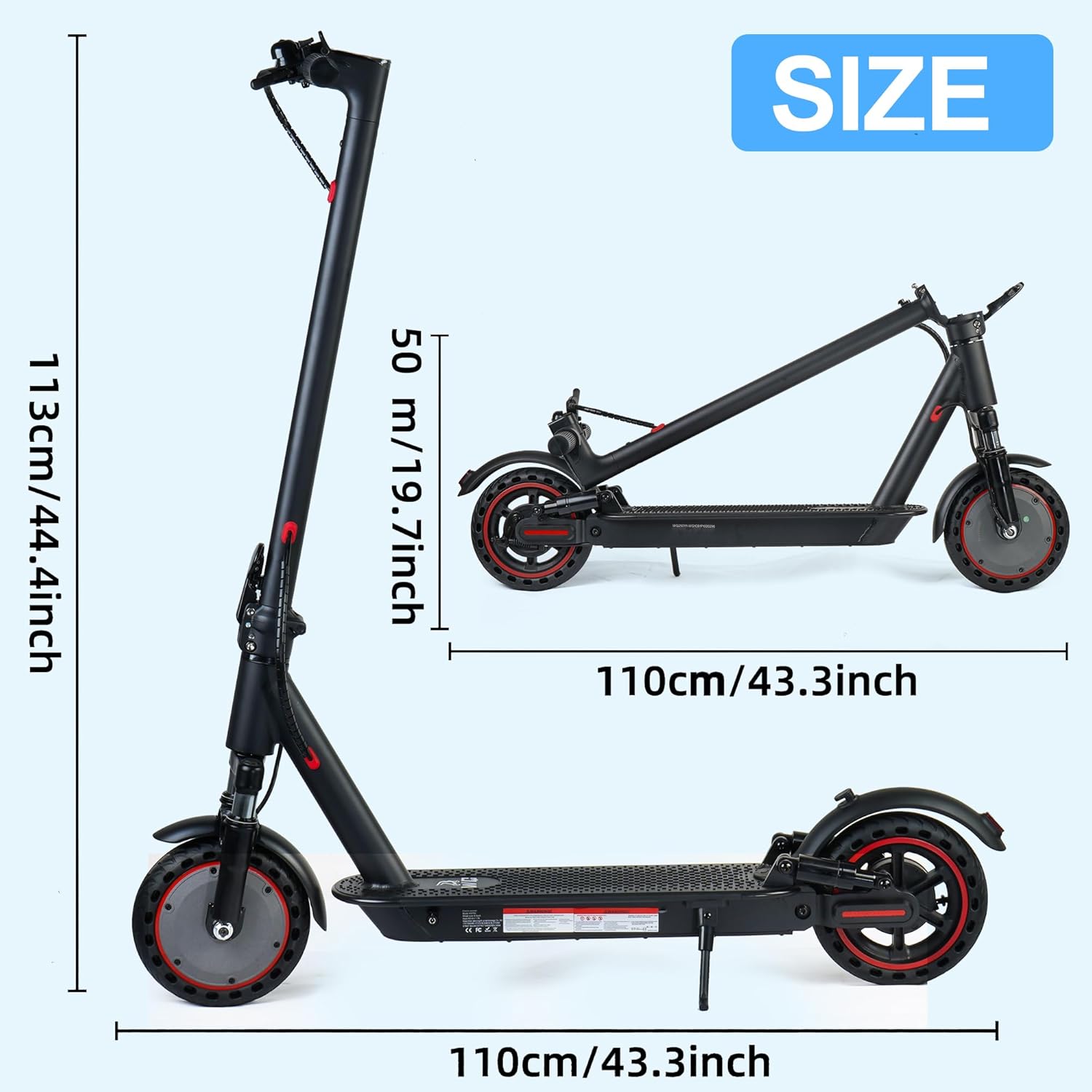
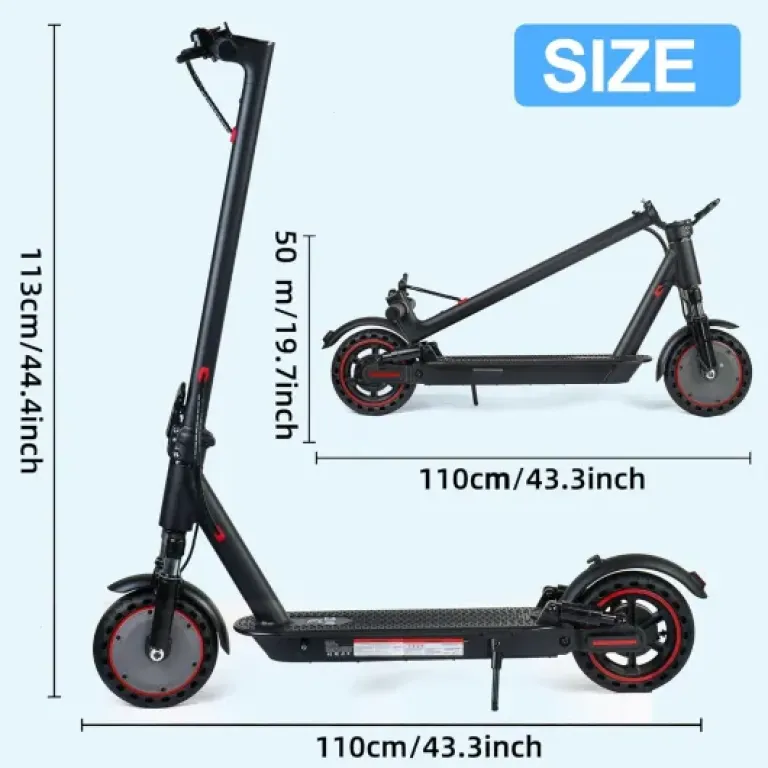
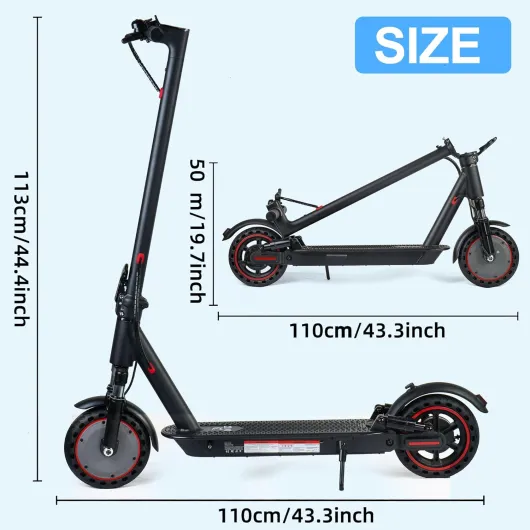
Design-wise, the W4 Pro is pretty straightforward. It’s a grey aluminium frame with a flat deck and a simple folding stem. No wild shapes or flashy lights everywhere. If you like clean and discreet, you’ll probably be fine with it. It doesn’t scream for attention, which I actually like when locking it up or bringing it into the office. The overall dimensions are about 110 cm long and 128 cm high, so it’s standard scooter size, not some mini toy.
The folding mechanism is one of the better parts of the design. You unlock a latch near the base of the stem, fold it down, and hook it onto the rear fender area. After a few tries, I could fold or unfold it in under 10 seconds without thinking. It feels reasonably secure when locked upright. I didn’t feel any scary wobble in the stem when riding, just the usual minor flex you get on most folding scooters.
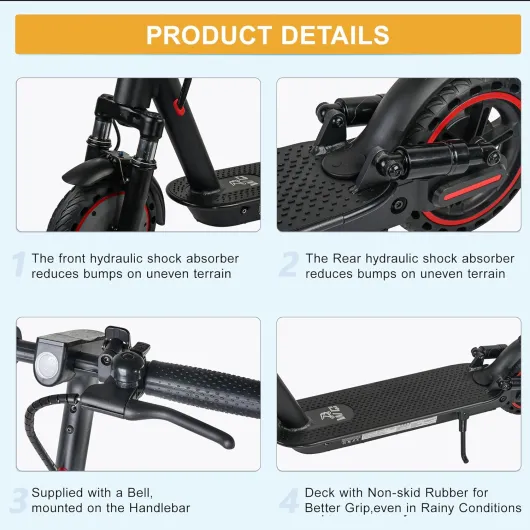
The deck is long enough for me to stand with one foot in front of the other without feeling cramped. It’s not super wide, but for a city scooter it’s fine. The grip on the deck is decent; even on a slightly wet morning, my shoes didn’t slide around. The handlebar is flat and fairly narrow, which is good for weaving through tight spaces but maybe a bit narrow if you’re used to wide, bike-like handlebars. Still, I got used to it after a couple of rides.
Overall, the design is more about function than style. If you want something that looks premium or flashy, this isn’t it. But if you just want a scooter that looks neutral, folds quickly, and doesn’t take over your hallway when stored, the design works. I’d call it “simple but practical” rather than anything special, and that matches the price point and target use pretty well.
Battery and range: fine overall, but the last bars vanish fast
The scooter comes with a 10.4 Ah lithium-ion battery, and on paper they mention up to 35–40 km range. In reality, like with most scooters, that number is very optimistic and probably based on a light rider on flat ground in eco mode. In my actual use, at around 80 kg, mostly in the faster mode and with some mild inclines, I was getting roughly 18–22 km of comfortable riding before the scooter started to feel noticeably weaker.
One thing that matches the Amazon reviews: once the battery indicator drops from full bars, it tends to fall faster than you’d like. The first bar lasts a while, and you feel confident, then after it goes from 5 to 4, the remaining bars can disappear in what feels like no time, especially if you’re still riding in sport mode. You can keep going, but the scooter gets slower as the battery drains, so the end of the ride can feel a bit sluggish.
Charging time is fairly standard. From nearly empty to full takes several hours (think overnight), so it’s not something you top up in 30 minutes. For commuting, the easiest way is: ride to work, plug it in if you can, and you’re safe for the way back. If you can’t charge at work, and your round trip is under 15–18 km, you’re probably fine. Anything longer and you might start worrying about the last part of the journey, especially in cold weather where batteries perform worse.
In practice, I’d say the battery is fine for short to medium commutes and quick errands. It’s not the scooter you buy if you genuinely need 30+ km every day without recharging. The thing I liked is that for realistic distances it’s okay, but on the downside, the battery gauge isn’t very linear and the performance drop near the end of the charge is noticeable. So you need to learn its behavior and not trust the bars blindly.
Comfort: dual suspension helps, solid tires remind you they’re there
Comfort is where this scooter is a bit of a mixed bag. On paper, dual suspension sounds great, and it does help. The front and rear suspension actually do absorb a good chunk of the vibration from small bumps, manhole covers, and rough patches. Compared to a basic scooter with no suspension and solid tires, this is definitely nicer on the wrists and knees. You can feel the springs working when you go over imperfections, and it keeps the scooter more stable than I expected on broken pavement.
That said, the solid 8.5-inch wheels still limit how comfortable it can be. On really rough roads or old cobblestones, you still feel a lot through your feet and hands. The suspension softens the hits, but it doesn’t turn it into a magic carpet. After a 20–25 minute ride on bad roads, I could feel some fatigue in my legs just from constant micro-adjustments. If your route is mostly decent tarmac with the occasional pothole or speed bump, you’ll be fine. If it’s all broken road and cobble, you’ll notice the limits.
Riding position is okay. The handlebar height worked for me, and the deck length lets you place your feet in a natural stance. The grips are basic but didn’t hurt my hands, even on slightly longer rides. There’s no seat of course, so it’s full standing, which is normal for this category. The scooter feels stable at its typical cruising speeds; I didn’t feel sketchy or wobbly unless I was trying to dodge potholes at the last second.
Overall, I’d say comfort is *good for a solid-tire scooter with suspension*, but don’t expect it to feel like a big pneumatic-tire model. For daily commutes of 15–30 minutes each way, it’s acceptable and better than many cheap scooters I’ve tried. For really long rides on bad surfaces, it will feel a bit tiring. The thing I liked is that I didn’t end each ride with my knees or wrists screaming, which is honestly what I care about most for a commuter scooter.
Materials and build: light but not flimsy
The frame is aluminium, which is pretty standard at this price. It keeps the weight down to around 13 kg, and you can feel that when carrying it. It doesn’t feel like a tank, but it doesn’t feel like cheap plastic either. The main tube and deck feel solid enough when you step on it. I’m around 80 kg, and the rated limit is 130 kg, so there’s some margin. I didn’t hear any cracking noises or worrying creaks, just the usual small rattles you get from the folding joint and suspension over bumps.
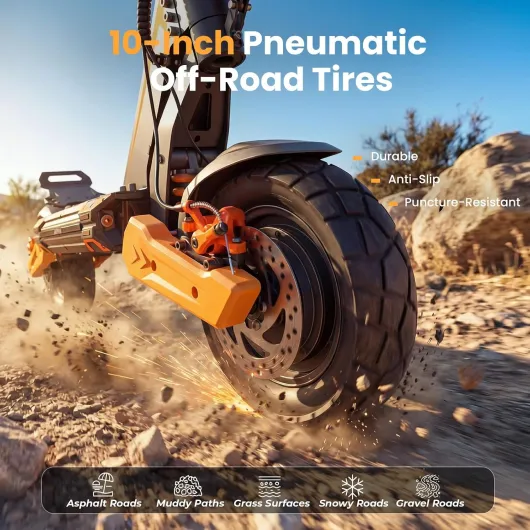
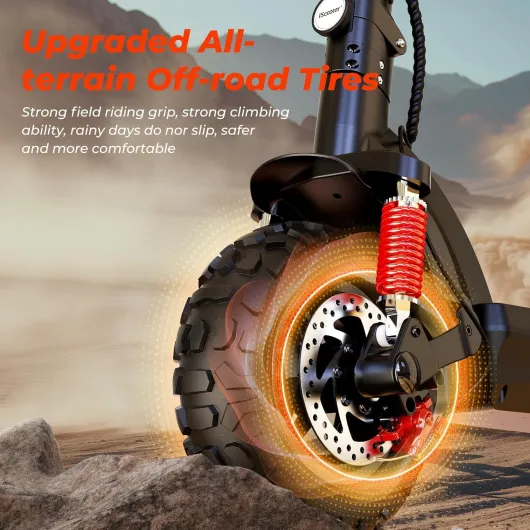
The wheels are listed as alloy steel with solid tires. So no inner tube, no punctures, but you trade that for less cushioning from the tires themselves. The rubber feels quite hard, which is good for durability but not great for comfort on rough roads. That’s where the dual suspension tries to compensate. After a couple of weeks, I haven’t seen any visible wear on the tires, and they grip okay on dry tarmac. On wet surfaces, you just need to ride sensibly, like with any small-wheel scooter.
The plastic parts (fenders, some trim around the deck and handlebar) feel okay but not premium. They do the job, but I wouldn’t be surprised if the fenders crack first if you’re rough with it or keep kicking it around. The brake levers and grips are basic but functional. The grips don’t feel fancy, but they didn’t slip or twist in my hands, even on longer rides.
In terms of overall build quality, I’d put it at “pretty solid for the price”. It’s not built like a high-end scooter that costs twice as much, but it also doesn’t feel like it’s about to fall apart. If you treat it as a commuter tool and not as a stunt scooter, the materials seem good enough to last a while. Just don’t expect premium finishing or super thick metal everywhere; it’s clearly balanced around being light and affordable.
Durability: feels sturdy enough, but some parts may rattle over time
After a couple of weeks of use, nothing has broken on me, and the scooter still feels structurally sound. The aluminium frame and steel wheel parts look like they can take daily commuting without falling apart. I went over plenty of bumps, small curbs, and rough patches, and while the scooter made some rattling noises from the folding joint and suspension, it didn’t feel like anything was about to snap. That said, I can see some of the plastic parts being the first to show wear if you’re rough with it.
The folding mechanism is always a concern on these scooters. On this one, the latch still locks firmly after multiple folds per day. I did notice a tiny bit of play developing at the stem after a while, but nothing serious. It’s the kind of thing you probably want to check and tighten every now and then, like you would with a bike. If you completely ignore maintenance, you’ll likely end up with more wobble and noise over time.
The solid tires are a plus on the durability side. No punctures to worry about, which is nice if you commute through debris or broken glass areas. The trade-off is comfort, but in terms of longevity, they should last a good while. Brakes might need adjustment after some use, like any mechanical brake system, but that’s normal. The suspension components feel okay so far, but I wouldn’t treat them like off-road gear; they’re clearly meant for city bumps, not jumps.
Overall, I’d say durability looks reasonable for a scooter in this range. It’s not indestructible, and if you ride it hard every day in bad weather, you’ll probably need to tighten, adjust, and maybe replace some parts eventually. But if you use it as a normal commuter tool and give it a bit of basic care, it feels like it should last. There’s better build quality out there if you pay more, but for the money, it’s acceptable.
Performance: decent speed for city use, nothing crazy
In terms of performance, this scooter is clearly tuned for everyday city riding, not for speed junkies. The motor gives you enough kick to get going quickly from a traffic light, but it’s not going to throw you backwards. Acceleration is smooth and predictable. There’s a sport mode (S mode) that gives a bit more punch and higher top speed, and that’s the mode I ended up using most of the time. It feels right for keeping up with bike lane traffic.
The top speed is in the typical legal range for electric scooters in most places, and it feels comfortable at that speed on flat ground. On slight inclines, you feel the scooter slow down a bit, but it doesn’t die instantly. On steeper hills, it will struggle, especially if you’re heavier. It will still climb, but slowly. If your commute includes serious hills, you might want something with a stronger motor. For mostly flat city routes with mild slopes, it’s fine.
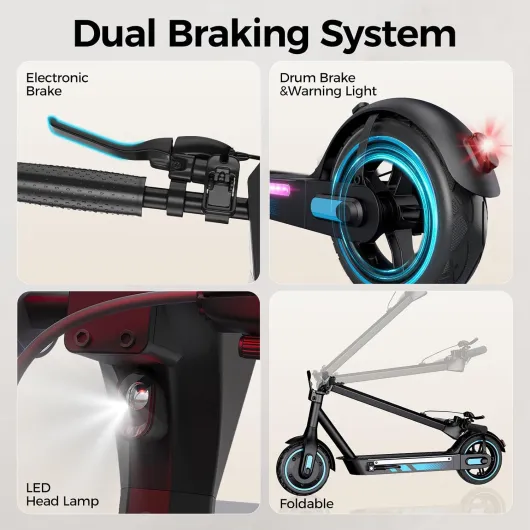
Braking is handled by front and rear brakes, and they do their job. They’re not ultra sharp like hydraulic disc brakes on a high-end scooter, but they’re good enough to stop you safely if you plan ahead a bit. I never had a moment where I felt I couldn’t stop in time in normal city conditions. Just don’t ride like you’re on a motorbike and expect miracles.
Overall, the performance is “good enough” for daily commuting and short trips. It’s not going to impress someone coming from a powerful dual-motor scooter, but that’s not really the target here. If you just need something that comfortably cruises at standard scooter speeds, handles flat routes, and doesn’t feel underpowered on small hills, it does the job. I’d call the performance solid but nothing more, which is fine for a mid-range commuter scooter.
What you actually get with the W4 Pro
Out of the box, you get the scooter, the charger, and a basic manual. That’s it. No fancy extras, no spare tires, no tools kit. The scooter comes mostly assembled; I just had to straighten the handlebar and tighten a couple of screws. First setup took me maybe 15–20 minutes taking my time. It weighs about 13 kg, which is light enough to carry up a couple of flights of stairs, but you’ll feel it if you’re doing that every day.
The W4 Pro is clearly designed as a city scooter. It has 8.5-inch solid wheels, dual suspension front and rear, and a flat handlebar at about 115 cm height. I’m about 1.78 m tall and the height felt fine. Someone much taller might find it a bit low, but for average height it’s comfortable enough. Controls are simple: one main button for power and mode, a throttle on the right, and brake levers for front and rear.
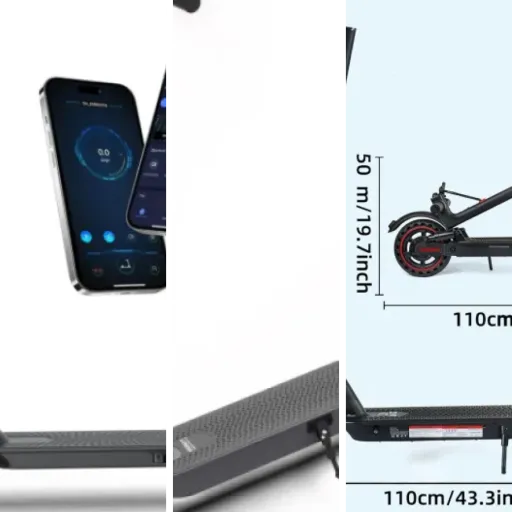
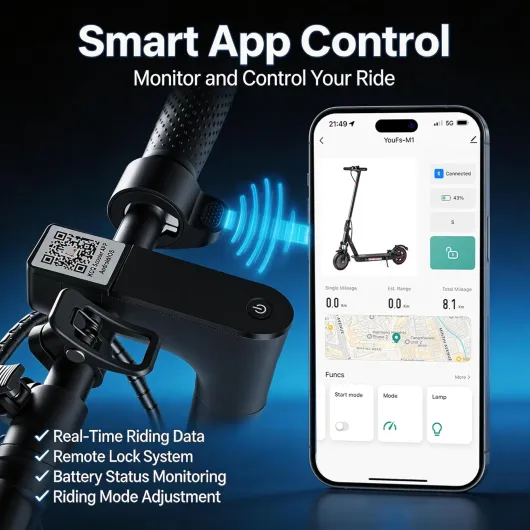
The LED display is basic but readable, even in daylight. You see speed, battery level in bars, and total mileage. There’s also Bluetooth to connect to the app. The app lets you tweak a few things like cruise control, zero-start (whether it kicks in from standstill or needs a push), and lights. Honestly, it feels more like a bonus than something you really need. After the first week, I stopped opening the app unless I was bored at a red light.
In terms of overall impression, it feels like a mid-range scooter that tries to give you the essentials: a half-decent battery, dual suspension, and a frame that doesn’t feel like it will snap under an adult. It’s not fancy, there’s no big brand logo flex, but it doesn’t feel like a toy either. If you just want a simple, adult-sized scooter for short to medium trips, the general package makes sense, especially at this kind of price point.
Pros
- Dual front and rear suspension makes city riding more comfortable than rigid scooters
- Lightweight and easy-to-fold design, practical for carrying and storage
- Decent real-world range for short to medium commutes (around 18–22 km for an average rider)
Cons
- Battery indicator drops quickly after the first bar and performance slows near low charge
- Solid tires and basic build mean you still feel a lot of vibration on very rough roads
Conclusion
Editor's rating
Overall, the WQCJL W4 Pro is a solid choice if you’re looking for a straightforward commuter scooter and you keep your expectations in check. It rides well enough, the dual suspension makes a real difference compared to rigid scooters, and the 10.4 Ah battery is okay for typical city distances. It’s not flashy, it’s not ultra powerful, but it feels like a practical tool rather than a gimmick. The folding system is quick, the weight is manageable, and the controls are simple, which is exactly what a lot of people need for daily use.
On the downside, the battery behavior isn’t ideal: once you drop from full bars, the remaining charge can disappear faster than you’d like, and the scooter slows down noticeably near the end of the battery. Comfort is good for a solid-tire scooter, but if your roads are very rough, you’ll still feel plenty of vibrations. The materials are decent but not premium, and some small parts may rattle or need tightening over time. So it’s not perfect, and there are better options if you’re ready to spend more.
I’d recommend this scooter to someone who wants an affordable, adult-sized electric scooter for daily trips of around 5–10 km each way on mostly decent roads. If you’re heavier, live in a very hilly area, or want long-range rides without thinking about the battery, you should probably look at more powerful and more expensive models. For everyone else who just wants something that gets the job done without costing a fortune, the W4 Pro is a pretty good deal.