
Summary
Editor's rating
Value: good hardware for the money, with some trade-offs
Design: built like a tank, but not exactly subtle
Battery and range: pretty decent, but don’t expect full 80 km at full blast
Comfort: surprisingly decent on rough ground, but you feel the weight
Durability and build quality: solid frame, average finishing
Performance: strong torque, solid grip, but mind the legal use
What you actually get with the RAYI D3
Pros
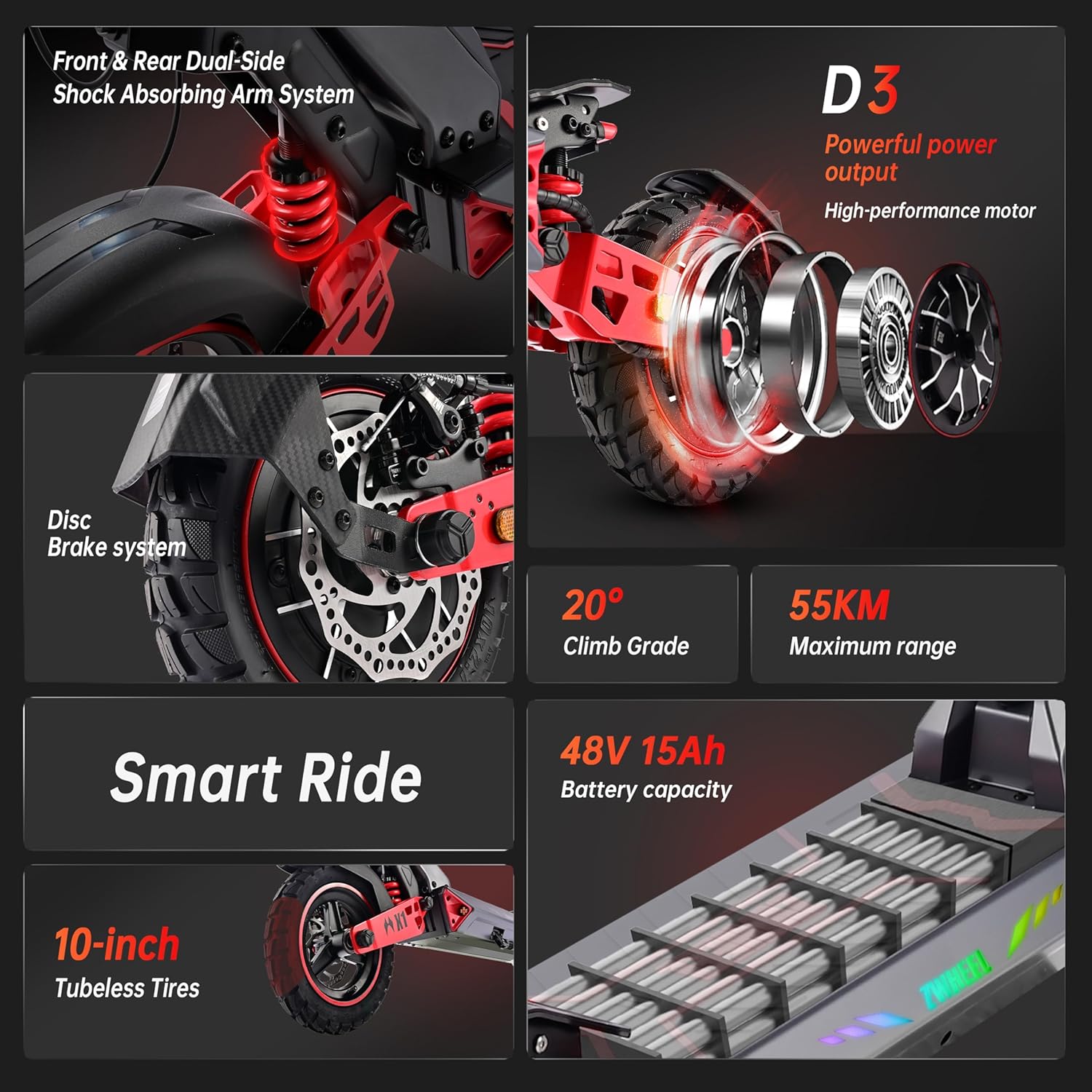
- Very stable and solid frame with front and rear suspension for rough ground
- 10-inch tubeless off-road tyres provide good grip on grass, gravel, and light mud
- Strong twin disc brakes with good stopping power and full lighting setup for visibility
Cons
- Heavy at around 31 kg, not practical to carry regularly
- Unknown brand with only a 6-month warranty and unclear long-term parts support
- Confusing product listing (single vs dual motor, 120 kg vs 150 kg load) and optimistic range claims

Specifications
View full product page →| Brand | RAYI |
A heavy off-road scooter that means business
I’ve been using the RAYI D3 off-road electric scooter for a few weeks on private tracks and rough paths, and it’s definitely not your usual lightweight commuter. This thing is big, heavy, and clearly built more for farms, estates, or large private properties than for popping to the corner shop. My main goal was to replace short trips around private land that I normally do on foot or with an old quad bike, and see if a scooter like this could actually keep up.
First impression when I unboxed it: it’s a proper lump. At 31 kg, you don’t casually carry it up stairs. But once it’s unfolded, it feels solid and planted. The 10-inch off-road tyres and the dual suspension give it a bit of a mini “trail bike” vibe, just without the seat. I’m around 85 kg, and I also rode it with a backpack and some tools; it didn’t feel like it was struggling with the weight.
In daily use on private land, the D3 is clearly tuned more for rough ground and longer distances than for tight city riding. The acceleration is strong, the brakes bite hard, and the range is honestly better than I expected from an unknown brand. At the same time, it’s not perfect: the weight is a pain if you need to carry it often, the finish is decent but not premium, and some specs in the listing are a bit confusing (120 kg vs 150 kg weight limit, single vs dual motor mentions).
Overall, my first takeaway is this: if you have private space to ride and you want something between a bicycle and a quad in terms of effort and speed, the D3 actually gets the job done. Just don’t buy it thinking it’s a lightweight scooter for casual urban use, and remember it’s for private land only if you want to stay on the right side of the law.
Value: good hardware for the money, with some trade-offs
In terms of value, the D3 sits in that mid-range off-road scooter category where you’re paying more than a basic city scooter, but far less than the really high-end off-road monsters. For the money, you get a solid chassis, off-road tyres, dual suspension, strong disc brakes, and a decent battery. On paper, that’s a pretty attractive package if your use case is private land, farms, or big estates. You’re basically getting a small utility vehicle that costs a fraction of an ATV or quad bike, and costs very little to charge.
The main trade-offs for the price are the unknown brand, the short 6-month warranty, and the slightly confusing specs in the listing. If you’re the kind of person who wants a big brand logo, polished app integration, and long-term authorised service centres, this scooter isn’t going to tick those boxes. You’re paying mostly for raw hardware and less for brand ecosystem. For some people, that’s fine; for others, it’s a deal-breaker.
Compared to more mainstream electric scooters designed mainly for city use, the D3 gives you a lot more off-road capability and load capacity, but you sacrifice portability and subtlety. It’s heavier, bulkier, and honestly overkill if you just need to ride a few flat kilometres of smooth pavement. On the flip side, if you actually plan to ride on grass, mud, and gravel every day, cheaper city scooters in the same price zone will struggle or break faster, so the D3 starts to look like good value for money in that specific niche.
So, from my point of view, the D3 is good value if: you have private land, you need something tough with real off-road tyres and suspension, and you’re okay with an unknown brand and a heavier frame. If you’re mainly commuting on public roads or in cities, or you care a lot about after-sales service and brand reputation, there are better options for you, even if the hardware looks less “beefy” on paper.
Design: built like a tank, but not exactly subtle
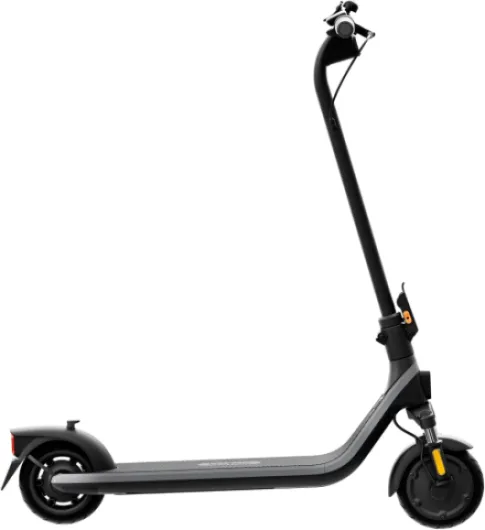
The overall design of the D3 is pretty straightforward: black aluminium frame, wide deck, chunky 10-inch tyres, and a tall folding stem. It looks more like something you’d see on a construction site or big estate than a slim city scooter. Personally, I like that it looks purposeful. It doesn’t pretend to be ultra-minimal; it just looks like a tool meant for rough ground. The deck is wide enough to stand with feet side by side or one behind the other, and the grip tape on top does a decent job of keeping your shoes in place, even when things get bumpy.
The folding mechanism is fairly standard: you unlock a latch at the base of the stem, fold it down, and it hooks so you can carry it or roll it. The anti-wobble part actually works; I didn’t feel any scary flex at the stem, even when braking hard or hitting small bumps at speed. However, because of the 31 kg weight, the design is more about stability than portability. Carrying it into a car boot is fine, but carrying it up several flights of stairs is a workout, not a convenience.
The cockpit area is simple: central digital display, throttle, and brake levers. The display shows speed, battery, and basic info clearly enough, even in daylight. No fancy colour graphics or anything, but honestly, that’s fine. The cables and wires are visible but reasonably tidy; it doesn’t look like a DIY project, but it’s also not as clean as some higher-end brands that hide everything inside the frame.
In short, the design is more “practical workhorse” than “sleek gadget”. If you want something that looks ultra-modern and slim, this isn’t it. If you care more about a stable stance, a wide deck, and a stem that doesn’t shake, the D3’s design choices make sense. I just wish the marketing was a bit clearer about the single vs dual motor look and didn’t mix those concepts in the same page.
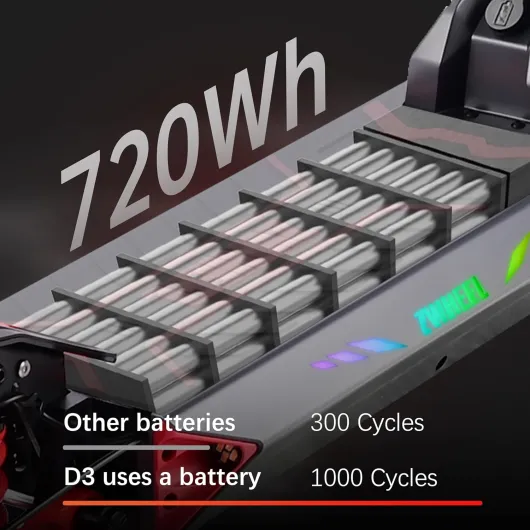
Battery and range: pretty decent, but don’t expect full 80 km at full blast
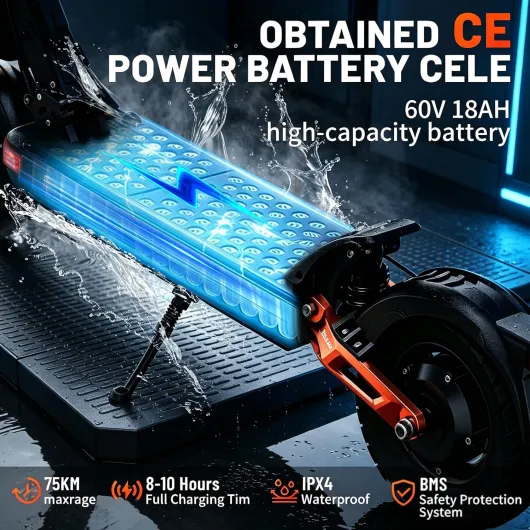
The brand pushes the idea of a long-range battery, with numbers around 80 km mentioned. In real life, as usual, it depends heavily on how you ride, your weight, terrain, and temperature. I’m around 85 kg and mostly rode in the middle speed mode, on mixed surfaces (grass, gravel, some compact dirt), with slight hills. In that scenario, I was consistently seeing something closer to 40–50 km of comfortable range before the battery gauge started dropping into the lower zones where performance tapers off.
If you baby it a bit, keep it in a lower speed mode, and ride mostly on flat, smoother paths, I can see how you might push it towards 60 km or more. But realistically, if you’re buying this for off-road-ish use, I’d plan around half to two-thirds of the advertised max range as a safe estimate. That’s still plenty for daily runs around private land or doing multiple loops of a big property. I never hit a situation where I ran out of battery unexpectedly, as long as I started the day with a full charge.
Charging time is quoted at around 5 hours, which matched pretty well with what I saw from low battery to full. That’s not fast, but it’s pretty standard for this kind of scooter. You plug it in at the end of the day, and it’s ready the next morning. The charger itself is basic, nothing fancy, and gets a bit warm but not worrying. The smart BMS is supposed to manage cell health and prevent overcharging; I obviously can’t see inside the pack, but I didn’t notice any weird behaviour with voltage or sudden drops.
Overall, the battery and range are good enough for practical use on private property. Just don’t buy it expecting a rock-solid 80 km at top speed on rough terrain. Treat that figure as the best-case scenario. In normal use, what you get is still solid for the price bracket, and the 5-hour charge time is manageable if you plan your rides.
Comfort: surprisingly decent on rough ground, but you feel the weight
Comfort-wise, the D3 is clearly tuned for off-road and rough tracks rather than smooth pavement. The combination of 10-inch tubeless tyres and front and rear suspension does a good job of smoothing out gravel, grass, and small potholes. On my private paths, which are a mix of compact dirt, gravel, and some uneven patches, the scooter stayed pretty composed. You still feel the bumps, obviously, but it’s much less punishing than a basic city scooter with tiny solid tyres.
Standing position is decent. The deck is long and wide enough for a natural stance, and even on longer rides (30–40 minutes wandering around private land) my legs were okay. There’s no seat, so all your weight is on your legs the whole time. If you’re used to bikes or seated scooters, you’ll feel the difference in your calves and knees after a while. I’m around 1.80 m tall and had no issue with handlebar height; the adjustable bar helps you dial it in so you’re not hunched over.
One thing to note: the scooter’s 31 kg weight helps with stability but also means you feel a bit of inertia when you hit bumps or when you’re trying to quickly change direction. It’s not twitchy, which is good, but it’s not agile either. On tight corners or narrow garden paths, you have to lean more and think a bit ahead. Braking hard on rough surfaces is also something you need to get used to, because the front end can dive slightly; nothing dramatic, but it’s there.
For comfort, I’d say the D3 is pretty solid for its category. It’s way more forgiving than cheap scooters with no suspension, especially on grass and gravel. Just keep in mind: no seat, heavy chassis, and a riding style that’s more “stand and cruise” than “weave through tight spaces”. If you mainly ride on flat, perfect tarmac, some of the off-road comfort benefits are overkill, and you might be better off with something lighter and simpler.
Durability and build quality: solid frame, average finishing
The frame on the D3 is aviation-grade aluminium, and it does feel solid. There’s no obvious flex when you stand on it, even when you bounce slightly to test it. The stem locking system and anti-wobble setup do their job; I didn’t get that scary “loose front” feeling you sometimes see on cheaper folding scooters. At around 31 kg, it’s clearly overbuilt compared to lightweight commuters, which is reassuring if you’re riding on rough ground regularly.
That said, the overall finish is more “decent” than premium. Welds and joints look fine, but some plastics and small parts (like cable guides and some covers) feel a bit generic. Nothing broke on me during testing, but you can tell this is made to a price point. If you treat it like a tool and not like a fragile gadget, it should hold up. I rode it through light mud, gravel, and some wet grass. A quick hose-down (avoiding blasting the electrics directly) and wipe made it look normal again.
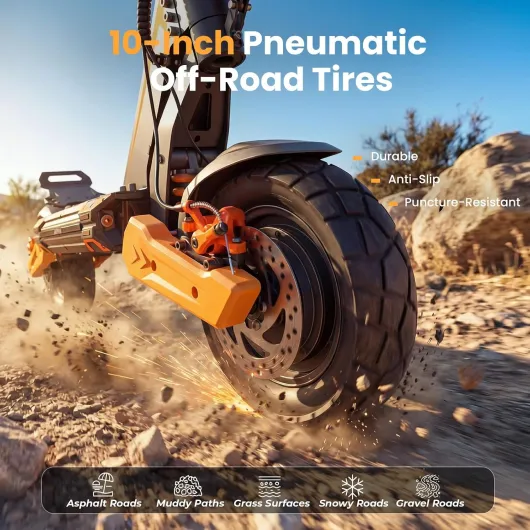
The tubeless tyres are a nice durability point. They’re less prone to pinch flats than inner tubes, and I didn’t get any punctures during my time with it, despite running over small stones and rough surfaces. The suspension hardware didn’t show any obvious play or rattling after a few weeks, which is a good sign. There are some inevitable small creaks and noises over time, but nothing out of the ordinary for a scooter that’s actually used off-road.
The only real downside in terms of durability is the relative unknown of the brand and the limited 6-month warranty. Big-name brands often give longer coverage and have easier access to spare parts. Here, you’re relying on the seller and the manufacturer in China. The Amazon reviews mention responsive customer service, which is encouraging, but long-term parts availability is still a question mark. If you’re okay with that and just want a robust frame and tyres that can take a beating, the D3 feels up to the task. Just don’t expect the same ecosystem and support you’d get from something like Ninebot or Xiaomi.
Performance: strong torque, solid grip, but mind the legal use
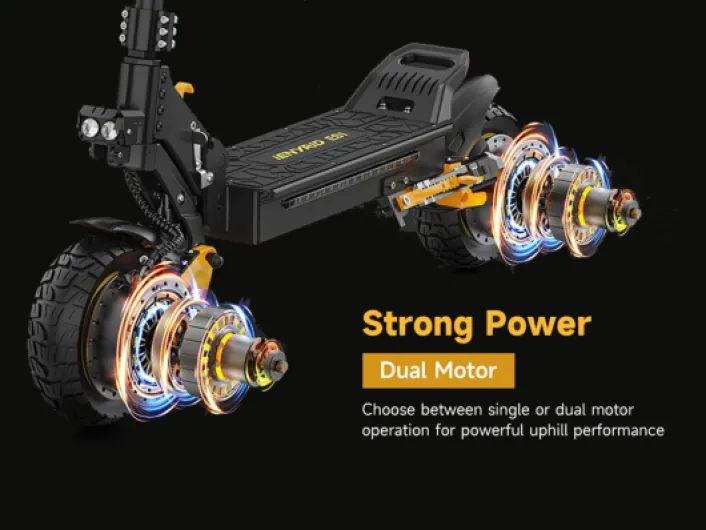
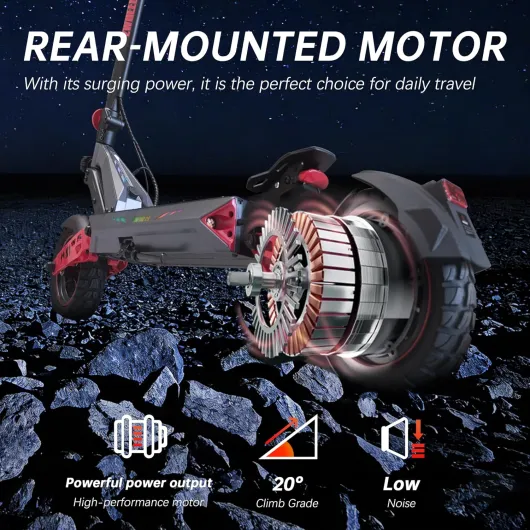
In terms of performance, the D3 feels more like a small off-road machine than a casual city scooter. The high-speed motor (single on my unit) has plenty of torque for private tracks. It pulls well from a standstill and keeps a steady pace on slight inclines. On my private land, it handled small hills and uneven ground without feeling underpowered. There are three speed modes, and you actually feel the difference between them. I mostly stayed in the middle mode for control, and used the highest mode only on longer, straighter sections.
Grip is one of the strong points. The 10-inch vacuum tubeless tyres bite nicely into grass, compact dirt, and even slightly muddy patches. In wet conditions, as long as you’re not doing anything stupid, the tyres keep traction pretty well. I rode it after light rain on short grass and gravel, and it didn’t slide around as much as I expected. It’s still a scooter with small wheels, so you can’t ride it like a dirt bike, but for what it is, the grip is reassuring.
The brakes are twin disc brakes with power cut-off, and they’re honestly one of the best parts. They stop the scooter within a short distance, even from higher speeds, as long as the ground isn’t too loose. On dry tarmac, braking is sharp; on gravel, you just have to be a bit gentler so you don’t lock up and skid. The hydraulic feel mentioned in the description is there: lever pull is smooth and controlled, not spongy.
One important reminder: all this performance is clearly meant for private land only, at least in places like the UK where riding this type of scooter on public roads is restricted. If you try to ride it on public streets, you’re basically asking for trouble. On private farmland, estates, or large gardens, though, the D3 has enough punch and grip to be genuinely useful for getting around quickly.
What you actually get with the RAYI D3
The D3 is sold as an off-road electric scooter for adults with a 10-inch wheel setup, a 48V battery, and a claimed long range (up to around 80 km depending on how you ride). The listing is a bit messy: the title mentions a single motor version, but the description talks about a dual motor system. The unit I used behaves like a strong single-motor scooter, so I’d treat the “dual motor” wording with caution unless the seller clearly confirms which version you’re getting.
On paper, you get: a 48V battery with smart BMS, 10-inch tubeless off-road tyres, front and rear suspension, twin disc brakes, LED lighting all around (headlight, brake light, turn signals), and a digital display in the middle of the handlebar. Weight is around 31 kg, frame is aluminium, and the quoted max load floats between 120 and 150 kg depending on where you read. Personally, I’d assume 120–130 kg as the realistic safe zone and not push it right to 150 kg every day.
The scooter folds at the stem, and there’s an anti-wobble mechanism that does make the front end feel stable while riding. It’s seatless, so you’re standing the whole time, and the handlebar height is adjustable. It comes basically ready to go: you unfold it, tighten a couple of bolts, charge it fully, and you’re riding. There’s no fancy app connectivity or anything like that; everything is done through the onboard display and buttons.
If I had to sum up the presentation: it’s a chunky, off-road focused scooter with most of the basics covered (brakes, lights, suspension, folding), but with a bit of confusion in the marketing. It’s not a polished big-name brand experience, but for someone who just wants a tough scooter for private tracks, the spec sheet is fairly attractive for the price bracket these usually sit in.
Pros
- Very stable and solid frame with front and rear suspension for rough ground
- 10-inch tubeless off-road tyres provide good grip on grass, gravel, and light mud
- Strong twin disc brakes with good stopping power and full lighting setup for visibility
Cons
- Heavy at around 31 kg, not practical to carry regularly
- Unknown brand with only a 6-month warranty and unclear long-term parts support
- Confusing product listing (single vs dual motor, 120 kg vs 150 kg load) and optimistic range claims
Conclusion
Editor's rating
After using the RAYI D3 off-road scooter on private land for a while, my overall opinion is that it’s a practical, tough scooter with some clear strengths and a few things you need to accept upfront. It’s heavy, it’s not very subtle, and the branding and specs are a bit messy, but once you’re actually riding it on grass, gravel, or farm tracks, it does what it’s supposed to do. The off-road tyres grip well, the suspension takes the sting out of rough ground, and the brakes are strong enough to feel safe even when you’re carrying some speed.
The battery range is decent in real-world use, even if the big 80 km claim is optimistic for hard riding. The frame feels solid, and the folding mechanism doesn’t feel like it will fall apart after a few weeks. Where it falls short is mainly around the unknown brand factor, the short 6-month warranty, and the sheer weight, which makes it a pain to move around when you’re not riding it. It’s also clearly not meant for legal public road use in many countries, so if you don’t have private land, it’s basically pointless.
I’d recommend the D3 to people who have farmland, large private estates, or big properties and want a low-maintenance way to move around without firing up a quad or a car each time. It’s also a decent option if you’re heavier and want something with a sturdy frame and real off-road tyres. On the other hand, if you’re mostly in the city, need to carry your scooter up stairs, or you worry a lot about long-term parts and brand support, I’d skip this and look at a more established commuter model instead. It’s a solid tool for the right use case, but not a one-size-fits-all solution.