
Summary
Editor's rating
Value for money: strong power and features for the price, but not for everyone
Big, black and built more like a small moped than a toy
Battery and range: good, but don’t dream about 85 km unless you ride very gently
Comfort: way smoother than small city scooters, but you feel the weight
Durability and build: feels tough, but check bolts and rear mudguard regularly
Performance: this thing actually pulls, especially with both motors on
What you actually get with the JOYOR S10-S-Z
Pros
- Strong dual-motor performance with good hill-climbing and fast acceleration
- Comfortable ride thanks to 10" pneumatic off-road tires and real suspension
- Hydraulic brakes and high load capacity (up to 150 kg) give solid control and stability
Cons
- Heavy at around 28.8 kg, not convenient to carry or move in tight spaces
- Real-world range is noticeably lower than the claimed 85 km if you use the power
- Some hardware (like rear mudguard) may need periodic tightening to avoid issues

Specifications
View full product page →| Brand | OneSportLife |
A serious step up from basic commuter scooters
I’ve been riding the JOYOR S10-S-Z for a few weeks now, mostly for daily commuting and a bit of weekend messing around on trails and rough paths. I’m not new to scooters, I’ve used smaller 350–500W city models before, so this was my first time with a dual‑motor 60V setup. The short version: it’s a big jump in power and comfort, but you pay for it in weight and bulk. This is not a light city toy you casually carry up three flights of stairs.
Right out of the box, it feels like a “real” machine more than a gadget. The frame is beefy, the deck is wide, and you can tell it’s built to handle heavier riders and rougher surfaces. It’s rated for up to 150 kg (330 lbs), and I’m around 90 kg with a backpack, and it never felt like I was pushing its limits. Compared to my old 500W commuter scooter that struggled on hills, this thing just goes without drama.
Setup was pretty straightforward: unfold the stem, bolt the handlebar on with the supplied screws and hex key, check the brakes, and you’re basically ready. The manual is basic but usable. The controls are a bit more complex than a simple rental scooter – you’ve got drive modes, lights, indicators, horn, and dual/single motor selection – but after one or two rides it becomes second nature. If you’ve never used a more powerful scooter, you might need a few rides to get used to the throttle response.
Overall, my first impression was: strong power, good suspension, but heavier and more “serious” than what casual riders might expect. It’s not perfect, but if you actually want something that climbs hills and deals with rough ground instead of just flat bike lanes, this is already in a different league than the cheap entry‑level stuff.
Value for money: strong power and features for the price, but not for everyone
Looking at the JOYOR S10-S-Z purely from a value standpoint, I’d say it’s pretty solid for what it offers: dual 1000W motors, hydraulic brakes, real suspension, 60V 18Ah battery, and a 150 kg load rating. To get that mix of power, range, and components from some of the bigger “premium” brands, you usually pay quite a bit more. Here, you’re getting a lot of scooter for the money, assuming the price stays around what I’ve seen on Amazon. The average rating is 4.8/5 from buyers, which matches my feeling that it does its job well and doesn’t feel cheap.
Compared to basic 350W budget scooters, it’s obviously more expensive, but you’re also in a completely different category. If you just need a short‑range city scooter for flat bike lanes and you’re under 80 kg, those cheaper models can be enough and lighter to carry. But if you’re heavier, live in a hilly area, or want to ride on dirt paths and rougher surfaces, those small scooters struggle or break faster. In that context, paying more upfront for something like the S10-S-Z can save you frustration and probably some repair costs.
Where the value becomes more “it depends” is if you don’t actually need the dual motor power or the big battery. If your daily use is just a few flat kilometers and you always have an elevator, fine, but if you have to carry it up stairs regularly, the 28.8 kg weight is a real downside. Also, if your city has strict speed or power limits for scooters, you might not be allowed to fully use what you’re paying for. So the value is great for someone who can actually use the power and range, less so if your use case is light and regulated.
All in all, for an adult rider who wants a strong, comfortable scooter for commuting and weekend rides, and who doesn’t mind the bulk, it’s good value. You’re getting proper brakes, decent range, strong motors, and real suspension in one package. Just be honest with yourself: if you only ride short, flat trips and need to carry it a lot, you might be better off with a lighter, cheaper model and keep the extra cash.
Big, black and built more like a small moped than a toy
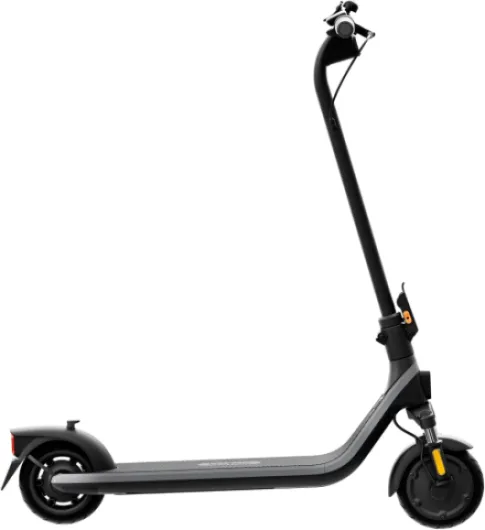
The design is pretty straightforward: black frame, chunky deck, wide 10‑inch off‑road tires, and a tall, adjustable handlebar. No flashy colors, no fancy curves – it looks functional and slightly aggressive, in a good way. If you like clean, simple lines and don’t care about standing out, it’s fine. If you want something cute or slim, this isn’t it. The deck is long and wide enough to stand with your feet in a comfortable stance, which is a big plus compared to narrow commuter scooters where you constantly readjust your footing.
The folding mechanism is classic: you fold the stem down towards the deck. It feels solid once locked, not wobbly, but again, because of the 28.8 kg weight, you’re not exactly one‑hand carrying this into a coffee shop. For me, it’s more of a “roll it into the hallway or garage and park it” design. The adjustable handlebar height is handy if you’re taller or shorter; I’m around 1.80 m and I could dial it in so I wasn’t hunched over. The grips are non‑slip and decent, not luxury but they don’t feel cheap.
The control layout is a bit busier than basic scooters: you’ve got the throttle, display, mode controls, horn, indicators, and brake levers for the hydraulic system. The screen is readable enough, even in daylight, showing speed, battery level, and mode. It’s not ultra-bright like some premium brands, but I never struggled to see it. Turn indicators and lights are a nice touch for commuting in traffic; they’re not car-level bright, but they make you more visible, which is what matters.
One design detail I’m a bit wary about is the rear mudguard area. One user review mentioned their rear mudguard came loose and caught the rear light cable in the wheel, which killed their taillight and brake light. Mine hasn’t done that, but after reading that, I did check the screws back there and I’d advise doing the same from time to time. Overall, the design is more about practicality and sturdiness than style. It looks like a tool, not a fashion object, which I personally prefer for something that might hit potholes and dirt tracks regularly.
Battery and range: good, but don’t dream about 85 km unless you ride very gently
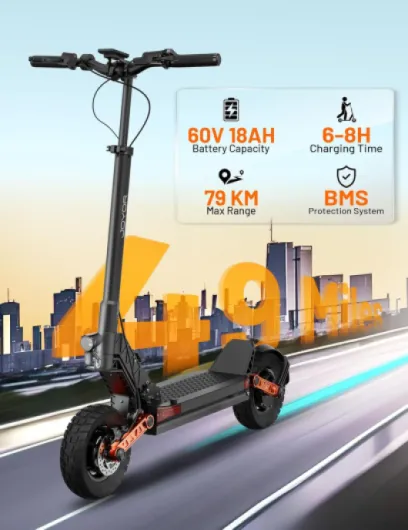
The battery is a 60V 18Ah pack, which is a decent size for this class of scooter. The manufacturer advertises up to 85 km (about 49–50 miles) of range, which is the usual optimistic number. In my actual use, at around 90 kg rider weight, mixed modes (mostly gear 2, sometimes dual motor, sometimes single), and a mix of flat and moderate hills, I was getting more in the 35–45 km range per charge before I started to feel the power drop and decided to recharge. If I stayed in single motor and rode more calmly, I could stretch it a bit, but I never got close to the full 85 km claim.
That said, 35–45 km of real-world use is still plenty for most commutes. For example, a 10 km each way commute is 20 km per day, so you’d easily get two days out of a charge, possibly three if you don’t push it too hard. If you’re lighter than me and ride in eco mode on mostly flat paths, you’ll probably see better numbers. But it’s better to plan based on the lower, realistic range rather than the marketing figure. At least you’re not dealing with range anxiety every day, which is nice.
Charging time is around 9 hours from empty with the included charger. That’s basically an overnight charge. For me, that’s fine: I plug it in in the evening and it’s ready the next morning. If you’re the kind of person who forgets to charge things until the last minute, the long charge time might annoy you. There’s no crazy fast-charging here, just standard charging. One Amazon reviewer mentioned their original charger stopped working (and that generic chargers they bought didn’t work either), so I’d be careful with that and probably contact the seller directly if you ever need a replacement instead of guessing on random chargers.
The scooter has smart battery management and a display that gives you a rough idea of remaining charge. Like most scooters, the battery gauge isn’t perfect – it tends to drop faster under heavy load (hills, dual motor) and bounce back on flat sections – but you get used to reading it. I never had it suddenly cut off on me. Overall, the battery setup is solid for commuting and weekend rides, just don’t go into it expecting to ride flat-out all day on a single charge. Treat the 85 km as a “best case” fantasy and plan for about half of that in normal, mixed use.
Comfort: way smoother than small city scooters, but you feel the weight
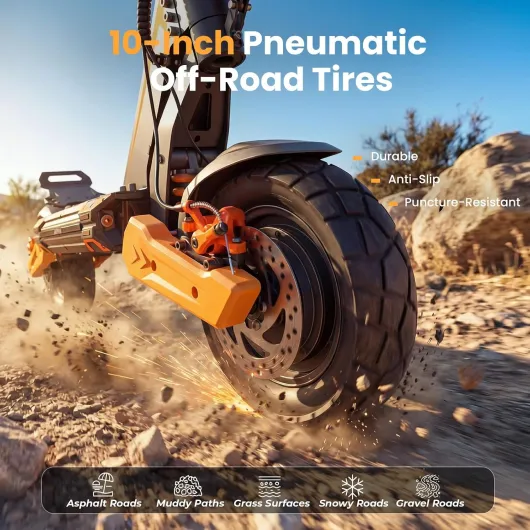
Comfort is one of the main reasons to step up to a model like this, and here it does pretty well. The combination of 10‑inch ultra‑wide pneumatic tires and the swingarm spring suspension front and rear makes a big difference. On my usual route, there are a couple of nasty potholes and rough patches where my old 8.5‑inch solid‑tire scooter used to rattle my teeth. With the JOYOR S10-S-Z, you still feel them, but it’s more of a dull thump instead of a full shock. Your knees and back will still thank you after a longer ride.
The wide deck helps a lot with stance. I can put one foot forward and one back, slightly sideways, which feels more stable, especially when accelerating hard or going over bumps. On smaller scooters, I’d often end up twisting my hips or standing awkwardly just to fit, and after 20–30 minutes I’d feel it. Here, I did a 45‑minute ride mixing road and gravel paths and didn’t feel sore. The non‑slip surface on the deck does its job; even in light drizzle, I didn’t feel like my shoes were sliding around.
The adjustable handlebar is useful. On fixed‑height scooters, I always feel like they’re either a bit too low or too high. Here I could set it so my arms were slightly bent and relaxed. The grips are basic but comfortable enough; if you’re picky, you could swap them, but I didn’t feel the need. The cruise control is also handy for longer straight stretches: once you get used to it, it reduces hand fatigue since you’re not holding the throttle constantly. Just be careful with cruise on bumpy paths; I prefer to keep manual control there.
The only comfort downside is the weight and bulk when not riding. Carrying almost 29 kg up stairs or into a tight hallway is not fun. Folding helps for storage, but it’s not what I’d call “portable” in a casual sense. Also, because it’s powerful, beginners might find the initial throttle a bit jumpy until they get used to it, especially in the higher gears. My advice: start in the slowest mode, single motor, and get a feel for the balance and brakes before pushing it. Once you’re used to it, the ride itself is very comfortable for this type of product.
Durability and build: feels tough, but check bolts and rear mudguard regularly
In terms of build quality, the JOYOR S10-S-Z feels solid. The frame is aerospace‑grade aluminum according to the spec sheet, which in practice means it’s rigid and doesn’t flex or creak when you hit bumps. Nothing felt loose out of the box – the stem locked solidly, the deck had no play, and the suspension arms moved smoothly. After a few weeks of rides, including some gravel tracks and rougher paths, there were no weird noises or obvious signs of wear, apart from the usual dust and a bit of dirt on the tires.
The IP54 water resistance is decent for everyday use. I rode it in light rain and through small puddles without any issues. I wouldn’t push it through deep standing water or ride in heavy downpours for long periods – it’s still an electric scooter, not a submarine – but it handled bad weather commuting better than my old, non‑sealed scooter, which would sometimes freak out with the display in heavy humidity. Here, all electronics stayed stable. Just dry it off and avoid blasting it with high‑pressure water when cleaning.
One potential weak point, as mentioned earlier, is the rear mudguard and light cable. At least one user reported the mudguard coming loose and catching the light cable, killing the rear and brake light. Mine hasn’t done this, but I did notice that the mudguard screws aren’t the thickest. I’d strongly suggest adding a simple routine: every couple of weeks, check and tighten the screws on the mudguard, stem, and any other external parts. That’s pretty standard for any scooter, especially if you ride off-road or over rough ground; vibrations work screws loose over time.
The hydraulic brakes and tires should last decently if you don’t abuse them. The seller says the tires are about three times more durable than standard ones. I obviously haven’t ridden long enough to confirm that exact ratio, but after a few weeks, they still look fine, with no cuts or abnormal wear. The quick-change system for tires is supposed to make maintenance easier, which is a plus, because tire changes on scooters can be a pain. Overall, it feels like a scooter you can use regularly without babying it, as long as you accept that you’ll need to do some basic maintenance checks from time to time.
Performance: this thing actually pulls, especially with both motors on
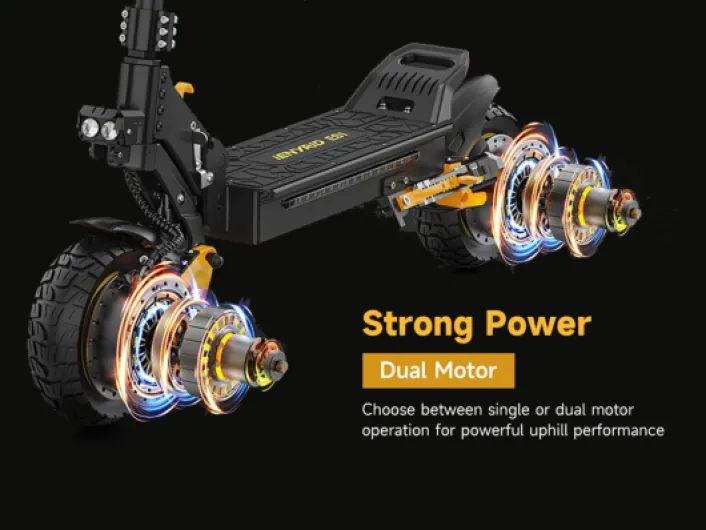
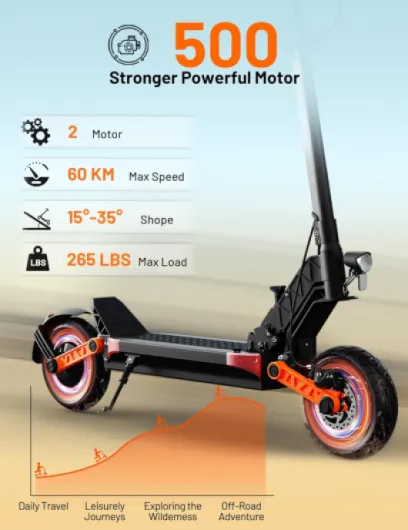
In terms of raw performance, this is where the JOYOR S10-S-Z stands out compared to the usual 350–500W commuter scooters. With dual 1000W motors (so 2000W total), acceleration is strong enough that you really need to lean forward a bit if you punch it on higher modes. You can switch between single motor and dual motor to balance efficiency and power. In single motor, it’s already decent for flat city riding. In dual motor, hills basically stop being an issue unless they’re extreme.
On my test hills, which are around 10–12% gradients, my older 500W scooter would slow to a crawl or force me to kick along. The JOYOR just climbs them at a steady pace, and if you’re in dual motor and a higher gear, it actually keeps decent speed without sounding strained. The brand claims it can handle up to 35° slopes. I didn’t find anything that steep around me, but based on what I tested, I believe it can handle pretty steep residential hills without problem for an average‑weight rider.
Top speed will vary depending on your local laws and how the scooter is configured, but let’s just say it’s much faster than rental scooters or entry-level models. The three gears are useful: you can limit speed for crowded areas or for beginners, and open it up on open roads or bike paths where it’s safe. I used gear 1 for crowded inner‑city sections, gear 2 for normal commuting, and gear 3 only when I had clear, wide paths and no pedestrians around. It’s more than enough speed for daily use; the limit becomes your comfort and braking distance, not the motor.
Braking performance is strong thanks to the hydraulic brakes front and rear. That’s a big upgrade over mechanical disc or drum brakes on cheaper scooters. You can modulate the braking nicely, and if you pull hard, it stops fast. This is important because with this level of power and speed, weak brakes would be a real problem. Combined with the grippy off‑road tires, it feels controlled even in emergency stops. In short, in real-world use, the scooter feels powerful, planted, and confident, as long as you respect that it’s not a toy and ride accordingly.
What you actually get with the JOYOR S10-S-Z
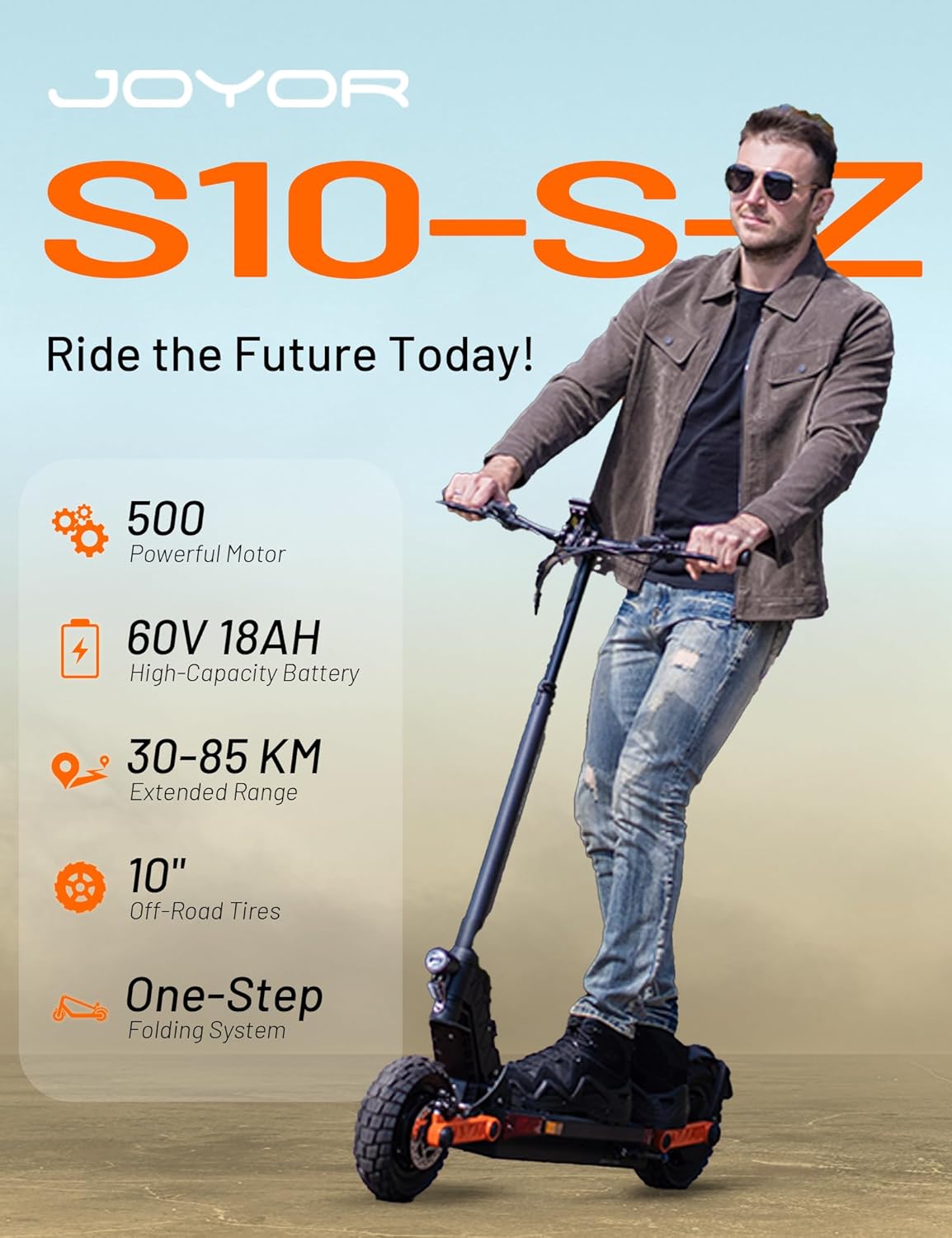
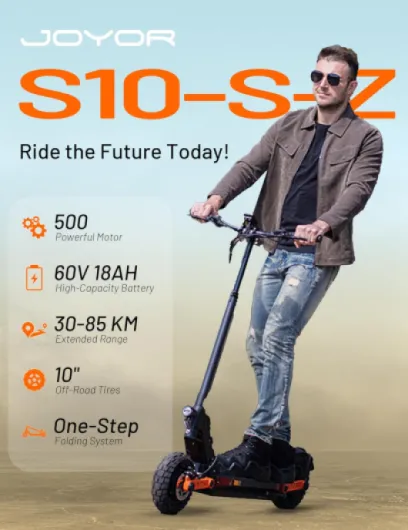
On paper, the JOYOR S10-S-Z is sold as a dual‑motor electric scooter with a 60V 18Ah battery, around 49 miles / 85 km max range, and 1000W x2 motors. In practice, that translates into a scooter that can easily keep up with city traffic on most roads and doesn’t die after one long commute. The brand claims up to about 85 km of range, but like always, that’s under ideal conditions: light rider, flat ground, eco mode, and probably mild speed. In real use, I’d count on a lot less if you ride it properly.
The scooter comes with hydraulic brakes (front and rear), 10‑inch pneumatic off‑road tires, front and rear spring suspension (swingarm style), and IP54 water resistance. IP54 basically means light rain and splashes are fine, but I wouldn’t deliberately ride through deep puddles or storm conditions. The frame is aluminum, which keeps it reasonably light for its category, but at 28.8 kg it’s still a big lump to drag around. Foldable stem, height‑adjustable handlebar, LED lights, turn signals, horn, and cruise control are all included, so it’s not stripped down in terms of features.
Out of the box you get: the scooter, a charger, a hex key, screws for the handlebar, and the paper manuals. Nothing fancy, but nothing missing either. There’s a 1‑year manufacturer warranty, which is standard for this kind of product. One Amazon reviewer mentioned good support when they needed help, which lines up with the fact the listing insists a lot on “stellar support”. I obviously haven’t needed warranty yet, so I can’t confirm how smooth that really is.
In terms of target use, it’s clearly pitched for adults, up to 65 years according to the listing, and recommended for urban commuting, recreation, and even “exercise/fitness”. Realistically, it’s more of a commuter / fun machine than a fitness tool: you’re not burning many calories standing on this. If your main goal is to replace short car trips or public transport and occasionally go off the paved path, the specs make sense. If you just want something to ride from the metro to the office and carry up to your apartment, this is probably overkill.
Pros
- Strong dual-motor performance with good hill-climbing and fast acceleration
- Comfortable ride thanks to 10" pneumatic off-road tires and real suspension
- Hydraulic brakes and high load capacity (up to 150 kg) give solid control and stability
Cons
- Heavy at around 28.8 kg, not convenient to carry or move in tight spaces
- Real-world range is noticeably lower than the claimed 85 km if you use the power
- Some hardware (like rear mudguard) may need periodic tightening to avoid issues
Conclusion
Editor's rating
After using the JOYOR S10-S-Z for a while, my overall opinion is that it’s a strong, capable scooter that suits riders who actually need power, range, and comfort, and are willing to deal with the weight. The dual 1000W motors, 60V battery, and hydraulic brakes put it above the usual commuter scooters you see everywhere. It climbs hills without drama, handles rougher paths better than small‑wheel models, and feels stable even at higher speeds. The suspension and wide deck make longer rides much less tiring than on basic scooters.
On the flip side, the nearly 29 kg weight and bulky frame mean it’s not very portable. Carrying it up stairs or into small apartments is a workout in itself. The claimed 85 km range is optimistic; in normal use expect closer to half of that, which is still fine but worth knowing. There are also some small build points to watch, like keeping an eye on the rear mudguard screws so you don’t end up with cable issues like one reviewer did.
I’d recommend this scooter to heavier riders, people with hilly commutes, or anyone who wants one scooter that can handle both city use and some off‑road fun. It’s also a good pick if you’re upgrading from a basic 350–500W model and you’re tired of weak hills and harsh rides. If you live in a walk‑up building, have strict local speed limits, or just want something light and simple for short flat trips, this is probably too much scooter and you’ll be paying for performance you won’t use. For the right person, though, it’s a strong, no‑nonsense workhorse with enough punch to be fun.