
Summary
Editor's rating
Is it worth the money?
Chunky design, big screen, and a lot of lights
Battery and real-world range: honest numbers
Ride comfort: finally a scooter that doesn’t beat you up
Build quality and how solid it feels
Speed, brakes and handling in real life
Specs on paper vs reality
Pros
- Comfortable ride thanks to 10.5–11 inch pneumatic tires and dual suspension
- Real-world 35–40 km range with a 48V 18Ah battery, enough for most daily commutes
- Solid frame and wide deck suitable for heavier riders up to 150 kg
- Effective dual disc brakes with power cut-off and good lighting (front, rear, indicators, deck lights, buzzer)
Cons
- Very heavy at around 29.5 kg, not practical to carry regularly
- Advertised 50–60 km range is optimistic for real-world use
- Lesser-known brand, so long-term parts and service may be less straightforward

Specifications
View full product page →| Brand | TYOKUM |
A big, heavy scooter that actually feels built for adults
I’ve been using this TYOKUM J-15 electric scooter for daily commuting and random errands for a few weeks now. I didn’t know the brand at all before buying it, so I went in with low expectations. What pushed me to try it was the combo of a 48V 18Ah battery, dual suspension, and the 150 kg load rating, because I’m not exactly light and I often carry a backpack with a laptop and groceries.
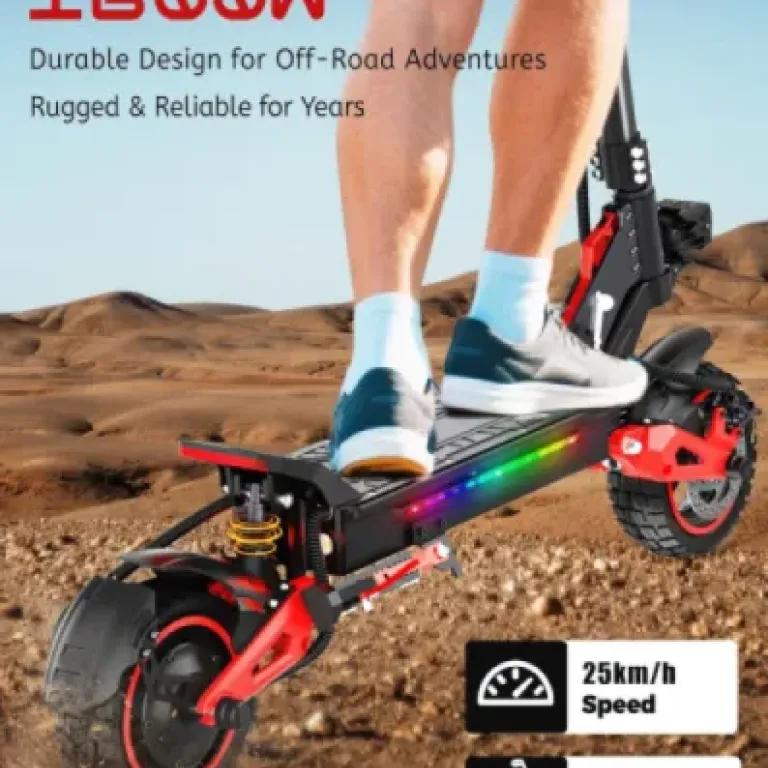
First impression when it arrived: this thing is big and heavy. The 29.5 kg they announce is not marketing fluff, you can feel every kilo when you try to carry it up stairs. It’s not a toy scooter like the small Xiaomi models; it’s more in the “mini electric moped without a seat” category. If you live on the 4th floor without a lift, think twice. If you have a garage or ground floor storage, it makes more sense.
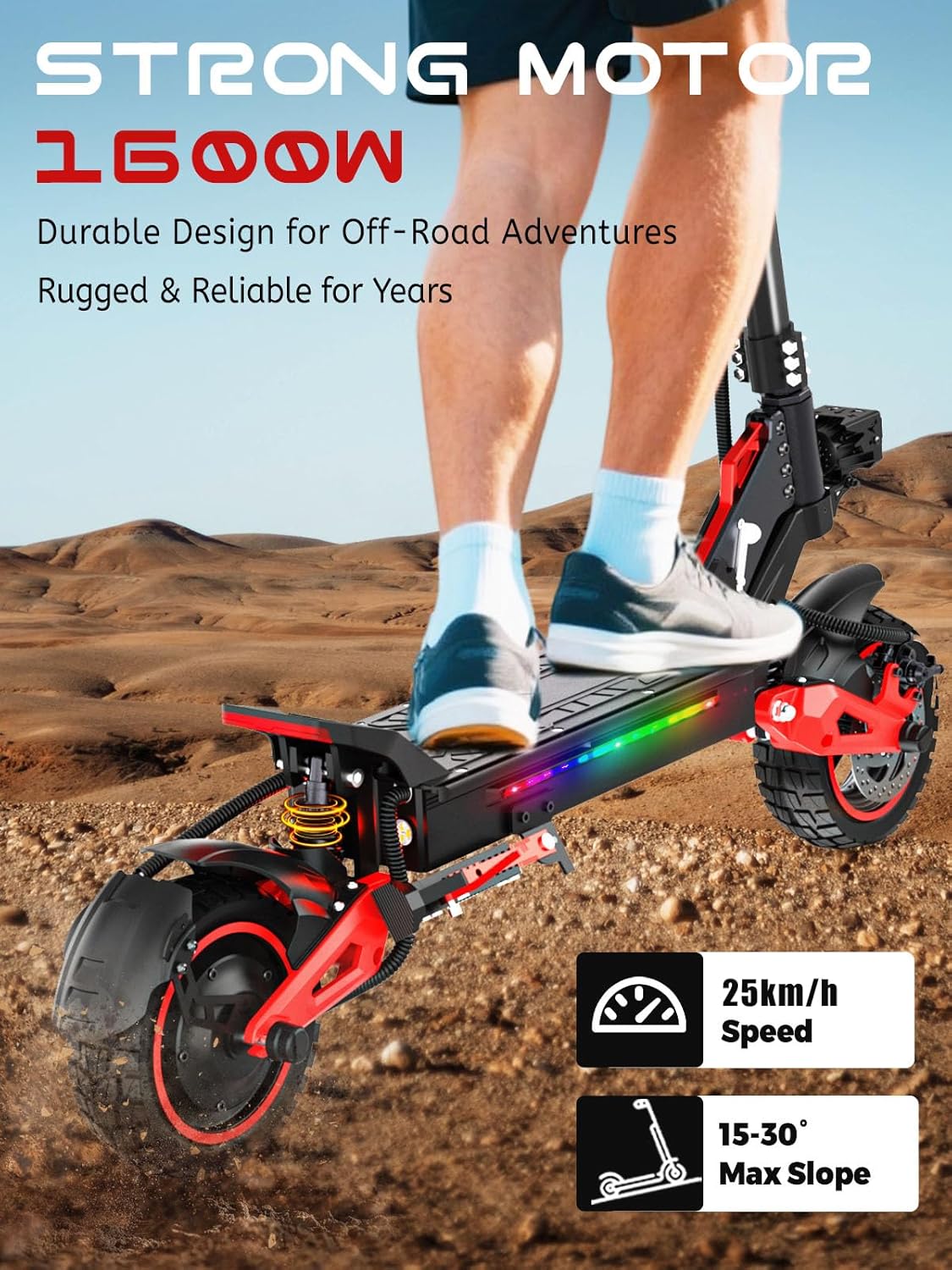
On the road though, that extra weight and the 10.5–11 inch tires give a very different feeling compared to light city scooters. It feels planted, stable, and you don’t get shaken to death by every little bump. The dual suspension actually does something; it’s not just written on the product page for show. I ride on a mix of bike lanes, rough pavement and the occasional bad road, and it handles all of that better than the lighter scooters I’ve used.
Overall, my first takeaway is this: it’s not a stylish gadget, it’s more of a practical commuting machine. It’s not perfect and definitely not for everyone, but if you want range, comfort and a solid frame more than portability, it starts to make sense. If you need something you can easily carry on the train or up stairs every day, you’ll probably swear at it pretty quickly.
Is it worth the money?
In terms of value for money, I’d say this scooter sits in a pretty good spot if you know what you’re buying. You’re basically paying for a big battery, solid frame, good brakes, and real-world comfort. Compared to big-name scooters with similar specs (48V batteries, dual suspension, large wheels), the price is usually lower, which is why I took the risk on a lesser-known brand in the first place. For commuting and weekend rides, it gives you most of what those more expensive models offer, minus the famous logo.
Where you “pay” in another way is the weight and brand reputation. At around 29.5 kg, this is not a convenient scooter if you need to carry it often. If your use case involves climbing stairs, taking it on public transport, or lifting it into a car several times a day, you’ll probably hate it pretty quickly. Also, being a smaller brand, you don’t get the same ecosystem of accessories and local repair options. You might have to rely on the seller’s after-sales support and your own DIY skills more than with a mainstream brand.
On the other hand, you get features that some similarly priced models skip: dual disc brakes, front and rear suspension, large 10.5–11 inch pneumatic tires, full lighting with turn signals and deck LEDs, and a password lock. For everyday commuting, those things actually matter more than fancy app connectivity or cosmetic details. The scooter feels like it’s designed for real adult use, especially with the 150 kg load rating and the wide deck.
So, is it worth it? If you want a solid, comfortable, long-range scooter mainly for road and bike path use, and you don’t care too much about brand prestige or ultra-portability, then yes, it’s good value. If you’re after something super light, ultra compact, or backed by a huge brand with service centers everywhere, then this isn’t the best match. There’s better out there for pure portability or brand support, but for raw commuting utility per euro, it holds its own.
Chunky design, big screen, and a lot of lights
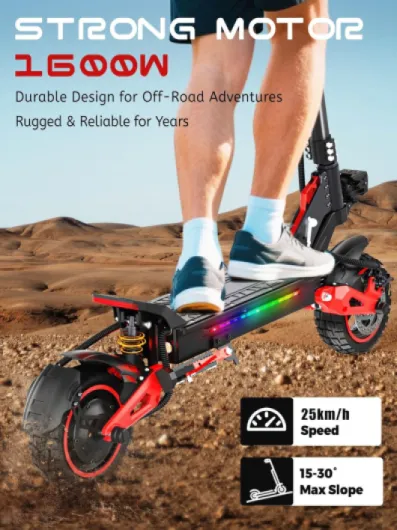
Design-wise, this scooter goes for a pretty straightforward black look with a few details that stand out. The frame is thick, the stem is robust, and the deck is wide. It doesn’t scream for attention like some flashy scooters, but it’s also clearly not a tiny minimalist city scooter. On the street, it looks more like a small electric vehicle than a toy, which I actually prefer for commuting. You feel like cars take you a bit more seriously when they see this thing compared to skinny rental scooters.
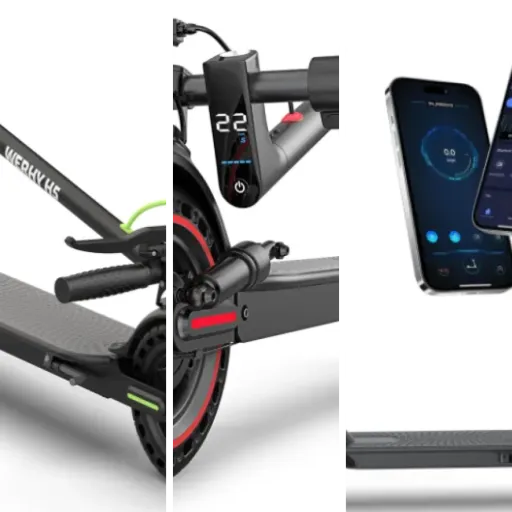
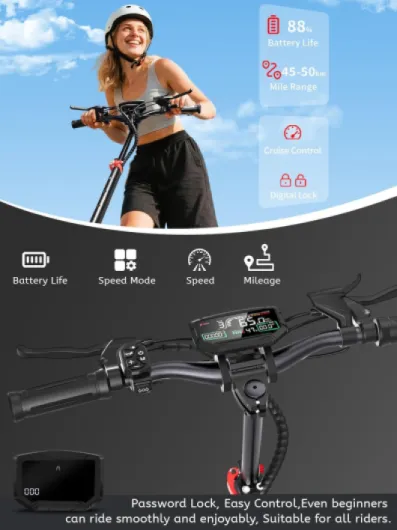
The LCD display is one of the better points. It’s big, easy to read, and gives you speed, battery level, mileage and mode at a glance. Even in daylight you can see it without squinting. The buttons around it are fairly simple: mode switching, lights, and so on. It doesn’t feel premium, but it’s clear and functional, which is all I ask. The password lock feature is a nice extra. It’s not going to stop a determined thief with a van, but it’s a basic deterrent and it stops kids or curious people from just hopping on and riding away.
The lighting setup is honestly more complete than what I’ve had on more expensive scooters. You get front lights (white or yellow), a red rear light, turn signals, a buzzer, and even colorful deck lights along the footplate. The deck LEDs are a bit flashy, but they do make you more visible from the side at night, which is not a bad thing. The horn/buzzer is loud enough that people actually react, unlike those tiny bells you get on some scooters that nobody hears.
My only small gripe with the design is the folding mechanism and size once folded. It does fold quickly and the latch feels secure, but when folded it’s still a big, heavy block of metal. It’s not something you tuck under a café table easily. Also, the fixed handlebar type means you can’t fold the bars in to make it more compact. So, design-wise, I’d say it’s built more for stability and visibility than for sleek portability. That’s fine if you know what you’re getting into.
Battery and real-world range: honest numbers
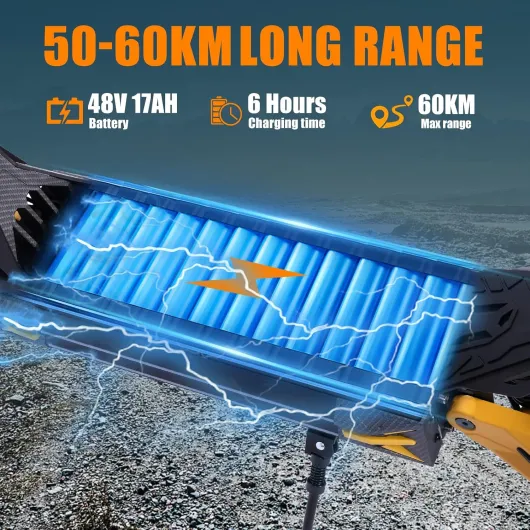
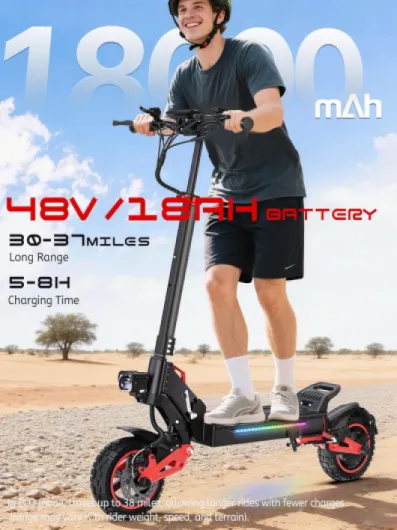
The battery is advertised as 48V 18Ah with a 50–60 km range and a 5–8 hour charge time. On the charging side, that’s accurate: from almost empty to full, I’m around 7 hours on the included charger. It’s not fast, so you basically plug it in overnight and forget about it. The charger itself is pretty standard, nothing special, just a brick with a status light. The port on the scooter feels reasonably solid; just don’t yank the cable out sideways.
For the range, as I mentioned earlier, the official numbers are optimistic. My use case: 95 kg rider, backpack, mixed flat and mild hills, mostly in middle speed mode, riding at a normal pace, not crawling. In that scenario, I consistently get around 35–40 km before the last battery bar starts to drop quickly and the scooter loses some punch. If I push it beyond that, it still moves, but acceleration is weaker and top speed dips. So for planning purposes, I treat it as a 35 km safe range scooter, maybe 40–45 km if I’m really careful.
The good thing is that the battery gauge on the LCD is readable enough that you can monitor it and avoid getting stranded. Like most scooters, the indicator drops more under load (going uphill, accelerating) and then creeps back up a bit on flat sections. You get used to reading it after a few rides. I haven’t noticed any crazy battery drain when the scooter is off; standby consumption seems low.
One thing I can’t fully judge yet is long-term battery health, because I haven’t had it for a year. But after several full cycles, there’s no obvious drop in range. The brand offers some parts replacement warranty (up to 12 months for some components), which is reassuring on paper, but it’s still a lesser-known brand, so I’d keep my expectations moderate. Overall, if you need a scooter that can realistically do a full day of commuting plus errands without recharging, this battery size makes sense. Just don’t buy it thinking you’ll always hit the top of the claimed range.
Ride comfort: finally a scooter that doesn’t beat you up
For me, the biggest difference compared to cheaper or lighter scooters is the comfort. Between the 10.5–11 inch pneumatic tires, the dual suspension, and the wide deck, it’s actually comfortable to ride for longer stretches. I regularly do 10–15 km in one go, and my knees and wrists complain a lot less than on the smaller 8.5-inch wheel scooters I used before. Speed bumps, rough tarmac and small potholes are still noticeable, but they don’t feel like the scooter is trying to throw you off.
The dual suspension does a decent job. It’s not super soft like a mountain bike, but it takes the edge off most bumps. You can feel that it’s tuned more for everyday city riding than for off-road. When I roll over those brick pavements or patched-up roads, the scooter absorbs around “most” of the vibration instead of sending it straight into my legs. It matches pretty well with the big tires, which have enough air volume to act like an extra cushion.
The deck width is another thing I really liked. You can comfortably ride with your feet side by side or one slightly angled, and you don’t feel cramped. I have fairly big feet and on many scooters I’m always adjusting my stance because the deck is too narrow. Here, I can lock into a stable position and just ride. That wide deck also makes it easier to shift your weight when braking or when you hit a bump, which adds to the feeling of control.
The only comfort downside is the weight when you’re off the scooter. Carrying 29.5 kg up stairs is not comfortable at all, and wheeling it around folded is okay but not great. Also, there’s no seat included, and because of the wide deck, finding a compatible aftermarket seat might be a bit tricky, just like one of the Amazon reviewers mentioned. If you need to sit for longer rides, you’ll have to do some research or contact the seller for options. But strictly in terms of riding comfort while standing, it’s one of the more pleasant scooters I’ve used in this price range.
Build quality and how solid it feels
The frame is made of aluminium alloy, and it feels tough. There’s no creaking or flexing when I ride, even when I hit rough patches or go off small curbs slowly. The stem feels secure and doesn’t wobble, which is something I pay attention to because I’ve had cheaper scooters where the folding joint started to loosen up after a few weeks. Here, after several weeks of daily use, everything still feels tight. The folding latch locks with a clear click and doesn’t feel like it’s going to open on its own.
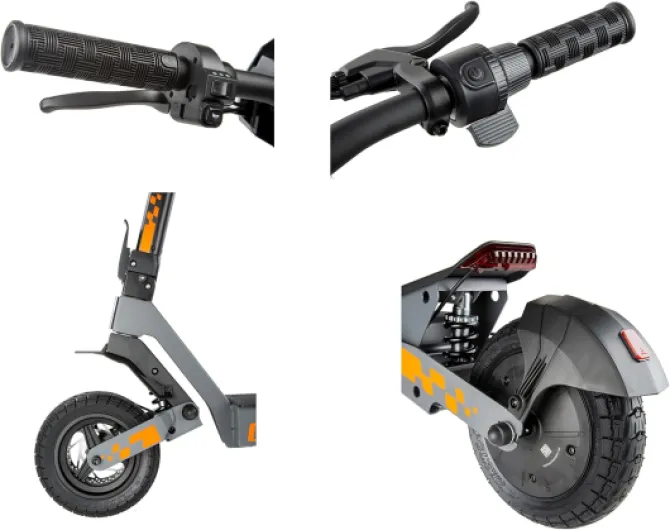
The disc brakes and calipers look fairly standard, not high-end, but they do the job. I haven’t had to adjust them yet, and there’s no annoying squeal as long as the rotors stay clean. The cables are routed reasonably well, though they’re not hidden inside the frame, so they’re exposed like on most scooters in this price range. The rubber tires seem decent; I haven’t had a puncture yet, but that’s partly luck and partly the type of roads I use. Being pneumatic, you’ll want to check pressure from time to time to avoid pinch flats.
The finishing is what I’d call “practical”. The paint is uniform, there are no sharp edges, and the deck grip feels secure underfoot. It’s not a premium finish, but it’s not sloppy either. The lights and turn signals still work fine, and I haven’t seen any condensation in the lenses after riding through light rain. I wouldn’t leave it out in a storm or wash it with a hose, though, because there’s no detailed IP rating clearly advertised, so I treat it as splash-resistant at best.
Long-term durability is always a question mark with lesser-known brands, but the early signs are positive. The scooter arrived well packed, no damage, and everything worked out of the box. Also, based on the user reviews mentioning good customer service, it seems the brand at least responds when there’s a problem, which is better than some random no-name sellers. Still, if you want something with years of proven track record and easy access to spare parts in local shops, a big brand will be safer. If you’re okay with ordering parts online and doing some basic maintenance yourself, this one feels solid enough for daily use.
Speed, brakes and handling in real life
Performance-wise, this scooter feels more serious than the usual entry-level models. The brushless motor is quiet but has a decent punch when you accelerate, especially in the higher speed modes. There are three speed modes, and they’re actually useful. I use the lowest mode in crowded areas or narrow bike lanes, the middle one for most of my commute, and the fastest one when I’m on open, safe stretches. It’s not a racing machine, but it gets up to commuting speeds quickly enough that you don’t feel sluggish in traffic.
The climbing ability they mention (18–25°) is a bit optimistic on the upper end, in my opinion. On gentle slopes and moderate hills, it handles them fine with my weight. On steeper inclines, it slows down, but it still climbs without me having to push. If you’re close to the 150 kg limit, don’t expect miracles on steep hills, but for normal city inclines it does the job. It’s much better on hills than the typical 250–350W scooters I’ve used before.
The dual disc brakes with power cut-off are a strong point. Braking feels reassuring, which is important on a heavier scooter. The levers have a decent feel, and you can modulate the braking instead of it being just ON/OFF. I’ve done a few emergency stops from higher speeds, and it stops in a short distance without the wheels locking up too easily, as long as the road is dry. In the wet, you still need to be careful, but that’s the case with most scooters.
Handling is stable thanks to the weight and big wheels. It’s not super agile for tight turns in cramped spaces, but at speed it feels planted. You don’t get the wobbly feeling some light scooters have when you’re going faster. The thumb throttle is easy to control, and after a day or two you get used to it. Overall, performance is solid for commuting and casual rides. If you’re looking for crazy acceleration or off-road capability, this is not that, but for normal urban use it’s more than enough.
Specs on paper vs reality
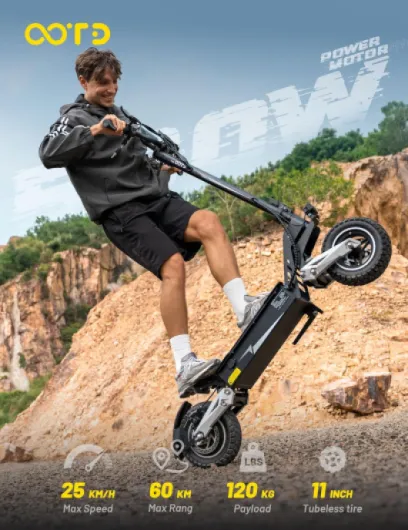
On paper, the TYOKUM J-15 ticks a lot of boxes: 48V 18Ah battery, advertised 50–60 km range, dual disc brakes, dual suspension, 10.5–11 inch pneumatic tires, 150 kg max load, and a foldable frame. You also get an LCD display, a password lock system, turn signals, a buzzer (horn), and a full light setup including deck lights. It’s clearly marketed as a proper adult commuter scooter, not a kid’s toy.
In practice, here’s how that translated for me. I weigh around 95 kg, usually ride with a backpack, and I mostly use the middle speed mode. With that setup, I’m getting roughly 35–40 km of real range before the battery starts dropping fast and the power dips. If I baby it a bit and use the slowest mode on flat paths, I can stretch it closer to 45 km, but I’ve never hit the claimed 55–60 km. So the advertised range is optimistic, but the real-life range is still decent for commuting.
The 150 kg load rating feels realistic in terms of frame strength. The deck is wide and doesn’t flex under my weight, even when I hit potholes or ride over small curbs. I’m not close to 150 kg, but I’ve thrown a heavy backpack plus some shopping on it and it didn’t feel like it was complaining. Compared to cheaper scooters that start creaking after a few weeks, this one feels more solid out of the box.
Where the spec sheet is a bit misleading is the idea of “lightweight” and “foldable”. Yes, it folds, but at around 29.5 kg, it’s not something you casually carry for long distances. Folding is more for putting it in a car boot or storing it in a corner, not for multi-modal commuting with stairs and trains. If you read the specs as “heavy but solid scooter with good range and comfort”, you’ll be closer to what you actually get.
Pros
- Comfortable ride thanks to 10.5–11 inch pneumatic tires and dual suspension
- Real-world 35–40 km range with a 48V 18Ah battery, enough for most daily commutes
- Solid frame and wide deck suitable for heavier riders up to 150 kg
- Effective dual disc brakes with power cut-off and good lighting (front, rear, indicators, deck lights, buzzer)
Cons
- Very heavy at around 29.5 kg, not practical to carry regularly
- Advertised 50–60 km range is optimistic for real-world use
- Lesser-known brand, so long-term parts and service may be less straightforward
Conclusion
Editor's rating
After using the TYOKUM J-15 for regular commuting, my overall opinion is that it’s a solid, practical scooter aimed at adults who care more about range and comfort than about portability or big-brand labels. The large 48V 18Ah battery, big pneumatic tires, dual suspension and dual disc brakes make daily rides pretty comfortable and safe, even on rougher roads. It feels stable, the wide deck is great for bigger riders, and the full light setup plus horn and turn signals are genuinely useful in traffic.
It’s not perfect, though. The advertised range is optimistic; expect around 35–40 km in normal use rather than the full 55–60 km. The 29.5 kg weight makes it a pain to carry, so it’s not ideal if you need to haul it up stairs or combine it with a lot of public transport. And while build quality feels good so far, the brand is still relatively unknown, so long-term support and spare parts availability might require a bit more effort than with a mainstream brand.
I’d recommend this scooter to heavier riders, people with longer commutes, or anyone who wants a sturdy, comfortable machine mainly for road and bike path use and who can store it on the ground floor or in a garage. If you live in a walk-up apartment, need something very light, or want a well-known brand with a big service network, you should probably look elsewhere. But if your priority is a tough commuter that gets the job done every day without too many frills, this one is a pretty solid option.