
Summary
Editor's rating
Value for money: strong specs if you actually use the power and range
Design: aggressive look, practical in some ways, awkward in others
Battery & range: long rides but long charges too
Comfort: genuinely smooth ride, but the weight is the trade-off
Materials & build: solid frame, mixed details
Durability: feels tough, but needs regular checks
Performance: strong dual motors, serious hill climbing
What you actually get out of the box
Pros
- Strong dual motors with very good hill-climbing and acceleration
- Comfortable ride thanks to hydraulic suspension and 10-inch vacuum tyres
- Large 52V 20.8Ah battery with genuinely long usable range for daily commuting and weekend rides
Cons
- Very heavy at 33.5 kg, awkward to carry up stairs or on public transport
- Long 11-hour charge time and build quality that needs occasional checks and tightening

Specifications
View full product page →| Brand | OneSportLife |
Big, heavy, and quick: what you’re really getting into
I’ve been riding the Kukirin G2 Master for a few weeks now, using it mostly for commuting in town and some weekend rides on rougher paths. If you’re thinking of a light little city scooter you can throw over your shoulder, this isn’t it. This thing is big, heavy, and clearly built more for power and range than for portability. It feels closer to a small moped than a classic rental scooter.
On paper, it looks very tempting: dual motors, 52V 20.8Ah battery, up to 43 miles of range, hydraulic suspension, and a 120 kg weight limit. The Amazon rating sits around 4.4/5 with mostly happy buyers, plus one very angry review talking about noise and a sketchy-looking battery. That last one caught my eye, so I paid extra attention to noises, finish, and electrics while using it.
In day-to-day use, it’s a strong performer but not perfect. The power is there, the suspension does its job, and the brakes are reassuring. But you have to accept the downsides: the weight (33.5 kg is no joke), the long 11-hour charge time, and a build quality that feels good overall but not bulletproof in every detail. Also, depending on where you live, road legality can be a grey area, especially with dual motors and high speed.
If you want something for short flat city trips and carrying up stairs, I’d say this is overkill. If you want a scooter that can pull hard up hills, handle rough tarmac, and take you far without constant range anxiety, then it starts to make sense. You just need to go in with realistic expectations, not the glossy product page dream.
Value for money: strong specs if you actually use the power and range
In terms of value, it really depends on what you need. Compared to basic 350–500W city scooters, this is clearly more expensive, heavier, and more overbuilt. But you’re also getting dual motors, real suspension, bigger battery, and serious range. If you’re just doing 3–5 km flat trips in the city, this is overkill and you’re paying for stuff you won’t use. In that case, it’s not good value for you personally, even if the product itself is fine.
If you actually use the power and range—longer commutes, hills, weekend off-road paths—then the package starts to make more sense. Getting a dual-motor scooter with hydraulic suspension and this battery size from a big-name brand usually costs quite a bit more. So in that sense, the G2 Master is good value for money on the spec sheet, as long as you accept the slightly rougher edges in finish and the need for a bit of maintenance.
The Amazon rating of 4.4/5 with mostly positive reviews lines up with my feeling: most people seem happy, a few have real issues. The one-star review about the rear wheel noise and taped battery is worrying, but given the others talk about smooth rides and good support, I’d say it’s probably a mix of occasional bad units and maybe rough shipping. That’s the risk you take at this price level with a less famous brand.
So, value-wise: if you’re a heavier rider, live somewhere hilly, or want one scooter that can handle both commuting and fun weekend rides, this is a pretty solid deal. If you’re light, live in a flat city, and need to carry the scooter a lot, you’re better off saving money and getting something smaller and simpler. It’s not universally great value, but for the right profile, it’s a lot of scooter for the price.
Design: aggressive look, practical in some ways, awkward in others
The design is clearly aimed at adults who want something that looks tough. The black 2025 version I used has an angular frame, chunky deck, and big 10-inch vacuum tyres. It looks more like a small off-road machine than a sleek city scooter. If you like that rugged style, you’ll probably be happy. If you prefer something discreet for commuting in a suit, this is a bit loud visually, especially with the ambient lights turned on.
The handlebar height is about 131.5 cm, which works fine for me at 1.80 m. The bar isn’t adjustable, but the fixed height should suit most adults. The deck is wide enough to stand sideways comfortably. I was able to ride with one foot angled forward and one back without feeling cramped. The weight distribution feels stable, thanks to the big frame and the low-mounted battery.
The folding mechanism is solid but not exactly elegant. It feels sturdy and safe, but you have to line things up and lock it properly; it’s not a one-second fold like small city scooters. When folded, it still takes quite a bit of space: 126 cm long and almost 60 cm wide. So yes, it fits in a normal car trunk, but it eats most of the space. For public transport, I’d say forget it unless you’re very determined.
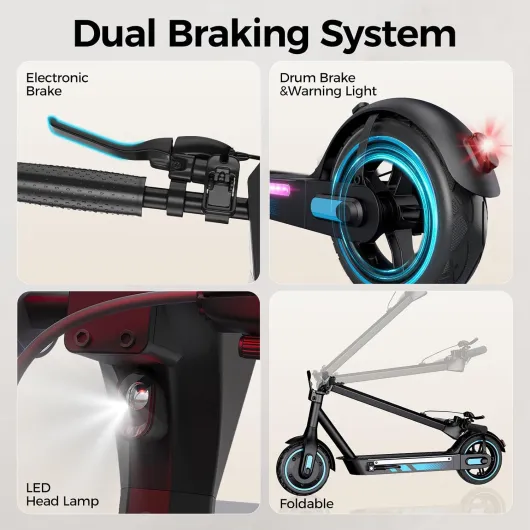
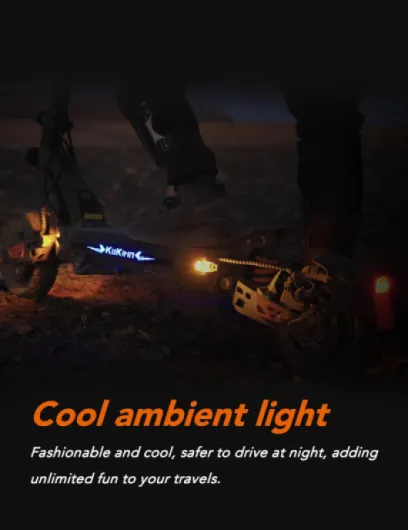
One thing I liked in the design is the lighting setup: front light that actually helps you see, rear light that doubles as brake light, plus turn signals. It’s not perfect car-level visibility, but for a scooter, it’s pretty solid. On the other hand, the cable routing and some plastic parts around the deck and stem don’t look super premium. They’re fine, but when you start bouncing around on rough roads, you notice a few rattles. Nothing broke on mine, but based on the one-star review complaining about noise, I can see how some units might develop annoying sounds if not checked and tightened regularly.
Battery & range: long rides but long charges too
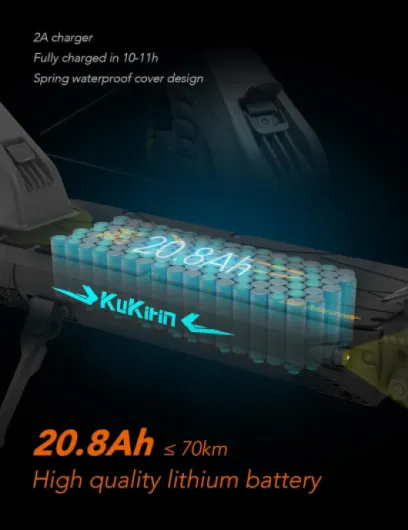
The 52V 20.8Ah lithium battery is one of the main reasons to consider this scooter. The advertised range is up to 43.5 miles (around 70 km). As usual, that figure is optimistic and based on light riders, eco mode, and flat ground. In my real use, with mixed modes, some hills, and my 85 kg weight, I was getting roughly 35–45 km per charge, which is still solid. If I babied it in the lower power mode and kept speeds reasonable, I could push closer to the higher end of that range.
The downside is the 11-hour charge time. This is not a scooter you quickly top up in an hour during lunch. It’s an overnight charge situation. For me, that was fine: ride during the day, plug it in at night, and it’s ready the next morning. But if you’re the kind of person who forgets to charge things, you might find yourself stuck more than once. A faster charger option would have been nice, but at this price point, I understand the compromise.
I didn’t experience any weird battery behaviour: no sudden drops from half to empty, no overheating, nothing like that. The display gives a decent idea of remaining charge, although like most scooters, the battery indicator jumps a bit depending on how hard you’re pulling the throttle. Light cruising shows more bars, full throttle up a hill shows less. That’s normal, just don’t panic when it dips under heavy load.
The product description mentions a fuse that can trip after heavy use to protect the battery. I didn’t have this happen to me, but I kept it in mind. The idea is fine: better a blown fuse than a damaged battery. But it also means if the scooter suddenly won’t turn on after a hard ride, you might have to contact support for a fuse replacement guide instead of assuming it’s dead. It’s one more thing to manage, but at least they’re transparent about it. Overall, for range and daily practicality, I’d say the battery is a strong point as long as you can live with the long charge times.
Comfort: genuinely smooth ride, but the weight is the trade-off
Comfort-wise, the G2 Master is where the scooter really starts to justify its size. The hydraulic suspension front and rear makes a clear difference. On broken pavement, speed bumps, and small potholes, it takes the edge off nicely. You still feel the road, but you’re not getting your knees and back smashed like on small, rigid scooters. On some gravel paths and slightly muddy tracks, it stayed composed enough that I didn’t feel like I was about to slide out all the time.
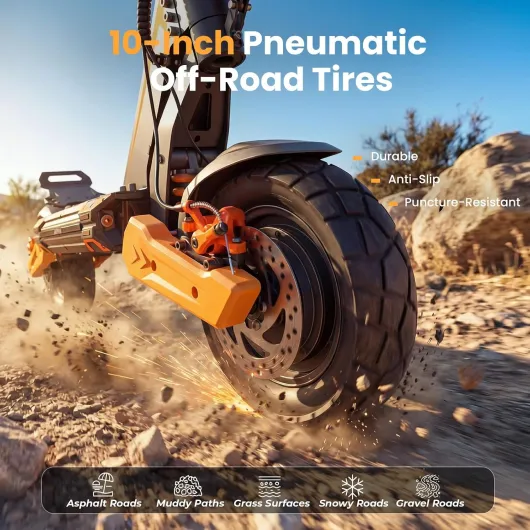
The 10-inch vacuum tyres also help a lot. They have enough volume to soften impacts and enough grip to give you confidence when leaning a bit in corners. Compared to the small, hard wheels on cheaper city scooters, it’s night and day. I could hold 20–25 km/h on rougher sections where I’d slow down to 10–15 on a basic scooter. If you have bad roads where you live, this matters more than you think.
On the flip side, the comfort off the scooter is bad. Again, 33.5 kg is heavy. Carrying it up even one flight of stairs is a workout. Rolling it around folded is possible, but it’s not very ergonomic. The handlebar shape and folding point don’t make it as easy to drag as a suitcase. So yes, riding comfort is good, but living with it off the road is less fun. This is a scooter you want to park in a garage, shed, or ground-floor hallway, not haul around all day.
The cockpit ergonomics are fine. The grips are decent, the brake levers are in a natural position, and the display is easy to read. After 30–40 minutes of riding, my feet felt okay thanks to the wide deck, but my knees did feel the weight and power when I was riding aggressively with lots of acceleration and braking. For normal commuting speeds, it’s comfortable. For long, fast off-road sessions, you’ll still get tired, but that’s more about the rider than the scooter.
Materials & build: solid frame, mixed details
The frame and wheels are aluminium, and that’s where most of the good feeling comes from. The main chassis feels stiff and strong. When riding over bumps or hitting the throttle hard, there’s no scary flex in the stem or deck. It gives you some confidence, especially at higher speeds. The 10-inch vacuum tyres also help; they have a bit of give and decent grip on wet tarmac and light gravel.
Where it feels a bit cheaper is in the smaller parts: some of the plastic covers, the way some cables are exposed near the stem, and a couple of rubber caps. They’re not terrible, but they don’t match the “tank” feeling of the core frame. I had to push a cable back into place once after folding because it was getting pinched. That’s the kind of small thing that doesn’t stop the scooter from working, but you notice it and it reminds you to keep an eye on it.
The brakes are mechanical disc brakes front and rear. The levers and calipers feel alright, not high-end bike level, but they get the job done. The rotors stayed straight during my use, and I didn’t get any serious rubbing, just the usual faint hiss you get on many disc setups. The hydraulic suspension units front and rear are the main “fancy” parts. They look and feel proper, and they really change the ride compared to rigid or basic spring-only scooters.
About the battery build, I didn’t open mine, but I checked the area under the deck and the visible wiring. Everything looked reasonably tidy and secure. I didn’t see any tape holding things in a sketchy way like the one angry review mentioned, so that might have been a bad unit or rough handling. Still, this kind of product isn’t a premium EU or US brand at double the price, so I’d say the materials are pretty solid for the cost, but don’t expect meticulous finishing everywhere. If you’re handy with a hex key and ready to tighten bolts now and then, you’ll be fine. If you want something you never touch with tools, this may annoy you.
Durability: feels tough, but needs regular checks
In the time I’ve had it, the G2 Master hasn’t shown any serious durability issues, but it also doesn’t feel like something you can neglect completely. With the power, speed, and weight, bolts and screws need to be checked now and then. After the first few rides, I went over the main bolts (stem, folding mechanism, wheel axles) with basic tools, and a couple of them took a small tighten. Nothing scary, just typical for this kind of scooter.
The hydraulic suspension has held up fine so far. No leaks, no weird noises, and no loss of damping. The tyres haven’t punctured, and the “anti-puncture” claim seems fair for normal use, but I wouldn’t go smashing into sharp rocks and expect miracles. The rims and frame didn’t show any cracks or bending, even after some rougher paths. The paint is holding up, with just a few small scuffs from locking it to metal railings.
Where I’m a bit more cautious is the electronics and wiring. I haven’t had failures, but given one review talked about electrical tape around the battery and strange noises from the rear wheel, I’d say quality control might vary a bit between units. If you get a good one, you’re probably fine. If you get a noisy one out of the box, I’d contact support quickly and push for a fix or exchange rather than living with it. The brand’s customer service gets good mentions in several reviews, which is reassuring.
Overall, my feeling is: solid core, average finishing, needs some owner attention. If you’re ready to treat it like a small motorised vehicle—check screws, keep it clean, avoid deep water, and don’t store it dead-flat for months—it should last. If you want something you never worry about and you just throw around, I’d look at simpler, lighter scooters instead.
Performance: strong dual motors, serious hill climbing
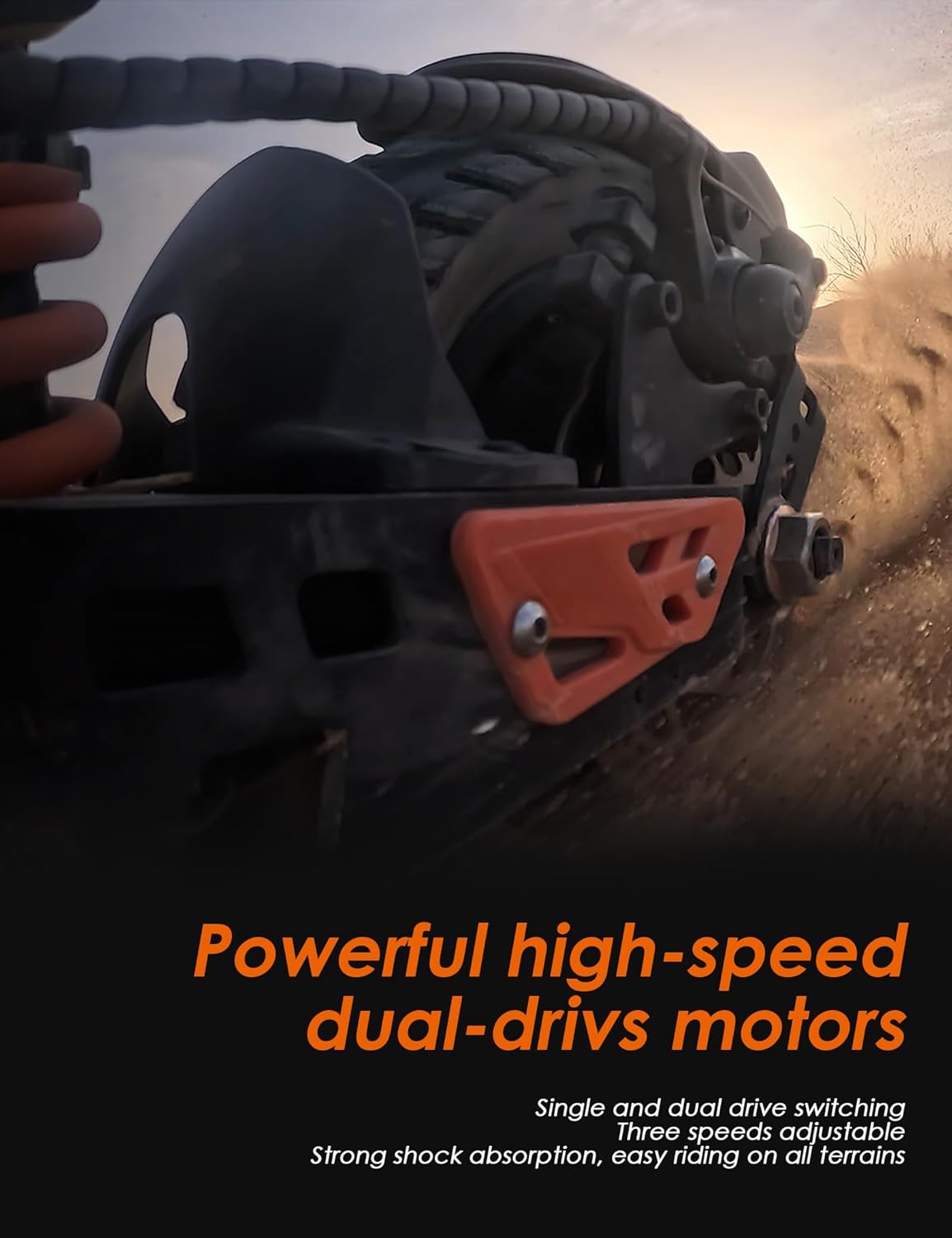
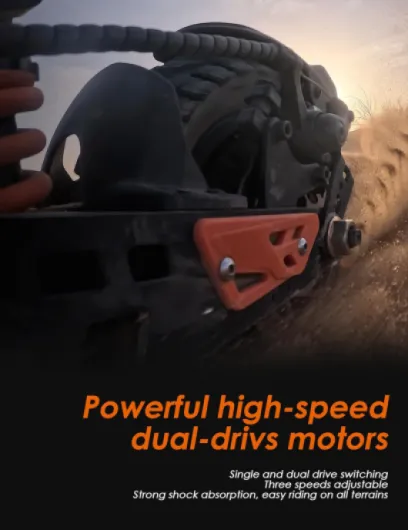
The big selling point here is the dual high-speed front and rear motors. In practice, the scooter pulls hard. From a standstill, if you’re in the higher power mode and not leaning forward, you feel the front wheel getting light. It’s not a toy. For flat city riding, I actually ended up dialing the power down a bit because I didn’t need that much punch in traffic and on shared paths. It’s nice to have, but you have to respect it.
On hills, this is where it really shines. I tested it on a few steep climbs where single-motor scooters usually slow to a crawl or you have to kick along to help. The G2 Master just kept going at a decent pace without complaining. With my weight around 85 kg, it still had plenty of torque left. If you live in a hilly area, this makes a big difference. No more planning your route to avoid slopes.
The brakes match the performance reasonably well. Dual disc brakes give good stopping power, and combined with the wide tyres and suspension, emergency braking feels controlled as long as you’re not doing something stupid. You still need to lean back and use both brakes properly, but it doesn’t feel under-braked like some smaller scooters. I’d still recommend doing a few test stops in a safe area to get used to how it reacts at higher speeds.
One thing to keep in mind: depending on your local laws, the full performance might not be legal on public roads. The listing even mentions that off-road use on private land is the idea. So you may have to limit speed or stick to private property to stay on the safe side. In terms of raw performance for the price, though, it’s strong. I wouldn’t put a beginner on it without a briefing, but for someone who already used weaker scooters and wants more power, it delivers.
What you actually get out of the box
Out of the box, the Kukirin G2 Master comes mostly assembled. In my case, it took around 25–30 minutes to get it from packaging to riding. You get the scooter, a charger, a basic pump, and an instruction manual. The manual is usable but a bit basic; I had to rely on common sense and a couple of YouTube videos to double-check folding and display settings. Nothing dramatic, but don’t expect super polished documentation.
The first thing that hits you is the weight. At 33.5 kg, it’s a pain to carry up stairs or into a car trunk if you’re not used to lifting heavy stuff. Yes, it folds, but the fold is more for storage and car transport than for daily carrying. I can lift it, but I wouldn’t want to do it more than a few times a day. If you live in a flat without an elevator, think twice.
The cockpit has a large HD LED display, basic controls for modes and lights, and brake levers on both sides for the dual disc brakes. Everything is pretty straightforward: you can see speed, battery level, and riding mode at a glance. It’s bright enough to read in daylight and not too blinding at night, which is nice. I liked that I didn’t have to dig into menus just to change basic settings.
As for the rest of the package, you get front and rear lights, brake lights, turn signals, and some ambient lighting. It does look a bit “gamer PC on wheels” at night, but it does help with visibility. Overall, the presentation gives the feeling of a serious, adult scooter focused on power and range, not a toy. But there are a few small finish details that remind you this isn’t a super premium brand, more like decent mid-range with strong specs.
Pros
- Strong dual motors with very good hill-climbing and acceleration
- Comfortable ride thanks to hydraulic suspension and 10-inch vacuum tyres
- Large 52V 20.8Ah battery with genuinely long usable range for daily commuting and weekend rides
Cons
- Very heavy at 33.5 kg, awkward to carry up stairs or on public transport
- Long 11-hour charge time and build quality that needs occasional checks and tightening
Conclusion
Editor's rating
The Kukirin G2 Master is a big, powerful adult scooter that does what it says on paper: strong dual motors, long range, and a comfortable ride thanks to hydraulic suspension and 10-inch tyres. On the road or on rough paths, it feels stable and confident, and it climbs hills far better than the usual single-motor city scooters. The brakes are up to the task, the lighting setup is decent, and the battery lets you ride proper distances without staring at the gauge every five minutes.
On the downside, you really need to accept the weight and the slightly rough-around-the-edges build. At 33.5 kg, it’s a pain to carry, and the 11-hour charge time means you have to plan your usage a bit. Some small details like cable routing and plastics don’t feel premium, and there’s at least one report of a dodgy-looking battery finish, so quality control is not perfect. You also have to consider local laws, because full power and speed may not be road legal everywhere.
Who is it for? Riders who want real power, good range, and comfort, and who can store it on the ground floor or in a garage. People okay with doing basic checks and tightening bolts now and then. Who should skip it? Anyone needing a light, portable city scooter, anyone who hates doing minor maintenance, and anyone expecting luxury-level finish. If you fit the first group, it’s a strong, no-nonsense option that gets the job done and offers a lot of performance for the money.