Section 1 – 72V electric scooter vs 60V performance in real riding
When riders compare 72V electric scooter vs 60V performance, they usually stare at top speed numbers. A higher voltage pack does raise theoretical top speed, but the real story is how that extra battery voltage changes torque, heat and performance efficiency over a full ride. On the road, the difference shows up less in a single burst and more in how the scooter feels after two hours of hard riding.
Take a typical 60V dual motor scooter rated at 2 000 watts nominal and 4 000 watts peak wattage. Its battery capacity might be 60V 20 amp hours, which equals 1 200 watt hours of stored energy in the system. A comparable 72V build often runs a 72V 25 amp hours battery, giving 1 800 watt hours and a noticeably higher potential for both speed and range.
On flat ground, both scooters can hit similar top speed if the motor controller is current limited. The 72V machine simply reaches that speed with less current draw, which means less heat in the wiring, controller and cells during the ride. That lower heat level is why a higher voltage scooter usually holds its performance deeper into the pack instead of feeling tired at half battery.
Hill climbs expose the 72V electric scooter vs 60V performance gap even more clearly. A 60V scooter that starts a 15 percent grade at 40 km/h often bogs down to 20 km/h as voltage sag kicks in under high load. The 72V system keeps more headroom in the motor and controller, so it can maintain higher speed and torque with the same nominal power rating.
For a performance enthusiast, this means the spec sheet wattage only tells half the story. You need to read battery voltage, amp hours and watt hours together to understand how much usable energy you can actually put to the ground. When you do that, the 72V platform usually delivers 10 to 15 percent better performance efficiency on the same route than a 60V scooter with similar capacity.
Section 2 – Voltage, power and speed: why 72V feels stronger on the road
To unpack 72V electric scooter vs 60V performance, start with the basic equation power equals voltage times current. When you raise voltage from 60V to 72V and keep the same power, the motor draws less current, which cuts resistive losses and heat in the whole system. That is why a higher voltage scooter can feel both stronger and cooler during aggressive riding.
Imagine two scooters limited to 3 000 watts of peak wattage by their motor controller. The 60V scooter must pull 50 amps to hit that power, while the 72V scooter only needs about 41 amps for the same output. Those extra 9 amps on the 60V pack turn into wasted energy as heat in the battery, wiring and controller, which slowly erodes performance efficiency and range.
On the street, that wasted energy shows up as softer acceleration after repeated launches. A 72V scooter keeps its punchier feel because the higher voltage lets the motor deliver torque without stressing the cells as hard. Less stress means less voltage sag, so the scooter holds closer to its rated top speed even when the battery drops below half.
Speed regulations also matter when you compare 72V electric scooter vs 60V performance for daily commuting. Some states are exploring speed tier frameworks for electric scooters, like the proposed speed tiers in Massachusetts that could influence how manufacturers tune controllers for different voltage classes, which you can read about in this analysis of emerging e-scooter speed tiers. If your local rules cap top speed electronically, the benefit of higher voltage shifts even more toward stronger hill climbing and cooler running rather than raw maximum speed.
For riders who weigh over 90 kilograms or live in hilly cities, that torque advantage matters more than a headline number. A 72V scooter can clear steep ramps and bridges at higher speed without forcing the motor to run at its thermal limit. That is the difference between a fun, confident ride and a scooter that feels like it is gasping every time the road tilts upward.
Section 3 – Inside the battery and controller: how 72V changes the hardware
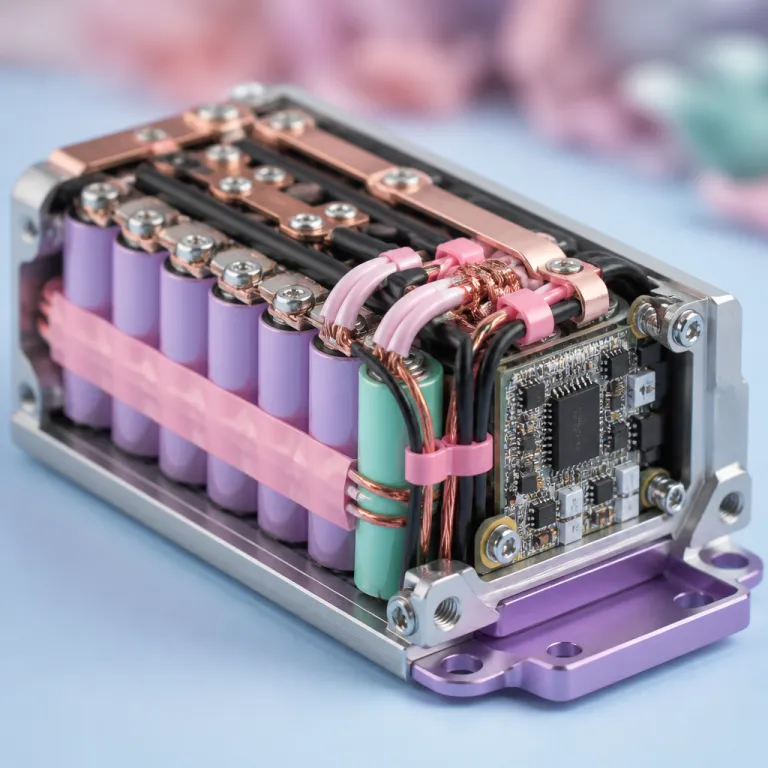
The heart of the 72V electric scooter vs 60V performance debate is the battery pack and the controller that manages it. A 72V pack uses more cells in series to reach higher voltage, which raises battery voltage but does not automatically increase capacity unless you also add parallel groups. Capacity still depends on amp hours, while total stored energy is measured in watt hours, which equals voltage times amp hours.
For example, a 60V 24 amp hours pack holds about 1 440 watt hours of energy. A 72V 20 amp hours pack stores a similar 1 440 watt hours, but the higher voltage changes how that energy is delivered to the motor. With higher voltage, the motor controller can supply the same power at lower current draw, which reduces heat and improves performance efficiency under heavy riding.
That efficiency gain only happens if the motor controller and battery management system are properly rated. A serious 72V scooter should use an 84V rated motor controller with quality MOSFETs, robust traces and active cooling to handle sustained high power. If the controller is undersized, you lose the higher potential of the pack and risk thermal cutbacks or premature failure.
Control logic also shapes 72V electric scooter vs 60V performance in subtle ways. Many manufacturers program gentler current ramps on 72V systems to protect the battery from extreme current spikes, which can slightly soften the initial hit but preserve range and reduce heat. Riders who want sharper response often upgrade to aftermarket controllers, but they must respect safe limits for battery voltage and continuous current.
If you want a deeper technical dive into how the controller shapes electric scooter behaviour, this guide on the role of the electric scooter controller in performance is a useful reference. It explains how phase current, battery current and firmware tuning interact with higher voltage to produce either smooth, controllable torque or twitchy, inefficient power delivery. Matching a 72V pack with a well engineered controller is what turns raw numbers into a stable, confidence inspiring ride.
Section 4 – Range, heat and efficiency: what changes over long rides
When you stretch 72V electric scooter vs 60V performance over a full day of riding, range and heat management become more important than peak power. A higher voltage system wastes less energy as heat in the wiring and controller, so more of each watt hour actually moves you forward. That is why two scooters with the same nominal watt hours can deliver different real world range.
Consider a 60V scooter with a 1 500 watt hours battery and a 72V scooter with the same 1 500 watt hours capacity. On a mixed urban route with frequent stops, the 72V scooter often travels 10 to 15 percent farther before hitting the same low voltage cutoff. The reason is simple physics, because lower current draw at higher voltage means lower resistive losses and less heat in the system.
Heat is not just a comfort issue, it is a performance and longevity problem. High temperatures accelerate cell degradation, which slowly reduces usable amp hours and increases voltage sag under load. A cooler running 72V pack can maintain its original range for more hours of riding before noticeable fade sets in.
Charging time is the other side of the range equation. A 72V 30 amp hours battery holds 2 160 watt hours, so with a standard 2 amp charger you are looking at roughly 15 hours from empty to full, while a 60V 20 amp hours pack at 1 200 watt hours needs closer to 10 hours. Many performance riders step up to 5 amp or dual chargers to keep downtime reasonable, but they must ensure the charging system and BMS are rated for the higher voltage.
If your priority is long distance commuting, the 72V electric scooter vs 60V performance choice should be framed around energy per kilometre, not just headline range. A well tuned 72V scooter with a 1 800 watt hours pack can be more efficient and less stressful to the battery than a 60V scooter with similar capacity pushed to its limits. For a curated look at long distance capable models, this overview of top electric scooters for long distance commuting is a practical starting point.
Section 5 – Torque, hill climbing and off road riding at higher voltage
For performance enthusiasts, the most tangible part of 72V electric scooter vs 60V performance is torque on steep grades. Higher voltage raises the motor’s unloaded speed and gives the controller more headroom to push current without hitting thermal or voltage limits. That combination translates into stronger pull from a standstill and more authority on 15 to 25 percent climbs.
Take a dual motor off road scooter with 1 500 watts nominal per motor at 60V. On a long dirt climb, the motors draw high current, the battery voltage sags and the controller may start to roll back power to protect itself from heat. The same motors rewound or reconfigured for 72V can reach similar power with less current draw, which keeps voltage sag under control and preserves torque deeper into the pack.
Off road riding also punishes weak electrical systems with constant load changes. Every time you punch the throttle out of a rut, the controller must respond instantly while managing battery voltage and phase current. A robust 72V system with a quality motor controller can deliver that sharp response repeatedly without cooking its MOSFETs or triggering over temperature cutoffs.
Riders who weigh more or carry gear feel the difference even more. On a 60V scooter, a heavy rider might see top speed drop sharply on hills as the battery voltage dips and the controller hits its current ceiling. On a 72V scooter with the same nominal wattage, the higher potential voltage lets the system maintain higher speed and torque before those limits kick in.
That does not mean every rider needs 72V for trail fun. If your off road sessions are short and your hills are moderate, a well built 60V scooter with decent battery capacity and a competent controller can still deliver a satisfying ride. The jump to higher voltage mainly pays off when you combine steep terrain, long climbs and repeated high power bursts that would push a 60V system into its thermal comfort zone.
Section 6 – Cost, charging and who should actually choose 72V
When you weigh 72V electric scooter vs 60V performance, cost and practicality should sit next to speed and torque. A 72V architecture needs more cells, a stronger controller and often better cabling, which typically adds 400 to 800 dollars over a comparable 60V build. You are paying for higher voltage hardware that can safely handle more power and heat over many hours of riding.
Charging logistics also change with higher voltage packs. A 72V 30 amp hours battery stores 2 160 watt hours, so even with a 5 amp charger you are looking at around 7 to 8 hours from low to full, while a 60V 20 amp hours pack at 1 200 watt hours can be topped up in roughly 4 to 5 hours with the same current. Riders who need quick turnarounds sometimes run dual charging ports, but that adds cost and requires careful attention to charger compatibility and battery voltage limits.
So who actually benefits from the voltage jump. If you are a heavy rider, live in a hilly area or regularly push your scooter at high speed for long distances, the 72V electric scooter vs 60V performance gap is worth the premium. You get stronger acceleration, better hill climbing, less voltage sag and more stable performance as the battery drains.
If your commute is short, flat and capped by local speed limits, a solid 60V scooter with decent capacity may be the smarter buy. You will save money, charge faster and still enjoy enough power for safe urban riding without carrying the extra weight of a large high voltage pack. In that scenario, investing in better tyres, brakes and lighting often improves real world safety more than chasing a higher voltage number.
For many riders, the sweet spot is a well engineered 60V scooter for city use and a 72V machine reserved for weekend performance riding. That split approach keeps daily running costs reasonable while still giving you access to the higher potential of a 72V system when you actually have room to use it. Not the highest top speed on paper, but the strongest eighth mile when the road turns steep and the battery gauge is already halfway down.
Key figures on voltage, power and range in electric scooters
- Many commuter scooters use 36V or 48V packs, while performance models increasingly adopt 60V and 72V systems, reflecting a market shift toward higher voltage architectures for better efficiency and torque (industry trend data from major manufacturers).
- A 72V 20 amp hours battery stores about 1 440 watt hours of energy, which is roughly 20 to 30 percent more than a common 52V 20 amp hours pack at 1 040 watt hours, giving significantly longer potential range for similar riding styles (based on standard watt hour calculations).
- Laboratory tests on lithium ion cells show that running at lower current for the same power output can reduce resistive heating losses by 10 to 15 percent, which aligns with the observed range gains of many 72V scooters over 60V models with similar watt hours (cell manufacturer technical reports).
- Real world range claims for high power scooters often drop by 30 to 40 percent when ridden at full throttle, highlighting why higher voltage systems that maintain efficiency under load are valuable for performance oriented riders (independent testing from multiple review outlets).
- Fast charging at 5 amps on large packs can cut charge time by roughly half compared with 2 amp chargers, but it also increases thermal stress on cells, which is why many manufacturers limit maximum charge current relative to battery capacity in amp hours (battery safety guidelines from major cell suppliers).
FAQ about 60V and 72V electric scooter performance
Does a 72V scooter always go faster than a 60V scooter ?
A 72V scooter has the electrical headroom for higher top speed, but the actual maximum speed is set by the motor design, controller limits and firmware. If both scooters are electronically capped at the same speed for legal reasons, the 72V model will not be faster on paper, but it will usually hold that speed more easily under load. You feel the benefit most on hills, with heavier riders and when the battery is below half charge.
How does voltage affect range if watt hours are the same ?
When two scooters have the same total watt hours, the higher voltage system can deliver slightly better range because it draws less current for the same power. Lower current means less resistive loss and less heat in the wiring and controller, so more of the stored energy turns into forward motion. In practice, many 72V scooters show around 10 to 15 percent better real world range than comparable 60V models on identical routes.
Is a 72V battery harder to charge safely at home ?
A 72V battery is not inherently harder to charge, but it requires a properly matched charger and a battery management system rated for the higher voltage. Because these packs often have larger capacity in amp hours, they take longer to charge at the same current, which tempts some riders to use faster chargers. As long as you stay within the manufacturer’s specified maximum charge current and use quality chargers, home charging remains safe.
Will a 72V system wear out my motor faster ?
A well designed 72V system does not automatically wear out the motor faster, because the motor mainly cares about heat and mechanical load rather than voltage alone. If the controller is tuned sensibly, the higher voltage can actually reduce current and heat for the same power, which is easier on the motor. Problems arise only when riders push extreme power levels beyond the motor’s continuous rating, regardless of whether the pack is 60V or 72V.
Who should stick with a 60V scooter instead of upgrading to 72V ?
Riders with short, flat commutes, strict local speed limits or tight budgets are usually better served by a solid 60V scooter. They get adequate performance, shorter charge times and lower purchase cost without the extra weight and complexity of a large 72V pack. For these users, spending money on better tyres, brakes and lighting often improves daily safety and comfort more than moving to a higher voltage platform.