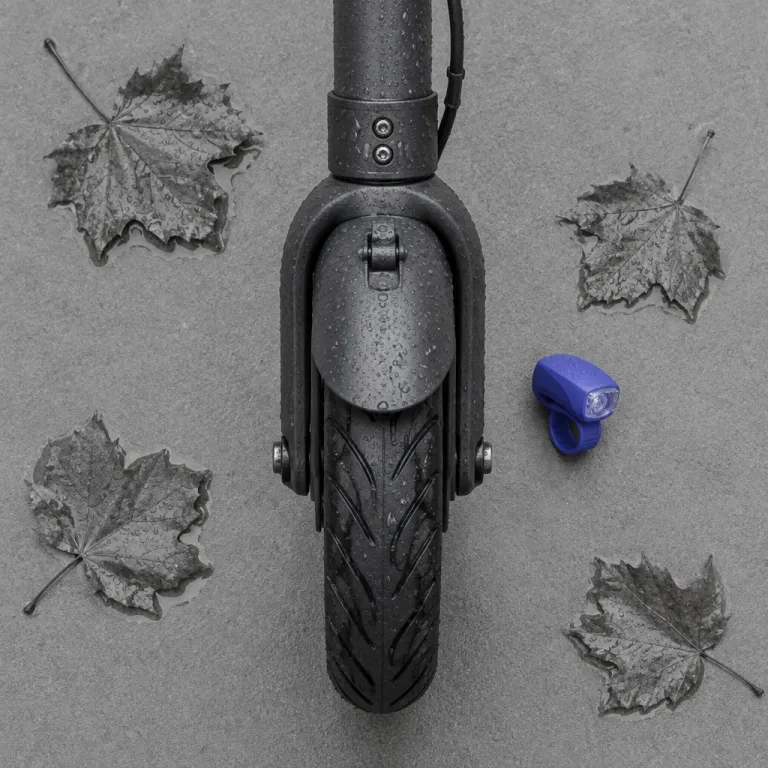
Reading the road in fall: wet leaves, paint and hidden water
September is when electric scooter fall commuting wet weather safety stops being theoretical and starts under your wheels. Fallen leaves trap water on the road, turning familiar bike lanes into slippery surfaces that feel closer to ice than asphalt. On a compact scooter electric deck, that mix of wet leaves and faded paint lines can erase grip in a heartbeat.
To stay safe in these conditions, change how you ride, not just what you ride. Enter corners slower, keep your electric scooter upright, and do your braking while the tires are still on relatively dry pavement before the leaf piles. When you must cross painted markings or metal covers in wet weather, go as straight as possible, avoid leaning, and keep throttle and brake inputs smooth to protect traction and overall safety.
Braking technique matters more than raw brake rating once the rain starts. On wet roads, shift your weight slightly back, feather the front brake, and rely more on the rear so the scooter stays stable instead of pitching forward. If your model uses electronic braking only, consider upgrading to a scooter with at least one mechanical drum or disc brake, because electric systems alone can feel vague on water polished surfaces.
Leaf mulch also hides potholes, drain grates and standing water that can cause sudden damage to rims, tires or even the electric wiring underneath. Treat any deep looking pile as if it could conceal a curb, and steer around rather than through when you ride electric in wet conditions. That small detour is often the difference between a safe commute and a bent wheel plus potential water damage to your scooter.
Some scooters handle this seasonal mess better than others, and the spec sheet rarely tells the full story. The Segway Ninebot Max G30, for example, pairs 10 inch pneumatic tires with a conservative controller that does not surge when the road turns slick, while many cheaper scooters spin the front wheel the moment rain hits painted crosswalks. If you weigh around 90 kilograms, expect the advertised 40 kilometre range to drop closer to 25 in cold, wet conditions, especially if you are climbing hills and constantly slowing for leaf piles.
Pay attention to tire design before the first real scooter rain commute of the season. Deep tread and softer rubber compound help an electric scooter clear water and grip better on wet roads than hard, slick street tires that were fine in dry summer weather. If your scooter uses solid honeycomb tires, lower your speed ceiling in heavy rain because you simply do not have the same mechanical grip as a properly inflated pneumatic setup.
Water resistance, real waterproofing and what fall rain actually does to scooters
Most riders only think about water resistance when the forecast shows heavy rain, but fall drizzle is what quietly kills many electric scooters. An IPX4 rating on paper means protection from splashing water, yet repeated exposure to low pressure spray from wet roads can still push moisture into deck seams and cable ports. The result is slow corrosion, controller glitches and battery damage that appear weeks after that one wet commute you tried to forget.
Manufacturers talk about waterproofing as if every scooter were a submarine, but the reality is more nuanced. True water resistant design means gaskets around the deck, sealed charge ports, and strain relieved connectors that do not wick water along the cable into the electronics. When you inspect a scooter electric model in person, look for rubber boots on brake sensors, silicone around the deck lid and a charging port cap that actually stays shut under pressure water from the front wheel.
Some brands do this better than others, and it shows once the weather turns. Apollo scooters, for instance, have leaned into higher water resistance ratings on recent models, but even there you should treat the rating as a ceiling, not an invitation to plow through ankle deep puddles. A cautious rider treats any standing water as a potential source of water jets aimed directly at bearings, motor seals and the underside of the deck.
City policy has started to reflect how serious wet weather safety can be when fleets are not maintained. When Denver removed Lime and Bird after a series of fatal incidents, the debate was not only about speed but about whether shared scooters were kept in a safe mechanical state for mixed weather commuting. Private owners should take that as a warning that regular checks of brakes, tires and waterproofing are not optional once the rain returns.
Think of your fall maintenance routine as cheap insurance against expensive water damage. Before the wet season, open the deck if your warranty allows, check for loose connectors, and add a thin bead of non acidic silicone around obvious gaps where water could pool. After any ride in heavy rain, wipe the scooter dry, stand it upright in a warm, ventilated space, and avoid charging until the deck and charge port are completely dry.
Pressure washing is the fastest way to ruin even a well sealed electric scooter. High pressure water jets can drive moisture past seals that easily shrug off normal spray from wet conditions, so stick to a damp cloth and a soft brush for cleaning. If you must rinse mud off the tires, use very low pressure water, keep the stream below the axle line, and never aim directly at the motor hub or deck seams.
Grip, tires and braking: tuning your scooter for cold, wet commutes
As nights lengthen and temperatures drop, your electric scooter fall commuting wet weather safety depends heavily on contact patches the size of two credit cards. Cooler air reduces tire pressure by roughly 0.07 bar for every 5 degrees Celsius, so a scooter that felt planted in August can feel nervous by late September. Check your tires weekly, and bring them back to the manufacturer’s recommended pressure rather than riding on chronically low pressure rubber that squirm under load.
There is a trade off here that serious riders learn quickly. Slightly lower pressure can increase grip on wet roads by letting the tire conform to rough asphalt, but too much drop increases rolling resistance, slashes range and makes pinch flats more likely when you hit hidden potholes under leaves. Aim for the lower half of the recommended PSI range in wet conditions, not a vague guess that leaves you either overinflated for grip or underinflated for safety.
Brake performance also changes dramatically between dry and wet conditions. Mechanical disc brakes that feel sharp in summer can glaze over with road grime, lengthening stopping distances just when you need them shortest. Make a habit of doing a few controlled hard stops in a safe area after the first rain to scrub the rotors and remind your fingers how much lever force is now required.
If your scooter relies on drum or electronic brakes, learn their limits before traffic forces the lesson. Drums tend to be more consistent in wet weather but can fade on long descents, while pure electronic braking often feels weak at low speeds where many fall crashes actually happen. A mixed system, with at least one mechanical brake backed by electronic regen, offers the best balance for everyday commuting in variable weather.
For a deeper dive into how different brake types behave as conditions change, a detailed guide to disc, drum and electronic systems can help you decide when service is due and whether an upgrade is worth the cost. Knowing when pads are worn, cables are stretching or electronic modulation is failing is part of riding electric with the same seriousness you would bring to maintaining an electric bike. The goal is simple, even if the mechanics are not, because a predictable stop on a wet downhill is worth more than any top speed figure.
Range is the other quiet casualty of cold, wet commuting. Lithium ion batteries lose effective capacity as temperatures fall, so that 40 kilometre summer ride can shrink to 30 or less once morning lows sit in the single digits Celsius. Plan your routes with a margin, avoid full throttle sprints on every straight, and remember that constant braking and re accelerating around puddles and leaf piles will drain watt hours faster than a steady cruise on a dry, warm day.
Seeing and being seen: light, clothing and practical rain gear
By late September, the calendar says fall while your commute says twilight, and that is where electric scooter fall commuting wet weather safety meets basic visibility. Shorter days mean you are riding electric in dim light both to and from work, often with rain on your visor and spray on your glasses. A stock 100 lumen headlight on many budget scooters is barely adequate for being seen, let alone for seeing potholes and wet leaves at 20 kilometres per hour.
For urban commuting, aim for at least a 300 to 500 lumen front light mounted on the handlebar plus a smaller helmet mounted light you can point into turns. The handlebar beam paints the road surface, while the helmet light lets you signal your presence to drivers at intersections and around parked cars. Rear visibility matters just as much, so pair the mandatory red tail light with an additional flashing unit on your backpack or jacket to create depth that drivers can judge.
Most US states now require a white front lamp and a red rear lamp or reflector on electric scooters, and enforcement tends to increase as days get shorter. Treat that legal minimum as a floor, not a target, especially in heavy rain where water droplets scatter light and make you harder to pick out. Reflective ankle bands, helmet decals and subtle piping on a dark jacket can add visibility without making you feel like you are wearing a full cycling kit to the office.
Rain gear for scooters has different requirements than for bikes because you stand upright and do not generate as much body heat. Look for a jacket with venting zips that can dump heat on climbs, a drop tail to block wheel spray, and cuffs that cinch tightly enough to keep water from running down your sleeves onto your gloves. Gloves themselves should balance insulation with grip, using synthetic leather or textured rubber palms that stay tacky on wet handlebars instead of turning slick once soaked.
Face protection is another overlooked part of wet weather commuting. A clear visor on a commuter helmet can keep rain and road grit out of your eyes, but it must not fog instantly at low speeds, so prioritize models with anti fog coatings or good venting. If you prefer no visor, carry clear glasses with hydrophobic coating so you can still read the road surface when oncoming headlights flare across wet pavement.
Finally, remember that the same visibility principles apply when you teach someone else to ride, whether that is a teenager on their first scooter or a partner new to micromobility. Building confidence session by session, with proper lights, reflective gear and a clear plan for wet conditions, turns a nervous first ride into a reliable fall commute. The habits you set now will carry through the darker, wetter months when the margin for error shrinks but the satisfaction of a smooth, safe ride grows with every kilometre.
FAQ
How dangerous are wet leaves for electric scooter riders ?
Wet leaves are extremely slippery, especially when they sit on painted lines or metal covers, and they can reduce traction almost as much as ice. On an electric scooter with small tires, that loss of grip happens suddenly, often during braking or gentle turns. The safest approach is to slow before leaf piles, keep the scooter upright and avoid any sharp steering or braking inputs while crossing them.
Can I ride my electric scooter in heavy rain if it has an IP rating ?
An IP rating indicates some level of water resistance, but it does not guarantee full waterproofing in heavy rain or deep puddles. Most commuter scooters are designed for light rain and splashes from wet roads, not for prolonged exposure to high pressure water or submersion. If you must ride in heavy rain, reduce speed, avoid standing water and dry the scooter thoroughly afterward before charging.
How does cold, wet weather affect battery range on electric scooters ?
Cold temperatures reduce the effective capacity of lithium ion batteries, so range typically drops once morning and evening rides happen in single digit Celsius conditions. Wet weather compounds this effect because frequent braking, re acceleration and detours around puddles use more energy than steady cruising on dry pavement. Many riders see a 20 to 30 percent range reduction in fall and winter compared with warm, dry summer commutes.
What tire pressure should I use for wet weather commuting ?
Start with the manufacturer’s recommended pressure, then aim for the lower half of that range to improve grip on wet roads without risking pinch flats. Check pressure weekly in fall, because cooler air naturally lowers PSI and can leave tires underinflated if you ignore them. Avoid running very low pressure, since that can make handling vague, increase rolling resistance and shorten range.
What lighting setup is best for dark, rainy commutes on a scooter ?
A practical setup combines a 300 to 500 lumen handlebar mounted front light with a smaller helmet light you can direct toward hazards. At the rear, use the built in tail light plus an additional flashing light on your backpack or jacket to create multiple points of visibility. Reflective elements on clothing, bags and helmet further improve your chances of being seen in rain and low light without requiring specialized cycling gear.