
Summary
Editor's rating
Value for money: good commuter package if you accept the compromises
Design: solid, a bit bulky, but feels safe on the road
Battery and range: honest numbers if you don’t ride like a maniac
Comfort: good suspension, decent deck, heavy but stable
Build quality and durability: solid frame, but tires and support are the weak link
Performance: quick enough for city traffic, with decent control
What you actually get out of the box
Pros
- Strong performance and stability for heavier riders thanks to 48V battery and 150 kg load capacity
- Good comfort with dual suspension and 10-inch vacuum tires for rough city roads
- Real-world range that can comfortably cover most daily commutes without charging every day
Cons
- Very heavy (around 29 kg) and bulky when folded, not ideal for stairs or frequent carrying
- Rear wheel/tube repairs can be tricky, with limited repair documentation and support
- Finish and after-sales support are more basic than big-name brands despite solid core specs

Specifications
View full product page →| Brand | TWOFISH |
A big-boy commuter scooter, not a toy
I’ve been using the TWOFISH V2 Max electric scooter as my main way to get to work and run errands for a bit now, and I’ll be straight: this is not a small city scooter you casually carry up three floors. It’s a chunky, fairly powerful adult scooter that feels closer to a small moped than to those rental scooters you see everywhere. If you’re expecting something super light and discreet, that’s not what this is.
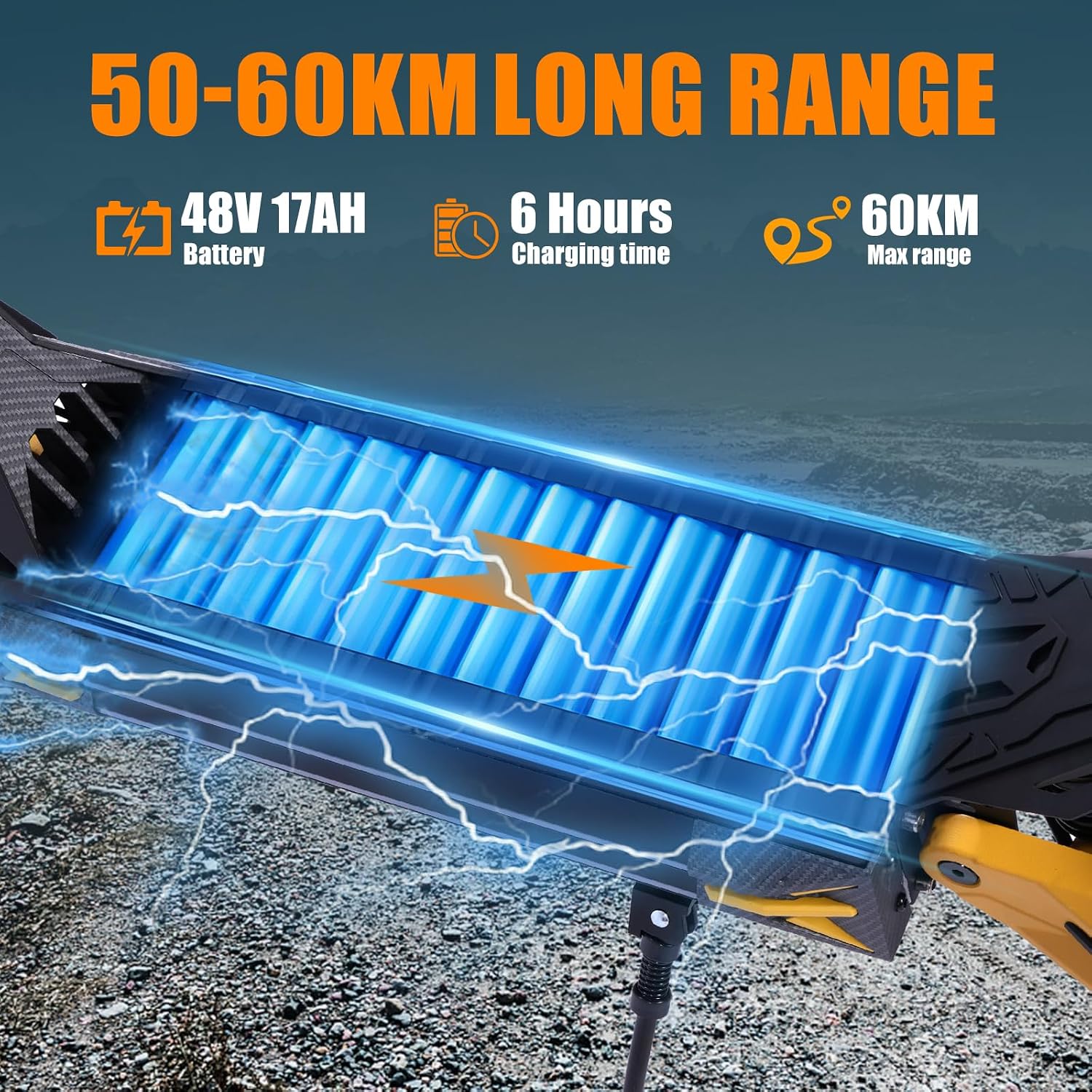
What pushed me to try it was the combo of 48V 17Ah battery, claimed 50–60 km range, and 150 kg load capacity. I’m not tiny, I often carry a backpack with a laptop and groceries, so I wanted something that doesn’t crawl up every small hill. On paper, this one looked good for heavier riders and longer commutes without charging every day.
After using it for daily commuting (around 15–20 km a day), plus a couple of longer weekend rides, I’d say it’s a pretty solid commuter machine with a few annoying details you need to know before buying. It rides well, feels stable, and the range is honestly better than I expected for the price. But it’s also heavy, a bit bulky, and if something like the rear tire goes, you’re not in for a fun afternoon.
If you’re thinking about this scooter for serious urban commuting and not just for occasional fun rides, it can definitely get the job done. Just don’t expect perfection: there are some corners cut in finish and after-sales support, and you feel that when you start dealing with repairs or fine tuning. I’ll break it down section by section so you know what you’re getting into.
Value for money: good commuter package if you accept the compromises
In terms of value, the TWOFISH V2 Max sits in that mid-range zone where you expect better performance and range than entry-level scooters, but without the polish and brand support of the big names. Looking at the specs – 48V 17Ah battery, dual suspension, disc brakes, NFC unlock, USB charging, and 150 kg capacity – for this segment it’s good value for money on paper. You’re getting a lot of scooter for what you pay, especially if you’re a heavier rider or want longer range.
Compared to cheaper 36V scooters, you’re paying more, but you get: more power, more stability, and more comfort. Compared to higher-end brands, you’re saving money, but you’re also giving up on things like super clean cable routing, fancy app integration, and often better after-sales service. The Amazon rating of 4/5 with only a handful of reviews reflects that: most people are happy with performance and build, but when something goes wrong (like the rear wheel tube), you feel the limits of a lesser-known brand.
The extras (front bag, lock, phone holder) are a nice touch. They’re not premium accessories, but they’re actually useful and save you a bit of extra spending. The NFC unlock is also a small plus for security; it won’t stop a determined thief with a van, but it does stop casual joyriders from just turning it on and taking off.
If your priority is range, power, and load capacity on a budget, this scooter makes sense. If you want something light, super portable, with top-tier customer support and super polished finish, you probably need to spend more with a big brand. So, value-wise, I’d sum it up like this: for a serious commuter who doesn’t mind a bit of DIY and weight, it’s a good deal; for someone who wants a plug-and-play, zero-maintenance toy, there are better options even if the specs look lower on paper.
Design: solid, a bit bulky, but feels safe on the road
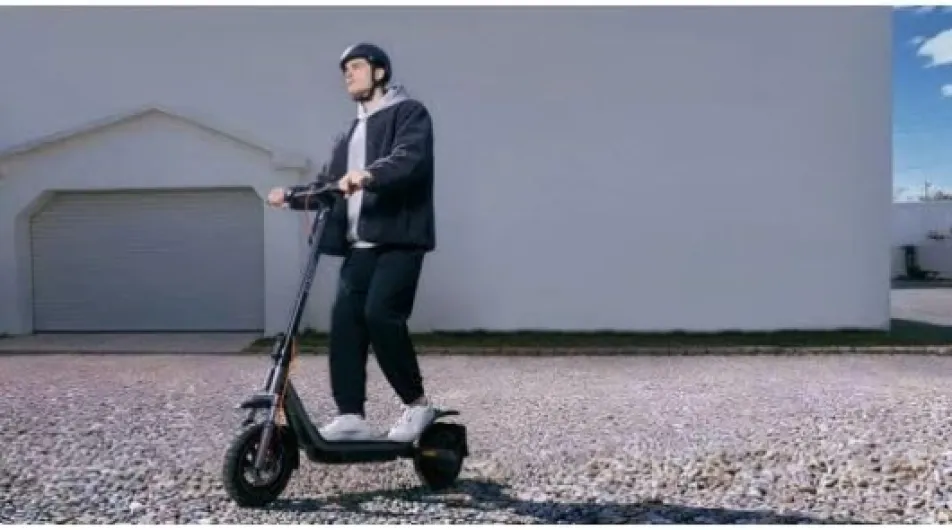
Design-wise, the TWOFISH V2 Max goes for the chunky, functional look rather than something sleek. Everything is black, with a wide deck and a thick stem. It doesn’t scream premium, but it doesn’t look cheap either. It looks like a scooter built to carry adults, not a toy scaled up. The deck is wide enough to stand with your feet side by side or one behind the other without feeling cramped, which helps a lot on longer rides.
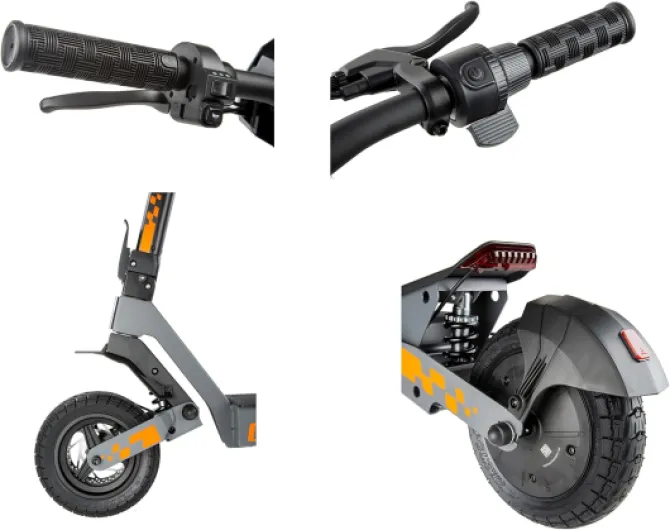
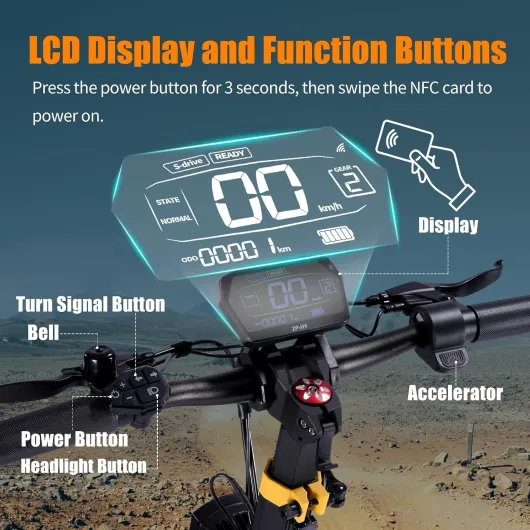
The handlebar is fixed (not foldable sideways), which adds to the solid feeling when riding but makes it more annoying to store in tight spaces. The controls are simple: thumb throttle on the right, brake levers on both sides, basic LCD in the middle. The screen shows speed, battery level, mileage, and mode (gear). It’s not super bright in full sun, but still readable. I like the thumb throttle more than twist throttles because it’s easier to modulate speed when going over bumps or riding one-handed for a moment.
The lighting is actually one of the better points of the design. You have a front headlight, rear brake light, and indicators, plus some side white lights. At night, cars see you, which is the main thing. The front light is strong enough for urban roads and bike lanes. On completely dark paths, I’d still add a helmet light if you want to see potholes earlier, but for normal city use, it’s fine.
On the downside, the scooter is clearly designed around performance and weight capacity, not compactness. When folded, it’s long and heavy, so fitting it under a desk or in a small hallway isn’t always easy. Also, cable routing is a bit messy: you see a bunch of wires around the stem, nothing dramatic, but it does remind you this isn’t a premium-brand scooter. Overall though, the design is practical and confidence-inspiring, just not pretty or ultra-compact. It looks like a tool, and that matches how it rides.
Battery and range: honest numbers if you don’t ride like a maniac
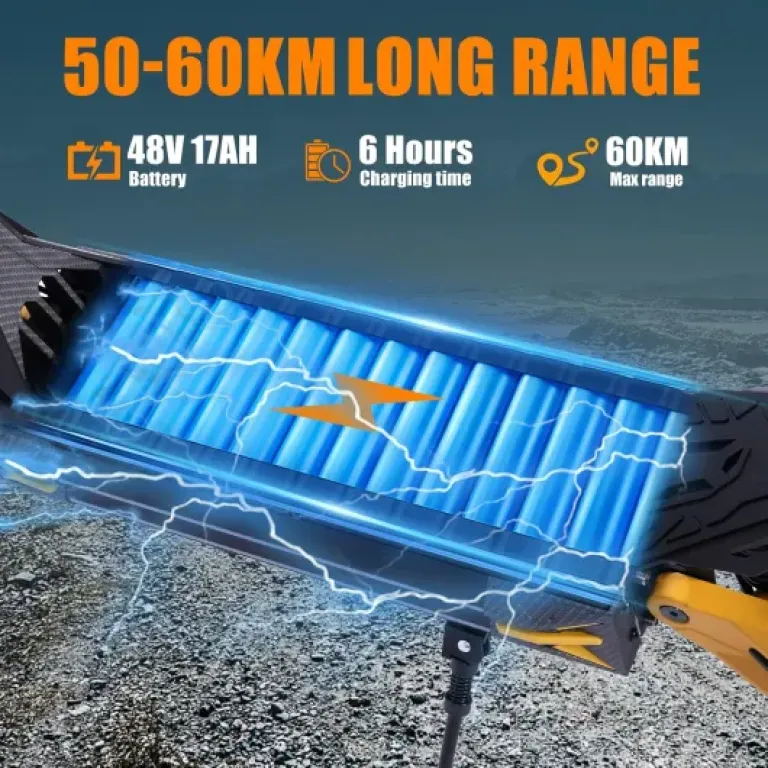
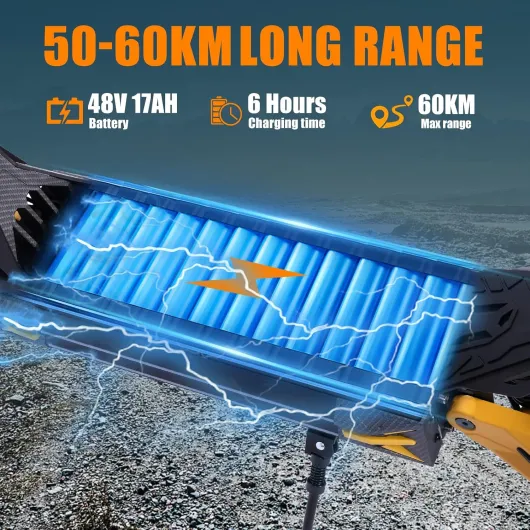
The big selling point here is the 48V 17Ah battery with a claimed 50–60 km range. In real life, as usual, it depends how you ride. With my mixed usage (I’m around 90+ kg with a backpack), mostly in mode 2, some hills, and not babying the throttle, I’m seeing roughly 35–45 km per charge before I start getting nervous about the last bar. If I stick more to mode 2 and avoid full throttle, I can push it closer to the higher end. So the advertised 50–60 km is optimistic, but not totally made up – you might see that if you’re lighter and ride calmer.
The good point is: you don’t need to charge it every day for normal commuting. For a 15–20 km daily round trip, I can comfortably do two days, sometimes three, before needing a charge. That’s convenient, because charging a big battery like this takes time. The brand doesn’t shout the exact charging time in the listing, but you’re looking at several hours to go from near empty to full, so it’s a “charge overnight” situation, not a quick top-up.
The battery behavior is pretty predictable: you don’t get massive power drop right away. It stays fairly consistent until the last bar or so, where you feel it a bit more sluggish. That’s normal. The LCD battery indicator is not super precise (it’s a bar system), but you get used to reading it after a few rides. I’d still reset the trip meter after every full charge to track your own personal range in your riding conditions.
Overall, I’d say the battery is one of the reasons to consider this scooter: it’s good enough that range anxiety is not a daily thing if your commute is reasonable. Just don’t expect miracles if you’re heavy, riding in top speed mode, and constantly on hills. For that kind of abuse, you’d probably want the bigger 60V 23Ah version, but then you’re entering even heavier territory. For most urban riders, this 48V 17Ah setup is a good compromise between weight and range.
Comfort: good suspension, decent deck, heavy but stable
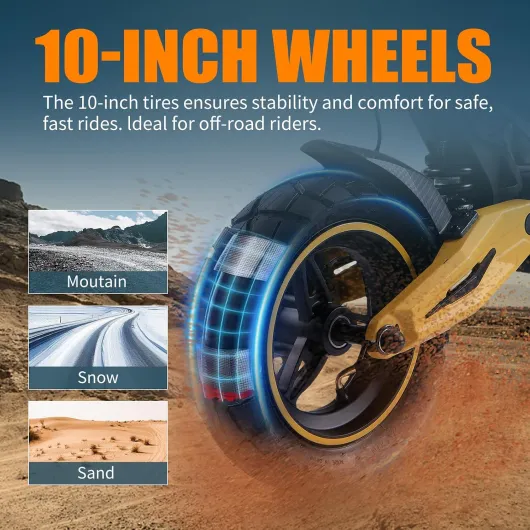
Comfort is actually where this scooter surprised me the most. With the dual spring suspension and 10-inch vacuum tires, it handles rough city roads noticeably better than lighter scooters I’ve tried. Potholes, speed bumps, and cracked bike lanes are still annoying, but you don’t get that bone-rattling feeling every time you hit a bad patch. The springs do their job, and the larger tires help smooth things out. On smooth tarmac, it’s just a chill, stable ride.
The deck is wide and grippy, which matters more than you think. I can shift my stance during longer rides without feeling like I’m about to fall off. That makes a difference on 30–40 minute rides where your legs would normally start complaining. The scooter also feels very stable at speed, partly because of the weight. You don’t get that wobbly handlebar feeling like on smaller rental scooters when you hit 25–30 km/h.
On the flip side, the weight that gives you stability also makes the scooter a pain when you’re not actually riding it. Carrying it up stairs is just not fun. Even turning it around in a tight hallway or lifting it onto public transport can be a workout. So comfort is great while riding, not so great once you have to move it by hand. If your commute involves a lot of stairs or train changes, this could be a deal-breaker.
Another point: the brakes and throttle are easy to reach and control, so you don’t end up with cramped hands after 20 minutes. The grips are basic but fine. I didn’t get any weird vibrations in the handlebar, which I’ve had with cheaper scooters. Overall, in terms of comfort, I’d say it’s pretty solid for daily commuting, especially if your roads aren’t perfect. Just be honest with yourself about how often you’ll need to lift or drag this 29 kg beast around, because that’s where the comfort story ends.
Build quality and durability: solid frame, but tires and support are the weak link
On the durability side, the aluminium frame and general structure feel robust. Nothing creaks, the stem doesn’t wobble, and the folding joint feels secure once locked. After repeated folding/unfolding and riding on bumpy roads, I didn’t notice any scary play in the main parts. For a scooter carrying up to 150 kg, that’s key, and it does give you confidence that it can handle heavier riders without bending or flexing like crazy.
Where things get more mixed is on the wheels and maintenance side. One Amazon user mentioned the back wheel tube bursting in less than a month and struggling to get diagrams to repair it. That doesn’t surprise me: rear tire and tube changes on many scooters are a pain, and this one is no exception. The components themselves aren’t necessarily bad, but access is not super user-friendly. If you’re not comfortable with tools, a puncture or tube issue can quickly turn into a headache, especially if the seller doesn’t provide clear guides.
The mechanical parts like brakes and suspension are pretty standard and should be easy to service in a bike or scooter shop, but you might have to insist because some shops don’t like working on brands they don’t know. The disc brakes will need periodic adjustment, the cables may stretch, and the suspension might start squeaking after a while if you don’t lube it. This is normal wear, but don’t expect a maintenance-free product. It’s a machine that weighs 29 kg and can carry 150 kg at decent speed – things will wear.
The 1-year limited warranty is better than nothing, but realistically, for stuff like punctures or tubes, you’re on your own. I’d strongly suggest: keep the original box (for returns), and maybe look up some generic tutorials on changing scooter inner tubes and adjusting mechanical disc brakes. Overall, I’d say durability is decent for the price: the main frame and structure feel like they’ll last, but small parts (tubes, maybe some hardware) and the lack of detailed repair info are the weak spots. It’s not fragile, but it’s not maintenance-free either.
Performance: quick enough for city traffic, with decent control
In terms of performance, the TWOFISH V2 Max is not a monster scooter, but for a single-drive commuter model it’s honestly more than enough. You get three speed modes controlled through the thumb throttle. In practice, mode 1 is for very slow areas or shared paths, mode 2 is the sweet spot for most city riding, and mode 3 lets you keep up with urban traffic on 30 km/h roads without feeling like a rolling obstacle. One Amazon reviewer mentioned doing 20+ miles in 15–20 minutes between 2nd and 3rd gear and keeping up with traffic, and that lines up with my feeling: for city use, it’s fast enough.
The acceleration is smooth, not jerky. It pulls reasonably well even with a heavier rider and a backpack. You’re not thrown backwards like on dual-motor scooters, but you also don’t sit there slowly crawling off the line. It’s a good balance between “fun” and “controlled”. Hills are manageable: small to medium slopes are fine, steeper ones slow it down, especially with heavier riders, but it still climbs. This is where the 48V system helps compared to the usual 36V budget scooters.
The brakes are a strong point. Mechanical discs front and rear with proper levers give you good stopping power. Several users mention the brakes as a positive, and I agree. From top speed, you can stop in a short distance without feeling like you’re going to skid out. You do need to keep them adjusted over time like any mechanical brake, but that’s normal. For city riding with cars around, having that braking confidence is a big plus.
If you’re coming from a rental scooter or a very basic model, this will feel like a clear step up: more punch, more top speed, more stability. If you’re already used to high-end or dual-motor scooters, this will feel more like a sensible commuter than a thrill machine. So in short: performance is solid and practical, not insane, and it fits the “urban commuting” label pretty well.
What you actually get out of the box
Out of the box, the TWOFISH V2 Max gives off a serious adult scooter vibe right away. It’s big, black, and clearly not designed to be a kid’s toy. In the box I had the scooter itself, a charger, and a few bonus bits: front bag, lock, and phone holder. These extras are nothing fancy, but they’re actually useful: I kept the front bag on from day one for keys, wallet, and a small lock.
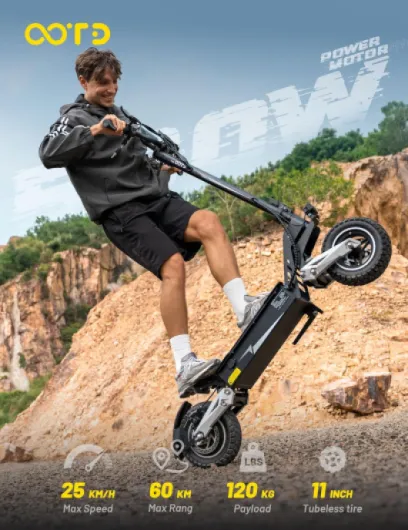
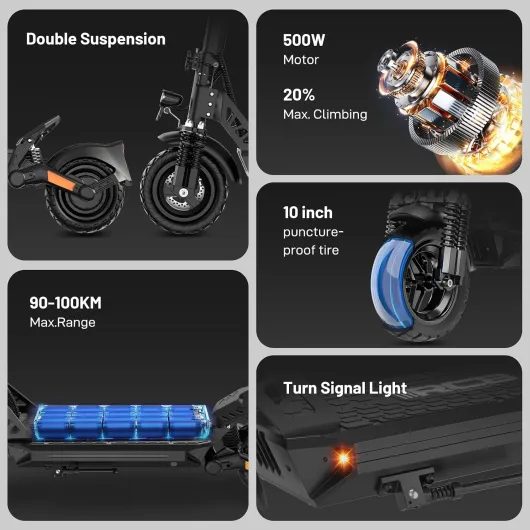
The scooter has 10-inch vacuum tires, dual suspension (front and rear springs), and an LCD display in the middle of the handlebar. You get mechanical disc brakes front and back, a thumb throttle, and NFC unlock, which basically means you tap a little card to turn it on, like an access badge. There’s also a USB port on the handlebar area so you can charge your phone while using it as GPS in the phone holder. The whole frame is aluminium, and the thing weighs about 29 kg, which you really feel when you try to lift it.
Folded, it’s technically portable, but let’s be honest: you don’t want to carry 29 kg more than a few meters. It’s fine to roll it into a hallway, lift it into a car boot, or up a single flight of stairs once in a while, but if you live on the 4th floor with no lift, you’ll hate your life quickly. The folding mechanism itself is straightforward enough, with a latch at the base of the stem, and it feels secure when locked, which is the main thing.
Overall, in terms of what’s promised versus what you get, it’s pretty consistent: a relatively powerful, heavy-duty commuter scooter with decent accessories thrown in. It’s not super polished like some big brands, and the manual is basic, but you can assemble it in under 30 minutes even if you’re not very handy. Just keep the box, as the brand itself warns, because if you ever need to return or repair it under warranty, shipping a 29 kg scooter without the original packaging is a headache you don’t want.
Pros
- Strong performance and stability for heavier riders thanks to 48V battery and 150 kg load capacity
- Good comfort with dual suspension and 10-inch vacuum tires for rough city roads
- Real-world range that can comfortably cover most daily commutes without charging every day
Cons
- Very heavy (around 29 kg) and bulky when folded, not ideal for stairs or frequent carrying
- Rear wheel/tube repairs can be tricky, with limited repair documentation and support
- Finish and after-sales support are more basic than big-name brands despite solid core specs
Conclusion
Editor's rating
The TWOFISH V2 Max is a solid, heavy-duty commuter scooter that focuses on the basics: power, range, comfort, and load capacity. It’s not light, it’s not fancy, but it rides well and feels stable, especially if you’re a heavier rider or you often carry a backpack. The dual suspension, 10-inch vacuum tires, and mechanical disc brakes make daily rides on rough city roads much more bearable than on lighter, cheaper scooters. The range is realistically good enough for most commutes without charging every day, as long as you don’t spend all your time in top speed mode.
On the downside, it’s heavy and bulky, so it’s not ideal if you need to carry it up stairs or constantly lift it on and off public transport. Maintenance and repairs, especially around the rear wheel and tubes, can be annoying, and the brand doesn’t seem to offer the same level of documentation and support you’d get from more established names. The build is generally robust, but you should expect to do some basic maintenance yourself or find a local shop willing to work on it.
I’d recommend this scooter to adult commuters who want a strong, stable, long-range ride and aren’t scared of a 29 kg machine. It’s good for daily urban trips, heavier riders, and people who value comfort and range over portability. If you live in a walk-up building, need to carry your scooter a lot, or want perfect support and premium finish, I’d look at something lighter and more mainstream, even if the specs on paper look weaker. Overall, it’s a good value, no-nonsense commuter scooter with a few rough edges you should be aware of before hitting “buy”.