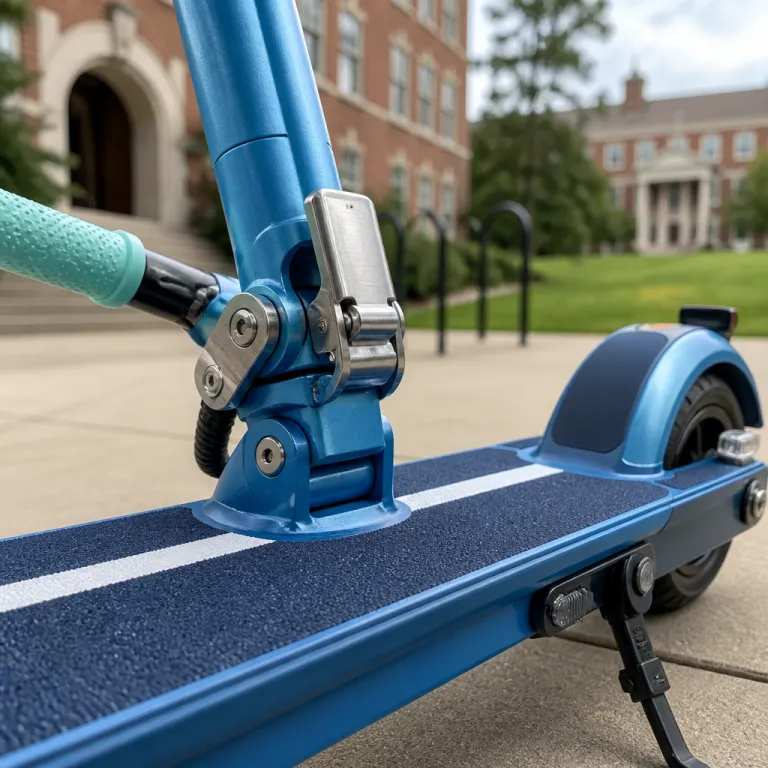
How to define the best electric scooter for a college campus
For a parent choosing the best electric scooter for campus life, the first filter is simple. A scooter that weighs more than about 35 lbs (16 kg) usually gets locked outside, while a truly lightweight foldable model around 28 to 32 lbs (13 to 15 kg) actually follows college students into dorms and lecture halls. On a real campus route of 0.3 to 1.2 miles (0.5 to 2 km) between buildings, long-range marketing claims matter less than build quality, predictable braking and everyday practicality.
Think of the electric scooter as a backpack on wheels, not a car replacement. The most campus-friendly scooters need a compact folded length around 105 to 110 cm (about 41 to 43 in) so they slide under a loft bed or next to a mini fridge, and that size matters more than a headline top-speed number on a product page. When you compare scooters, look at the stated weight in lbs, folded dimensions and the rated rider capacity together, because those three specifications tell you whether the scooter will actually live indoors or slowly rust on a bike rack.
Speed is the next trap for parents and college students. A claimed top speed of 25 mph (40 km/h) sounds exciting, yet on crowded paths the safe cruising speed is closer to 10 to 15 mph (16 to 24 km/h), especially when freshmen weave between classes with headphones on. For a first campus scooter, a sensible choice is often a model with a real-world top speed around 18 to 20 mph (29 to 32 km/h), a strong rear brake plus a reliable front brake, and clear safety features such as lights, reflectors and a bell that students actually use.
Battery life and scooter battery safety now sit under a sharper spotlight on many campuses. Residence halls sometimes restrict where electric scooters can charge, and some fire codes ban charging in hallways or near exits, so a battery capacity that supports one full day of riding on a single charge is more valuable than a promise of long-range weekend adventures. Before you buy, ask housing staff how many scooter chargers they allow per room, where outlets sit relative to beds, and whether they have written rules about lithium battery storage during breaks, then compare those answers with the manufacturer’s stated battery capacity and charge time.
Real models under $500 that actually work for dorm life
In the sub-$500 tier, the GoTrax GXL V2 remains a reference point for families shopping for a reliable campus scooter that still feels affordable. Manufacturer specifications list a weight of about 12 kg (26.4 lbs) and a claimed maximum range of roughly 19 to 20 km (12 miles) in ideal conditions, while long-term user reports often describe real-world distances closer to 14 to 16 km (9 to 10 miles) with an 80 kg rider. On short campus routes, that practical range still covers a full day of classes without stressing the scooter battery when used as a daily college commuter.
The GoTrax GXL V2 uses 8.5 in pneumatic front and rear tires, which give more grip on wet autumn leaves than solid rubber, though they can puncture if your student hits broken glass near parking lots. Braking comes from a front electronic brake paired with a rear disc brake, and that mixed system feels more reassuring than a single electronic setup when paths are crowded and damp. For a parent, the real win is that this commuter scooter folds quickly, fits under a dorm bed and rarely tempts a thief because it looks modest next to flashier models that chase higher top speeds.
If your budget stretches closer to the 500 dollar ceiling, the Segway Ninebot Max G30 often appears on independent “best commuter scooter” and “best electric scooters for college” lists for good reasons. Manufacturer data lists a weight around 19 kg (41.2 lbs) and a claimed range up to about 65 km (40.4 miles) in eco mode, which independent range tests usually translate into roughly 32 to 40 km (20 to 25 miles) of mixed-use riding for an average-weight adult. Its rated top speed of about 30 km/h (18.6 mph) matches the official specifications, and in campus use the real cruising speed usually sits around 22 to 24 km/h (14 to 15 mph), which feels brisk but controllable.
The Segway Ninebot Max shines in battery life and build quality rather than pure speed. Its large-capacity battery and conservative controller tuning give a genuine long-range ride, so a student can handle several days of short trips between dorms, libraries and gyms before needing a full charge if they ride in eco mode, as confirmed by many owner reports and independent range tests. If you are thinking about a family upgrade path, guides such as the Father’s Day scooter gift article mentioned earlier show how a Ninebot Max can move from a college campus to a parent’s commute once your student graduates.
Quick spec comparison for dorm use (manufacturer data and typical real-world results)
- GoTrax GXL V2: approx. 12 kg (26.4 lbs); folded length about 108 cm (42.5 in); claimed range around 19 to 20 km (12 miles), real-world campus range roughly 14 to 16 km (9 to 10 miles) with an 80 kg rider.
- Segway Ninebot Max G30: approx. 19 kg (41.2 lbs); folded length about 117 cm (46 in); claimed range up to 65 km (40.4 miles), real-world mixed-use range around 32 to 40 km (20 to 25 miles) in standard or eco mode for an average-weight rider.
Compact pros and cons for dorm-friendly scooters under $500
- GoTrax GXL V2 – best foldable scooter under $500 for light riders
Pros: very portable weight for stairs, simple folding latch, grippy pneumatic tires, approachable price for a first campus scooter.
Cons: shorter real-world range than premium models, basic display and controls, tires can puncture and may need occasional tube replacement. - Segway Ninebot Max G30 – long-range campus and commuter option
Pros: excellent battery life for larger campuses, robust frame and deck, strong reputation for reliability, comfortable ride on rougher paths.
Cons: heavier to carry into dorms, longer folded length, usually near the top of the under-$500 budget even when discounted.
Safety features, braking systems and seasonal campus riding
When you evaluate electric scooters for college transportation, safety features deserve as much attention as price or style. Autumn and spring bring rain, wet tiles and piles of leaves, so the combination of tire type, brake design and lighting can decide whether a near miss becomes a crash. For a first scooter purchase, prioritise models with bright front and rear lights, side reflectors and at least two independent braking systems.
On most budget-friendly scooters, you will see three main brake designs. Electronic front braking uses the motor to slow the wheel, drum brakes hide inside the hub and resist weather, and mechanical disc brakes on the rear wheel give the strongest stopping power but need occasional adjustment. A balanced setup for college students is a front electronic brake with a rear mechanical disc brake, because that pairing keeps stopping distances short without locking the wheel on damp concrete.
Tire choice also changes how a scooter behaves across seasons. Pneumatic tires flex and grip better on cold sidewalks and wet bricks, yet they can go flat at the worst moment, while honeycomb or solid tires never puncture but slide more easily on smooth indoor tiles near lecture halls. If your campus has long indoor corridors or polished stone plazas, a scooter with slightly wider pneumatic tires and a moderate top speed will feel calmer than a narrow-tire model that chases every extra mph.
Parents sometimes ask whether dual-motor scooters or high-power models belong on campus. For most students, the answer is no, because dual-motor designs add weight, raise the price and push top speed into ranges that campus rules may forbid, even if some high-performance scooters look impressive on paper. If you are curious about those machines for future commuting, a technical overview such as the guide to top electric scooters with dual motor systems helps you understand why they suit long suburban rides more than short campus hops.
Charging, theft prevention and practical buying tips for parents
Daily life with a campus scooter revolves around charging and storage, not just riding. Many dorms now limit where students can plug in electric scooters, and some require that battery packs stay away from beds or soft furnishings, especially during overnight charging. Before you buy, ask housing staff whether they have written rules about lithium battery capacity, shared outlets and where chargers can sit in a room, and compare their answers with local fire-safety guidance.
To extend battery life and reduce fire risk, teach your student to avoid full 0 to 100 percent cycles whenever possible. A simple habit of charging between roughly 20 and 80 percent keeps the battery chemistry under less stress, and resources such as the explanation of the 20–80 charging rule show how one routine can significantly increase a scooter battery’s lifespan. In practice, that means topping up for an hour after afternoon classes rather than leaving the scooter on a charger all night.
Theft prevention on campus is brutally simple. Cable locks disappear in seconds, and even U-locks can fail if a thief has time, so the only reliable strategy is to choose a lightweight foldable scooter that your student will actually carry into class. When you compare a product list on a retailer or brand site, focus on weight in lbs, folded size and handlebar latch design, because a secure and fast folding mechanism makes it easier to bring the scooter everywhere.
Price still matters, especially when you juggle tuition, books and travel. For most families, the realistic budget for a first campus scooter sits under 500 dollars, and within that band you can find a good mix of safety features, reasonable speed and solid construction without chasing premium branding. When you see a tempting sale, check whether the scooter uses standard parts, offers clear warranty support and has a track record of surviving at least one full academic year of daily use in real reviews, not just glossy marketing claims.
FAQ
What is a safe top speed for a college campus scooter ?
On most campuses, a safe top speed for electric scooters is around 20 km/h, which equals roughly 12 mph. Many models advertise a higher top speed, yet crowded paths, blind corners and mixed traffic make those numbers unrealistic for daily riding. A scooter that can reach about 25 km/h (15.5 mph) but feels stable and predictable at 15 km/h (9 mph) is usually the best compromise for college students.
How much should a parent expect to pay for a reliable campus scooter ?
For a first electric scooter purchase aimed at college commuting, a realistic price range sits between 300 and 500 dollars. Below that band, scooters often cut corners on braking, frame strength or battery life, which can shorten their useful capacity to a single semester. Within the 300 to 500 dollar range, you can find models like the GoTrax GXL V2 that balance weight, safety features and durability for everyday campus use.
Is a heavier scooter always better built for college riding ?
Heavier scooters sometimes use stronger frames and larger batteries, yet weight above 35 lbs becomes a liability in dorm life. A scooter that is too heavy to carry up stairs or into lecture halls often ends up locked outside, where theft and weather damage shorten its life. For most students, a mid-weight electric scooter around 28 to 32 lbs offers the best mix of portability and robustness.
Do college dorms allow charging electric scooters in rooms ?
Policies vary widely between universities, and some residence halls now restrict where students can charge electric scooters. Many housing offices require that chargers stay away from beds and exits, and a few ban charging in hallways entirely for fire safety reasons. Parents should check written housing rules and ask staff directly about scooter battery storage and charging before buying any product.
Are Segway Ninebot scooters a good choice for campus use ?
Segway Ninebot scooters such as the Ninebot Max G30 are well regarded for build quality, battery life and weather resistance, which helps them survive multiple academic years. Their main drawback for campus use is weight, because a Ninebot Max around 41 lbs can feel heavy for smaller riders to carry daily. If your student is comfortable lifting that mass and your budget reaches the higher end of the under 500 dollar range during a sale, a Segway Ninebot model can be a strong long-term option for college transportation.