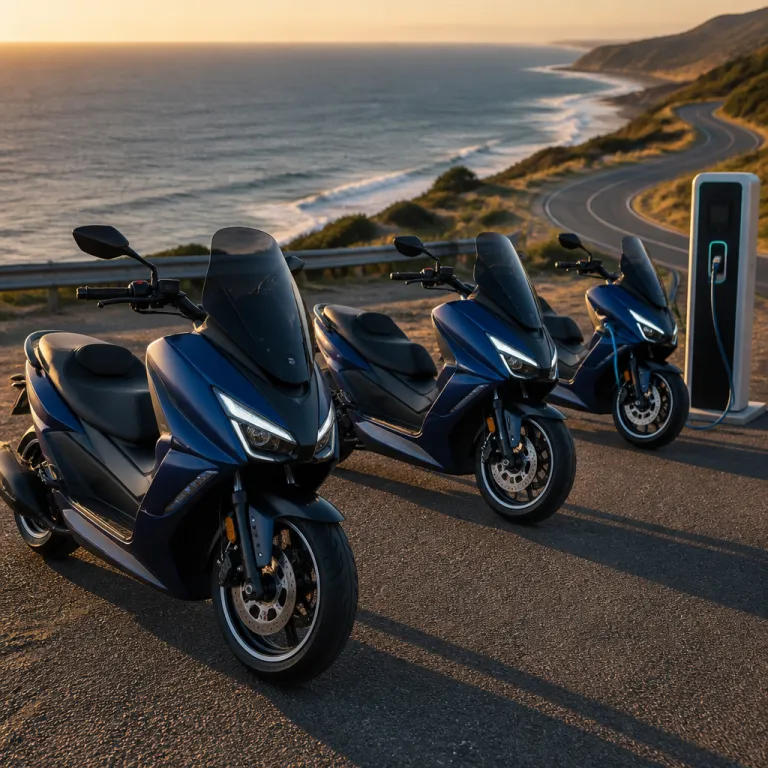

BMW scooter performance, real world speed and daily usability
Why a BMW scooter appeals to performance focused urban riders
A BMW scooter targets riders who want motorcycle grade stability in city traffic. Many people move from a traditional bike or from brands such as Honda scooters because they want a bit more power, better brakes, and a more refined engine character. When you compare several BMW scooters across different years, you notice how consistently they balance speed, comfort, and everyday practicality.
For someone choosing a BMW scooter as a first premium electric or petrol powered machine, the location where you ride matters as much as the spec sheet. Dense European city centers, long suburban commutes, and coastal highways all demand different levels of top speed and different types of cruise comfort, so you must match the model to your daily routes. Riders on enthusiast forums often explain how their commute distance, climate, and parking situation shaped their final decision more than any marketing claim, for example a Berlin commuter describing how winter range and heated grips mattered more than outright acceleration.
BMW positions each scooter as a bridge between a car and a motorcycle. That means the brand expects you to use the scooter for real transport, not just weekend fun, and this is why features such as heated grips, an electronic windshield, and strong front discs are not cosmetic extras. When you read detailed ownership reports in a BMW community, you repeatedly see the same theme: owners treat their BMW scooter as a daily mobility tool that must work every single morning, often replacing a second car for school runs, office trips, and short highway hops.
Engine performance, speed mph and real world top speed
Performance oriented buyers usually start with one question about any BMW scooter: how fast will it go in real traffic. Official figures for speed in mph and top speed are useful, yet they never tell the full story about acceleration, stability, and how the scooter behaves when you need to overtake quickly. Experienced riders often compare a BMW scooter with a Honda bike or a Kymco scooter to judge whether the engine delivers enough punch for ring roads and short highway stretches.
When you examine the electric powertrain of a modern BMW scooter, you see how the motor, battery management, and electronic aids work together to sustain high speed without overheating. For instance, BMW lists a maximum output of about 31 kW (42 hp) and a top speed of roughly 120 km/h (75 mph) for the CE 04, while the C 400 X and C 400 GT petrol scooters are quoted at around 25 kW (34 hp) with a similar claimed maximum velocity. Owners posting long term reports on specialist forums often describe how their scooters still reach the advertised top speed after tens of thousands of kilometres, provided the battery or engine is serviced on schedule.
High speed riding also depends on aerodynamics and rider comfort. The electronic windshield on some BMW scooters reduces wind pressure at 100 km/h (62 mph), which makes sustained cruising less tiring and safer, especially when combined with cruise control on long straight sections. For a deeper technical breakdown of how one specific BMW scooter manages heat, torque delivery, and high speed stability in everyday life, you can look up a detailed analysis of a high performance urban electric scooter for everyday life and compare its findings with the official BMW Motorrad specifications for your chosen model.

| Model | Peak power | Claimed top speed | 0–50 km/h* | Typical real world range* |
|---|---|---|---|---|
| BMW CE 04 (electric) | Approx. 31 kW / 42 hp | About 120 km/h (75 mph) | Roughly 2.5–3.0 s | Commonly 90–110 km mixed use |
| BMW C 400 X / GT (petrol) | Approx. 25 kW / 34 hp | About 139 km/h (86 mph) | Roughly 3.5–4.0 s | Often 250–300 km per tank |
*Indicative figures compiled from BMW Motorrad data and aggregated independent road tests; actual results vary with rider weight, weather, and terrain.
Braking, chassis and safety features for high speed BMW scooters
Any BMW scooter designed for high speed must stop as confidently as it accelerates. This is why BMW equips many scooters with twin front discs, strong rear brakes, and advanced ABS systems that keep the bike stable even on wet city streets. Riders who move from lighter Honda scooters or compact Kymco scooters often comment that the extra weight of a BMW scooter feels reassuring at speed, provided the suspension is correctly adjusted.
Chassis design plays a crucial role in how secure you feel when the speed in mph climbs. A long wheelbase, low center of gravity, and rigid frame help the scooter track straight during emergency braking, while wide tyres increase grip when you lean into fast corners. Independent tests of premium scooters frequently report stopping distances from 100 km/h (62 mph) in the region of 40 metres on dry asphalt for models with twin front discs, placing BMW scooters among the stronger performers in this class when tyres and brakes are in good condition.
Safety is not only about hardware; it is also about how the scooter communicates with the rider. Clear dashboard messages, intuitive controls for cruise control, and predictable responses from the electronic aids all reduce mental load when traffic becomes dense. If you want to compare how a BMW scooter stacks up against another high performance electric model with dual motors and hydraulic suspension, a thorough test of a high capacity battery scooter for adults can offer a useful benchmark for braking and chassis behaviour, especially when you cross reference it with recognised motorcycle magazine reviews.
Comfort, technology and daily usability for information seeking riders
Comfort features can transform a fast BMW scooter from a weekend toy into a serious commuting partner. Heated grips extend your riding season through cold mornings, while an adjustable electronic windshield lets you fine tune wind protection for different speeds and rider heights. Many owners report that after a few years of daily use, these small details matter more than raw top speed figures on the brochure.
Digital connectivity also shapes the ownership experience. When you install an app that links your phone to the BMW scooter, you gain access to navigation, service reminders, and sometimes remote status checks about battery charge or location, which helps when you park in crowded city streets. Riders who log and register their trips through such apps often share summary posts about energy consumption, average speed in mph, and maintenance costs, giving new buyers a clearer picture than any marketing leaflet and revealing how software updates can subtly improve range or throttle response.
Everyday practicality extends beyond software. Under seat storage, a flat floor, and solid passenger grab handles turn BMW scooters into genuine car replacements for many urban families, especially when combined with cruise control for weekend trips outside the city. If you are researching options for younger or less experienced riders in your household, a guide to safe travel mobility scooters with medical grade features can show how comfort and safety design principles scale from kids scooters to full size machines and highlight which elements BMW adopts on its own models.
How BMW scooters compare with Honda and Kymco performance models
People who arrive at a BMW scooter often start by cross shopping Honda scooters and Kymco scooters in the same power class. Honda typically focuses on bulletproof reliability and conservative styling, while Kymco often competes on price and equipment, leaving BMW to emphasise premium feel, technology, and long term support. When you read forum threads where a long term owner acts as thread starter, you frequently see detailed replies and views comparing service experiences, parts availability, and resale values between these three brands.
Performance comparisons must go beyond headline top speed numbers. A Honda bike might match a BMW scooter in speed in mph, yet the BMW can feel calmer at that pace because of its chassis tuning, electronic aids, and more protective bodywork. Kymco scooters sometimes offer impressive acceleration for the money, but riders who have owned them for several years occasionally mention more vibration or less refined suspension compared with BMW scooters of similar engine capacity, especially when carrying a passenger or riding on rough suburban roads.
Ownership experience also differs in subtle ways. BMW dealers often provide longer test rides, detailed handovers, and software updates that keep the scooter’s electronic systems current, while some Honda and Kymco outlets focus more on quick transactions. Riders posting follow up messages a couple days after a test ride sometimes describe how the BMW scooter felt more like a compact touring bike with cruise control, heated grips, and an electronic windshield, rather than a simple city runabout, which can justify the higher purchase price for riders who travel year round.
What forum language reveals about real BMW scooter ownership
Anyone researching a BMW scooter quickly notices how much information hides in owner forums. Threads often begin when a new rider becomes a thread starter, posting first impressions only days ago after buying or testing a scooter. Over time, these threads accumulate replies and views that trace the entire ownership journey, from the excitement of the first ride to long term reflections several years later.
Forum software usually displays how long a member has been active and how many posts they have written, which helps you understand whether you are reading a quick reaction or a seasoned perspective. When you read posts from someone who has contributed for many years and still writes balanced messages about their BMW scooter, you gain more confidence in the durability of the engine, brakes, and electronics. Paying attention to the location listed under each profile also matters, because a scooter that performs well in a mild coastal climate might face different challenges in a cold continental region with salted winter roads.
Some threads include practical tips that never appear in official manuals. Owners explain how to click to expand hidden sections of the digital dashboard, how to click to expand service menus in the companion app, or how to log and register minor issues before a warranty visit. Others share step by step notes about fitting accessories, such as upgraded front discs, alternative tyres, or extra wind deflectors, which can subtly change the way a BMW scooter behaves at high speed in mph on rough roads and improve comfort for taller riders. Typical comments include remarks such as “my CE 04 feels as stable as a mid size motorcycle at 70 mph” or “after 20,000 km the brakes still feel strong and progressive,” which add colour to the raw numbers.
Key statistics about BMW scooters and high speed electric mobility
- According to BMW Motorrad press information, global sales of BMW scooters and maxi scooters form a growing share of its urban mobility segment, with electric models such as the CE 04 accounting for an increasing percentage of deliveries in major European cities.
- Independent road tests from established motorcycle magazines report that many BMW scooters equipped for highway use can comfortably maintain cruising speeds around 110 to 120 km/h (68 to 75 mph), which aligns with typical motorway limits in several European countries.
- Brake performance measurements published by specialist testing organisations indicate that premium scooters with twin front discs, including several BMW models, often stop from 100 km/h (62 mph) in roughly 40 metres on dry asphalt, placing them among the better performers in the premium scooter category.
- Urban mobility studies from European transport agencies suggest that riders who switch from cars to scooters or motorcycles can reduce commuting time by around 20 to 40 percent in congested city centres, a figure that helps explain the growing interest in high performance BMW scooters.
- Consumer surveys conducted by motorcycle industry analysts consistently rank BMW among the top brands for owner satisfaction in the scooter and touring segments, with high scores for comfort, technology features, and dealer service quality when compared with direct rivals.
FAQ about BMW scooters for performance oriented information seekers
How fast can a BMW scooter realistically go on the highway ?
Most highway capable BMW scooters can sustain speeds around 110 to 120 km/h (68 to 75 mph) without strain, which allows you to keep pace with traffic on many European motorways, provided local limits permit such speeds. Always check the specific model’s homologated top speed on the official BMW Motorrad spec sheet and remember that carrying a passenger or luggage can slightly reduce performance.
Are BMW scooters suitable for daily commuting in all weather conditions ?
BMW designs its scooters for year round use, and features such as heated grips, protective bodywork, and optional electronic windshields help in cold or wet weather. Good quality tyres and ABS braking systems further improve safety on slippery roads. However, you still need appropriate riding gear and regular maintenance to keep the scooter safe in harsh climates.
How do BMW scooters compare with Honda and Kymco models on reliability ?
Honda has a long standing reputation for reliability, while Kymco has improved significantly in recent years, and BMW positions its scooters as premium products with strong engineering and dealer support. Owner surveys and forum reports suggest that BMW scooters hold up well over many years if serviced on schedule. The best approach is to compare maintenance intervals, warranty terms, and real owner feedback for the specific models you are considering.
Is cruise control worth having on a BMW scooter ?
Cruise control can be very useful if you regularly ride on ring roads or motorways where speeds remain steady for long stretches. It reduces wrist fatigue, helps you maintain legal speeds, and lets you focus more on traffic around you. Riders who mostly stay in dense city traffic may use it less often, but still appreciate it on occasional longer trips.
What should I check during a BMW scooter test ride ?
During a test ride, pay attention to low speed balance, braking feel, and how the suspension handles bumps at both city and highway speeds. Test the responsiveness of the engine, the clarity of dashboard messages, and the comfort of the seat and riding position after at least 20 to 30 minutes. Finally, consider practical aspects such as storage space, ease of using the side stand, and how confident you feel manoeuvring the scooter in your typical parking locations.