
Summary
Editor's rating
Value: strong specs for the money, if you accept the trade-offs
Design: more mini-moped than city toy
Battery and range: good, but marketing numbers are optimistic
Comfort: stable and forgiving, as long as you accept the weight
Brakes, build and long-term feel
Performance: locked tame, unlocked properly quick
What you actually get with the GT1 Dual
Pros
- Strong performance with dual motors, especially once unlocked
- Very stable and comfortable on rough roads thanks to 10'' off-road tyres and dual suspension
- Excellent lighting setup with headlight, tail light, indicators and ambient lights for visibility
Cons
- Very heavy (around 37.5 kg), impractical to carry regularly
- Stock mechanical brakes feel spongy and underwhelming at higher speeds
- Stem can creak slightly at the folding mechanism and isn’t easily adjustable

Specifications
View full product page →| Brand | isinwheel |
Big, heavy and surprisingly fun
I’ve been riding the isinwheel GT1 Dual Motor for a bit now, mostly on shared paths, rough tarmac and some light gravel (all on private land, obviously). First impression: this thing is a tank. It’s not your slim commuter scooter; it’s closer to a small moped without the seat. If you’re expecting something you can casually carry up three floors, forget it right away.
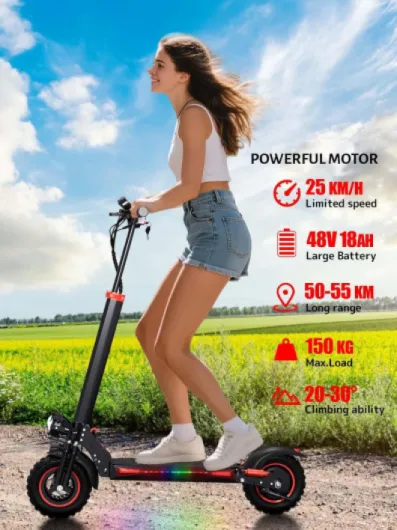
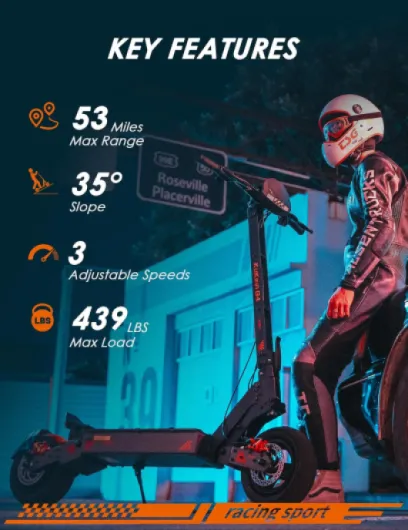
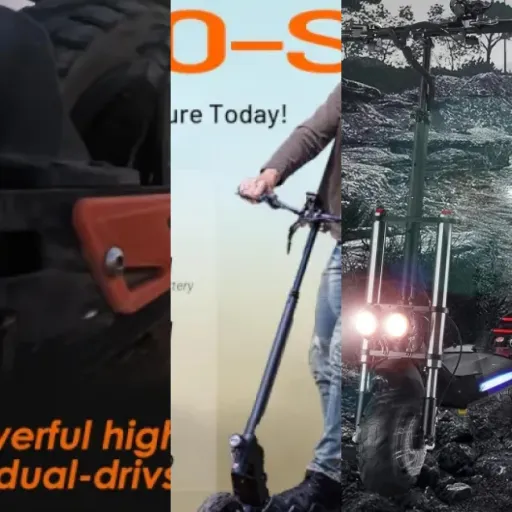
What pushed me to try it was the spec sheet: dual motors, off-road 10'' tyres, a 48V 13Ah battery claiming up to 55 km, and a triple brake system. On paper, it looks like one of those over-specced budget monsters. In practice, it’s a pretty solid balance of power and price, but with some compromises you need to be okay with, especially weight and braking feel out of the box.
I’ve mostly used it for medium trips, around 8–15 km at a time, mixing eco mode and full power when I had a bit of space. I’m around 90–95 kg with a backpack, so not a light rider. That matters, because range and acceleration change a lot with weight. Under my conditions, the scooter behaves differently from the marketing numbers, which is normal, but worth spelling out.
If you’re wondering whether this is a good everyday scooter or more of a weekend toy, I’d say it leans towards "serious leisure / heavy-duty commuting" rather than a simple hop-on-hop-off city scooter. It’s fun, pretty powerful once unlocked, and feels solid, but it’s not convenient for everyone. I’ll go through the main points: design, comfort, performance, battery, brakes/durability and overall value.
Value: strong specs for the money, if you accept the trade-offs
In terms of value, the GT1 Dual sits in that segment where you get a lot of power and features for a mid-range price, but you also accept a few compromises. Dual motors, a 48V 13Ah battery, off-road tyres, full lighting and dual suspension at this price point is honestly good value for money. If you compare it to big-name brands with similar specs, you usually pay quite a bit more.
Where you feel the cost-cutting is mainly in the brakes and small finishing details. Mechanical disc + drum with a slightly spongy lever feel instead of hydraulics, a folding stem that can creak a bit and isn’t super adjustable, and a basic app. None of this is a deal-breaker, but it’s where you notice you didn’t buy a premium scooter. If you add the suggested hydraulic brake upgrade, you’re still often cheaper than some competitors with similar performance out of the box, but that’s extra money and effort.
For someone who wants a light, easy-to-carry scooter for quick errands, this is honestly the wrong product. You’d be paying for power and range you don’t need and dragging almost 38 kg around. But if you’re specifically looking for something sturdy, powerful and comfortable on bad roads, and you don’t mind the weight or a bit of tinkering, the price/performance ratio is hard to ignore.
I’d say the value is best for riders who: ride medium to long distances, have a place to store and charge it at ground level, and are okay with the legal limitations (or ride on private land). If that’s you, the GT1 Dual gives you a lot of scooter for the money, with the caveat that you might want to invest in better brakes down the line.
Design: more mini-moped than city toy
Design-wise, the GT1 Dual looks aggressive and a bit bulky, in a good way if you like the off-road style. The all-black frame with the chunky 10'' off-road tyres makes it look serious. When I parked it next to typical rental scooters, it honestly dwarfed them. The deck is wide and long, which I really appreciated. You can ride with your feet side by side or one behind the other without feeling cramped, even if you’re tall or have big feet.
The stem is thick and includes the folding mechanism at the base. On my unit, and matching what one Amazon reviewer said, the stem can creak a little at the folding hinge when you put weight on it or go over bumps. It doesn’t feel like it’s going to snap, and there’s barely any actual flex, but the noise is slightly annoying and doesn’t inspire full confidence. Also, unlike some other scooters, there’s no obvious adjustment for tightening the latch pressure, so you’re basically stuck with how it ships unless you’re willing to tinker more deeply.
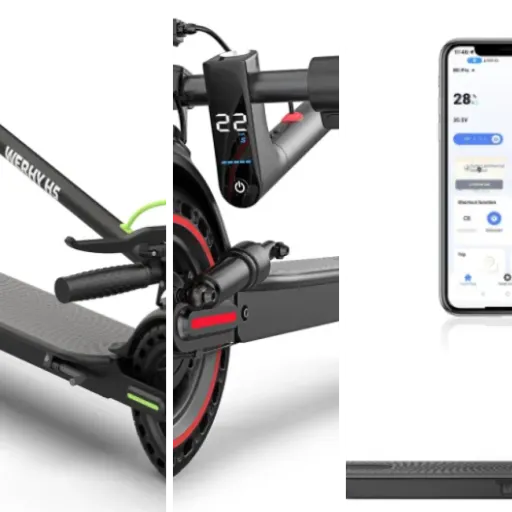
The handlebar is fixed (no height adjustment) but at 130 cm total height it’s fine for most adults. I’m around 1.80 m and the bar position feels natural. Controls are standard: throttle on the right, brakes on both sides, LCD display in the middle, and buttons for mode and power. The LCD is clear enough, even in daylight, and shows speed, mode, battery, and some basic info. It’s not premium, but it does the job and is easy to read while riding.
One thing I genuinely liked is the lighting layout. You’ve got a headlight, tail light, turn signals, ambient light strips and an extra spotlight. At night or in low light, the scooter looks much more visible than the usual budget models. It’s not just cosmetic; cars and pedestrians see you earlier. That Amazon review praising the lighting is accurate: it does feel more “premium” in that specific aspect, even if the rest of the scooter is more on the rugged side than pretty.
Battery and range: good, but marketing numbers are optimistic
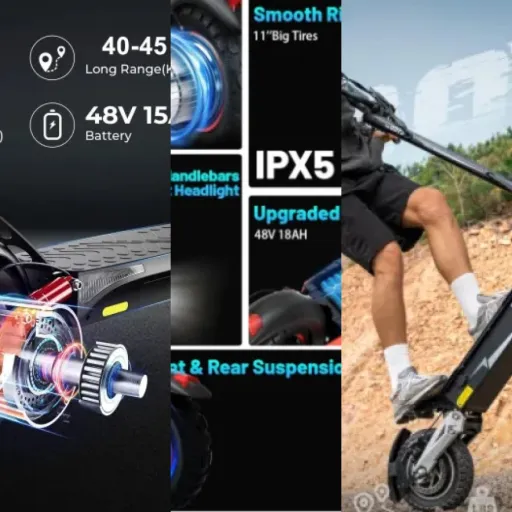
The GT1 Dual comes with a 48V 13Ah battery, which gives you 624 Wh on paper. The brand claims around 50–55 km of range. As usual, that’s probably based on a light rider, flat ground, eco mode, and lower speed. In real life, with a heavier rider and mixed usage, you won’t hit those numbers unless you baby it.
In my case (about 90–95 kg, some hills, and a mix of mid and high speed), I was seeing roughly 25–35 km per charge depending on how much I used dual motors and the higher mode. On one ride where I stayed mostly in the slower mode and avoided full-throttle bursts, I pushed closer to the upper 30s in km, but that was really riding gently. As soon as you start enjoying the power in Turbo mode, the battery drains faster, which isn’t surprising.
Charging time is around 6.5–7.5 hours with the supplied charger. That’s pretty standard for this battery size. It’s basically: ride during the day, charge overnight. There’s no fast charging option included, so if you need to charge it fully during a short break, that’s not happening. You can top it up a bit during work, but a full cycle still takes most of a workday.
The battery gauge on the display is okay but not super precise under load. Like many scooters, when you accelerate hard, the voltage sags and the battery bars drop, then bounce back when you slow down. You get used to reading it, but don’t panic when you see it suddenly drop a bar during a climb. Overall, I’d say the range is decent but not magical. If you plan for about half to two-thirds of the advertised maximum in real use, you’ll be in the right ballpark. For commuting within 10–15 km each way, it’s fine, as long as you can charge at home.
Comfort: stable and forgiving, as long as you accept the weight
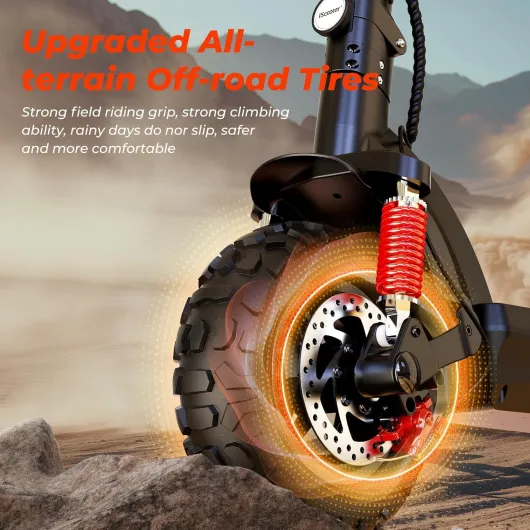
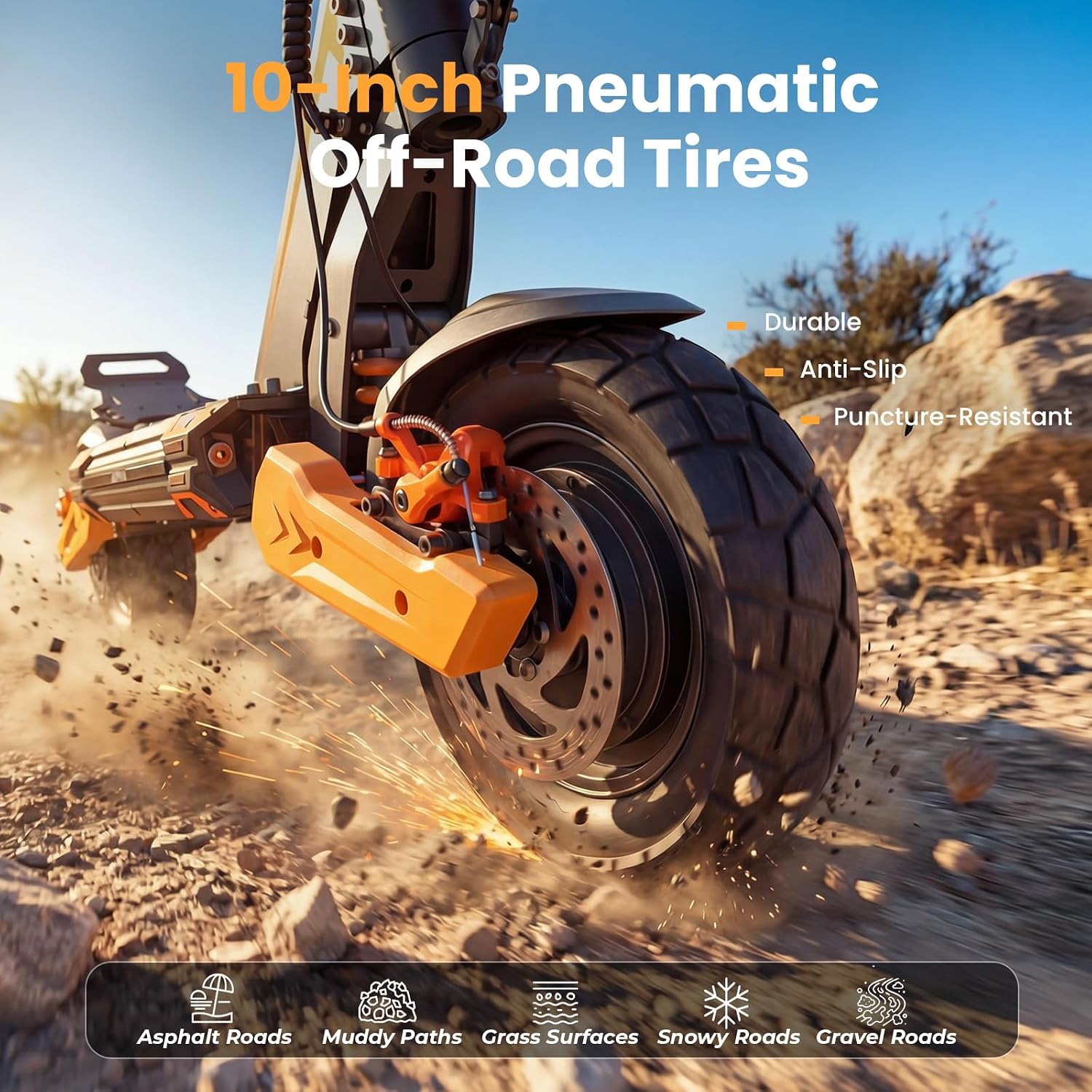
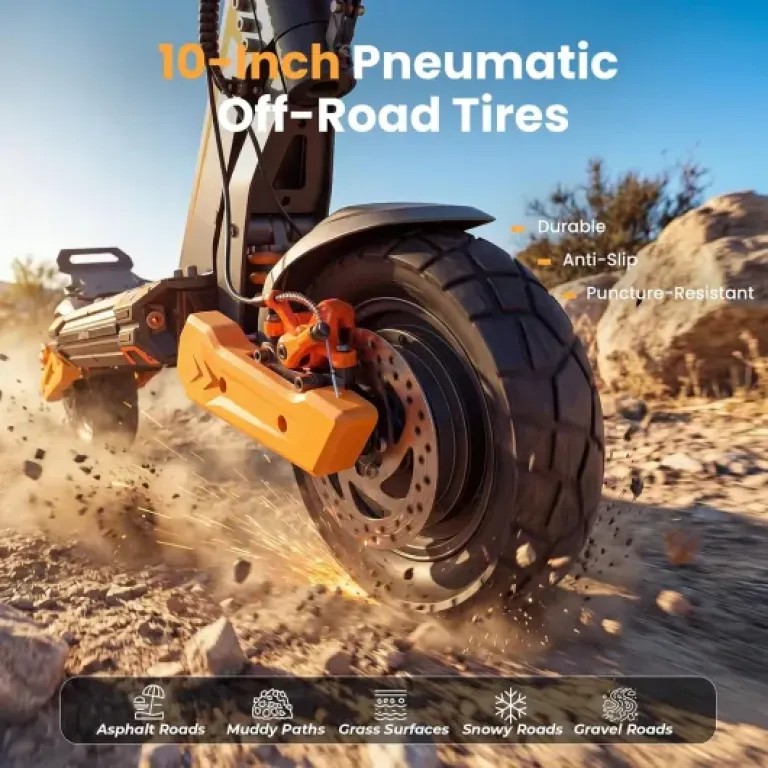
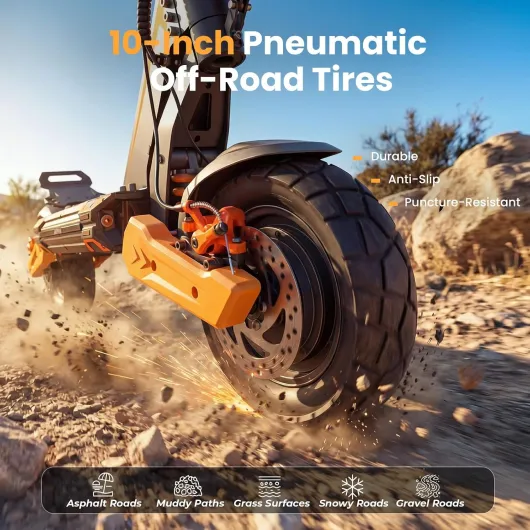
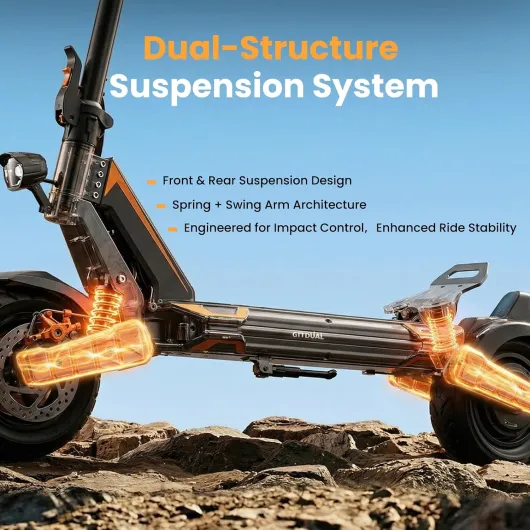
In terms of comfort, the GT1 Dual is clearly built to handle rougher surfaces than a standard city scooter. The 10'' vacuum off-road tyres plus the front and rear swing-arm suspension do a decent job of smoothing out bumps, potholes and gravel. It’s not like floating on a cloud, but compared to a rigid-frame scooter with solid tyres, it’s night and day. On cycle paths with cracked asphalt, I could ride at a decent speed without feeling like my knees were going to explode.
The wide deck helps a lot with comfort. I could shift my stance regularly on longer rides, which reduces fatigue. On a 15 km trip, I alternated between feet side by side and a staggered stance, and my legs felt okay at the end. The grip on the deck is good; I never slipped even when the tyres or shoes were a bit damp. The handlebars are a decent width, giving you enough leverage to control the scooter at higher speeds or when hitting small obstacles.
Where comfort takes a hit is the weight and handling off the scooter. At nearly 38 kg, any time you have to lift it – stairs, putting it in a car boot, moving it in a hallway – it’s a bit of a workout. I can manage it, but it’s not pleasant. If you live in an apartment without a lift or need to carry it often, you’re going to hate that part. For rolling it around folded, it’s fine, but lifting is the real issue.
Riding posture overall is relaxed. The fixed handlebar height worked for me, but shorter riders might find it a bit high and taller riders might want it slightly higher. There’s no quick adjustment, so you have to accept it as is. Noise-wise, apart from the minor stem creak and the usual tyre/road sound, it’s not too loud. Suspension doesn’t clank, which is good. In short: on the road it’s comfortable and stable, but as soon as you need to carry it, the comfort factor disappears quickly.
Brakes, build and long-term feel
The frame itself feels solid. It’s a heavy scooter with a rated load of 150 kg, and you can tell they didn’t go ultra-light on materials. No obvious flex in the deck, welds look okay, and after riding over rough surfaces I didn’t notice any alarming rattles beyond the small stem creak I mentioned earlier. The off-road tyres also feel sturdy and haven’t shown any damage so far, though long-term puncture resistance will depend a lot on where you ride.
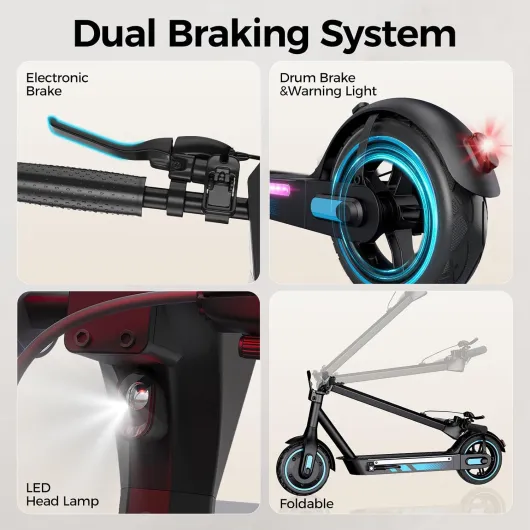
The big topic here is the brake setup. On paper, the triple braking system (electronic brake + front disc + rear drum) sounds very reassuring. In practice, the stopping power is decent, but the feel of the mechanical brakes isn’t great. I had the same experience as the Amazon reviewer: you have to pull the levers hard, almost to the grips, to get strong braking, and there’s not much modulation. It’s either "not much" or "a lot" rather than a smooth, progressive feel. For casual speed it’s acceptable, but once you unlock Turbo and start going faster, it doesn’t feel fully up to the job.
Is it unsafe? Not really, but it doesn’t inspire full confidence when you’re pushing the scooter. That’s why I agree with the suggestion to upgrade to hydraulic brakes if you plan to ride fast often. They’re not included, so it’s an extra cost (around £80 for the mentioned Dyisland kit), but that would fix the main weak point of the scooter, in my opinion. If you stay in the legal speed range and ride calmly, the stock brakes are okay, just not pleasant to use.
As for waterproofing and general durability, the scooter handled light wet conditions and some splashes fine, and the included waterproof bag is a nice touch for carrying your phone or tools without worrying about light rain. I wouldn’t ride it through deep puddles on purpose, but normal bad weather use seems manageable. With a 1-year warranty and spare parts availability listed for 2 years in the EU, it’s not the worst situation if something breaks, but it’s not top-tier support either. Overall, build quality is pretty solid for the price, but the braking system and the non-adjustable stem latch are the two things I’d keep an eye on.
Performance: locked tame, unlocked properly quick
Performance is where this scooter starts to feel more like a toy for adults than a simple commuting tool. Out of the box, it’s limited to around 25 km/h (15.5 mph), which feels okay but nothing crazy for a dual-motor scooter. Acceleration in this locked mode is smooth and decent, good enough to climb moderate hills without drama, but you always feel like the scooter could do more.
Once you apply the little unlock trick mentioned in the Amazon review (hold the left brake lever and press the mode button five times until you get two beeps), things change a lot. You get access to "Turbo" mode, and the scooter wakes up properly. Acceleration becomes much stronger, and the top speed goes well beyond the legal 25 km/h. I won’t write a specific number because it depends on rider weight and conditions, but let’s just say it’s fast enough that you really need to respect the throttle and know what you’re doing.
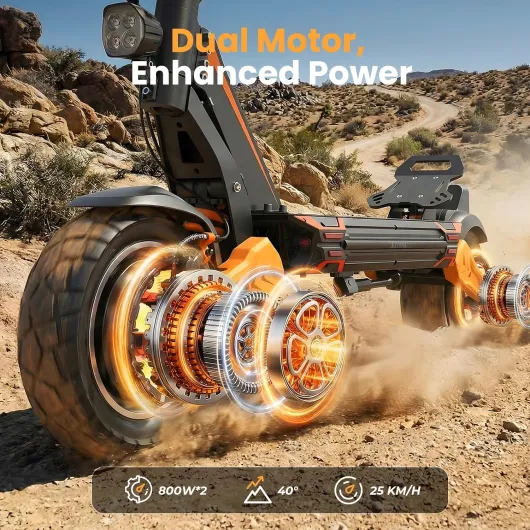
The dual motors give good traction on starts and on slightly loose surfaces like gravel or dusty paths. It doesn’t spin out like crazy, but you feel the extra pull compared to a single-motor 500W scooter. Uphill performance is solid too. On medium slopes where cheaper scooters slow to a crawl, the GT1 Dual kept decent speed with me at ~90+ kg. It’s not a race bike, but you don’t feel frustrated on hills.
The flip side: at higher unlocked speeds, the stock mechanical brakes start to feel like the weak link (more on that in the brake/durability section). Also, if you ride in Turbo mode all the time, don’t expect the advertised range. Overall, if you unlock it, it becomes genuinely quick and fun. If you keep it locked, it’s still okay, but you’re not really using what the dual motors can offer, and then a lighter, simpler scooter might make more sense.
What you actually get with the GT1 Dual
Out of the box, you get the scooter mostly assembled, a basic tool kit, the charger, a user manual, and a small waterproof bag that mounts on the stem. Assembly is straightforward: tighten a few screws on the handlebar, check the folding latch, inflate tyres if needed, and that’s basically it. No crazy setup. The manual is clear enough, even if the English is a bit rough in some places, but you can figure things out.
Specs in simple terms: it’s a dual-motor scooter (the listing says dual 500W, one review mentions 800W, but in any case, both wheels are powered). It runs off a 48V 13Ah battery, claims 50–55 km of range, has 10'' vacuum off-road tyres, dual suspension (front and rear), and a triple brake system: electronic brake plus front disc and rear drum. Max speed is listed as 25 km/h, but as one Amazon user explained, you can unlock a higher speed via a button combo. That’s not advertised loudly, but it’s there.
The scooter is heavy: about 37.5 kg according to the specs. You feel every kilo of that. It supports up to 150 kg rider weight, which is good if you’re heavier or ride with a backpack and gear. Dimensions are around 120 x 64.5 x 130 cm, so it’s not compact even when folded. It fits in a car boot, but it’s not something you want to drag through a crowded train station daily.
There’s also an app (isinwheel Club) for basic management: lock/unlock, modes, lights, some stats. It’s more of a bonus than a must-have. The scooter works fine without it. Overall, what you get is a big, feature-packed scooter focused on power and stability rather than portability. If you’re expecting a light Xiaomi-style commuter, this is not in that category at all.
Pros
- Strong performance with dual motors, especially once unlocked
- Very stable and comfortable on rough roads thanks to 10'' off-road tyres and dual suspension
- Excellent lighting setup with headlight, tail light, indicators and ambient lights for visibility
Cons
- Very heavy (around 37.5 kg), impractical to carry regularly
- Stock mechanical brakes feel spongy and underwhelming at higher speeds
- Stem can creak slightly at the folding mechanism and isn’t easily adjustable
Conclusion
Editor's rating
The isinwheel GT1 Dual Motor is a big, heavy, but genuinely fun electric scooter that leans more towards "mini off-road machine" than simple commuter. The dual motors, 10'' off-road tyres and dual suspension make it stable and fairly comfortable on rough surfaces, and once you unlock Turbo mode, it has more than enough power for most people. The wide deck and strong frame give a sense of security, especially if you’re a heavier rider or often carry a backpack.
On the flip side, the weight is a serious drawback if you need to carry it regularly. At nearly 38 kg, this is not a scooter you casually haul up stairs every day. The mechanical brakes work but don’t feel great, especially once you start using the higher speeds. If you plan to ride fast a lot, upgrading to hydraulic brakes is almost a no-brainer. Range is decent but not as high as the marketing numbers unless you ride slowly and carefully, which is pretty standard for this segment.
I’d recommend the GT1 Dual for people who want a powerful, sturdy scooter mainly for medium to long rides on private land or in controlled environments, and who have easy storage at home or in a garage. It suits heavier riders and those who value stability and lighting more than portability. If you need something light, easy to carry, and always legal-speed only, you’re better off with a smaller, simpler scooter. Overall, it’s a solid buy if you know what you’re getting into and you’re okay with its size and quirks.