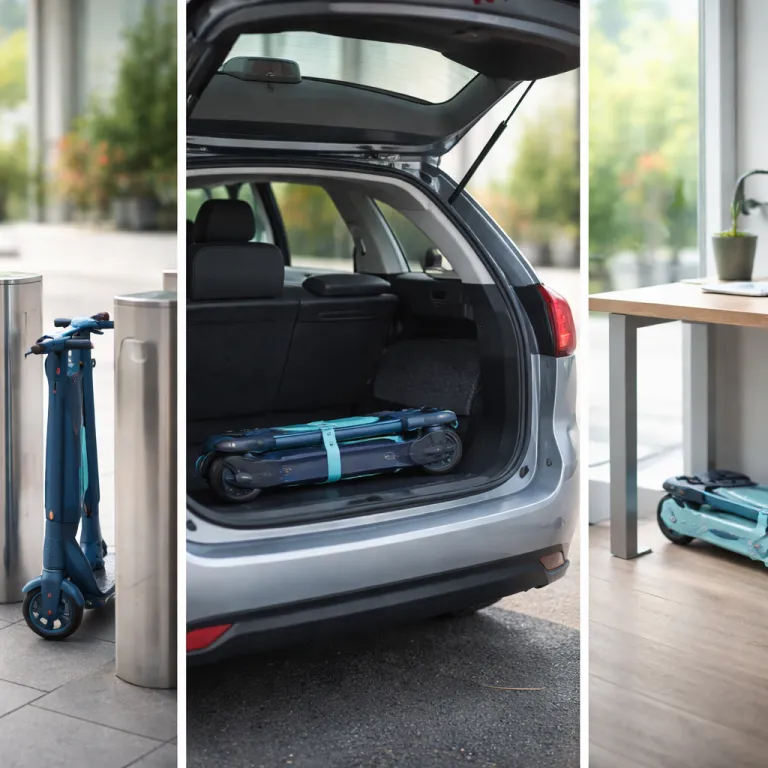
Why a foldable electric scooter matters for real commuters
A foldable electric scooter is not just a gadget; it is a practical mobility tool. For urban commuters who mix walking, trains, and buses, compact scooters that fold to under about 45 centimetres in width and roughly 100 centimetres in length change what is possible in a day. When a scooter folds quickly and cleanly, it can enhance mobility in crowded stations where every second and every centimetre of space counts.
Think about your daily ride and where the scooter actually lives between trips. Under a desk, in a hallway, beside a café table, or in a car trunk, a portable folding scooter has to compete with backpacks, shopping bags, and other people’s feet, not just with other electric scooters on a spec sheet. That is why the real test is not only top speed in mph or claimed range in miles, but how the folding mechanism behaves after hundreds of folds and whether the scooter still feels practical for quick errands.
Weight is the second hard limit, and it is non‑negotiable for many adult riders. Once a scooter passes roughly 13 to 14 kg, or about 28 to 30 lbs, carrying it up stairs or through a subway turnstile becomes a shoulder workout rather than a smooth ride enhancer. Lightweight scooters with smaller battery packs trade some real‑world range for easier lifting, while heavier commuter scooters with bigger motors and dual braking systems offer better performance but punish your arms every time you fold and carry them.
The desk and trunk tests for lightweight folding scooters
Office life sets a brutal standard for any folding scooter that claims to be portable. A typical desk clearance is about 69 centimetres high and 61 centimetres deep, so a scooter for adults has to fold with a stem that lies low and handlebars that do not jut out if you want a truly smooth transition from street to swivel chair. Many electric scooters technically fold, yet their folded height or handlebar width still blocks your legs or your colleague’s movement when tucked under a desk.
In testing commuter‑focused scooters like the Segway Ninebot Max G30, Xiaomi Pro 2, and GoTrax XR Ultra, the desk test quickly exposes which folding designs are serious. For consistency, folded dimensions in the table below are measured from the front wheel to the rear mudguard for length, from floor to highest point for height, and across the widest point of the handlebars for width. Stem folding systems that lock the stem to the rear fender keep the scooter compact, while extra folding at the handlebars shaves precious centimetres so the folded profile slides fully under a workstation. When you add a laptop bag and maybe a coffee, a 12 kg frame feels manageable, but a 20 kg scooter with a bigger motor and battery becomes a chore every single time you repeat the folding routine.
The trunk test tells a different story about price, practicality, and usable range. In a mid‑size sedan, a scooter that folds to under about 110 centimetres in length and 45 centimetres in height can lie flat while still leaving room for groceries, which makes weekend rides more realistic. If you are considering a model like the Maxshot V1, reading a detailed light commuter scooter review such as the one on this simple commuter scooter guide helps you weigh regular price against sale price, real‑world range, and whether the folding scooter design will still feel portable after months of use.
| Model | Approx. folded size (L × H × W) | Weight | Claimed range | Typical tested range* |
|---|---|---|---|---|
| Segway Ninebot Max G30 | ~117 × 48 × 47 cm | ~18–19 kg | Up to 65 km (40 mi) | ~30–40 km (18–25 mi) |
| Xiaomi Pro 2 | ~113 × 49 × 43 cm | ~14 kg | Up to 45 km (28 mi) | ~25–30 km (15–19 mi) |
| GoTrax XR Ultra | ~109 × 36 × 43 cm | ~12 kg | Up to 27 km (17 mi) | ~16–20 km (10–12 mi) |
*Typical tested ranges are drawn from independent reviews and manufacturer test data under mixed urban riding at moderate speeds, usually with a rider weight around 70–80 kg and average speeds close to 20–25 km/h.
Folding mechanisms, durability, and stem wobble over time
Every folding electric scooter lives or dies by its latch. Stem‑fold designs use a hinge at the base of the steering column, deck‑fold systems hinge the standing platform itself, and some scooters add folding handlebars to shrink width for better portability in tight spaces. The more joints you add, the easier storage becomes, but each hinge is another place where play and wobble can creep in after hundreds of folds and thousands of kilometres.
Independent repair shops and long‑term user reports show that stem wobble usually appears first, especially on scooters that use softer metal or undersized locking pins to keep the folding mechanism light. After roughly 800 to 1,000 folding cycles, many budget scooters develop a few millimetres of movement at the stem, which you feel as a vague steering response at around 25 km/h, even if the scooter still hits its advertised top speed on flat ground. That looseness does not always mean the scooter is unsafe, but it does turn what should be a smooth ride into a slightly nervous one, particularly for adults who push their electric scooters close to their top speed on busy streets.
Durability also depends on how the folding latch interacts with the braking and wiring systems. On better‑designed scooters, the dual braking cables and motor wires are routed with enough slack to handle repeated folding without pinching, while cheaper models sometimes kink cables near the hinge, which can slowly degrade braking power or throttle response. Before you jump on a scooter sale that advertises a tempting sale price, check whether the folding scooter uses robust metal parts, whether the latch has a secondary safety catch, and whether the manufacturer specifies a tested folding‑cycle count in its documentation, because that number often matters more than a slightly lower regular price on paper.
Weight, range, and the trade offs behind portable performance
Lightweight design is the holy grail for any portable electric scooter, but physics always demands a trade. To keep total weight under about 13 kg, or roughly 28 lbs, manufacturers usually shrink the battery capacity and sometimes choose a smaller nominal motor wattage, which limits both range in kilometres and sustained top speed on hills. That is why many of the lightest scooters feel ideal for short urban hops yet struggle to maintain their advertised distance when you add a heavier rider or steeper gradients.
Take a typical 250 to 350 watt motor paired with a modest battery pack in a compact folding scooter. On flat city streets with a 75 kg rider, you might see 18 to 22 kilometres of real‑world range before the battery management system starts to limit power, even if the marketing promises 30 kilometres or more. Add a few hills, colder weather, or a rider closer to 100 kg, and that same electric scooter may deliver closer to 12 to 15 miles, which is still enough for many commutes but far from the optimistic numbers that drive some scooter sale campaigns.
Heavier commuter scooters with 500 watt motors and larger batteries can push real‑world range to 30 or even 40 kilometres, yet they often weigh 20 kg or more, which makes every staircase a negotiation. For riders who need to enhance mobility without sacrificing their back, the best compromise is usually a mid‑weight adult scooter around 15 kg, with honeycomb tires for puncture resistance, dual braking for safety, and a realistic top speed around 25 km/h that balances efficiency and control. In that band, the gap between regular price and sale price matters less than whether the scooter still feels manageable after a week of carrying it through your actual commute.
Ride quality, tires, and braking on compact electric scooters
Folding does not have to mean flimsy, but ride quality often suffers when designers chase the lowest possible weight. Small solid wheels transmit every crack in the pavement, while slightly larger pneumatic or honeycomb tires can transform the same route into a smooth ride that feels calmer at speed. On a short test loop, the difference between 8‑inch and 10‑inch wheels may seem minor, yet over 10 miles of mixed asphalt and cobblestones, your knees and wrists will tell you which scooter is truly suitable for daily use.
Honeycomb tires sit between solid and air‑filled designs, using a perforated structure to flex without needing inflation, which suits portable scooters that get folded and bumped around on trains. They resist punctures better than tubes, which is valuable when your electric scooter lives in a trunk with tools or luggage that could pinch a valve, but they still give more compliance than fully solid rubber. For many adult riders who value low maintenance, honeycomb tires paired with a well‑tuned motor and a stable folding mechanism strike a smart balance between comfort, durability, and the need to enhance mobility without constant workshop visits.
Braking deserves as much attention as top speed, especially on compact scooters that share lanes with cars and buses. Dual braking systems that combine a mechanical drum or disc with electronic motor braking shorten stopping distances and give redundancy if a cable stretches or a lever fails, which matters more than squeezing an extra 2 mph of top speed from the controller. When you compare scooters at a similar price, prioritise models where the dual braking hardware still feels strong after repeated folding and carrying, because loose calipers or misaligned rotors often appear first on scooters that are treated as toys rather than as serious mobility alternatives.
Transit, turnstiles, and living with a folding mobility scooter
Public transport is where the marketing fantasy of a folding mobility scooter meets reality. A scooter that looks compact in a studio photo can feel huge when you are trying to slip through a subway turnstile with a backpack, a coffee, and a crowd behind you. In that moment, the difference between 12 kg and 18 kg, or between a 100 centimetre and 120 centimetre folded length, decides whether your electric scooter enhances mobility or just adds stress.
One‑hand folding mechanisms matter more than spec sheets admit, because you rarely have both hands free in a real commute. A well‑designed folding scooter lets you kick a latch, drop the stem, and lock it to the rear without juggling your phone or ticket, while a clumsy design forces you to set the scooter down and block the flow of people. If you plan to use buses or trams regularly, test whether you can lift the scooter by the stem with one hand, carry it for at least 30 metres, and still feel in control of your balance and your belongings, because that is the real‑world definition of portable.
Home storage adds another layer of practical constraints that often outweigh pure price considerations. In a small flat or shared house, a scooter that stands upright on its rear wheel or tucks neatly into a wardrobe can be the best mobility investment, even if its regular price is slightly higher than a bulkier model on scooter sale. For families thinking ahead about younger riders, pairing an adult commuter scooter with a safe first kids’ model, using guidance from resources such as this age by age safety guide for a first electric scooter, helps everyone share limited hallway space without turning the home into a cluttered parking lot.
Key benefits of foldable electric scooters for urban life
Compact electric scooters change how city dwellers think about distance. A 5 kilometre trip that once felt too long to walk becomes a quick ride that slots between meetings, errands, and social plans, especially when the scooter folds fast and disappears under a café table or office desk. That flexibility is what turns a folding mobility scooter from a weekend toy into a daily transport tool that quietly enhances mobility without demanding a parking space.
For many riders, the most underrated benefit is psychological rather than mechanical. Knowing that your scooter can fold, roll into a lift, and sit beside you on a train removes the anxiety of being stranded by a sudden storm, a flat battery, or a cancelled bus, even if you rarely push the full range in miles or the maximum speed that the spec sheet promises. When you can combine a modest top speed with a reliable motor, a durable battery, and a folding scooter frame that survives thousands of folds, the regular price feels more like an investment than a gamble on a flashy scooter sale.
If you want a deeper dive into how these benefits play out across different models and use cases, a focused analysis such as this overview of the benefits of foldable electric scooters can help frame your priorities. Some riders will value the lightest possible adult scooter under 12 kg, even if that limits range and top speed, while others will accept a heavier 18 kg frame with honeycomb tires and dual braking to gain more stability and safety. Either way, the best electric scooter for you is the one that fits under your desk, in your trunk, through your turnstile, and into your budget, not just the one that wins a spec sheet race.
Key figures about foldable electric scooters
- Many commuter‑focused foldable scooters target a real‑world range of 15 to 25 kilometres, which typically covers a 5 to 10 kilometre each‑way urban commute with some buffer for detours or colder weather, according to manufacturer testing data from major brands and independent reviewers.
- Weight thresholds around 13 to 15 kg are common for models marketed as truly portable, because surveys of urban riders and shared‑scooter usage data show that most adults find carrying more than 15 kg up a flight of stairs uncomfortable over time.
- Top speed limits for street‑legal electric scooters in many European cities sit around 20 to 25 km/h, which shapes how manufacturers tune motors and controllers for a balance between acceleration, safety, and battery efficiency in their published specifications.
- Durability studies from repair shops that specialise in scooters report that stem wobble and hinge play are among the most frequent complaints after roughly 800 to 1,000 folding cycles, highlighting the importance of robust latch design and documented test standards.
- Market analyses of personal electric vehicles show that lightweight and foldable models represent a growing share of new scooter sales, driven by hybrid commuting patterns that mix scooters with public transport and car trips in dense urban areas.
FAQ about foldable electric scooters
How much should a good foldable electric scooter weigh for commuting ?
For most urban commuters, a good target weight is between 12 and 15 kg, which is light enough to carry up a flight of stairs or through a station without excessive strain, yet heavy enough to house a decent battery and a motor that can maintain a practical top speed.
What real range can I expect compared with advertised miles or kilometres ?
Advertised range figures usually assume a light rider, flat ground, and low speed, so in real city use you can expect roughly 60 to 70 percent of the claimed distance, especially if you ride near top speed or face hills and colder temperatures.
Are honeycomb tires better than pneumatic tires on folding scooters ?
Honeycomb tires reduce the risk of punctures and require less maintenance, which suits folding scooters that are frequently carried and stored, but high‑quality pneumatic tires still offer the best comfort and grip if you are willing to check pressure regularly.
How important is a one hand folding mechanism for daily use ?
A one‑hand folding mechanism becomes crucial when you juggle bags, tickets, or a phone, because it lets you collapse the scooter quickly without blocking other people, which is especially valuable in busy stations and on crowded pavements.
Is it worth paying a higher price for dual braking on a compact scooter ?
Paying more for a compact scooter with dual braking is usually worthwhile, because having both mechanical and electronic braking shortens stopping distances and provides redundancy if one system fails, which directly improves safety in mixed traffic.
Quick buyer’s checklist for foldable electric scooters
- Portability: Check folded length, height, and width against your desk, trunk, and storage space, and aim for 12–15 kg if you regularly face stairs or turnstiles.
- Range and performance: Expect about 60–70 percent of the advertised range in real use, and match motor power and top speed to your hills, rider weight, and local speed limits.
- Folding hardware: Look for a solid latch with a secondary safety catch, documented folding‑cycle testing, and minimal stem play when you rock the handlebars.
- Ride comfort: Prefer 9–10 inch pneumatic or honeycomb tires, a stable deck, and geometry that feels calm at 20–25 km/h rather than twitchy at higher speeds.
- Safety features: Prioritise dual braking, good lighting, and tidy cable routing that will not pinch when you fold and unfold the scooter every day.