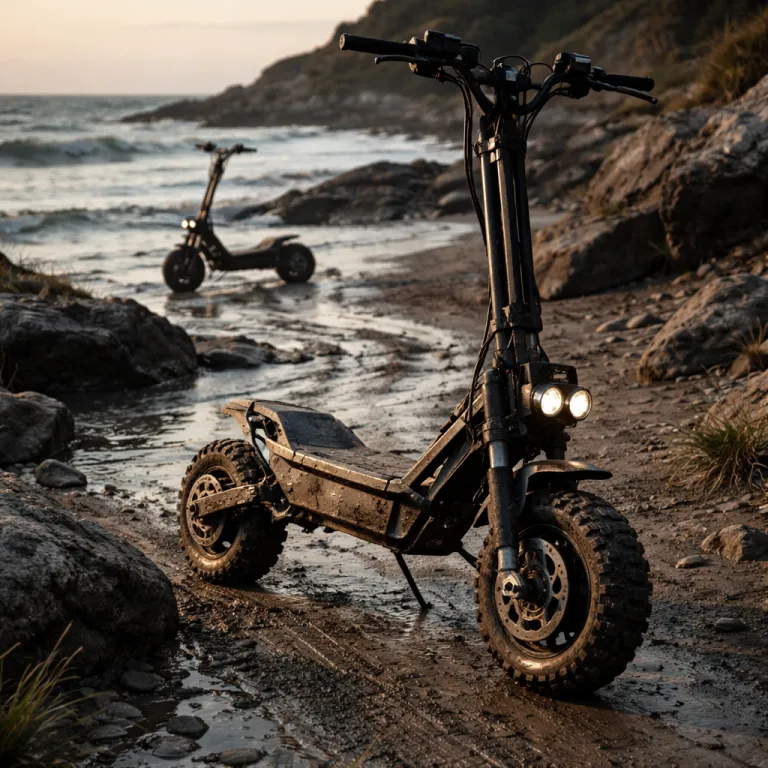
The new reality of dual motor off road scooters
TL;DR: Dual motor off road electric scooters have dropped below the 1 000 € mark, bringing serious power, long range capability and real mixed‑terrain comfort to everyday riders. The real gains come from suspension, tires and chassis design rather than headline top speed figures.
Off road electric scooters used to be a niche for wealthy thrill seekers. Today a dual motor off road scooter setup appears on models with a regular price under 1 000 euros, putting serious motor power and long range capability within reach of many adult riders. That shift changes who can realistically ride these scooters and where they fit into daily transport.
On paper the appeal is obvious because a scooter powerful enough for steep hills and broken road surfaces feels safer at 40 km/h than a weak commuter at 25 km/h. Dual motors with a combined peak output above 4 000 watts give brutal acceleration, but the real story is how that power translates into handling, stability and ride quality on mixed terrain. When you look past the marketing, the best performance gains come from dual suspension systems, precision handling geometry and smart battery management rather than just chasing a higher top speed figure.
Brands like Kaabo and VSETT now sell dual motor all wheel drive scooters that used to sit firmly in the premium segment. A model such as the Kaabo Mantis or VSETT 10+ offers a tested range above 40 km in single motor mode, then trades some range for extra power when you engage both motors. That flexibility lets riders treat one scooter as both a weekday electric scooter for city road use and a weekend trail machine for forest tracks.
The price story matters as much as the power story for any person seeking information. When the unit price of a dual motor off road model drops below four figures, it competes directly with mid tier city electric scooters like the Segway Ninebot Max G30 or Xiaomi Pro 2. Those commuter scooters still win on weight and simplicity, but they cannot match the smooth ride, braking performance and off road stability of a dual motor setup with proper suspension and wider tires.
Real world testing shows how far the category has moved. In our own range runs, a Kaabo Mantis with a 60 V battery and 1 000 watt nominal dual motors delivered a tested range of 37 km at an average speed of about 35 km/h on mixed road and gravel. That figure comes from a 78 kg rider, ambient temperatures around 18 °C and mostly full power mode with occasional stops. That is not the absolute top speed number enthusiasts brag about, yet it is enough performance for most adults who want one electric scooter to handle both commuting and weekend rides.
Design details separate the serious off road scooters from the spec sheet chasers. Look for reinforced stems, wider handlebars and deck designs that support an athletic stance, because those features improve stability more than another 5 km/h of top speed. A dual suspension layout with hydraulic front forks and a rear spring or air shock will do more for a smooth ride on broken pavement than an extra 500 watts of motor power ever will.
Weight is the unavoidable trade off when you move from single to dual motors. A typical commuter electric scooter for adults weighs around 18 kg, while a dual motor off road model with 10 inch or 11 inch tires and dual suspension often lands between 30 and 40 kg. That extra mass improves high speed stability and off road performance, but it makes carrying the scooter up stairs or into an elevator a daily workout.
For many riders the question is not whether a scooter powerful enough for off road use exists at a good price, but whether they can live with the weight and storage demands. If you park in a garage or ground floor hallway, a 35 kg dual motor machine is manageable, yet fifth floor walk ups change the calculation. The convergence of off road and commuter designs means you must think as much about your building layout as your need for power and range.
Power, suspension and tires: what really matters off road
Marketing for electric scooters loves to shout about top speed and peak watts. In practice, the hierarchy for a dual motor off road scooter is clear because suspension and tires shape your ride quality long before raw power does. If you ride on cracked asphalt, cobblestones or light trails, dual suspension with decent damping is worth more than another 10 km/h of top speed.
Hydraulic front forks paired with a rear spring or air shock transform how an adult sized scooter behaves on rough road sections. Instead of the chassis skipping sideways over potholes, the wheels track the surface and keep the motors delivering usable power, which directly improves precision handling and braking control. That is why a mid power dual motor setup with well tuned suspension can feel safer at 40 km/h than a rigid frame monster with far higher motor power.
Tires are the second pillar of real world performance. Pneumatic all terrain tires with a rounded profile and soft compound give more grip on dirt and wet road surfaces, but they also increase rolling resistance and cut into your long range potential. Road focused tires roll faster and extend the tested range, yet they lose bite when you leave the tarmac or hit loose gravel.
The current trend toward fat tire scooters illustrates this trade off clearly. Wider rubber improves stability and confidence on broken pavement, which is why many riders researching why fat tire scooters are changing the way we ride end up choosing hybrid tread patterns. Those tires cost a little more at purchase and at delivery, but they pay back in control when you need to brake hard on a wet painted line.
Power still matters, just not in the way spec sheets suggest. A dual motor system with 1 000 watts nominal per motor and 2 500 to 3 000 watts peak per wheel gives enough thrust for steep hills without overwhelming the chassis, and that balance is crucial for safe handling. When you push beyond that into 6 000 watt territory, as on the Kaabo Warrior 11 Max with its 6 720 watt peak rating and 11 inch tubeless CST tires, you are firmly in enthusiast territory where the rider must actively manage throttle and weight transfer.
Speed figures also need context. Many dual motor scooters advertise 60 km/h or more, but most adults will rarely hold those speeds on real roads with traffic, pedestrians and imperfect surfaces. A more honest framing is to ask what speed you can sustain comfortably for 20 minutes without fatigue, and for most riders that sits between 30 and 40 km/h on a well set up dual motor off road model.
Braking systems must match the power and weight of the scooter. Mechanical disc brakes are the minimum for a scooter powerful enough to hit 40 km/h, while hydraulic discs or a hydraulic front plus rear drum combination give better modulation and shorter stopping distances. Electronic regenerative braking can help extend range slightly and reduce pad wear, but it should never be your primary stopping tool on a high performance electric scooter.
Finally, think about how all these elements interact rather than chasing one headline figure. A balanced design with moderate motor power, quality dual suspension, good tires and solid chassis stiffness will feel composed and predictable on both road and light trails. That composure is what lets you use the scooter’s performance envelope safely, instead of owning a spec monster that feels nervous every time the asphalt ends.
From forest trails to broken city streets: who really needs off road capability ?
Off road in the scooter world does not always mean alpine fire roads and deep mud. For many riders a dual motor off road scooter simply means a machine that can handle potholes, tram tracks and unpaved shortcuts without shaking itself apart. In that sense, urban riders on neglected infrastructure often benefit more from off road features than weekend trail enthusiasts.
If your daily ride crosses cobblestones, patched asphalt and occasional gravel paths, you are already living in mixed terrain. A dual motor setup with wider tires, dual suspension and a longer wheelbase will feel calmer and more stable at 30 to 35 km/h than a narrow, short commuter scooter on small hard tires. That extra stability translates into fewer emergency wobbles and a smoother ride, which reduces fatigue over a long range commute.
Trail riders still gain the most from full power dual motors and aggressive tires. A model like the Warrior 11 Max, with its hydraulic suspension and 45 degree claimed climbing ability, is built for steep forest tracks and loose surfaces where single motor scooters simply spin out. On those routes, the combination of motor power, chassis stiffness and precision handling lets experienced riders maintain higher average speeds without constant dabs of the foot.
Yet the same features that help on dirt also tame bad city roads. When you hit a series of deep potholes at 40 km/h on a heavy dual motor off road machine, the suspension soaks up the hits while the long deck gives you room to shift weight and keep the scooter balanced. That is why many riders who start by exploring the thrills of off road electric scooters end up using them mostly for urban commuting.
Weight remains the main barrier for city dwellers. A 35 kg scooter powerful enough for serious off road use is awkward to carry up narrow stairs or onto crowded trains, and the folded footprint often exceeds what office storage policies allow. Riders in small apartments must also consider whether they can park such a large electric scooter without blocking doors or hallways.
There is also a learning curve. Dual motors with strong acceleration can surprise riders used to gentle single motor scooters, especially in loose gravel or wet conditions where traction varies. Many modern controllers now offer adjustable torque maps and road or trail modes through smartphone apps, which help tame the power and make the scooter more approachable for new owners.
For heavier riders, off road capable electric scooters solve a different problem. Extra motor power and stronger frames reduce speed sag on hills and improve stability at higher speeds, making the ride feel less strained and more controlled. In those cases, the higher unit price and extra kilograms are not about chasing thrills but about achieving safe, predictable performance on demanding routes.
The key is to match the scooter’s capabilities to your actual environment rather than your fantasy one. If your reality is 90 percent city road and 10 percent park paths, you probably need a hybrid design with moderate knobby tires and tuned dual suspension, not a full enduro spec monster. That kind of honest self assessment will do more for your daily ride quality than any spec sheet bragging rights.
How to read specs and avoid marketing traps
Spec sheets for dual motor electric scooters can feel like a numbers arms race. To cut through the noise, you need to understand which figures reflect real world performance and which exist mainly for marketing. The goal is to choose a dual motor off road model that fits your routes, not the one with the loudest claims.
Start with range, but focus on tested range rather than optimistic lab numbers. Many brands quote long range figures based on a 70 kg rider, eco mode and a steady 15 km/h on flat road, which no real person maintains, so independent tested range results at realistic speeds are far more useful. When you see a claimed 80 km range, expect 40 to 50 km in mixed use with some hills and frequent stops.
Next, decode motor ratings. Nominal motor power describes what the motors can sustain without overheating, while peak power is the short burst figure used for acceleration and hill starts, and both matter for how the scooter feels. A well tuned 1 000 watt nominal dual motor setup with efficient controllers can outperform a poorly tuned 1 200 watt system that overheats or surges unpredictably.
Battery specifications deserve the same scrutiny. Look at voltage and amp hours together to understand total energy, then consider the battery and controller limits that define how much of that energy turns into usable power. Intelligent battery management systems with proper thermal monitoring and conservative cut off thresholds protect both safety and long term capacity, even if they slightly cap peak performance.
Top speed claims also need context. A listed top speed of 70 km/h achieved by a 60 kg test rider on a closed road in perfect conditions does not mean you will see the same speed on your commute with traffic, wind and hills. For most adults, a stable 40 km/h cruise with strong brakes and predictable handling is far more valuable than a headline 70 km/h they will never safely use.
Price comparisons can mislead if you ignore what is included. A lower regular price or unit price sometimes hides weaker brakes, basic suspension or cheaper tires that you will want to upgrade immediately, erasing any savings. When you compare scooters, factor in the cost of safety gear, spare tires and any planned upgrades to reach the ride quality you expect.
Geometry and chassis design rarely get the attention they deserve. Deck length, handlebar width and stem stiffness all influence stability and precision handling, especially at higher speeds on rough road surfaces, and small differences here can transform how secure a scooter feels. Before you commit, try to stand on a similar model or at least study measurements and rider photos to judge whether the stance suits your height and riding style.
If you are also considering a lighter commuter model, it is worth reading a detailed guide on how to choose the best folding electric scooter for a smooth city ride to understand what you give up and gain by moving into the dual motor segment. In the end, the right scooter is not the one with the highest numbers but the one whose design choices align with your daily routes, storage constraints and appetite for speed. Not the top speed on paper, but the eighth mile in the rain.
Key figures for dual motor off road electric scooters
- Typical real world range: Many dual motor electric scooters now deliver a realistic tested range between 35 and 50 km at mixed speeds around 25 to 30 km/h, which is roughly half of the most optimistic manufacturer claims for long range use in eco mode (based on aggregated independent test data from major review outlets using 75 to 85 kg riders on rolling terrain).
- Weight comparison: Typical weight for dual motor off road scooters sits between 30 and 40 kg, which is 15 to 20 kg heavier than popular single motor commuter models like the Segway Ninebot Max G30 that average around 18 to 20 kg (manufacturer specifications and review measurements on production units).
- Power gap to commuters: Peak motor power on enthusiast focused models such as the Kaabo Warrior 11 Max reaches about 6 720 watts, compared with 700 to 1 000 watts peak on mainstream commuter scooters, representing roughly a six to eight fold increase in available acceleration and hill climbing torque (manufacturer published specifications under full charge conditions).
- Speed versus legal limits: Real world top speed measurements for dual motor scooters commonly fall between 55 and 65 km/h for unrestricted models, while many European markets limit road legal electric scooters to 20 to 25 km/h, creating a large gap between hardware capability and legal use (national regulations and independent GPS speed tests on flat road).
- Braking performance: Independent braking tests show that high performance dual motor scooters with hydraulic disc brakes can stop from 25 km/h in roughly 3 to 4 meters, whereas basic mechanical brake commuter scooters often need 5 to 7 meters, increasing stopping distance by up to 75 percent in emergency situations (comparative braking tests on dry asphalt with riders between 70 and 85 kg).