
Summary
Editor's rating
Value for money: good deal if you know its limits
Design and build: simple, compact, no nonsense
Battery and range: honest for short trips, optimistic on the box
Comfort: solid tires = zero flats, but you feel every bump
Durability and build quality: feels sturdy for the price
Performance: 19 mph is real, but don’t expect miracles on hills
What you actually get with the VOLPAM Q1
Pros
- Lightweight and folds in about a second, easy to carry and store
- 350W motor reaches real 19 mph on flat ground for efficient commuting
- Solid 8.5'' tires mean no flats and low maintenance
- Clear LED display and simple controls, plus useful companion app
Cons
- No suspension and solid tires make the ride quite firm on rough roads
- Real‑world range (around 9–12 miles) is lower than the top claimed numbers
- Struggles on steeper hills, especially for heavier riders

Specifications
View full product page →| Brand | VOLPAM |
A budget scooter I actually kept using
I’ve been riding the VOLPAM Q1 350W (8.5'' version, 19 mph / ~15 miles) for a few weeks for short city trips and commuting to work. I didn’t baby it: daily use on rough sidewalks, a few light rain rides, and a lot of quick stop‑and‑go. I bought it as a cheap alternative to taking the car for short errands and to avoid crowded buses.
My expectations were pretty moderate: at this price I just wanted something that turns on every time, doesn’t shake apart after a month, and doesn’t die halfway to the office. Overall, it does the job. It’s not a high‑end scooter, and you feel that in a few spots, but for basic commuting it’s honestly pretty solid.
The main thing that surprised me is how usable it is day‑to‑day. The folding system is quick, the weight is manageable, and the 19 mph top speed is enough for city riding without feeling like I’m going to eat pavement every second. I’ve owned a heavier, more powerful scooter before, and while that one was more fun, I actually grab this one more often because it’s easier to live with.
It’s not perfect: the solid tires are harsh, the range numbers on the box are optimistic, and the manual is kind of vague. But if you’re looking for a practical tool and not a toy to show off, it’s worth a look. I’ll go through the different parts: design, performance, battery, comfort, durability, and value, with the good and the annoying bits.
Value for money: good deal if you know its limits
Taking everything into account, I’d say the VOLPAM Q1 offers good value for money if your expectations are realistic. You get a 350W motor that really hits around 19 mph on flat ground, a practical folding system, solid tires that remove the headache of punctures, a clear display, and an app with a few useful features. For daily commuting of under 10 miles total, it gets the job done without too many headaches.
Where you feel the lower price is mainly in comfort and small details. No suspension, solid tires, slightly vague manual, and range numbers that are optimistic. If you compare it to more expensive scooters from big brands, you lose a bit of refinement: less cushioning, fewer premium materials, and not as polished overall. But you’re also paying less, and in practice, for simple city use, it’s not a huge sacrifice.
If your budget is tight and you just want something reliable for short commutes, I think this scooter is a pretty solid choice. If you have more money to spend and you care a lot about comfort, longer range, or better hill performance, you might be happier going up a tier. For students, people in small cities, or anyone who just wants to swap a few car or bus rides for something cheaper and more flexible, the price/performance ratio makes sense.
To sum it up: it’s not the best scooter on the market, but for the price bracket it sits in, it holds its own. You pay for a practical tool, not a luxury toy, and on that front it delivers reasonably well.
Design and build: simple, compact, no nonsense
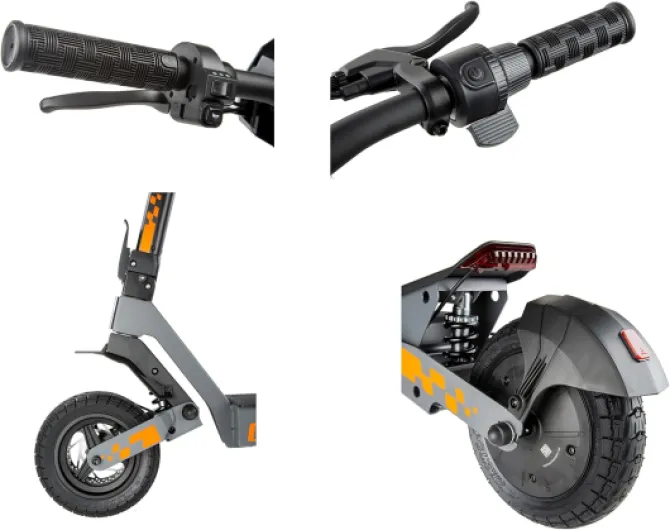
Design‑wise, the VOLPAM Q1 is pretty straightforward. Gray aluminum frame, T‑shaped handlebar, 8.5'' solid rubber wheels. Nothing flashy, but that’s not a bad thing. It blends in, which I actually like when I leave it locked outside a shop. The deck width is decent; I can put my feet one behind the other comfortably, but it’s not huge. If you have very big feet, you might find it a bit tight but still workable.
The folding mechanism is one of the best parts. It really does fold in about a second once you’ve got the motion down. You flip the latch, drop the stem, hook it to the rear, and that’s it. I’ve done it in stairwells, in the train, and next to my desk. No fighting with stuck latches so far. The stem feels reasonably solid when locked; there is a tiny bit of play if you shake it hard, but nothing scary while riding.
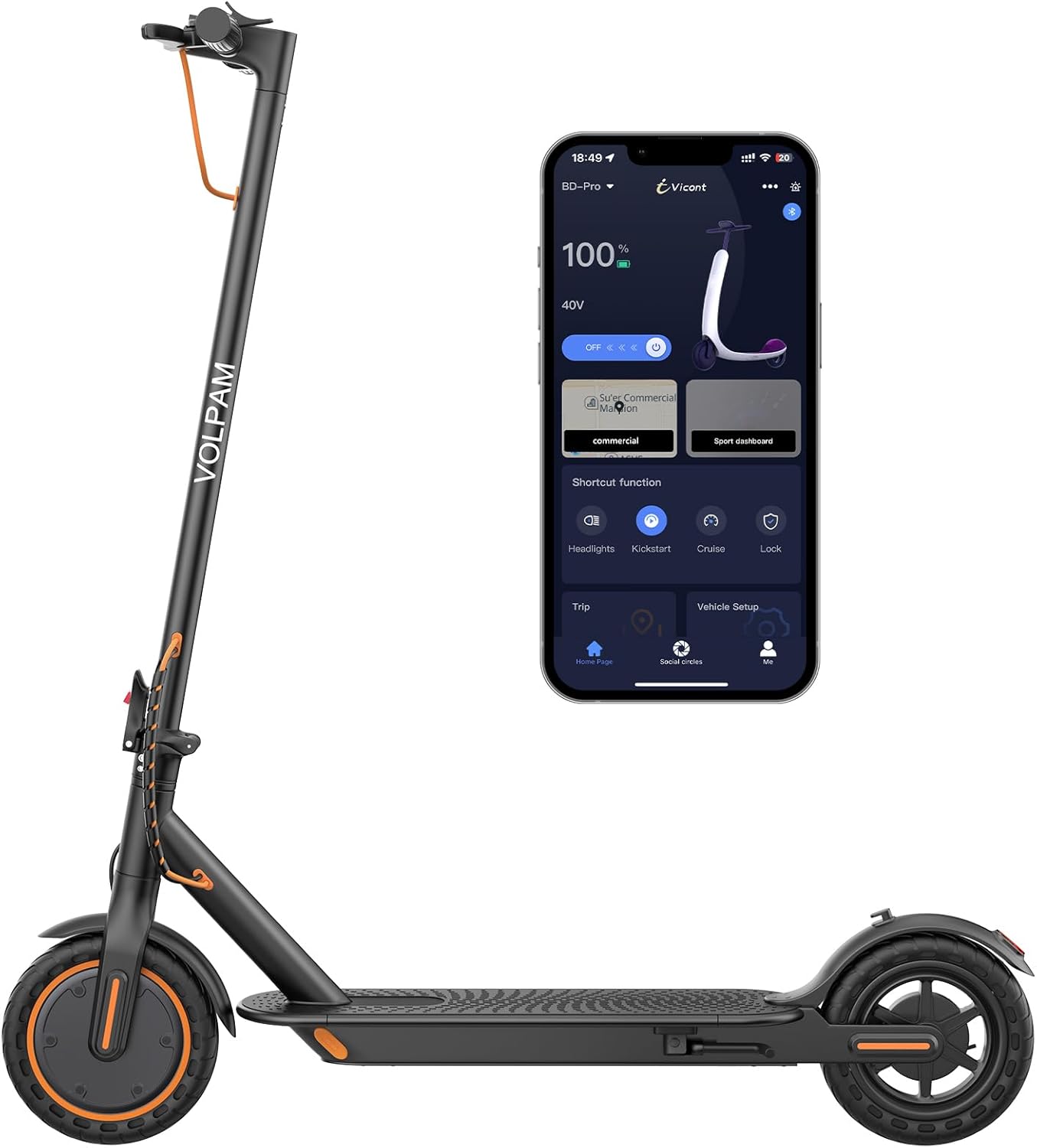
The LED display is clear even under sunlight. It shows speed, battery bars, and mode. Buttons are minimal: power on/off, change mode, turn lights on. Honestly, that’s all you need. No clutter. The lights are okay: the front light is enough to see potholes at moderate speed, and the rear light is bright enough so cars notice you. I still wouldn’t rely on it alone for totally dark roads, but for city streets, it’s fine.
Overall, the design is more about practicality than style. It’s not a head‑turner, but it’s compact, functional, and easy to carry. For a daily commuter, I’ll take that over some fancy design that’s a pain to fold or weighs a ton.
Battery and range: honest for short trips, optimistic on the box
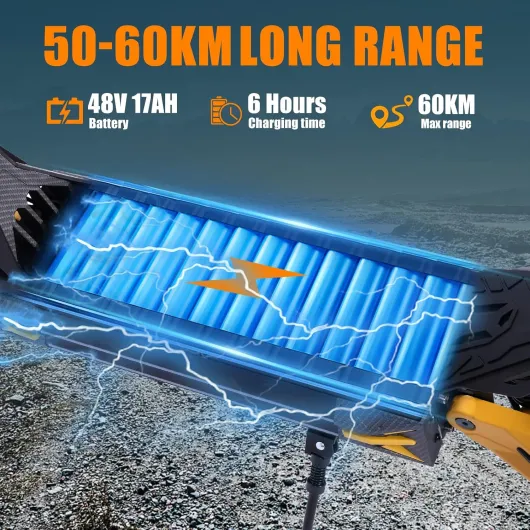
The brand talks about up to 15 miles of range for this 8.5'' / 350W / 19 mph setup, but also lists 12 miles in the technical details. In real life, with my weight and mixed riding (full speed most of the time, some stops, a bit of incline), I’m getting around 9–11 miles before it feels like I should recharge. If I ride more calmly, around 12–13 mph and avoid constant full throttle, I can push it closer to 12–13 miles, but that’s with being careful.
So, if you’re planning a daily commute of around 3–4 miles each way, you’re fine. You can go to work and back, maybe add a quick detour, and still have some battery left. If you’re thinking of doing 10–12 miles in one go at full speed, that’s where it starts to get tight. Also, like any scooter, range drops if you’re heavier, if it’s cold, or if there are lots of hills.
Charging time is around 4–5 hours from low battery to full. I usually just plug it in when I get home and don’t really think about it. The charger light is red while charging and turns green when done. I haven’t had any charging issues so far, but the brand’s note about checking the charger and connection if there’s a problem is worth keeping in mind. The charging port cover is a small rubber cap; it stays in place, but I make sure to push it in properly so water doesn’t get in.
Overall, the battery is fine for what this scooter is meant to do: short to medium urban trips. Just don’t buy it expecting the top numbers from the product page. Use them as a theoretical maximum and mentally subtract a few miles. If you can live with around 8–12 real miles depending on how you ride, you’ll be okay.
Comfort: solid tires = zero flats, but you feel every bump
The big trade‑off here is solid 8.5'' tires and no suspension. On the plus side, no punctures, no pressure checks, no tire maintenance. On the downside, you feel every crack, manhole cover, and rough patch. On smooth asphalt, the ride is perfectly fine and even feels pretty smooth. On old sidewalks or broken streets, it gets a bit rattly and you’ll definitely feel it in your hands and knees on longer rides.
The deck height is okay, not too high, so you feel stable when standing. The handlebar height is fixed but works well for my height (around 5'9"). I lent it to a taller friend (around 6'2"), and he said it was still usable but would have preferred the bar a bit higher. Grip on the deck is good; the rubber pattern keeps your shoes from sliding, even when it’s slightly wet.
The solid tires give decent grip in dry conditions. In light rain or on wet tiles, you need to be more gentle with acceleration and braking, but that’s true for pretty much any scooter. Because there’s no suspension, I naturally slowed down a bit on rough surfaces to avoid getting shaken too much. For trips under 20–30 minutes, it’s totally fine. For longer rides on bad roads, it gets tiring.
Noise and vibrations are acceptable. There’s some rattling from the rear fender over bumps, but nothing crazy. No weird squeaks or flex in the frame so far. Comfort rating for me: good enough for daily short commutes, not something I’d take for a long joyride on rough paths. If you live in a city with mostly smooth bike lanes, you’ll be happier than if you’re stuck on broken sidewalks all the time.
Durability and build quality: feels sturdy for the price
After a few weeks of daily use, the frame and key parts still feel solid. The aluminum stem doesn’t wobble excessively, the folding latch still locks properly, and there are no signs of cracks or bending. I’ve carried it up and down stairs, bumped it into curbs, and stored it in the trunk a bunch of times. So far, it handles this normal abuse without complaining.
The solid tires are obviously a plus for durability. No flats, no worrying about glass or small nails. You trade comfort for peace of mind, but from a durability point of view, it’s great. The brake system hasn’t faded yet; the rear drum brake still feels consistent. I did a quick visual check of the wiring and cables after a few weeks, and nothing looks frayed or loose.
I did ride it a couple of times in light rain. The scooter handled it fine, but I wouldn’t push my luck in heavy rain or deep puddles, since they don’t shout about any strong waterproof rating. After those wet rides, I wiped it down and made sure the charging port cap was properly closed. No issues starting or charging afterward.
The brand mentions a one‑year limited warranty, which is decent in this price range. I haven’t had to use it, so I can’t say how responsive they are, but at least it’s there. Overall, for what I paid, the scooter feels more robust than I expected. It’s not built like a tank, but for regular commuting and normal handling, I’d say the durability is pretty reassuring so far.

Performance: 19 mph is real, but don’t expect miracles on hills
On flat ground, the 350W motor does its job. I weigh a bit under 180 lbs, and I regularly hit the claimed 19 mph on smooth pavement in the highest mode. Acceleration is not brutal, but it’s quick enough for city riding. You won’t outrun bikes in a sprint, but you won’t feel stuck either. It’s a good middle ground between speed and feeling in control.
Where you feel the limits is on hills. On mild inclines, it slows down but still moves. On steeper ones, speed drops quite a bit, and you might end up at jogging pace. This is normal for a 350W scooter, but if your daily route is full of big hills, I’d say look at something with 500W or more. For mostly flat city use, it’s fine. The motor is also quiet; you hear a soft whine but no rattling or weird noises so far.
The brakes are decent. You’ve got the electronic brake (EABS) plus a rear drum brake. Together they stop the scooter quickly enough for city speeds. The electronic brake alone is a bit soft, but once you add the rear lever, it bites properly. I tested a few emergency stops from full speed on dry pavement, and it stopped in a short distance without throwing me forward. On wet surfaces, like any scooter, you need to anticipate more and brake earlier.
There are multiple riding modes (slower, normal, fast) plus cruise control. Cruise control kicks in after holding a steady speed for a few seconds, which is handy on longer straight stretches. Performance overall is what I’d call “good enough for commuting”: it won’t impress speed junkies, but it’s more than enough for getting around town efficiently and safely.
What you actually get with the VOLPAM Q1
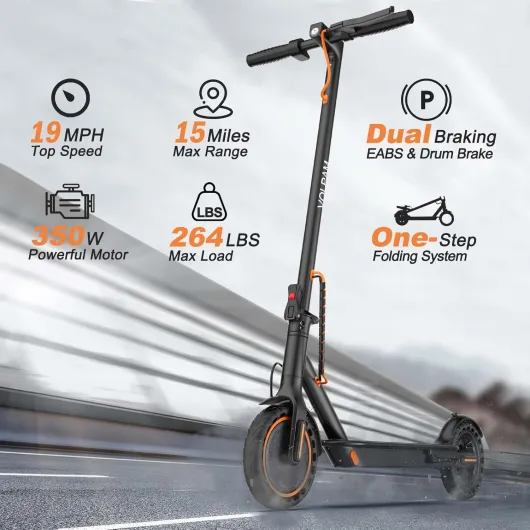
The model I’ve been using is the VOLPAM Q1: 350W motor, 8.5'' solid tires, claimed 19 mph top speed and about 15 miles of max range. On paper they say up to 15 miles, but in the detailed specs it even says 12 miles, so right away you know the marketing and reality are not totally synced. It’s rated for up to 264 lbs, weighs about 26 lbs, and has dual braking (electronic + rear drum brake). No suspension, just solid tires.
In the box you get the scooter folded, the charger, a basic toolkit, and the manual. No extra bells and whistles. Setup is simple: unfold, lock the stem, plug it in for a full charge (took me roughly 4–4.5 hours the first time), connect the app if you want, and you’re basically ready. The app is basic but useful for checking battery, toggling settings, and locking the scooter electronically.
This scooter is clearly aimed at short to medium commutes: going to work, campus, quick grocery runs, or riding around the neighborhood. It’s not meant for big hills or 20+ mile trips. If you weigh around 150–180 lbs and ride on mostly flat roads, you’re in the sweet spot. If you’re close to the 260 lb limit, expect slower starts and less range.
Compared to more expensive brands like Xiaomi or Segway, it’s a bit more bare‑bones: fewer refinements, harsher ride, but also cheaper and lighter. So the presentation is pretty clear: this is a simple commuting tool with a few nice extras (LED display, app, cruise control), not some fancy gadget packed with premium touches.
Pros
- Lightweight and folds in about a second, easy to carry and store
- 350W motor reaches real 19 mph on flat ground for efficient commuting
- Solid 8.5'' tires mean no flats and low maintenance
- Clear LED display and simple controls, plus useful companion app
Cons
- No suspension and solid tires make the ride quite firm on rough roads
- Real‑world range (around 9–12 miles) is lower than the top claimed numbers
- Struggles on steeper hills, especially for heavier riders
Conclusion
Editor's rating
After using the VOLPAM Q1 for regular commuting and errands, my overall feeling is that it’s a practical, no‑frills scooter that suits everyday use pretty well, as long as you don’t push it beyond what it’s designed for. The 350W motor is strong enough for flat city riding and really does reach around 19 mph. The folding system is quick and easy, the weight is manageable, and the solid tires mean you’re not wasting time or money dealing with flats.
The downsides are clear: the ride is firm because of the solid tires and lack of suspension, the real‑world range is below the optimistic numbers, and hills expose the limits of the motor. It’s not the most comfortable or powerful option out there, but it’s also not priced like those higher‑end models. For short daily commutes, students going to class, or someone who wants a light, simple scooter to avoid traffic, it makes sense.
If you want long range, very smooth rides, or you live in a very hilly area, I’d say look for something with a bigger battery and at least 500W. If your routes are mostly flat, under 10–12 miles total, and you just need a reliable, compact scooter that gets the job done without too many complications, this VOLPAM model is a solid pick in the budget/mid range category.