Summary
Editor's rating
Value for money: fun per dollar is pretty good
Design: weird to look at, fun to ride
Comfort and handling: stable but tiring on long sessions
Materials and build: solid frame, a few weak spots
Durability: structure is tough, cosmetics not so much
Performance: fun on flat ground, struggles on hills
What you actually get out of the box
Pros
- Solid steel frame and big pneumatic front wheel for a smoother, stable ride on flat ground
- Drifting and tight‑turn riding style is genuinely fun once kids learn it
- Good for getting kids outside and active; works well for ages roughly 7–13
Cons
- Does not fold and is bulky to store or transport
- Grip tape on the foot wings wears or peels fairly quickly
- Struggles on hills; clearly limited to flat, smooth surfaces for enjoyable use

Specifications
View full product page →| Brand | Razor |
| Color | Black/Mint Green |
| Age Range (Description) | Adult |
| Special Feature | Adjustable Handlebar Height |
| Weight Limit | 143 Pounds |
| Product Dimensions | 42.8"L x 24.2"W x 34.4"H |
| Number of Wheels | 3 |
| Model Name | FBA_20036097 |
A three‑wheel scooter that actually gets used
I’ve had the Razor DeltaWing Scooter (black/mint green) at home for a few weeks now, and I can say one thing right away: kids actually grab this thing instead of letting it collect dust in the garage. It looks a bit odd at first with the big front wheel and the two small rear casters, but that “weird” look is exactly what makes kids curious enough to jump on it. In my case, an 8‑year‑old and a 10‑year‑old took it over immediately, and I only got to ride it when they got tired.
From the first day, the main feeling is: it’s fun, but it’s not plug‑and‑play like a classic scooter. You need 10–20 minutes to figure out how to sway your hips and shift your weight to get it to glide properly. Once they got it, they were carving and doing small spins in the driveway. Compared to a standard two‑wheel Razor, it’s less about straight‑line speed and more about drifting and playing around with turns.
In practice, it’s clearly made for flat, smooth surfaces. On our slightly sloped street, going uphill is a pain, and kids give up quickly. On the other hand, on a smooth parking lot or a bike path, it rolls nicely and feels stable enough. You do feel the weight of the steel frame when you try to carry it or put it in the car, and since it doesn’t fold, that gets annoying fast if you move it around a lot.
Overall first impression: pretty solid toy for active kids who already like scooters or bikes and want something a bit different. It’s not perfect, there are a few design choices that are a bit dumb (no folding, bulky, some grip wear), but for the price and the amount of laughter I heard in a few sessions, it does the job. If you’re expecting a compact, easy‑to‑transport commuter scooter for adults, this is not it. If you just want kids out of the house and burning energy, it works.
Value for money: fun per dollar is pretty good
For the price range this usually sells at, I’d say the value is pretty solid, especially if you have more than one kid who can use it. It’s not the cheapest scooter on the market, but you’re getting a steel frame, a real pneumatic front tire, and a design that actually brings something different compared to basic two‑wheel models. The Amazon rating around 4.5/5 with a lot of reviews matches what I’ve seen at home: kids like it and keep using it, which is what matters most.
Compared to a standard Razor scooter, you’re paying for the extra wheel, the drifting feature, and the bigger tire. If your child just wants something to roll straight to school, this is overkill and not very practical. A simple folding scooter would be cheaper and more compact. But if the goal is to get kids outside and moving, this one works well. My own metric is: does it get used more than once a week? In our case, yes. For that alone, I’m okay with the price.
There are some drawbacks that affect the value slightly: no folding, bulky to store, grip tape that wears quickly, and limited use on hills. If those points bother you a lot, you might feel you paid for something that’s more toy than transport. But as a backyard/driveway/park toy, it delivers enough fun to justify the cost in my opinion.
So overall, good value if you know what you’re buying: a playful three‑wheel drift scooter for flat ground, not an everyday commuting solution. If that matches your use case and your kid’s style, the money is well spent. If you want something more practical and compact, there are better options for the same budget.
Design: weird to look at, fun to ride
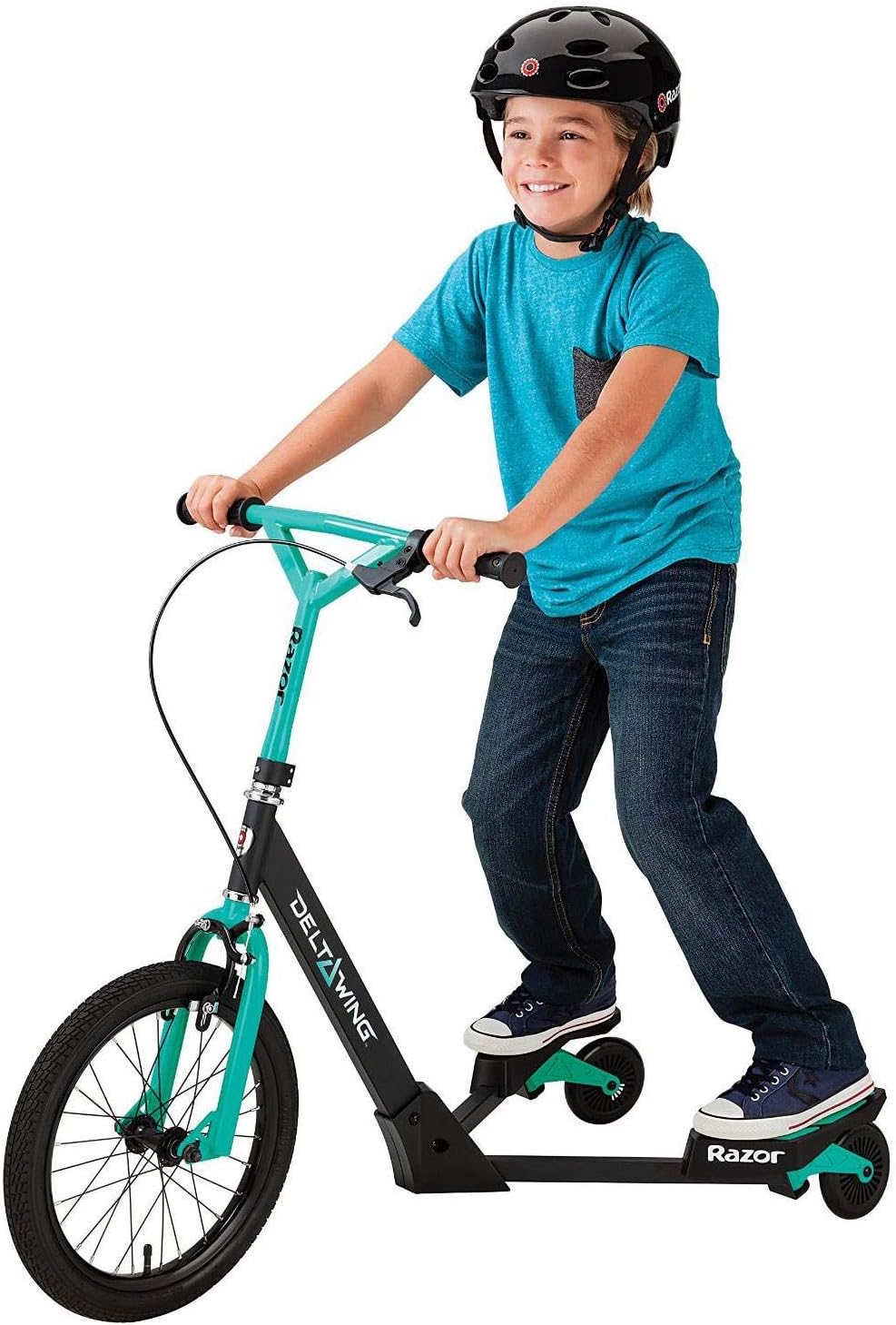
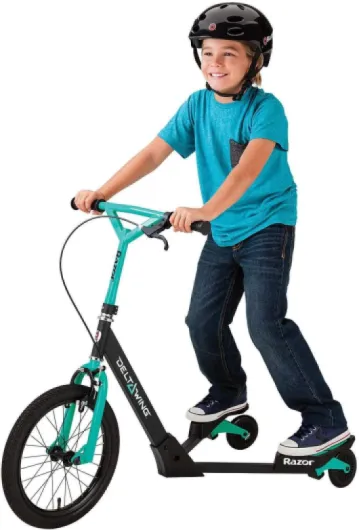
The design is what makes the DeltaWing stand out. You’ve got a big 16‑inch pneumatic front wheel like a small bike tire, then two small 125 mm wheels on low‑angle casters at the back. The wings where you put your feet are wide and sit low, which gives a stable base. It looks a bit like a mix between a tricycle and a drift scooter. The black and mint green color combo is simple but looks good in real life – not too flashy, but still “cool” enough for kids to be happy to show it off.
The riding style is different from a normal scooter: you don’t just push with one leg and go straight. You lean your body and move your hips to get it to carve side to side. The rear casters allow drifting and small spins if you’re on smooth ground. My 8‑year‑old needed about 15 minutes to stop looking stiff and start using it like it’s meant to, and after that he was doing tight turns on the driveway. The 10‑year‑old picked it up even faster and was trying 180‑degree turns by day two.
On the downside, that same design makes sharp turns a bit sketchy. If you lean too hard, especially at higher speed, it can throw you off balance. I nearly got tossed making a quick right turn the first time I tried it, exactly like one of the Amazon reviews mentioned. So yes, it’s fun, but you need to tell kids to start slow and learn the limits. A helmet is non‑negotiable in my opinion, and for smaller kids, knee and elbow pads are a good idea.
Overall, I’d say the design is focused on fun and drifting, not on practicality. It looks different, which is why kids like it, but you pay for that with bulk and a learning curve. If you want something compact and simple, this design is a bit much. If you want something that feels more like a toy for tricks and play, then the design makes sense.
Comfort and handling: stable but tiring on long sessions
Comfort‑wise, the DeltaWing is better than a cheap two‑wheel scooter on some points and worse on others. The big pneumatic front wheel smooths out small bumps nicely, so your hands and feet don’t buzz after a few minutes. Standing on the wings is also pretty comfortable because they’re wide and low to the ground, which gives a stable stance. Kids feel secure on it fairly quickly, especially compared to narrow decks where they’re always shifting their feet.
The handlebar height is adjustable, but there’s a limit. For kids around 8–12 years old, it’s fine. For a tall adult, it starts to feel low, and you end up bending your back more than you’d like. After 15–20 minutes of riding it as an adult, you feel it in your legs and lower back. For kids, this is basically extra exercise, which is not a bad thing, but they do get tired faster than on a regular scooter that just rolls straight.
The riding position is quite active: you’re always shifting weight, bending your knees, and moving your hips to make it slide or turn. That’s fun at first, but it’s not very relaxed. This is why sessions at my place are usually 10–20 minutes max before kids park it, drink some water, and then either go back or switch to something else. Again, that’s fine for a toy, but don’t expect leisurely long rides like on a bike.
In terms of comfort, the main downside is the lack of folding or easy carrying. When kids get tired in the middle of a walk, you’re the one stuck lugging a bulky 20‑pound scooter back home. There’s no shoulder strap or easy handle to grab, so it’s just awkward. So I’d say: comfortable enough while riding, a bit tiring for adults, and annoying to carry around when not in use.
Materials and build: solid frame, a few weak spots
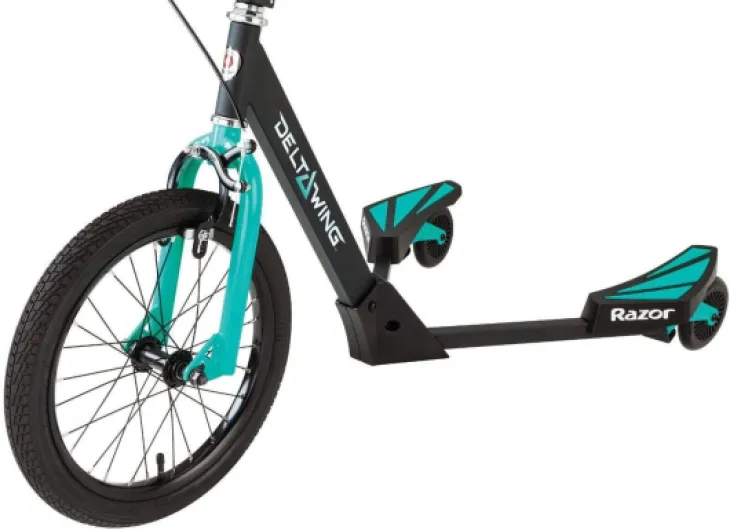
On the materials side, Razor did a decent job where it matters most. The frame is steel, and you feel it: the scooter is not light (around 8.8 kg / 19–20 lbs), but it feels solid. No flex or wobble in the main tube, and the rear wings don’t feel like they’re going to snap under normal use. The wings are made of a high‑tech polymer, which is just a fancy way of saying hard plastic, but it’s thick and handles kids jumping on and off without complaint so far.
The front wheel is a pneumatic rubber tire, which is a big plus compared to cheap plastic wheels. It absorbs small bumps and cracks in the pavement, so the ride is more comfortable and you don’t get that horrible vibration you get with hard wheels. You do need to check the air pressure from time to time, like a bike. The rear wheels are smaller 125 mm rubber/plastic combo casters. They roll fine on smooth concrete or asphalt, but on rough surfaces they get noisy and lose some grip when you try to drift.
The grips on the handlebar are soft rubber and feel okay in the hands, not too hard, not too squishy. One thing I noticed and that other users mention: the grip tape on the foot pads is not the best. On ours, it started showing signs of peeling and wear pretty quickly, even though the scooter wasn’t abused or left in the rain. It’s not dramatic and can be fixed with some new grip tape, but for a product at this price, I would have preferred something that holds up a bit better.
Overall, the materials are pretty solid for the frame and wheels, but some finishing details are average: grip tape quality, some small plastic parts that feel basic, and the brake lever is functional but not premium. For normal family use, it’s fine. If your kids are the type who destroy everything in a month, you’ll probably see cosmetic wear pretty fast, but the structure itself seems built to last longer.
Durability: structure is tough, cosmetics not so much
On durability, I tried to be a bit rough with it to see how it holds up. The steel frame feels tough. No cracking sounds, no visible flex, and after several sessions with both kids and me riding it (close to the weight limit), it still feels tight. The welds look clean, and I don’t see any obvious weak point in the main structure. This matches the general feedback from long‑term owners: the frame itself holds up pretty well over time.
The wheels are holding up fine too. The front tire, being pneumatic, just needs occasional air. It hasn’t shown weird wear so far. The rear casters will probably be the first moving parts to show age if kids do a lot of drifting and spinning, but after regular use on concrete, they still roll smoothly. I’d keep an eye on them after a year or so, but nothing alarming in the short term.
The weak spots are more cosmetic and finishing details. The grip tape on the wings is clearly the cheapest part of the build. As mentioned earlier, it started peeling a bit after just a couple of days, with normal use and no rain. It’s annoying but not a disaster; you can replace it with skateboard grip tape for a few bucks and probably end up with something better than the original. The paint on the frame can scratch if you drop it or lean it against rough walls, which is pretty standard.
Stored in a garage and not left outside in the rain, I don’t see any reason this scooter wouldn’t last several years of normal family use. If you have three kids in a row using it daily and throwing it around, it will look beat up, but the core parts should still be fine. So I’d say: good durability where it counts, but expect some cosmetic wear and maybe a bit of DIY (re‑taping the foot pads) if you want to keep it looking decent.
Performance: fun on flat ground, struggles on hills
In terms of performance, you have to be clear on what this thing is meant for. On flat, smooth ground, it rides nicely. The big front tire rolls over small cracks and stones without throwing you off, and once kids get the hang of the side‑to‑side motion, they can keep it moving without constantly pushing with their feet. My 10‑year‑old manages to cruise around a parking lot with very little pushing, just by carving and using the rear casters.
The real fun comes from the drifting and tight turns. Because the rear wheels are on casters, you can do almost on‑the‑spot turns if you shift your weight correctly. Kids quickly figure out how to swing the back end around and do 180s. It’s not a stunt scooter for jumps, but for ground tricks and sliding, it works. Just be aware that at higher speeds, those same drifts can get sketchy. If you turn too sharp or lean too far, it can feel like it wants to slide out under you.
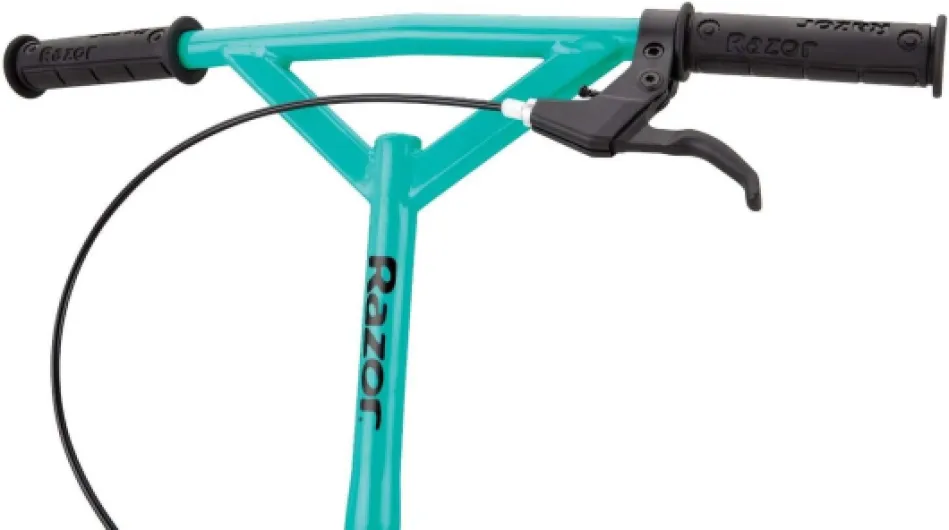
On slopes, it’s a different story. Going uphill is a chore. With the steel frame and the wide rear, it’s heavier and less efficient than a normal scooter. My kids avoid any kind of incline with it. On slight downhill, it picks up speed quickly, and that’s where you’re happy to have the front hand brake, which does its job as long as the surface is dry. For younger kids (around 5–6), reaching and squeezing the brake can be a bit hard, so they need supervision and a safe area.
So in practice, performance is great for play on flat ground and short sessions, not for commuting or long rides. If you have a big driveway, a cul‑de‑sac, or access to smooth parking lots, it makes sense. If you live in a very hilly area or only have rough sidewalks, it will be less fun and sit unused more often.
What you actually get out of the box
Out of the box, the DeltaWing comes mostly pre‑assembled. You’ve got the main steel frame with the big 16‑inch front wheel already installed, the two rear caster arms with the 125 mm wheels, the “Y” style handlebar, and the front hand brake. Assembly is pretty basic: slide the handlebar in, tighten a couple of bolts, adjust the brake, and you’re rolling. It took me around 20 minutes going slowly, and honestly a motivated 10‑year‑old could do it with a bit of help, which lines up with what other buyers say.
The scooter is not foldable, and that’s the first thing you notice when it’s fully assembled. Dimensions are about 42.8" long, 24.2" wide, and 34.4" high. So it’s wide at the back because of the wings, and it takes a good chunk of space in the garage. In a small car trunk, it fits, but you need to play Tetris with other stuff. If you’re used to classic Razor scooters that fold and slide under a seat, this one is a different story.
On paper, the weight limit is 143 pounds and the age range says “adult”, but in reality it’s clearly targeted at older kids and teens. I’m just under that weight limit, and it holds me fine, but you feel that it’s tuned more for lighter riders: easier to get it drifting, easier to push off, and the handlebar height is a bit low for a tall adult. For kids between 7 and 13, it feels more adapted.
In terms of position, you ride either standing with feet on the side wings or kind of half‑sitting/leaning if you’re lazy, but there’s no actual seat. The marketing line about “standing or sitting” is a bit optimistic. You can crouch or lean back, but it’s not a seated scooter. So if you’re looking for something really comfortable for long rides, this isn’t it. It’s more a short‑session, mess‑around toy than a transport tool.
Pros
- Solid steel frame and big pneumatic front wheel for a smoother, stable ride on flat ground
- Drifting and tight‑turn riding style is genuinely fun once kids learn it
- Good for getting kids outside and active; works well for ages roughly 7–13
Cons
- Does not fold and is bulky to store or transport
- Grip tape on the foot wings wears or peels fairly quickly
- Struggles on hills; clearly limited to flat, smooth surfaces for enjoyable use
Conclusion
Editor's rating
After seeing the Razor DeltaWing in real use, I’d sum it up like this: a fun, sturdy toy for flat ground that kids actually use, with a few annoying design choices. The frame and main components feel solid, the big front wheel makes the ride smoother than cheap scooters, and the drifting style is genuinely entertaining once kids get the hang of it. In my house, it didn’t stay in the corner – it went out to the driveway regularly, which says a lot.
On the flip side, it’s bulky, doesn’t fold, and isn’t great on slopes. The grip tape on the wings is a weak point and will probably need replacing if your kids ride it a lot. For smaller kids, the hand brake can be a bit hard to reach and squeeze, so you need to keep an eye on them. It’s clearly more of a “fun toy for sessions” than a practical daily scooter.
I’d recommend it for families with kids roughly 7–13 years old, who have access to flat, smooth areas like driveways, cul‑de‑sacs, or parking lots, and who already like bikes or scooters. If you’re looking for a compact, foldable scooter for commuting or tossing in the car all the time, you should skip this and go for a classic two‑wheel model instead. But if the goal is simply to get kids outside, moving, and burning energy, the DeltaWing gets the job done and gives decent value for the price.