
Summary
Editor's rating
Value for money: solid deal if your needs are realistic
Design: simple, compact, and mostly thought through
Battery & range: honest if you keep your expectations realistic
Comfort: fine for short rides, rough if your roads suck
Durability & build: feels sturdy enough, with the usual budget quirks
Performance: decent speed, limited on hills
What you actually get with the VOLPAM Q1
Pros
- Lightweight and easy to carry at around 25 lbs
- Solid tires mean no flats and low maintenance
- Decent speed and braking for short city commutes
Cons
- Limited real-world range (about 7–9 miles for an average adult)
- No suspension and solid tires make the ride quite firm on rough roads
- 350W motor struggles on steeper hills or with heavier riders

Specifications
View full product page →| Brand | VOLPAM |
A budget scooter I actually kept using
I’ve been riding this VOLPAM Q1 (the 8.5" / 350W version) for a few weeks now for short city trips and commuting to the office. I didn’t expect much at this price point, especially with all the random brands on Amazon, but I wanted something light, simple, and not too expensive in case it got stolen. I’ve used rental scooters a lot and owned one mid-range Segway/Ninebot before, so I had some points of comparison.
The first thing that stood out was the weight. At around 25 lbs, it’s noticeably lighter than my old scooter. Carrying it up one or two flights of stairs or into a trunk isn’t a workout, which for me is a big plus. I live in an apartment with no elevator, so if it was heavier, I’d probably end up using it less. Fold, carry, unfold – that part is painless.
On the road, it behaves like a typical entry-to-mid level commuter scooter: decent speed, okay range, solid but not cushy ride, and basic features that cover the essentials. It’s not a toy, but it’s also not some high-end beast that flies at 30 mph. If you’ve used Lime/Bird type scooters, the ride feeling is pretty similar, maybe a bit lighter and more responsive.
Overall, my first impression was: it’s a pretty solid everyday scooter for short to medium trips, with some limits you definitely feel if you push it too hard. If you expect performance like a $700+ scooter, you’ll be disappointed. If you just want something to replace short car rides or bus rides, it gets the job done without fuss. I’ll break down the good and the annoying parts below.
Value for money: solid deal if your needs are realistic
For the price this thing usually goes for on Amazon, the value is pretty solid, as long as you know what you’re buying. You’re not paying for huge range or insane power. You’re paying for: light weight, simple setup, no-flat tires, and enough performance for short urban trips. Compared to renting scooters every day, this pays for itself pretty quickly if you commute regularly.
Against bigger brands like Segway/Ninebot, you obviously lose a bit in refinement, comfort, and long-term brand reputation. But those scooters usually cost quite a bit more for similar or slightly better specs. If your budget is tight and your daily distance is short, this VOLPAM makes sense. It feels more solid than some of the ultra-cheap models I’ve seen in big-box stores, and it actually has app support and a decent braking system.
Where the value drops is if you try to make it do more than it’s meant for. If you need to do 10–15 miles per day, or you live somewhere hilly, or you’re heavier and want strong acceleration, then this 350W/187Wh setup will feel underpowered and limited. In that case, you’d be better off spending more upfront for a higher-powered scooter with a bigger battery, instead of buying this and being frustrated.
So my take: if you’re an adult looking for a budget-friendly, lightweight scooter for short commutes, campus, or quick errands, and you’re okay with a firmer ride and modest range, the value is good. If you expect it to replace a car for long daily trips or tackle big hills, it’s not the right tool, and the value suddenly becomes “meh” because you’ll hit its limits pretty fast.

Design: simple, compact, and mostly thought through
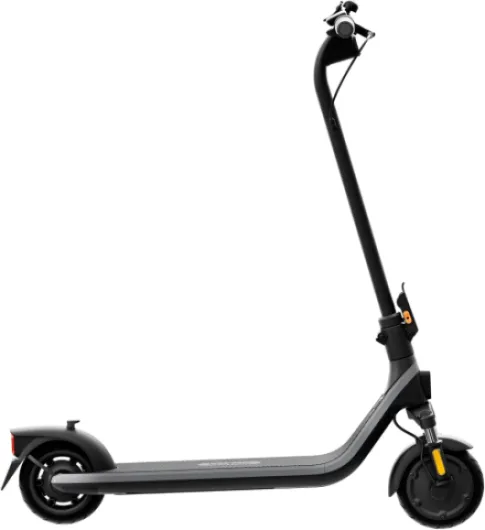
Design-wise, the Q1 is pretty straightforward. Black frame, clean lines, no weird shapes. It looks like most generic scooters you see in cities, which for me is actually a good thing – it’s discreet and doesn’t scream “steal me”. The deck is a normal width, not super wide but enough to stand with one foot in front of the other comfortably. The rubber grip on the deck has enough traction, even when my shoes were a bit wet from light rain.
The folding mechanism is the usual hook-and-latch system on the rear fender. It folds in a couple of seconds once you get the hang of it. The latch feels decent – not sloppy, but also not as tight as a premium scooter. I checked it after a week and re-tightened a screw once, which I’d recommend anyway for any scooter you fold a lot. When folded, it’s compact enough to fit easily in a car trunk or under a desk at work.
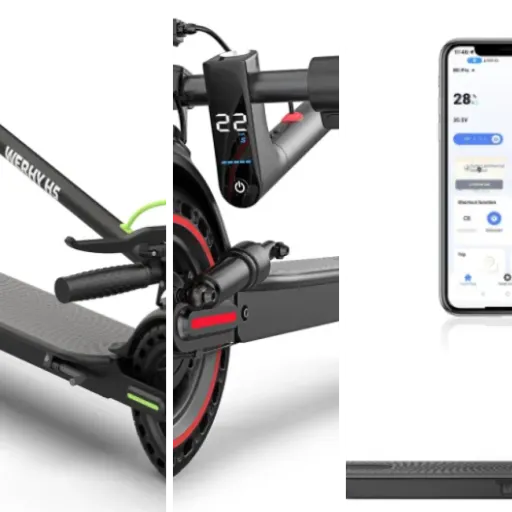
The handlebar layout is basic but functional: center display, thumb throttle on one side, brake on the other. The screen shows speed, battery, and mode. It’s readable in daylight but not super bright; under strong sun you need to glance a bit closer, but it’s usable. The buttons are simple – long press for power, short presses for changing modes and turning lights on/off. No crazy learning curve here.
One thing to note: there’s no suspension, so the design is really focused on being compact and light instead of soft and cushy. Between the rigid frame and solid tires, you feel road imperfections more than on a scooter with suspension or air-filled tires. For smooth pavement and bike lanes, it’s fine. On broken sidewalks and rough asphalt, you’re reminded this is a budget commuter and not a comfort-focused model. Overall, the design is practical and no-nonsense, but not particularly refined.
Battery & range: honest if you keep your expectations realistic
The battery on this version is 36V/5.2Ah (around 187 Wh), and VOLPAM claims up to about 12 miles of range. As usual, that’s under ideal conditions: lightweight rider, flat terrain, low speed mode. In real life, with my 180 lbs, mixed speeds, and some mild hills, I was getting around 7–9 miles per charge. On a fully flat route, staying mostly in Mode 2, I managed close to 10 miles but I was riding gently.
So if you’re planning your commute, I’d treat this as a reliable 6–8 mile scooter with some buffer, not a straight 12-mile machine. For me, that means it’s fine for: going to work and back if each way is 3–4 miles, or doing a few short errands in the same area. If you need 10+ miles daily without charging, it’s going to feel tight, and you’ll end up nursing the throttle or riding slower.
Charging time is around 4 hours from empty to full, which is reasonable. I usually just plug it in when I get home and it’s full by the next outing. The charger is small and easy to throw in a backpack if you want to top up at work. The battery indicator on the display is the usual bar system, so it’s not ultra-precise, but good enough to know if you should head home soon.
One thing to keep in mind: riding in the top speed mode all the time and doing a lot of stop-and-go will chew through the battery quicker. Cold weather also cuts range a bit. Overall, I’d say the battery is fine for short commutes and casual use, but clearly not designed for long-distance rides. If you want big range, this specific configuration isn’t it. For daily city runs under 8 miles total, it’s workable and lines up with what they roughly advertise, as long as you read those numbers with some realism.

Comfort: fine for short rides, rough if your roads suck
Let’s be clear: with solid 8.5" tires and no suspension, comfort is not the strong point of this scooter. On smooth bike lanes or decent roads, it’s totally fine. I did several 3–4 mile trips in a row and had no problem. But once you hit cracked asphalt, brick, or those patchy city streets, you feel a lot of vibrations through the deck and handlebar. It’s not unbearable, but you definitely don’t forget you’re on a budget scooter.
The riding position is okay. The handlebar height worked for me at about 5'10". You’re not hunched over, and the deck has enough space to move your feet around a bit. The grips are basic rubber; they’re not super soft, but they don’t slip, even when my hands were a bit sweaty. After around 20–25 minutes of continuous riding on rougher roads, my hands and knees felt a bit tired, mostly from the constant small bumps.
What helps is that the scooter is light and easy to control. You don’t fight with the steering, and low-speed maneuvering is simple. In tight spaces, around pedestrians or cars, you can slow down and weave easily. Braking is smooth if you don’t slam it, and the electronic brake doesn’t jerk too hard, which makes stop-and-go riding more comfortable overall.
If your daily route is mostly smooth pavement, comfort is decent and totally usable. If you have a lot of potholes, cobblestones, or rough sidewalks, you’ll feel every defect and might start wishing for at least some suspension or bigger tires. For me, I’d say: comfortable enough for up to 20–30 minutes at a time, but not something I’d want to ride for an hour straight on bad roads. For quick commutes or errands, it’s fine; for long bumpy rides, not so much.
Durability & build: feels sturdy enough, with the usual budget quirks
In terms of build quality, the Q1 feels better than some cheap no-name scooters I’ve tried, but you can still tell it’s not a high-end model. The aluminum frame feels solid, there’s no major flex in the deck, and the stem doesn’t wobble once you lock it properly. After a few weeks of almost daily use, it hasn’t developed any major creaks or scary noises, just the occasional small rattle on very rough roads, which is pretty normal.
The solid rubber tires are a big plus for durability. No flats, no punctures, no checking tire pressure – you just ride. The flip side is the harsher ride, but from a maintenance point of view, it’s convenient. I rode over some broken glass and sharp gravel a couple of times, and the tires didn’t care at all. For someone who doesn’t want to deal with tire issues, that’s a nice trade-off.
The folding hinge and latch are the parts I checked the most. After a week or so, I tightened one screw that felt a little loose, and since then it’s been fine. I’d honestly do that with any folding scooter – they all need a quick check now and then. The cables are fairly well routed along the stem, not flapping around. The paint job is okay; it doesn’t scratch super easily, but if you drop it or hit curbs often, you’ll get visible marks like any scooter.
There’s a 180/365-day warranty on different parts, which is decent for this price range. I didn’t have to use support, so I can’t comment on how fast they respond, but knowing there’s at least some warranty coverage is reassuring. Overall, I’d say durability feels good enough for regular city use if you don’t abuse it. It’s not a tank, but it doesn’t feel like a toy either. Just expect to occasionally tighten a bolt and live with some small rattles on bad roads.
Performance: decent speed, limited on hills
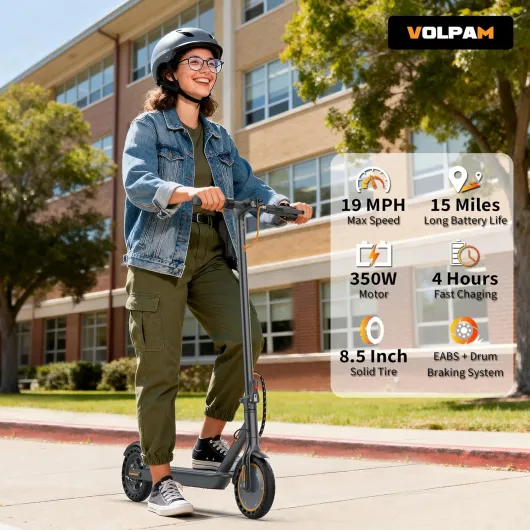
Performance-wise, the 350W motor is what I’d call “good enough for city use, but don’t expect miracles.” On flat ground, it gets up to around 18–19 mph in the highest mode with my 180 lbs weight. Acceleration is smooth, not brutal. It’s not going to throw you backward, but it’s quick enough to keep up with bike traffic and not feel sluggish. For commuting, I actually prefer this kind of smooth acceleration over something too aggressive.
The scooter has 3 speed modes. Mode 1 is very slow (good for sidewalks or first-time riders), Mode 2 is a nice compromise for casual riding, and Mode 3 gives you the full speed. I mostly stayed in Mode 2 in crowded areas and switched to Mode 3 on open bike lanes. Switching modes is quick via the button on the handlebar or through the app. There’s also cruise control, which kicks in after holding a steady speed for a few seconds – handy on long straights.
On hills, you feel the limits of the 350W motor. Small inclines are fine; the scooter slows a little but keeps going. On steeper hills, the speed drops a lot, and you might find yourself crawling up at walking speed. If you live in a very hilly area, you should probably look at the 500W version or another model. On mostly flat city terrain with occasional mild slopes, it’s okay, just don’t expect it to fly uphill.
Braking performance is solid for the speed range. The combo of electronic brake plus rear brake brings you to a stop in a reasonable distance without feeling sketchy. If you slam the brake, you feel the front slow down sharply, but the scooter stays controllable. For a 19 mph scooter, I’d say the brakes match the power. Overall, performance is in line with the price and specs: decent speed, fine on flats, modest on hills. Nothing mind-blowing, but it does what it’s supposed to do.
What you actually get with the VOLPAM Q1
The version I tried is the VOLPAM Q1 with the 350W motor, 8.5" solid tires, and a 36V/5.2Ah battery (about 187 Wh). On paper, they advertise up to 19 mph speed and around 12 miles of range. In real life, those numbers depend a lot on your weight, hills, and how you ride. I’m around 180 lbs, mostly riding in speed mode 2 or 3, with mild hills in the city.
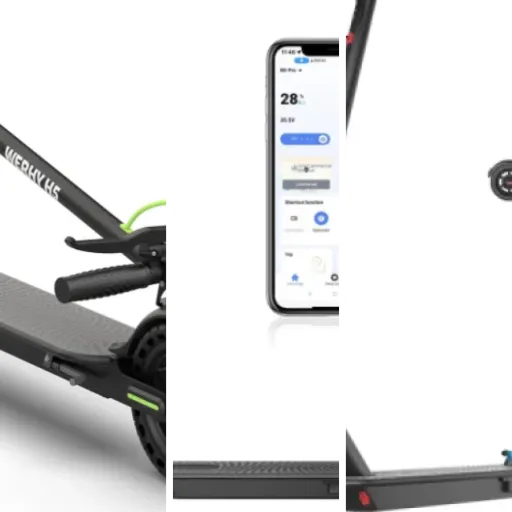
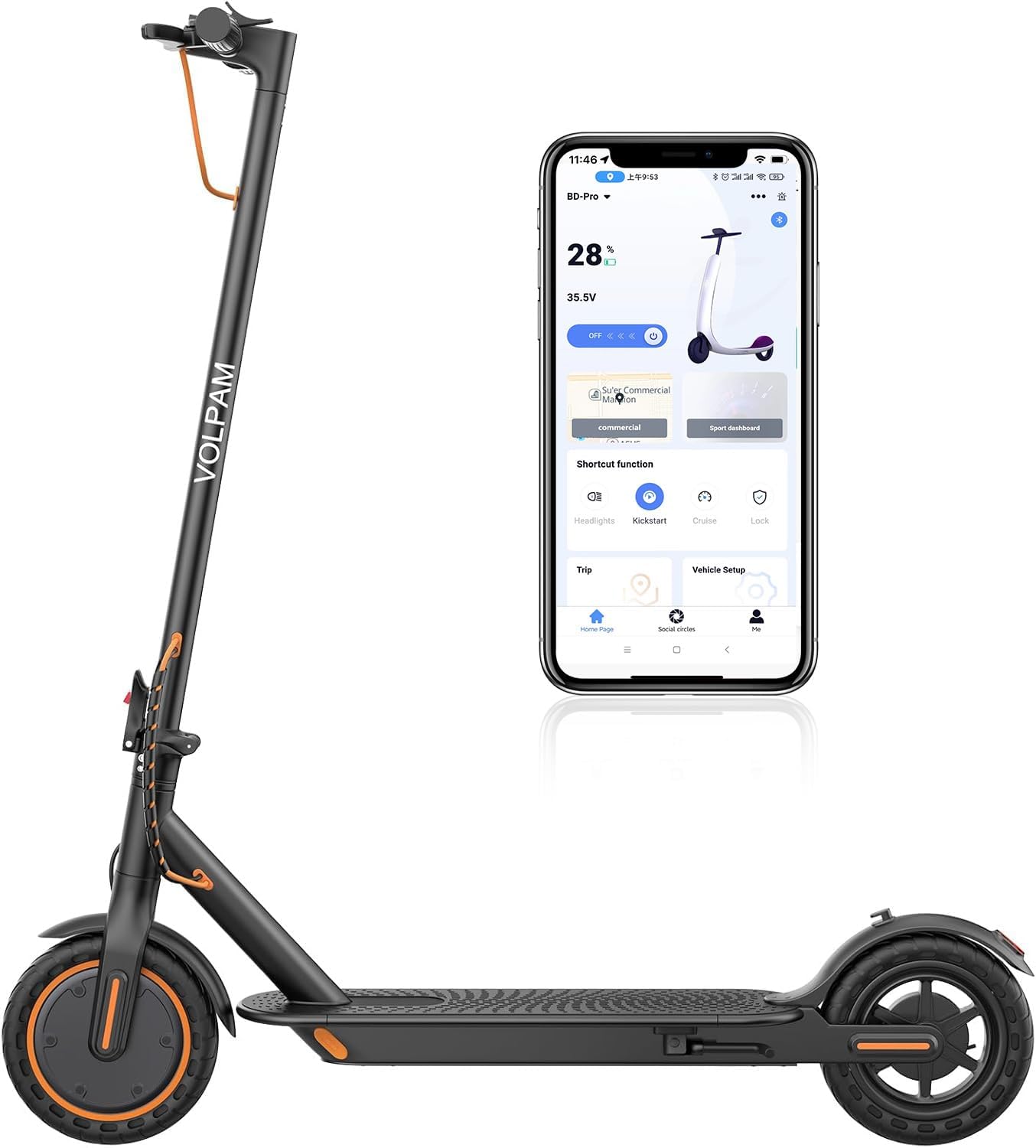
Out of the box, setup is simple: you basically bolt on the handlebar, connect a cable or two, and that’s it. Tools are in the box. It’s not complicated, and I was on the road in about 15–20 minutes including checking the screws and going through the app once. The app pairing worked on the first try, which is honestly not always the case with these cheaper brands. Once paired, you can lock the scooter, change speed modes, see battery, and tweak a few small things.
Key specs in practice: the 350W motor is fine for flat city streets and small hills. Don’t expect miracles on steep slopes; it will slow down and you’ll feel it. Top speed around 18–19 mph is reachable on flat ground in the highest mode if you’re not too heavy. The dual braking system (electronic + rear) does the job, and the lights are bright enough to be seen at night, though I’d still add an extra light if you ride in dark areas.
So if I summarize the presentation: this is a basic commuter scooter focused on being light and simple rather than powerful or long-range. You get: 3 speed modes, cruise control, solid 8.5" tires, app connectivity, folding mechanism, and enough power for city use. No suspension, no fancy features, no huge battery. It’s positioned as a daily short-trip tool, not a long-distance machine, and that’s pretty much how it feels on the road.
Pros
- Lightweight and easy to carry at around 25 lbs
- Solid tires mean no flats and low maintenance
- Decent speed and braking for short city commutes
Cons
- Limited real-world range (about 7–9 miles for an average adult)
- No suspension and solid tires make the ride quite firm on rough roads
- 350W motor struggles on steeper hills or with heavier riders
Conclusion
Editor's rating
The VOLPAM Q1 350W with 8.5" solid tires is a straightforward, no-drama commuter scooter. It’s light, folds quickly, and has just enough speed and power for flat or slightly hilly city riding. The app works, the brakes are reassuring, and the solid tires mean no flats, which is a big plus if you don’t want to deal with maintenance. Range is realistic for short trips, not for long-haul days, and the ride is firm because of the lack of suspension and solid tires.
If you’re someone who needs a scooter for short daily commutes, campus runs, or quick errands within a few miles, this fits pretty well. It’s easy to carry, simple to use, and doesn’t feel like it’s going to fall apart immediately. On the other hand, if you’re heavier, live in a very hilly area, or want to do 10+ miles every day at full speed, you’ll probably find the motor and battery too limited and the comfort lacking on rough roads. In that case, it’s worth looking at more powerful or better-suspended options, even if they cost more.
Overall, I’d rate it as a good value, practical scooter for realistic urban use, with clear strengths (lightweight, simple, low maintenance) and equally clear limits (modest range, average hill performance, firm ride). If your expectations match what it’s built for, you’ll likely be satisfied. If you’re hoping it will behave like a high-end model, you’ll be underwhelmed.