
Summary
Editor's rating
Value: pricey for a toddler scooter, but you feel where the money goes
Design: kid-friendly, parent-approved, not flashy for the sake of it
Materials and build: feels like it will outlive the 5-year age limit
Durability: built to survive real kid abuse
Performance: how it actually rides for a 2–5 year old
What you actually get with the Micro Mini Deluxe
Pros
- Very stable three-wheel, lean-to-steer design that helps toddlers learn balance quickly
- Solid build quality with smooth, quiet wheels and a sturdy deck that feels safe
- Adjustable handlebar and replaceable parts give it a decent lifespan across multiple kids
Cons
- Higher price than many kids’ scooters, not ideal if you’re on a tight budget
- Limited to roughly ages 2–5, so you’ll need a different scooter as they grow
- Doesn’t fold and has no flashy extras like lights, which some parents or kids might want

Specifications
View full product page →| Brand | Micro |
A kids’ scooter that doesn’t feel like a toy-store gimmick
I’ve had the Micro Mini Deluxe in lavender at home for a few weeks now, mainly for a 3‑year‑old and occasionally a curious 5‑year‑old. I’m not a scooter nerd, just a parent who’s already bought a couple of cheap plastic scooters that rattled, tipped, and ended up on Facebook Marketplace after a month. So I went into this one a bit skeptical, especially given the higher price compared to the usual big-box options.
Out of the box, the first thing I noticed is that it actually feels like proper gear, not a flimsy toy. The deck is solid, the wheels roll smoothly, and the T‑bar clicks in without any drama. There’s no big assembly project here: you literally slide the handlebar in, tighten it with the included hex key, and that’s it. From unpacking to first ride took maybe five minutes, including adjusting the height.
The main real-life test for me is simple: does the kid actually use it, and do I feel comfortable letting them ride without hovering every second? So far, the answer is yes on both counts. The lean‑to‑steer system looked a bit odd at first, but my 3‑year‑old picked it up in under 10 minutes. Inside the house, on the sidewalk, small slopes in the park – it’s been used daily.
It’s not perfect: the price stings, and it’s basically limited to the 2–5 age range, so you’re not buying something that will last them into elementary school. But in terms of stability, ease of use, and the kid actually wanting to ride it instead of ignoring it, it’s pretty solid. If you’re tired of wobbly, noisy scooters that feel sketchy, this one is a noticeable step up, even if it’s not cheap.
Value: pricey for a toddler scooter, but you feel where the money goes
Let’s be blunt: this thing costs more than the usual kids’ scooters you see at big-box stores. If you’re just looking at price tags, it’s tempting to grab the cheaper one and call it a day. I’ve done that before, and those scooters usually end up wobbly, noisy, and ignored after a short time. With the Micro Mini Deluxe, you’re basically paying for better build, smoother ride, and longer usable life from age 2 to around 5.
In practice, the value shows up in a few ways. First, my kid actually uses it, daily. A toy that gets used constantly is worth more to me than a cheap one that sits in the corner. Second, I don’t feel like it’s going to snap or fold under them. The stable three‑wheel setup and decent materials make it feel safer, which is hard to put a price on. Third, the adjustable handlebar means you’re not rebuying a new scooter every time they grow a couple of inches.
Compared to cheaper competitors, you’re getting: smoother wheels, a sturdier deck, better steering, and the option for spare parts. If you’ve got multiple kids or plan to pass it on, that spreads the cost out nicely. If this is just for a one‑off weekend with a visiting toddler, then no, it’s probably overkill. Also, keep in mind it tops out around age 5; you’ll likely end up buying a bigger two‑wheel scooter later anyway.
So in terms of value, I’d say it’s good but not budget-friendly. It makes sense if you care about quality, safety, and daily use, and you’re okay paying more upfront for fewer annoyances. If your priority is the lowest price and you don’t mind some wobble and noise, you can find cheaper options that roll, but they won’t feel like this.
Design: kid-friendly, parent-approved, not flashy for the sake of it
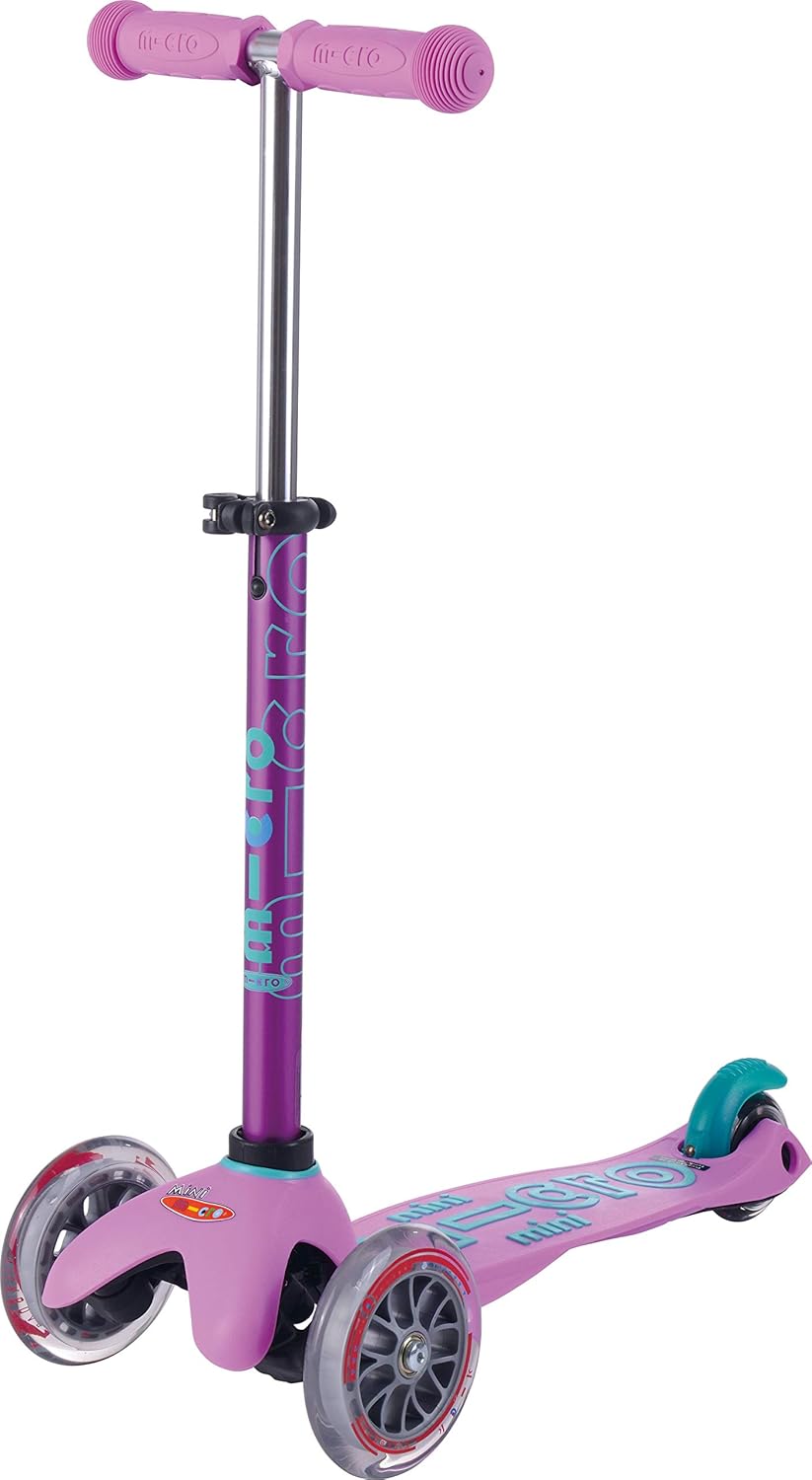
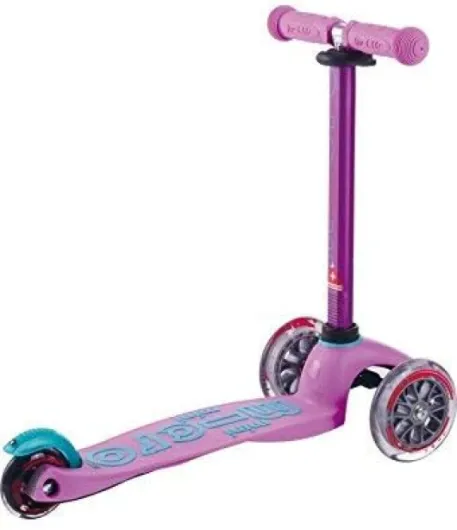
The design is pretty straightforward: two big front wheels, one rear wheel with a brake, and a low deck that keeps the kid close to the ground. The lavender color looks nice without screaming neon, and it doesn’t look cheap or plasticky in person. My kid liked the color right away, which matters more than I’d like to admit, because if they think it looks “babyish”, it’ll just sit in the corner.
The lean‑to‑steer design is the main thing that stands out. The handlebar doesn’t turn like a bike; instead, the front wheels tilt when the rider leans. For small kids, this is actually more intuitive once they get past the first 5 minutes. It naturally limits sharp, jerky turns, which makes it harder for them to suddenly twist and dump themselves on the ground. Watching my 3‑year‑old, I noticed that he gradually started doing smoother curves instead of trying to yank the bar around like on a trike.
From a parent point of view, I like that there’s no folding hinge. On other scooters we’ve had, the folding point is exactly where things start to wobble and squeak after a few weeks. Here, the front assembly is solid and fixed. It means it’s a bit bulkier to throw in a packed stroller basket, but honestly, I prefer solid over foldable for a toddler who’s going to crash it into curbs and benches.
Little touches are practical: the deck is low and wide enough for small feet, with a non‑slip surface that actually grips. The rear brake is a big plastic fender they step on. It’s not subtle, but it works, and kids understand it quickly. Overall, the design is simple, focused on stability and ease of use, not on fancy features. If you want spinning lights and cartoon graphics, this isn’t it; if you want something that looks and feels like proper equipment for small kids, it’s on point.
Materials and build: feels like it will outlive the 5-year age limit
Material-wise, this scooter clearly sits a level above the generic toy-store ones. The frame is aluminum, so it’s light but doesn’t flex in a sketchy way. There’s no weird creaking when the kid pushes off or hits a crack. The deck itself is a tough plastic with a rubbery, grippy top. After a few weeks of indoor and outdoor use, including some wet pavement and gritty sidewalks, there are scuff marks but nothing that feels like it’s wearing out.
The polyurethane wheels are probably the biggest difference compared to cheaper scooters I’ve bought. On the budget versions, the wheels are often hard and noisy, and you can feel every pebble. On this one, the wheels roll smoothly and quietly, even on rougher sidewalks. There’s no rattling, and the bearings feel decent. When I step on it myself (I’m over the stated limit, so I’m not riding it properly, just testing), it still feels solid and doesn’t complain, which gives me some confidence about longevity for kids under 110 lbs.
The handlebar and clamp area feel sturdy. The adjustable T‑bar slides up and down smoothly, and once you tighten it with the hex key, it doesn’t slip. With some scooters, that clamp loosens and the bar starts rotating or dropping mid‑ride; I haven’t seen that here so far. The grips are basic rubber, not super soft, but they don’t feel cheap or sticky, and my kid hasn’t complained about comfort.
One thing to know: there are a lot of plastic parts in the steering column and deck connection, but they don’t feel fragile. Micro also pushes the idea of replaceable parts, which is actually useful if you’re the type to keep gear for multiple kids. I haven’t had to replace anything yet, but just knowing I can swap wheels or a brake instead of tossing the whole scooter is a plus. Overall, the materials feel solid and thought-through, not fancy, but built for daily kid abuse.
Durability: built to survive real kid abuse
After a few weeks of use, the scooter still feels tight, which is more than I can say for the cheaper models we’ve owned. No wobble in the handlebar, no rattling in the front wheels, and the deck hasn’t warped or loosened. My kid has already crashed it into walls, dropped it on the driveway, and used it as a pretend lawnmower, and the only signs are cosmetic scuffs on the edges and the brake.
The rear brake gets scratched up quickly, which is normal since it drags near the ground and gets stepped on constantly. Functionally, it’s fine. The wheels have picked up some dirt and tiny stones, but they still roll smoothly and don’t show flat spots or cracks. I’ve had cheap scooters where the wheels start chipping or the bearings seize up pretty fast; that hasn’t happened here, and I’d be surprised if it did any time soon based on how it feels.
The adjustable handlebar is often a weak point on kids’ scooters. On this one, I’ve raised and lowered it several times between my 3‑ and 5‑year‑olds. The clamp still holds firm and doesn’t slip while riding. There’s no play or twisting in the T‑bar, which gives me some confidence for the long term. I also like that Micro openly talks about replaceable parts and lists spare wheels and brakes online. That usually means they expect the frame to outlast the consumables.
Realistically, I can see this scooter lasting through multiple kids if you don’t leave it permanently outside in the rain. It’s not indestructible, but it feels much closer to real sports gear than a disposable toy. The only downside is the built-in age limit: once your kid is over about 5 or gets heavier, they’ll outgrow it, even if the scooter itself still has life left. So durability-wise, it’s strong, but you’re capped by the product category, not by construction quality.
Performance: how it actually rides for a 2–5 year old
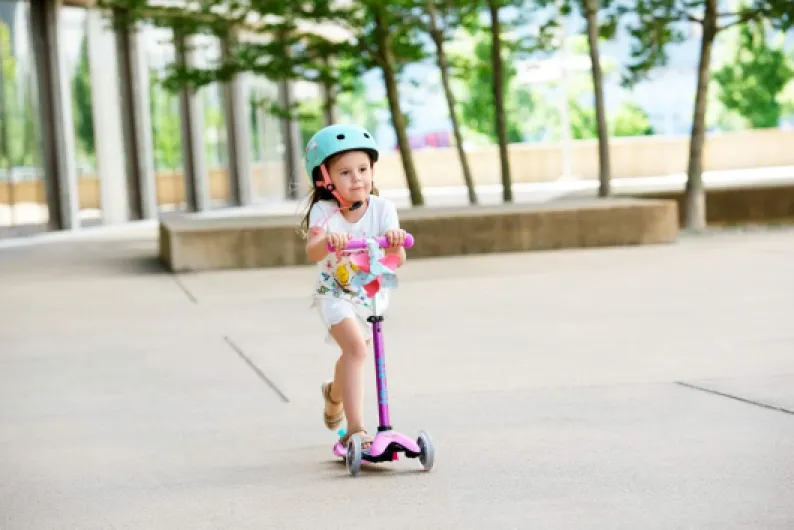
In daily use, the scooter rides smooth and predictable, which is what you want for small kids. My 3‑year‑old was shaky on a cheap two‑wheel scooter, constantly tipping and dragging a foot. On this one, with the two front wheels and low deck, he found his balance much faster. Within the first session, he was pushing properly and gliding a few meters at a time without panicking. On flat pavement, it rolls easily enough that they don’t get frustrated, but not so fast that it’s out of control.
The lean‑to‑steer system takes a short learning curve. The first 5 minutes, my kid tried to twist the handlebar like a bike and got annoyed. Once I showed him to lean his body instead, it clicked. After that, turns felt quite natural, and he started doing little S‑curves on the sidewalk. The steering is not super tight, which is good: they can’t suddenly turn 90 degrees and wipe out. It’s more of a smooth carving motion. For older or more aggressive kids, that might feel limiting, but for toddlers, it’s exactly what you want.
Braking is via the rear fender. My 3‑year‑old mostly still drags a foot to slow down, but my 5‑year‑old uses the brake properly and it works fine. It’s not a sharp, sudden stop, more of a steady slowdown, which is okay at these speeds. On mild slopes, you still need to keep an eye on them; this isn’t some magic safety device. But compared to cheaper scooters we’ve had, they have more control and fewer random spills.
In terms of terrain, it handles smooth sidewalks, indoor floors, and park paths well. It’s not meant for gravel, grass, or big cracks – it will judder or stop like any small-wheeled scooter. Indoors, it’s quiet enough that it doesn’t drive you crazy. Outside, the smooth rolling makes longer walks easier because you’re not stopping every few meters to untangle them from a crack. Overall, performance is solid: stable, quiet, and predictable, which is more important at this age than speed or tricks.
What you actually get with the Micro Mini Deluxe
On paper, the Micro Mini Deluxe is a three‑wheeled scooter for kids roughly 2 to 5 years old, with a weight limit of 110 lbs. In real life, it’s basically a very stable toddler scooter with a front two‑wheel setup and a single rear wheel with a foot brake. The frame is aluminum, the wheels are polyurethane, and the whole thing weighs about 4.2 pounds, so kids can move it around themselves and parents can carry it one‑handed without swearing.
The scooter comes almost fully assembled. In the box, you get the deck with the front wheels already attached, the T‑bar handle, a small hex wrench, and a carry strap. You slide the T‑bar into the deck, tighten the clamp with the wrench, and you’re done. No weird screws, no 20‑step manual. I had it ready before my kid finished asking, “Is it done yet?” The handlebar height is adjustable, which matters a lot if you actually want to get a few years out of it instead of replacing it every growth spurt.
The steering is lean‑to‑steer, meaning the kid leans their body and the scooter turns, instead of twisting the handlebar like a bike. If you’ve only seen classic two‑wheel scooters, it feels a bit strange at first, but for small kids it’s actually easier and more stable. My 3‑year‑old figured it out in one short session; my 5‑year‑old hopped on and was carving turns in the driveway in seconds.
Overall, in practice, you’re paying for a sturdy, low‑maintenance scooter that’s clearly designed for constant use: no rattling parts, no folding mechanism to mess up, and simple construction. It’s not loaded with gimmicks like lights or a folding handle, but honestly, that’s probably why it feels tighter and more solid than the cheaper stuff I’ve tried.
Pros
- Very stable three-wheel, lean-to-steer design that helps toddlers learn balance quickly
- Solid build quality with smooth, quiet wheels and a sturdy deck that feels safe
- Adjustable handlebar and replaceable parts give it a decent lifespan across multiple kids
Cons
- Higher price than many kids’ scooters, not ideal if you’re on a tight budget
- Limited to roughly ages 2–5, so you’ll need a different scooter as they grow
- Doesn’t fold and has no flashy extras like lights, which some parents or kids might want
Conclusion
Editor's rating
Overall, the Micro Kickboard Mini Deluxe in lavender is a solid choice for kids roughly 2–5 years old if you want something stable, smooth, and built to last more than a season. The three‑wheel, lean‑to‑steer design really does help small kids find their balance without tipping constantly, and the build quality is clearly a step above the typical toy-store scooters. My 3‑year‑old actually uses it every day, indoors and outside, which for me is the real proof that it works well for this age.
It’s not perfect. The price is on the high side for a toddler scooter, and the usable window is limited: once they’re over about 5 or want to do tricks or ride faster, you’ll be shopping for a bigger two‑wheel model. There’s no folding mechanism or flashy extras like lights, so if you want something super compact or full of gimmicks, this isn’t it. But if your priority is stability, smooth rolling, and durability, this scooter does the job very well and feels like it will survive multiple kids if you look after it a bit.
I’d recommend it to parents who are tired of flimsy, rattly scooters and are okay paying more for something that feels safe and gets used a lot. If you’re on a tight budget, or your kid is already closer to 6 and tall for their age, I’d skip this and go straight to a bigger model. For the core 2–4 age range though, it’s one of the better options I’ve tried in terms of real-world use.