
Summary
Editor's rating
Value: decent price if you accept the limits
Design: kid-friendly, not flashy, and a bit old-school
Battery and charging: the fun is real, the wait is long
Comfort: fine for kids, just don’t expect a magic carpet
Build and materials: sturdy frame, budget battery tech
Durability: handles kid abuse reasonably well
Performance: 10 mph is real, hills are the weak spot
What you actually get out of the box
Pros
- Realistic 10 mph top speed that feels fun for kids without being excessive
- Sturdy steel/aluminum build with removable padded seat and adjustable handlebar
- Simple controls and low-maintenance hub motor with no chain or belt
Cons
- Old-school lead-acid battery with long 10–12 hour charge time and limited range
- Struggles on anything more than gentle hills; best only on mostly flat terrain

Specifications
View full product page →| Brand | Razor |
A kids’ e-scooter that doesn’t try to be a motorcycle
I’ve had this Razor seated electric scooter (100 Series, Black/Glow) at home for a bit now, mainly for a 10‑year‑old and a smaller 8‑year‑old to share. I’m not the target rider, but I’m the one who assembled it, charged it, and watched the kids use and abuse it around the neighborhood. So this is more a parent/owner review than a rider review. Overall, it’s a pretty solid entry‑level scooter for kids and early teens, as long as you know what you’re getting into and don’t expect adult-commuter performance.
In terms of use, we’ve done short daily rides in the cul‑de‑sac, a few longer loops around the block, and some light hill attempts. Nothing crazy, just typical kid use: ride, dump it on the lawn, forget to turn it off, repeat. The advertised 10 mph and ~40 minutes ride time line up reasonably well with what we’ve seen, especially on flat pavement and with kids under 100 lbs.
Where this scooter makes sense is if you want something fun but not too fast, with a seat option for kids who don’t want to stand the whole time. The twist‑grip throttle is simple, the hand brake is familiar if they’ve ever used a bike, and the frame feels sturdy enough for its 120 lb limit. It’s not high‑tech, and it definitely feels like a product that’s been around for years, but that’s not necessarily a bad thing.
It’s not perfect though. The motor needs a kick‑start to engage, the battery is old‑school lead-acid with long charging times, and it hates steep hills. If you expect to use this as a real commuter tool or for heavier teens, you’ll probably be disappointed. But as a neighborhood toy for kids 8–13, it gets the job done and doesn’t feel unsafe, which is pretty much what I care about at this price.
Value: decent price if you accept the limits
On the value side, I’d say this Razor sits in a sweet spot for younger kids. It’s not super cheap, but it’s also nowhere near the price of bigger lithium‑powered scooters aimed at teens and adults. For the money, you’re getting a solid frame, a real 10 mph top speed, a removable seat, and a brand with a long track record in kids’ scooters. The 4.3/5 rating with a ton of reviews on Amazon matches my experience pretty closely.
Where you feel the price is in the battery tech and hill performance. If you compare it to more expensive lithium scooters, those will generally give you better range, faster charging, and more torque for hills. But they also cost a lot more and often go faster, which might not be what you want for an 8–10‑year‑old. So it’s a trade‑off: cheaper upfront, older tech, but more kid‑friendly speeds and power.
If your use case is simple neighborhood fun—driveway, sidewalk, park paths—and you’re okay with the overnight charging routine, this scooter feels like good value. It’s especially worth it if you have multiple kids who can share it and grow into it. My two both use it, and that alone makes the cost easier to justify. You’re spreading the cost over a lot of hours of outdoor entertainment.
On the other hand, if you’re thinking of this as a serious commuting tool for a teen, or you live in a very hilly area, I’d say look elsewhere and spend more. This is a toy first, light transport second. For what it is—a kids’ seated electric scooter with sensible speed and basic features—it’s good value for money, as long as you go in with realistic expectations.
Design: kid-friendly, not flashy, and a bit old-school
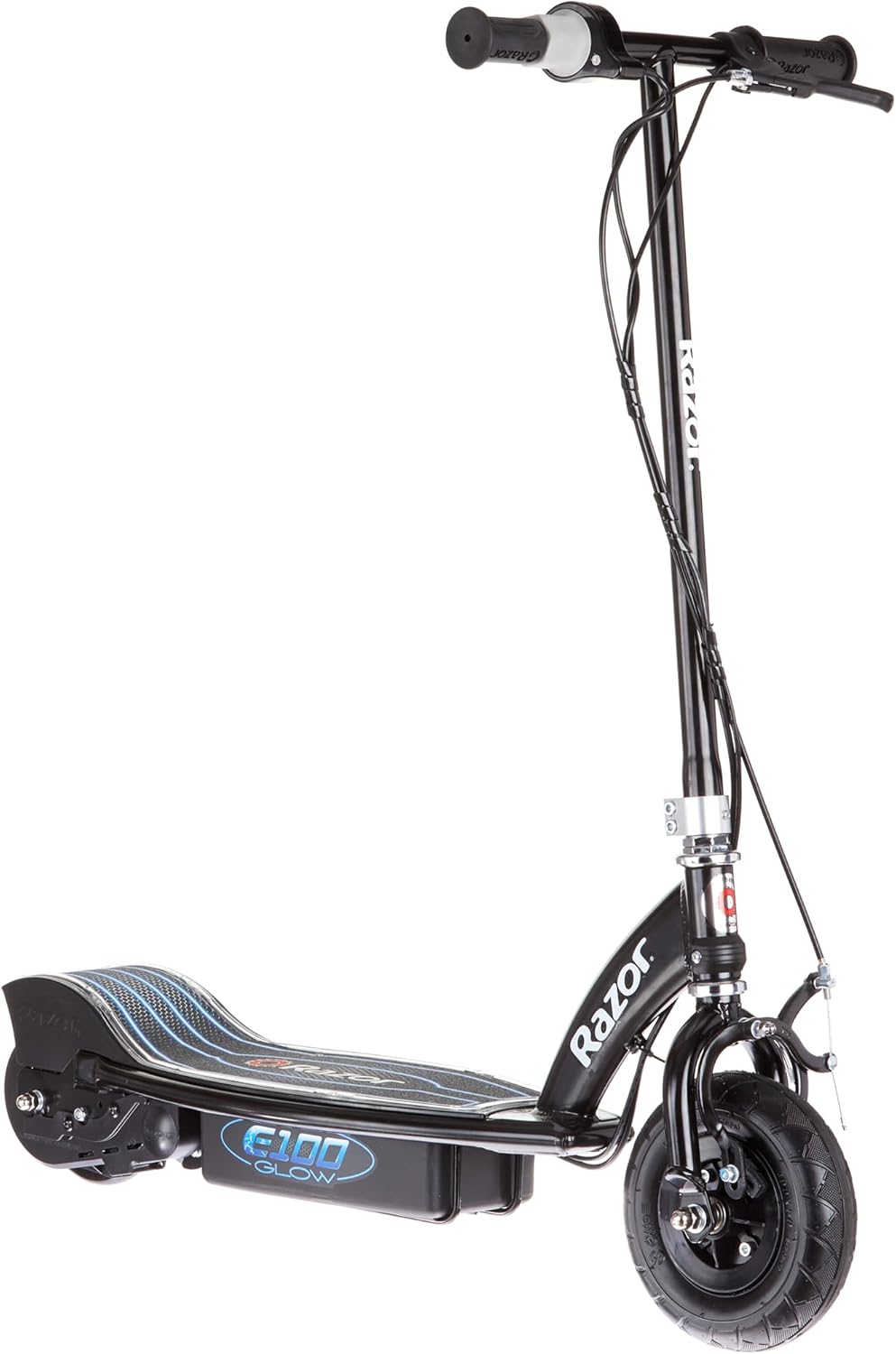
Design-wise, this is very much a classic Razor scooter with a motor and seat stuck on, which honestly is fine. The Black/Glow version has that typical Razor look: black frame and deck with some glow accents/lights that kids like in the evening. It doesn’t look cheap, but it also doesn’t look like some futuristic adult commuter scooter. For a kid’s toy, that’s probably the right call.
The layout is simple: twist‑grip throttle on the right, hand brake on the left, and a sturdy deck that’s wide enough for one kid’s feet, not two. The removable seat is a nice touch. My 10‑year‑old likes to stand most of the time and only uses the seat when cruising slowly with friends. The 8‑year‑old prefers to sit almost all the time. Being able to pull the seat off and use it as a standard e‑scooter makes it more flexible if you have multiple kids using it.
The handlebar height is adjustable, which helps if you’ve got kids of different ages. That said, it’s still clearly sized for children; a tall 13‑year‑old or light adult can technically ride it, but they’ll look cramped, and the geometry isn’t made for that. The controls are straightforward—no display, no speed modes, no app, nothing fancy. Just an on/off switch underneath and the throttle. That makes it easier for younger kids, but if you’re used to more modern scooters, it feels a bit basic.
In terms of practicality, the retractable kickstand is handy and actually stable enough on flat surfaces. My only design gripe is the placement of the power switch and charging port low on the side: you do have to bend down, and kids usually forget to turn it off. I’ve walked past it more than once and seen the power light still on hours after riding. Not a deal-breaker, but don’t expect kids to manage power like adults. Overall, the design is simple, functional, and clearly geared toward safety and ease of use rather than cool factor for teens.
Battery and charging: the fun is real, the wait is long
The battery situation is where you really feel that this is an older design. It uses sealed lead-acid batteries, not lithium. In real life, that means: heavy, long charge times, and more sensitive to how you treat it. The advertised ride time is up to 40 minutes, which lines up if your kid is light, the ground is flat, and temperatures are reasonable. In our case, with mixed riding (some stop‑and‑go, some small inclines), we usually get about 30–35 minutes before the scooter starts to feel noticeably weaker.
Charging is the annoying part. From pretty low to full, you’re looking at around 10–12 hours. So this is very much a “ride in the afternoon, charge overnight” kind of product. There’s no quick top‑up before dinner that magically gives you another full session. If your kid drains it in the morning and wants to use it again later the same day, that’s probably not happening unless the first ride was very short.
This type of battery also doesn’t like being left discharged. The manual and even some Amazon reviews mention it, and they’re right. If you let the scooter sit for weeks with a dead battery, you’re slowly killing it. Same thing if you store it in freezing temperatures in a garage without charging it once a month. So if you’re lazy about maintenance, you’ll likely see range drop off faster over time and might end up buying a new battery pack sooner than you’d like.
On the plus side, once you accept the routine—ride, then plug it in overnight—the system is predictable and low‑maintenance. There are no chains, no belts, and the charger is simple to use. For a kid’s toy that gets used once a day or a few times a week, it’s manageable. Just don’t confuse this with modern lithium scooters where you can quickly recharge and get long range. It’s older tech that works, but it needs a bit of discipline from the adults in the house.
Comfort: fine for kids, just don’t expect a magic carpet
From a comfort point of view, my kids have zero complaints, and that’s usually the best indicator. The padded seat is basic but does the job for 20–30 minute rides. It’s not some ergonomic masterpiece, but kids this age aren’t picky. The ability to stand or sit is honestly one of the more useful features—if they get tired of standing or are just cruising slowly with friends, they sit; if they want to feel more “scooter-like,” they stand and ignore the seat.
The front pneumatic tire helps a lot more than I expected. On regular asphalt and sidewalk seams, it does a decent job of smoothing the ride so kids aren’t getting rattled every second. There’s no actual suspension, so bigger bumps and cracks are still noticeable, but for normal neighborhood pavement it’s fine. The rear solid tire is harsher, but because most of the impact is taken by the front, it’s not too bad. My kids haven’t complained about numb hands or anything like that, even after longer sessions.
The hand grips are ergonomic enough and not slippery. Even on warmer days when their hands get a bit sweaty, I didn’t see any slipping issues. The twist‑grip throttle is light enough for smaller hands to manage without straining, and the brake lever has a reasonable pull. My 8‑year‑old can comfortably reach and use both without stretching or awkward hand positions, which was one of my concerns before buying.
One thing to keep in mind: at 10 mph, wind and small vibrations still add up. For kids, that speed feels exciting but not scary. For adults used to full-size e‑scooters, it will feel slow. If your main concern is comfort for a child on flat ground, this scooter is good enough. If you want something cushy for rough paths or long distances, you’ll need to look at bigger, more expensive models with real suspension and a better deck setup.
Build and materials: sturdy frame, budget battery tech
The frame is alloy steel with an aluminum deck, and that part feels solid. When you pick it up, it has a bit of heft (around 26 lbs), which actually reassures me that it’s not flimsy plastic everywhere. The deck doesn’t flex under a kid’s weight, and even with me (around 160 lbs) just testing it very gently in the driveway, it didn’t feel like it was going to snap, even though I’m clearly over the rated limit. I wouldn’t ride it regularly at my weight, but it gives a decent idea of the safety margin.
The front tire is pneumatic (air-filled), and the rear is flat‑free/solid. That combo makes sense: the front wheel helps smooth out cracks and small bumps, while the rear can’t get punctured. The downside is you need to occasionally check air in the front tire, but that’s normal. The listing mentions polyurethane wheels, which is more of a generic spec they reuse across products; on this scooter, the key point is that the front is air, rear is solid. Grip on dry pavement is fine, but I wouldn’t let kids ride this on wet tiles or smooth wet concrete—like most scooters, it can slide.
The motor is an in‑wheel hub motor, which means no chain or belt to mess with. That’s a big plus for parents who don’t want to deal with tensioning chains or cleaning greasy parts. It also keeps noise down a bit compared to older chain-drive models, though it’s not silent. You still hear a noticeable whine when it’s at full speed, but it’s not crazy loud. Frame welds and paint look decent; ours has taken a few falls and scrapes and only has cosmetic scratches so far.
The weak link in the material story is really the battery setup. Lead-acid works and it’s cheaper, but it’s heavier, doesn’t like deep discharges, and takes forever to charge. If you treat it right—charge after use, don’t store it dead, avoid freezing temps—it should last a decent amount of time. If your household is more “use it, forget it in the shed for months,” expect to be buying a replacement battery pack sooner than you’d like. So: good structural materials, okay tires for the use case, and old-school battery tech that needs a bit of discipline.
Durability: handles kid abuse reasonably well
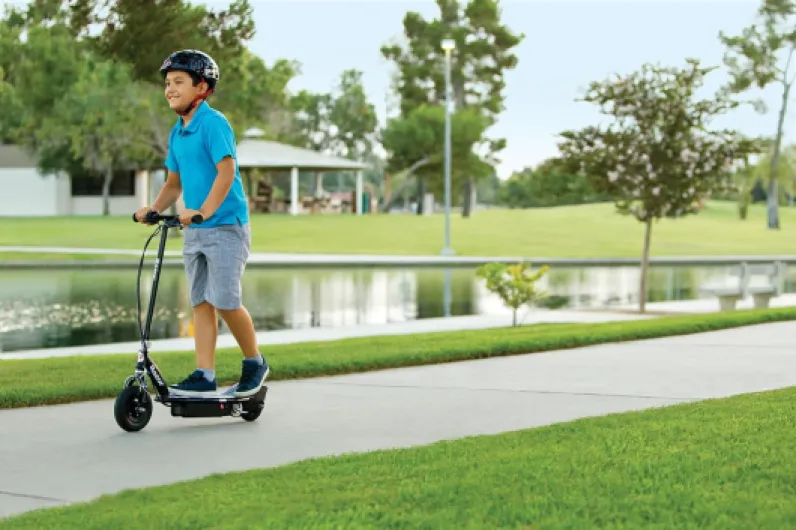
In terms of durability, this scooter has held up better than I expected given the way kids treat their stuff. It has already tipped over on the driveway a bunch of times, been dropped on the lawn, and even knocked over in the garage. So far, nothing has bent or broken. The paint has some scratches, but that’s cosmetic. The frame feels solid, and there’s no wobble in the handlebars after a few weeks of use.
The deck grip is holding up okay—it’s not peeling or bubbling, and it still has decent traction even after being stepped on with dusty shoes. The seat post clamp is still tight and hasn’t started slipping, which is something I’ve seen on cheaper products. The padded seat itself hasn’t torn or compressed oddly yet, though we’ll see how it looks after a full season.
The front pneumatic tire hasn’t had any punctures so far, and the rear solid tire obviously can’t go flat. That’s a relief, because the last thing I want is to be patching inner tubes every other week for a kids’ toy. The hub motor being enclosed in the wheel hub also helps durability—no exposed chains to get misaligned or clogged with dirt. The brake cable is still working smoothly, and I haven’t had to adjust it yet, though I expect at some point it’ll need a minor tweak like any cable brake.
Where I’m a bit cautious is long‑term battery durability. Lead-acid batteries will eventually lose capacity, especially if not treated well. If you leave this unused all winter without charging, don’t be surprised if range is noticeably worse next spring. Structurally, though, the scooter feels like it can survive a few years of kid use without falling apart. It’s not indestructible, but it’s not flimsy either. For the price point, I’d say durability is pretty decent as long as you don’t expect it to still feel brand new after daily abuse.
Performance: 10 mph is real, hills are the weak spot
Performance-wise, this scooter does what the spec sheet says, but nothing more. On flat pavement with a kid in the 70–90 lb range, it hits that ~10 mph top speed pretty reliably. It doesn’t rocket there; you need to give it a couple of pushes to reach about 3–5 mph, then twist the throttle and it gradually ramps up over a couple of seconds. Honestly, I prefer that gentle ramp for kids—it doesn’t jerk them forward or throw them off balance.
The kick‑to‑start motor annoys some people based on reviews, but in practice, I think it’s a good safety feature. My son has accidentally twisted the throttle while walking next to it, and since the scooter wasn’t rolling, nothing happened. If it had instant torque from a standstill, that could’ve yanked it out of his hands. The way it’s set up forces the rider to be in “riding position” before the motor will engage, which is exactly what I want with younger kids.
The downside is hill performance. On gentle slopes, it manages, but you definitely feel it slow down. On anything you’d call a real hill (the kind where you’d drop a couple of gears on a bike), the scooter struggles or just crawls. My 10‑year‑old has to help it along with a foot on steeper parts near our house. So if your neighborhood is mostly flat, no problem. If you’re in a hilly area, expect kids to complain that it “won’t go” uphill.
Braking performance is fine for the speed. The front hand brake is responsive and predictable once kids get used to it. I made them practice a few hard stops on the driveway before letting them go further, and the scooter stayed stable without pitching them forward. Overall, for the intended age range and flat terrain, the performance feels well matched. It’s not fast enough to be scary but not so slow that kids get bored immediately.
What you actually get out of the box
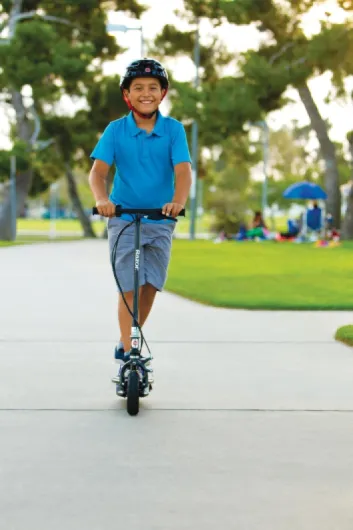
Out of the box, you’re getting a basic but complete kids’ electric scooter setup: the Razor 100 Series seated scooter, the removable padded seat, the charger, and the usual manual and warning stickers everywhere. Assembly on mine was straightforward: bolt the handlebar in, attach the seat post and saddle, and you’re more or less done. I’m not a DIY guy and it still took around 20–30 minutes at a relaxed pace with basic tools.
The product listing talks about a 10 mph top speed and around 40 minutes of ride time, and that’s roughly accurate in real use. With my 10‑year‑old (around 75 lbs), we were getting about 30–35 minutes of decent power before the scooter started to feel sluggish on flat ground. On cooler days or with the lighter 8‑year‑old, it stretches a bit closer to the claimed 40 minutes. Once it starts bogging down on small inclines, it’s time to go home and charge.
One thing the description doesn’t make super clear is that this thing uses lead-acid batteries, not lithium. That matters because: long charging time (about 10–12 hours for a full charge), it’s heavier than it looks on the page, and you’re supposed to keep the battery topped off and not leave it discharged for months. If you treat it like a cordless drill and just throw it in the garage all winter with a dead battery, don’t be surprised if it’s toast by spring.
In practice, the scooter fits best as a recreational toy rather than transport. The size is right for kids roughly 8–13, and the 120 lb weight limit is realistic. It’s not built for adults or for long commutes, no matter what the generic “unisex-adult” tag says. If you buy it with that mindset—fun laps around the block, trips to the park, cruising the driveway—it feels like a decent, fairly priced package.
Pros
- Realistic 10 mph top speed that feels fun for kids without being excessive
- Sturdy steel/aluminum build with removable padded seat and adjustable handlebar
- Simple controls and low-maintenance hub motor with no chain or belt
Cons
- Old-school lead-acid battery with long 10–12 hour charge time and limited range
- Struggles on anything more than gentle hills; best only on mostly flat terrain
Conclusion
Editor's rating
Overall, the Razor Seated Electric Scooter 100 Series is a solid kids’ scooter if you treat it as a toy and not as a mini motorcycle. The speed feels right for the 8–13 age range, the frame and deck feel sturdy, and the removable seat makes it more versatile for different kids and moods. The twist‑grip throttle and hand brake are easy to learn, and after a couple of practice runs, my kids were perfectly comfortable riding it around the neighborhood.
The main downsides are tied to the older lead-acid battery system and the modest motor. You get around 30–40 minutes of real use per charge, then a long 10–12 hour wait to fill it back up. It also struggles on real hills, so if your area isn’t mostly flat, kids will have to help it with their feet. Battery care matters too—if you don’t keep it charged and avoid storing it dead in the cold, you’ll shorten its life.
Who is it for? Parents who want a safe-ish, not too fast electric scooter for kids, mostly on flat ground, and who don’t mind plugging it in overnight after use. Who should skip it? Families in hilly neighborhoods, teens wanting speed and range, or anyone expecting modern lithium performance. In that context, it’s a good, no‑nonsense option that delivers a lot of fun for the price without feeling overly fragile or risky.