Summary
Editor's rating
Value for money: worth the hassle?
Honeycomb design and red accents: looks vs practicality
Comfort: say goodbye to flats, not to vibrations
Rubber quality and what it feels like in real use
Durability: built to be abused
Real-world performance: grip, speed, and handling
What you actually get with these BANGTING tires
Pros
- No more flats or air pressure checks, very low maintenance once installed
- Durable, hard rubber that handles potholes and rough city use without visible damage
- Good grip in dry conditions and stable handling at normal commuting speeds
Cons
- Installation is tedious and physically demanding, often needs boiling and strong tools
- Ride is noticeably harsher and more vibratory than pneumatic tires, especially on rough roads
- Slight impact on acceleration and range due to added weight and rolling resistance
Specifications
View full product page →| Brand | BANGTING |
Solid tires: freedom from flats… and a fight with your rims
I put these BANGTING 8.5x2 solid tires on a Xiaomi-style scooter that originally came with tubes. One flat too many finally pushed me to try solid rubber. I’ve ridden them for a couple of weeks on mixed city roads: bike lanes, rough sidewalks, a few potholes I didn’t see coming. So this isn’t lab testing, it’s just day‑to‑day use from someone who’s tired of patch kits and mini pumps.
First thing: these tires do what they promise on the basic level. No more flats, no more checking pressure, no more carrying a pump. For commuting, that’s honestly the main reason to get them, and on that point, they deliver. You lose a bit of comfort compared to air tires, but at least you’re not walking the scooter home because a tiny piece of glass ruined your morning.
The flip side is the installation. The listing and reviews talk about boiling water and needing two people. That’s not an exaggeration. Getting these onto the rim is a real workout. I managed it at home with some tools and hot water, but if you’re not patient or not very handy, I’d seriously consider paying a shop. Once they’re on, they stay put, but getting there is not fun.
Overall, after a couple of weeks, my feeling is pretty simple: the ride is a bit harsher, but the peace of mind is worth it. If you want comfort above everything, stick with pneumatic. If you’re sick of flats and don’t mind a tough install, these are a pretty solid option for the price.
Value for money: worth the hassle?
Price-wise, this 2‑pack from BANGTING sits in the budget to mid-range for solid scooter tires. Considering you get two tires and you basically remove punctures from your life, the value is pretty solid. Compare that with buying replacement tubes, patch kits, maybe paying a shop every time you don’t feel like wrestling with a tire change—it adds up fast. After one or two avoided flats, these pretty much pay for themselves in time and stress saved.
The big “cost” is not just the money, it’s the installation effort. If you do it yourself, expect around 30–60 minutes per tire the first time, plus the whole boiling water setup, soap solution, tools, swearing, etc. If you pay a bike or scooter shop, add that labor cost to the total. Even then, you’re still getting long‑term peace of mind compared to constantly dealing with tubes. But you should go in with your eyes open: the product is good value if you either have patience and tools, or you’re okay paying someone to mount them once.
There are softer, more comfortable solid tires on the market, but they tend to be pricier or less durable. There are also cheap unknown‑brand ones that crack or deform faster. BANGTING sits in a nice middle ground: not fancy, but reliable and fairly priced. The 4.6/5 rating on Amazon with a lot of reviews lines up with my experience—most people are happy once the tires are finally on the rims.
If I look at it as a commuter: I’d rather spend a bit on these once than keep buying tubes and wasting mornings fixing flats. So in terms of value, I’d rate them highly, with the only real downside being the time and effort to install. If you’re okay with that trade‑off, they’re a good deal. If you want something you can slip on in 10 minutes, this is not it.
Honeycomb design and red accents: looks vs practicality
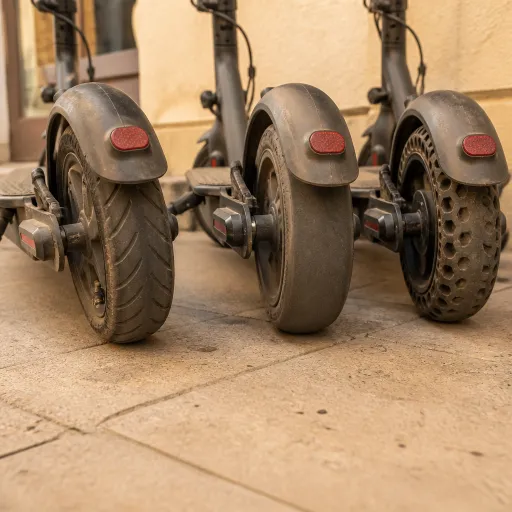
The design is pretty simple: solid rubber tire with a honeycomb pattern all around the circumference. Those holes aren’t just for show; they’re supposed to give a bit of flex so the tire doesn’t feel like a rock. Compared to a totally solid rubber ring, the honeycomb layout does help. You can press on it and actually see a bit of give, especially around the sidewalls. On the scooter, that translates into a ride that’s firm but not completely brutal.
Visually, the red color band is noticeable. If your scooter is all black, it’ll stand out. On my Xiaomi‑style scooter with red brake cable and red accents, it actually matches quite well and looks intentional. If you don’t like flashy colors, this might be a downside because there’s no way to hide it. For a kids’ or teen scooter, though, the look is a plus. One of the Amazon reviewers mentioned their kid loved the red match on a GoTrax XR Elite, and I had the same kind of reaction from friends: “looks cool, a bit more aggressive.”
From a functional standpoint, the tread is a shallow honeycomb/ ridged pattern. On dry asphalt and concrete, grip is totally fine. I didn’t have any slipping during normal braking or cornering. In light rain, you can feel it’s not as forgiving as a softer pneumatic tire, but that’s more about rubber hardness than the tread pattern itself. I wouldn’t rely on these for wet, fast cornering, but that’s true for most scooter tires anyway.
One thing I liked is how the honeycomb holes also make installation slightly less awful because you can stick a screwdriver or tire iron through them to lever the tire over the rim. A few reviewers mentioned this trick, and it really helps. So the design is doing double duty here: a bit of shock absorption and a way to grip and pull during mounting. Not glamorous, but practical.
Comfort: say goodbye to flats, not to vibrations
Let’s be blunt: swapping from pneumatic to solid tires is a comfort downgrade. That’s just how physics works. With these BANGTING tires, the honeycomb design takes the edge off, but it doesn’t magically make them feel like air‑filled tires. On smooth bike paths and good asphalt, the ride is actually fine, almost similar to properly inflated tubes. Where you really notice the difference is on broken pavement, cobblestones, and sidewalk seams.
On my commute, there’s a stretch of rough sidewalk with lots of cracks. With the old air tires, it was bumpy but manageable. With these solid tires, the vibration is sharper and more constant. You feel more buzz in your hands and feet. After about 15–20 minutes of riding, it’s still tolerable, but I wouldn’t want to do an hour straight on really bad roads. If your scooter has suspension, that will help a lot. Mine doesn’t, so all the shock goes through the frame and into my body.
That said, there are some positives. The ride feels more consistent. There’s no change in behavior as the tire “loses” pressure, because there is no pressure. Day 1 and day 10 feel basically the same. Also, I never had that slightly squishy feeling when taking a fast corner or doing a quick swerve. The tire stays firm and predictable, which weirdly adds a bit of confidence once you get used to the extra harshness.
For me, the trade‑off is acceptable: less comfort, more reliability. If you’re lightweight and mainly ride short distances in the city, you’ll probably adapt quickly. If you’re heavier, ride long distances, or have wrist/knee issues, you might find the extra vibration annoying. In that case, I’d only recommend these if you pair them with some kind of suspension stem or a good padded deck mat to help absorb the buzz.
Rubber quality and what it feels like in real use
The brand claims these are made from Thai natural rubber with good heat and wear resistance. I obviously didn’t send them to a lab, but after a couple of weeks of daily commuting (roughly 6–8 km per day), there’s no visible cracking or weird deformation. The tread edges are still sharp, and the red color hasn’t faded. They do feel on the harder side compared to stock pneumatic tires, which is exactly what you’d expect from a solid design.
During installation, I boiled each tire for around 20 minutes, as suggested. The rubber handled it fine. No smell change, no surface damage, and once cooled, it went back to its normal stiffness. That’s a good sign for durability because if a 20‑minute boil plus the brute force of levering it over the rim doesn’t damage it, normal riding probably won’t either. Just be ready: when they’re hot, they’re really hot, so you need proper gloves or thick towels.
On the road, the material gives a firm, slightly bouncy feel over small bumps. The honeycomb structure helps a bit, but don’t expect miracle suspension. Compared to my old air tires at 45 psi, these are stiffer and transmit more vibration to the handlebar and deck. It’s not terrible, but on rough pavement you feel more of the surface texture. The upside is there’s zero squirm or flex when cornering; the tire stays planted and predictable.
In terms of wear, after hitting a few potholes and some rough curb cuts, I didn’t see chunks missing or cuts in the rubber. The compound seems geared towards longevity and resistance to damage more than comfort. For a commuter scooter that lives in the city, that’s exactly what I want. If you were hoping for a soft, cushiony ride, these materials are not going to give you that. They’re more about surviving abuse than pampering you.
Durability: built to be abused
Durability is where these tires make the most sense. In a few weeks of use, I’ve hit potholes, small bits of glass, and some rough curbs that would have made me nervous with tubes. With these, I honestly stopped caring. I still try not to ride like a maniac, but mentally it’s nice not to be constantly scanning the ground for every tiny shard that might cause a slow leak.
The rubber shows almost no wear so far. The tread pattern is still clearly visible, and the edges of the honeycomb holes haven’t started cracking. One of the Amazon reviews mentioned they feel super durable, and I’d agree with that impression. The material is on the harder side, which usually means slower wear. I’d be surprised if these didn’t last significantly longer than a typical pneumatic tire and tube combo under the same conditions.
The load rating is listed at over 600 lbs, which is obviously way more than any single rider plus scooter. In practice, that just means they barely deform even with a heavier adult on board. I rode with a backpack and sometimes a second small bag on the handlebar, and the handling didn’t change much. No bulging, no wobble, no rubbing against the fender. Once they’re mounted correctly, they stay seated and centered on the rim.
The only durability concern I could imagine is long‑term exposure to sun and temperature changes if you store the scooter outside. I haven’t had them long enough to see that, but given how stiff the rubber is and how it handled boiling water, I’m not too worried. If anything fails first on a typical scooter, it’ll be the battery or folding mechanism, not these tires. So from a longevity point of view, they feel like a good investment if you plan to keep your scooter for a while.
Real-world performance: grip, speed, and handling
In daily use, these tires perform pretty well for what they are. On dry surfaces, grip is solid. I tested hard braking from top speed (around 25 km/h on my scooter) and never felt the tire lock up earlier than expected. Cornering at a normal commuting pace feels stable, with no weird slipping or sidewall flex. The harder rubber and solid structure actually give a very direct feel of the ground, which I ended up liking once I adapted.
Acceleration and top speed take a small hit because these tires are heavier than stock pneumatic ones. I noticed the scooter needed a bit more time to get up to speed, especially on slight inclines. It’s not night and day, but if you’ve ridden the same scooter for a while, you’ll feel it. Range might also drop a bit due to the increased rolling resistance, though in my case it was minor—maybe 5–10% less range on the same route. Hard to measure exactly, but I did notice the battery gauge dropping a little faster than before.
On wet pavement, it’s okay but you need to be more cautious. Harder rubber plus no air cushion means less contact adaptation to the road. I didn’t wipe out, but I slowed down more in turns and braked earlier. If your city gets a lot of rain, I’d keep that in mind. These are fine for occasional wet rides, but they’re not magic rain tires.
Overall, performance is very much in the “gets the job done” category. You trade a bit of speed, a bit of range, and some comfort for a tire that just keeps rolling no matter what you run over. For a commuting scooter that lives in bike lanes and city streets, that’s a fair trade, especially if you’ve already lost time and money dealing with punctures and tube changes.
What you actually get with these BANGTING tires
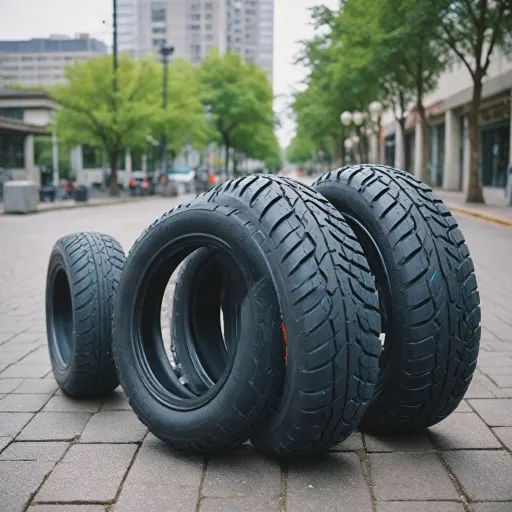
Out of the box, you get two solid 8.5 x 2 honeycomb tires, no tubes, no extra hardware. Mine came with basic plastic tire levers, which are better than nothing but honestly not strong enough alone for the job. The tires themselves feel dense and heavy in the hand, which makes sense since it’s solid rubber with holes. The red accents are pretty visible and give a bit of a sport look if your scooter already has red details (Xiaomi style, some Gotrax models, etc.).
The size is listed as 8.5 x 2 / 50/75‑6.1, and they’re meant to replace standard 8.5'' scooter tires like on Xiaomi M365 / Pro 2 / 1S / 3, Gotrax GXL V2 / XR / APEX, and similar. Important detail: when you unpack them, they look too small. That’s on purpose. The inner diameter is smaller than the rim, so they grip tightly once stretched on. Don’t panic when you see that, but do plan your installation properly.
Weight-wise, they’re heavier than stock pneumatic tires and tubes. You feel it when you hold them, and later I did notice a slight difference in how fast the scooter accelerates, especially from a complete stop. Not dramatic, but it’s there. On the other hand, that extra mass also made the scooter feel a bit more planted at speed, especially over small cracks and joints where the tire doesn’t deform as much.
They’re clearly built to be low‑maintenance, daily use parts. No fancy packaging, no extras, just two red honeycomb tires that scream “use me and forget about me.” If you’re looking for a pretty unboxing experience, this isn’t that. If you just want a cheap and straightforward way to ditch inner tubes, the bundle makes sense and the product matches the description pretty closely.
Pros
- No more flats or air pressure checks, very low maintenance once installed
- Durable, hard rubber that handles potholes and rough city use without visible damage
- Good grip in dry conditions and stable handling at normal commuting speeds
Cons
- Installation is tedious and physically demanding, often needs boiling and strong tools
- Ride is noticeably harsher and more vibratory than pneumatic tires, especially on rough roads
- Slight impact on acceleration and range due to added weight and rolling resistance
Conclusion
Editor's rating
After riding these BANGTING 8.5x2 solid tires for a while, my opinion is pretty clear: they do exactly what you buy them for. They get rid of flats, they don’t need any maintenance, and they feel tough enough to handle everyday city abuse. You give up some comfort and a bit of performance, but in exchange you stop worrying about punctures and air pressure. For commuting and casual rides, that’s a trade I’m personally fine with.
Who are they for? Riders who are sick of patching tubes, who use their scooter regularly for work or school, and who want a set‑and‑forget solution. If you’re okay with a firmer ride and either have the patience to install them yourself (hot water + soap + time) or don’t mind paying a shop once, you’ll probably be happy with them. The red design is a bonus if it matches your scooter, or just something you tolerate if you don’t care about looks.
Who should skip them? Anyone obsessed with comfort, people riding long distances on bad roads, or those who hate DIY and don’t have access to a workshop. In those cases, staying with pneumatic tires or looking for a suspension upgrade might make more sense. Overall, I’d call these tires a solid, no‑nonsense option: not perfect, but they get the job done and feel like good value for the price.