
Summary
Editor's rating
Value for money: good deal if you know its limits
Design: light, simple, and very pink
Battery and range: fine for daily errands, not for long tours
Comfort: fine for short rides, rough for bad roads
Build and materials: better than toy-grade, not premium
Performance: decent speed, average hill climbing
What you actually get with this scooter
Pros
- Good price for a 350W commuter scooter with app and folding design
- Solid tires mean no flats and very low maintenance
- Light and compact enough to carry, store, and put in a car trunk easily
Cons
- Ride is quite firm on rough roads due to solid tires and basic suspension
- Hill climbing is only average, especially for heavier riders or steeper slopes

Specifications
View full product page →| Brand | Roinside |
A budget scooter I actually kept using
I’ve been riding this Roinside pink 350W scooter for a couple of weeks now for basic city errands and short commutes. Nothing fancy: home to the store, to the gym, and a few random trips around the neighborhood. I bought it mainly because I was tired of walking 20–30 minutes for small trips and didn’t feel like spending Segway-level money. On paper it’s pretty standard: 350W motor, 8.5'' solid tires, about 15 miles claimed range, and a foldable frame.
Right out of the box, it felt more solid than I expected for the price. I’ve used a few rental scooters and one mid-range Segway before, so I had something to compare it to. This one clearly sits in the “budget but usable” category. It’s lighter than most rental scooters, folds quickly, and the pink color stands out in a good way if you’re into that. If you prefer something stealthy, this is not it.
In daily use, it does what it says: it gets me from point A to B without too much hassle. The motor is strong enough for flat city streets, the brakes bite hard, maybe a bit too hard, and the app is basic but handy for locking the scooter and changing modes. It’s not the smoothest ride, and it’s not the strongest hill climber, but for short commutes it’s been pretty practical.
Overall, I’d say it’s a pretty solid option if you want a simple, low-maintenance scooter and don’t care about top-tier comfort or fancy features. It has some annoyances—especially the harsh braking and the stiff solid tires—but for the money, it feels like a decent compromise between price, performance, and portability.
Value for money: good deal if you know its limits
Price-wise, this scooter sits clearly in the budget to mid-budget zone, and that’s where it makes the most sense. You’re not paying for fancy brand prestige or super high specs. You’re getting a basic, functional commuter scooter with solid tires, a 350W motor, and a usable app. Compared to more famous brands with similar specs, this one is usually cheaper, sometimes by a decent margin, and that’s its main strength.
What you’re really paying for here is: low maintenance (solid tires), acceptable range for short commutes, and easy portability. At about 30 lbs and with a simple folding system, it’s practical to throw in a car trunk, bring into an office, or carry up a flight of stairs. For people who just want something to replace a few bus rides or short car trips, it’s good value. The 12-month warranty on parts is also reassuring, even if actually using a warranty is always a bit of a hassle with any brand.
On the downside, you’re giving up some comfort and performance. The ride is harsher than air-tire scooters, the range is modest, and hill performance is just okay. If you’re heavier, live in a hilly area, or want to do long rides on weekends, you might feel the limits pretty quickly. Also, the build is solid enough but doesn’t scream long-term tank; I’d treat it as a daily tool, not something to abuse.
Overall, I’d say it’s good value for someone who wants a simple city scooter and is realistic about what they’re getting. If you catch it at a discount, even better. If you’re very picky about comfort or want top-tier performance, you’ll probably need to spend quite a bit more on a different brand or a higher model.
Design: light, simple, and very pink
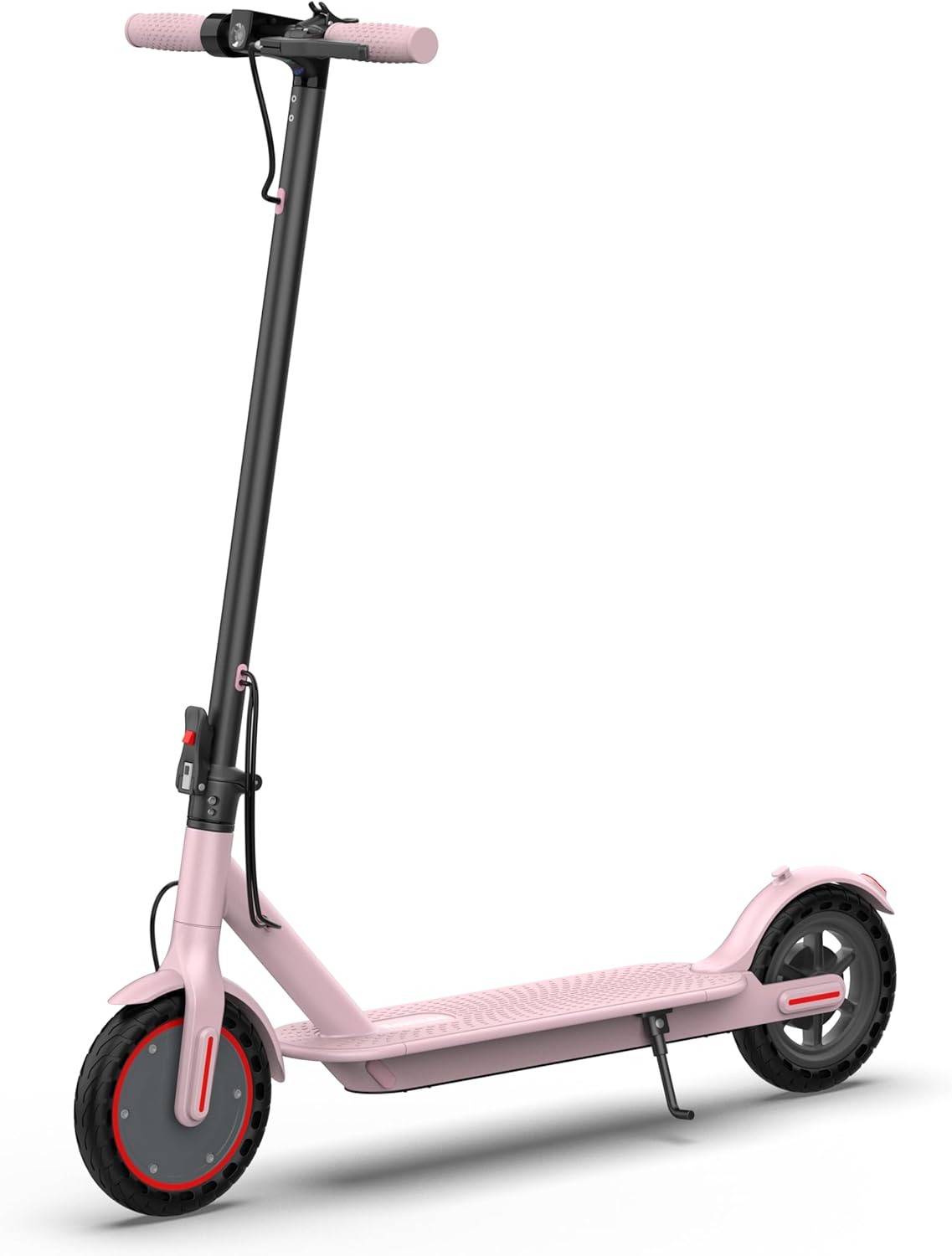
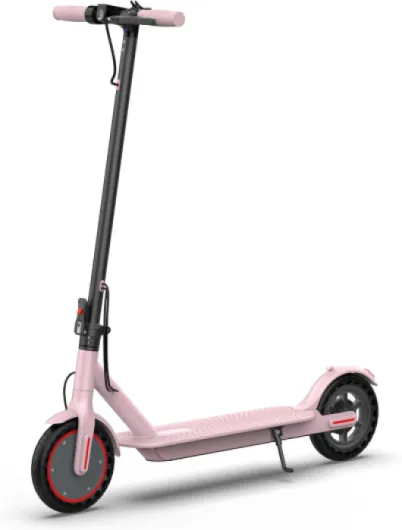
Visually, this scooter is pretty straightforward: slim deck, straight stem, and a clean handlebar with throttle on one side and brake lever + bell on the other. The pink color is not subtle at all. If you’re shy about standing out, pick another color, because this thing is noticeable. Personally, I didn’t mind it; at least it’s easy to spot in a bike rack or in a crowded garage. Just be aware that lighter colors do show dirt faster, and this one is no exception.
The folding mechanism is a basic latch setup: pull the latch, lower the stem, and hook it to the rear fender. It’s quick and doesn’t feel overly flimsy, but I still checked the bolts after a few rides just to be safe. So far, no play or wobble in the stem, which is something that can get annoying on cheaper scooters. The deck is medium width. You can stand sideways with one foot forward and one at an angle without hanging off too much, but it’s definitely not as wide as some bigger commuter models.
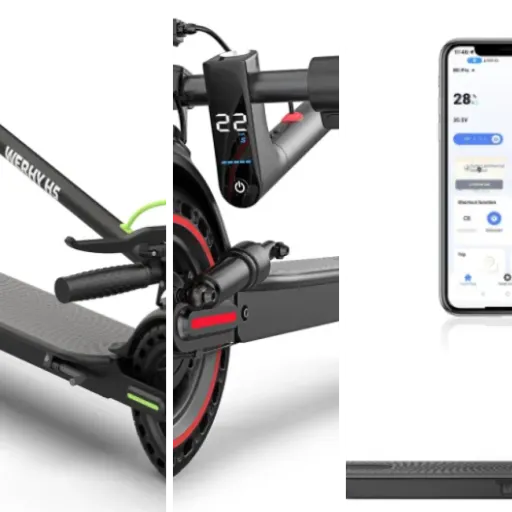
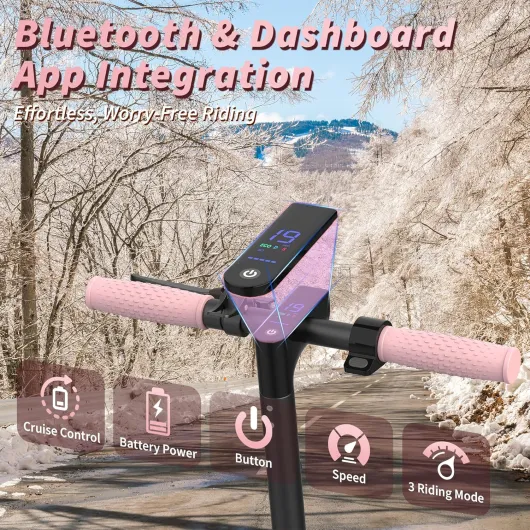
The display is small but readable, even in sunlight. You get speed, battery bars, and mode indicators. Nothing fancy, but it’s enough. There’s a headlight up front that’s bright enough for you to be seen and to see the road a bit in the dark, but I’d still add a separate light if you ride at night a lot. The rear brake light is basic but functional. No turn signals, so you’ll still be using hand signals if you want to ride like a responsible adult.
Overall, the design is more about practicality than style, aside from the color. It’s compact, folds easily, and doesn’t have a bunch of useless extras. The downside is there’s not much adjustability—handlebar height is fixed, no suspension adjustment, and the deck length is what it is. If you’re average height, it’s fine; if you’re very tall or very short, you just have to adapt your stance.
Battery and range: fine for daily errands, not for long tours
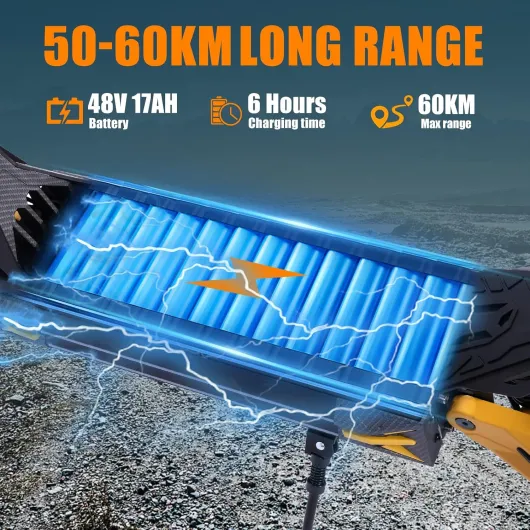
The scooter has a listed 323Wh battery, with a claimed range of up to 15 miles for this 350W model. In real life, like always, that number is optimistic. With my weight and normal riding (mostly full speed, some stops, a few small hills), I was seeing around 9–11 miles before the scooter started to feel weaker and the top speed dropped. If I rode more gently, mixing eco mode and normal mode, I could stretch it a bit more, but I never reached a true 15 miles at my usual pace.
Charging time is around 4–5 hours from low to full, which is normal. I usually just plug it in when I get home and it’s ready by the time I go out again. The charger is basic and not huge, so you could keep one at home and one at work if you wanted. The battery indicator on the display is the typical bar system, so it’s not super precise, but you can roughly tell when you’re in the last third and should start thinking about heading back.
One thing to note: as the battery drops, the scooter gradually limits power and speed. You won’t suddenly stop, but you’ll notice you can’t hit the same top speed, and acceleration becomes softer. This is standard behavior to protect the battery, but it’s good to know if you’re planning a longer ride. Don’t push it to 0% all the time either; lithium batteries don’t like that. Keeping it above 20–30% most of the time should help it last longer.
For daily use—short commutes, errands, going to school or work within a 3–5 mile radius—it’s totally fine. If your round trip is under 10 miles and you can charge at home, you’re good. If you need something for 15+ mile round trips without charging, I’d look at a higher-capacity model. For the price range though, the battery life is decent and lines up with what I expected given the motor and weight.
Comfort: fine for short rides, rough for bad roads
Comfort-wise, this scooter is okay but not soft, and the solid tires are the main reason. There is some front suspension listed, but don’t imagine motorcycle-style shocks. It takes the edge off very small bumps, but anything more than that you still feel. On smooth bike lanes or decent roads, I had no problem doing 20–30 minute rides. On cracked sidewalks or roads full of patches and manhole covers, it gets tiring faster, mostly in the knees and ankles from absorbing the impacts.
The riding position is pretty standard: one foot forward, one slightly sideways. The deck height feels normal; you’re not too high off the ground, so you still feel stable when turning. The handlebar height is fixed, and for my height (around 5'10" / 178 cm) it was fine. Someone much taller might feel a bit hunched over. The grips are simple but didn’t cause any blisters or discomfort, even on longer rides. There’s no adjustable stem or anything like that, so what you see is what you get.
Noise-wise, the scooter is fairly quiet. You mainly hear the motor whine a bit when accelerating and the usual tire noise on pavement. No rattling from the folding system so far, which is nice. The only time it got slightly annoying was on really rough surfaces where everything just vibrates more, but that’s more about the road than the scooter.
If you want a plush, cushioned ride, this is not it. If you just need something to ride 2–5 miles at a time and your roads aren’t destroyed, it’s perfectly workable. I’d describe the comfort as “good enough for commuting, not great for long fun rides on bad roads.” It’s fine for getting to work or school, but it’s not a scooter you’ll want to ride for an hour straight on rough streets.
Build and materials: better than toy-grade, not premium
The frame is aluminum, which is standard for this type of scooter. It keeps the weight down while still feeling reasonably sturdy. When you step on it, there’s no weird flex or creaking, which is good. The welds and joints don’t look fancy, but they don’t look sloppy either. It’s clearly not at the same finish level as higher-end brands, but it doesn’t feel like a toy from a supermarket bin.
The 8.5'' solid tires are rubber, and that’s a big part of the overall feel. They’re maintenance-free, which is nice—no flats, no checking pressure. But the trade-off is less cushioning and more vibration on rough pavement. If your roads are smooth, you’ll be fine. If you’re constantly crossing cracked sidewalks and patched asphalt, you’ll feel it in your legs after a while. The grip on dry surfaces is decent. I wouldn’t push it hard on wet roads, but that goes for most scooters anyway.
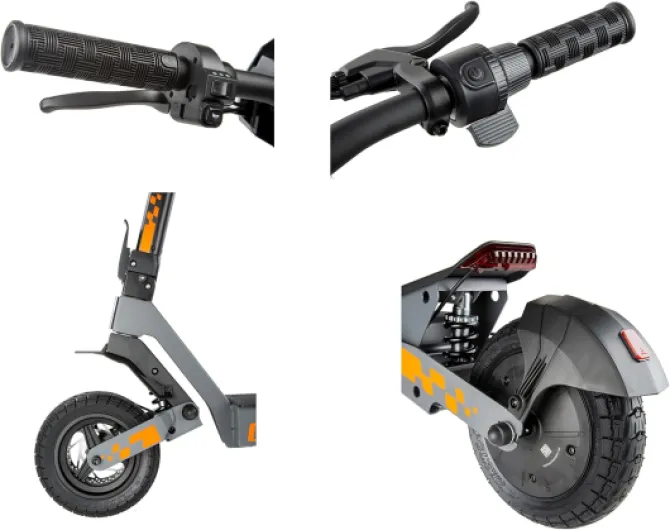
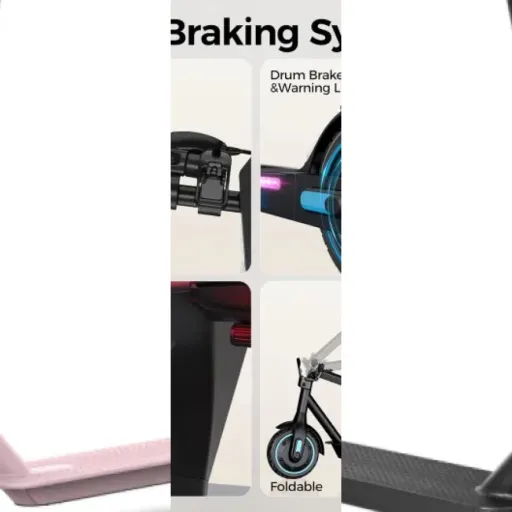
The brake setup uses a rear disc brake plus an electronic brake (EABS). The disc itself looks decent and doesn’t feel cheap, but the tuning from the factory is pretty aggressive. A light squeeze can already slow you a lot, and if you grab too hard you get that sudden stop feeling. It’s safer than weak brakes, but you do need to get used to it. The levers and grips feel okay—not premium rubber, but comfortable enough for 20–30 minute rides without thinking about it.
Other small details: the kickstand works and doesn’t feel wobbly, the folding latch is metal (not some weak plastic clip), and the cables are mostly routed cleanly. The plastic parts—fenders, housing around the display, etc.—look and feel like normal budget scooter plastic. They get the job done but don’t expect anything fancy. Overall, the materials are perfectly acceptable for the price, with the solid tires clearly chosen to cut down on maintenance rather than to maximize comfort.
Performance: decent speed, average hill climbing
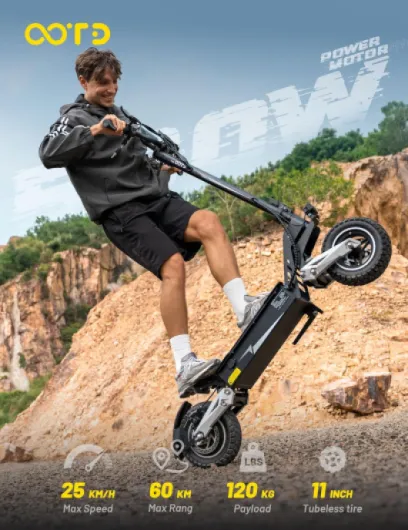
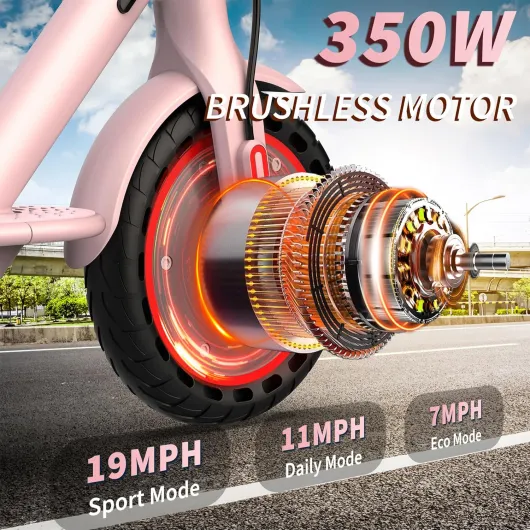
The 350W motor does a pretty good job on flat ground. Acceleration is smooth and predictable. It’s not going to launch you like a high-end scooter, but it’s more than enough for city streets and bike lanes. I was consistently hitting around 17–19 mph on flat, depending on battery level and wind. For commuting, that’s totally fine, and honestly, anything much faster on small wheels starts to feel sketchy anyway.
On hills, it’s a different story. On small inclines, it holds speed fairly well. On steeper hills, it slows down noticeably. You’ll still get up there, but don’t expect to climb fast if you’re close to the weight limit. I’m around 175 lbs and on a decent incline it dropped down to around 8–10 mph, sometimes less if the battery wasn’t full. If you live in a really hilly city, this might annoy you. If your routes are mostly flat with the occasional slope, it’s manageable.
The braking performance is strong, maybe too strong for some people at first. The rear disc brake plus electronic brake combo can cause quite a hard stop if you pull the lever aggressively. Once you get used to feathering the brake instead of grabbing it, it’s fine, but the first time I hit it hard I definitely felt my weight shift forward more than I liked. On the plus side, it gives confidence when you need to stop quickly in traffic.
General handling is good: the scooter feels stable at commuting speeds, and turning is easy once you adopt a solid stance. No weird wobble or flex, even at higher speeds. The only real performance limitation is hills and the fact that the top speed is capped around 19 mph, which is basically standard for this category. Overall, it performs like a solid mid-tier commuter scooter, not slow, not crazy fast, just right in that usable middle zone.
What you actually get with this scooter
On paper, the Roinside UP6 350W version I tested is the pink 8.5'' model with a claimed range of up to 15 miles and a top speed of around 19 mph. It uses a 350W brushless motor, a 323Wh battery, and solid rubber tires. It supports riders up to about 260 lbs (264 lbs listed), and the whole scooter itself weighs about 30 lbs. The box includes the scooter already assembled, a charger, and a basic manual. No seat, no extra tools, just the essentials.
The brand pushes a few main points: foldable and portable, double braking system (disc brake + electronic brake), and smartphone app with lock, speed modes, and cruise control. It’s also UL2272 certified, which is the usual safety standard for these things. The frame is aluminum, handlebars are fixed height at about 44 inches, and the deck isn’t huge but enough for one adult to stand comfortably if you don’t have giant feet.
In use, the real-world numbers are a bit different from the listing, which is pretty standard. With my weight around 175 lbs, riding in mixed conditions (some small inclines, stop-and-go, and not babying the throttle), I’ve been seeing around 9–11 miles before the scooter starts to noticeably slow down. If you’re lighter or ride in eco mode on mainly flat roads, you might get closer to the advertised 15 miles, but I wouldn’t count on it daily.
So in practice, I see it this way: this is a short to medium commute scooter, not something for long weekend tours. It’s clearly built for urban use: go to school, office, grocery store, then back home. If your round trip is under 8–10 miles, you’re fine. If you’re trying to do 15 miles one way, this is not the right model. For the price bracket though, the package makes sense: simple, no nonsense, and you’re not terrified of it getting stolen the way you’d be with a scooter that costs twice as much.
Pros
- Good price for a 350W commuter scooter with app and folding design
- Solid tires mean no flats and very low maintenance
- Light and compact enough to carry, store, and put in a car trunk easily
Cons
- Ride is quite firm on rough roads due to solid tires and basic suspension
- Hill climbing is only average, especially for heavier riders or steeper slopes
Conclusion
Editor's rating
After using the Roinside 350W pink scooter for everyday trips, my take is pretty straightforward: it’s a practical, budget-friendly commuter that does its job without being fancy. The motor handles flat city riding well, the brakes are strong (maybe a bit too strong until you get used to them), and the solid tires mean you won’t be dealing with flats all the time. The range is enough for short to medium commutes, not for long-distance adventures.
It’s not perfect. The ride is on the firm side because of the solid tires, and hills expose the limits of the 350W motor. The finish and materials are clearly in the budget category, and the comfort level depends a lot on how good or bad your roads are. But for the price, you get a scooter that’s light enough to carry, folds quickly, and is simple to use. If your main goal is to cut down walking time or skip a few bus rides, it gets the job done.
I’d recommend this to people who need a short-range city scooter: students, office commuters, or anyone doing daily rides under 10 miles round trip on mostly decent roads. If you’re heavier, live in a very hilly area, or want maximum comfort and range, you should look at a more powerful model with air tires and a bigger battery. For what it is—a straightforward, affordable adult commuter—it’s a solid option, as long as you go in with realistic expectations.